

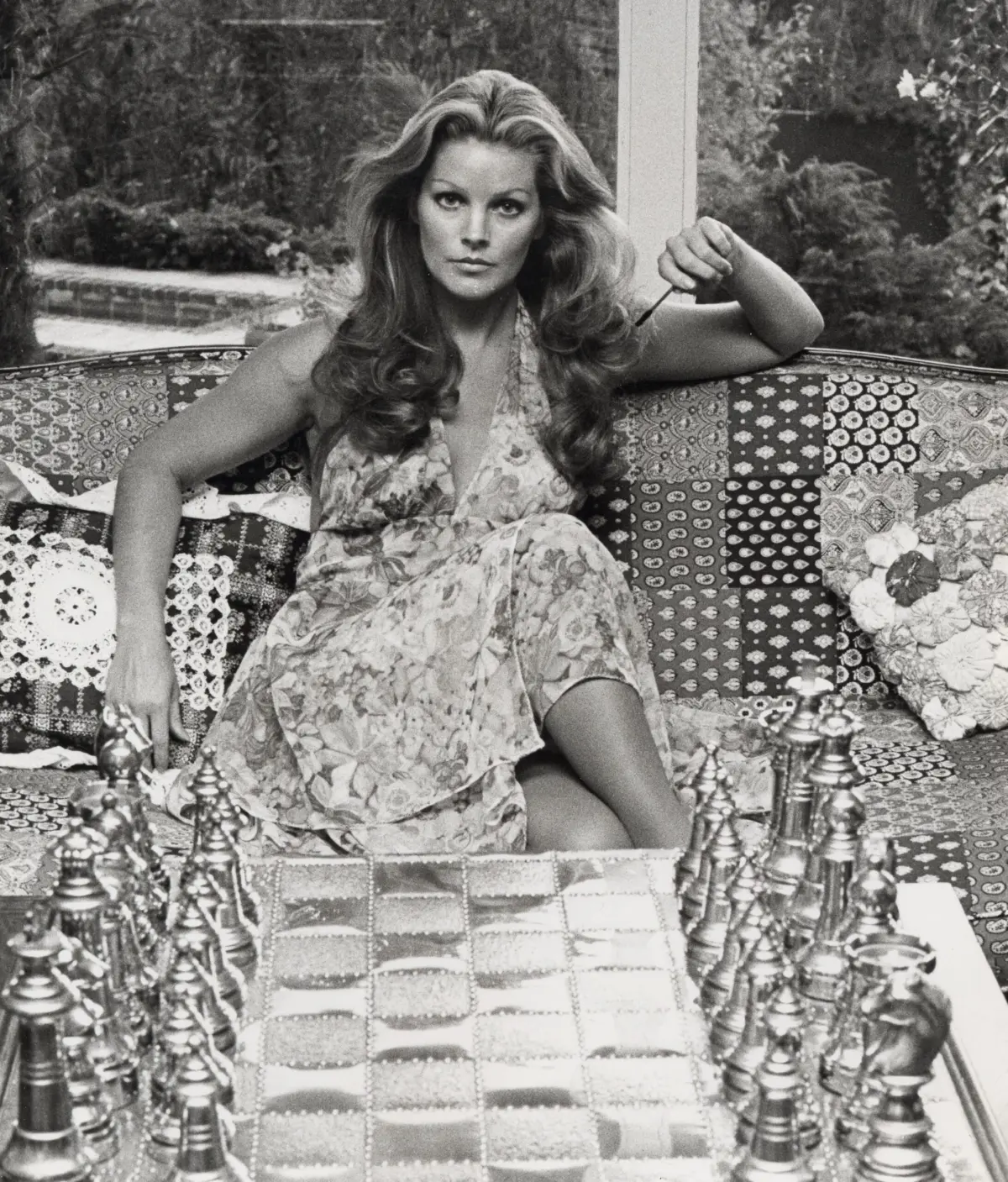
Few figures in American pop culture are as intimately connected to legendary residential spaces as Priscilla Presley. From the sprawling, mythic gates of Graceland in Memphis to a secluded, Italian-inspired sanctuary in Beverly Hills, her domestic life has spanned some of the most celebrated and scrutinized addresses in modern history.
As a teenager thrust into global fame, Priscilla navigated a world defined by mid-century modernism, classical southern revivalism, and French Regency glamour. Beyond her enduring association with Elvis Presley, she carved out a formidable legacy of her own, transforming a financially drowning estate into America’s most-visited historic residence outside of the White House.

Main Facts: The Foundations of a Historic Domestic Life
Priscilla Presley’s journey through architectural history began long before she became a household name. Born in Brooklyn, New York, her early life took a dramatic turn when her stepfather, an Air Force captain, was stationed in West Germany. It was there, in 1958, that a 14-year-old Priscilla Beaulieu crossed paths with a 24-year-old Elvis Presley, who was serving a stint in the U.S. Army.
What followed was a romance that transitioned from a guarded European courtship to a high-profile American fairy tale. After years of long-distance communication and visits to Los Angeles and Memphis, Priscilla moved permanently to Tennessee in 1963, eventually taking up full-time residence inside Graceland.

The couple married on May 1, 1967, at the now-demolished Aladdin Resort in Las Vegas, celebrating with a grand reception back at their Memphis estate. Though their marriage dissolved in the early 1970s, Priscilla’s footprint on the properties they shared—and her later acquisition of custom-tailored West Coast sanctuaries—cemented her status as a tastemaker with an eye for exceptional real estate.
Chronology: A Timeline of Residences and Milestones
To understand Priscilla Presley’s life is to trace it through the rooflines and floor plans of the homes she inhabited, preserved, and reinvented:

- 1958: Fourteen-year-old Priscilla meets Elvis Presley in West Germany during his U.S. Army service.
- 1963: Priscilla moves to Memphis, Tennessee, eventually moving into the legendary Graceland mansion.
- May 1, 1967: Elvis and Priscilla wed at the Aladdin Resort in Las Vegas, followed by a honeymoon at the famed "House of Tomorrow" in Palm Springs.
- February 1, 1968: The couple welcomes their only child, Lisa Marie Presley.
- November 1970: The family is photographed at their French Regency-style Trousdale Estates home in Beverly Hills, which they originally purchased for $400,000 in 1967.
- October 9, 1973: Elvis and Priscilla’s divorce is finalized. Priscilla subsequently purchases a private, Italian-inspired villa in Beverly Hills, dubbing it "Villa Nostra" ("Our Home").
- August 16, 1977: Elvis Presley passes away at the age of 42. Graceland is placed under the stewardship of Elvis’s father, who names Priscilla as a trustee.
- 1982: Facing mounting financial ruin and urged by attorneys to sell, Priscilla successfully spearheads the effort to open Graceland to the public as a museum, saving it from liquidation.
- March 2006: Graceland is officially designated a National Historic Landmark.
- December 2020: Priscilla sells her Beverly Hills compound for $13 million after more than 45 years of residency, downsizing to a luxury condo in Century City.
Supporting Data: Architectural Specifications and Financial Realities
The historical weight of Priscilla Presley’s former homes is matched by their impressive physical dimensions and market trajectories:
1. Graceland (Memphis, Tennessee)
- Original Purchase: Bought by Elvis Presley in 1957 for $102,500.
- Architectural Style: Classical Revival (built in 1939).
- Square Footage: Expanded from an original 10,200 square feet to approximately 17,500 square feet through various residency additions.
- Visitor Metrics: Attracts roughly 600,000 visitors annually, making it second only to the White House as the nation’s most-visited historic residence.
2. The House of Tomorrow (Palm Springs, California)
- Architect: Designed by acclaimed modernist architect William Krisel in 1960.
- Square Footage: 4,695 square feet.
- Design Features: Divided into four distinct circular living spaces beneath a sweeping, sloped roof; equipped with futuristic 1960s electronic climate controls, outdoor lighting, and automated sprinkler systems.
3. Trousdale Estates Home (Beverly Hills, California)
- Purchase Year: 1967 (purchased for $400,000).
- Style: French Regency.
- Occupancy: Shared by Elvis, Priscilla, and Lisa Marie before the couple’s separation and subsequent sale of the property.
4. Villa Nostra (Beverly Hills, California)
- Acreage: Set on two acres of dense, private foliage.
- Expansion: In 1992, Priscilla enlisted an Italian architect to add a second floor, incorporating a library, two additional bedrooms, and a staircase framed in hand-laid Italian tiles.
- Final Sale: Sold in December 2020 for $13 million, boasting nearly 9,000 square feet, seven bedrooms, and 8.5 bathrooms.
Official Responses and Personal Reflections
Priscilla has been remarkably candid in recent years regarding the emotional toll, the triumphs, and the heavy responsibilities associated with her former homes. Reflecting on her decision to keep Graceland afloat during a perilous financial era, she recalled the stark warnings she received from estate attorneys.

"The attorneys brought me in and said, ‘Priscilla, we’re going to have to sell Graceland. We have no money. We’re not bringing any money in,’" Priscilla shared in a retrospective interview. "I just looked at them, and I said, ‘That’ll never happen, ever.’ Then I left."
That gamble paid off exponentially, preserving a monument that Elvis viewed as the ultimate testament to his meteoric rise from humble beginnings. At the 2006 ceremony marking Graceland’s designation as a National Historic Landmark, Priscilla noted:
“To [Elvis], having Graceland was a tangible symbol of how far he had come from his very humble beginnings.” Later, while promoting her memoir, she emphasized: “I am most proud of the fact that Graceland became what it is today because I tok a chance.”

Regarding her post-divorce sanctuary in Beverly Hills—dubbed Villa Nostra—Priscilla described to Closer magazine how the secluded property served as a vital emotional refuge:
“It’s a bit secluded with the gates, so you can’t see in. It was a sanctuary for me… When I had more family here, there was a cozy feeling, and that’s why I put ‘Villa Nostra.’ It means ‘Our Home’ in Italian.”
Her unique post-divorce relationship with Elvis was further underscored by geographic proximity. When she bought her Beverly Hills villa, Elvis maintained a nearby Holmby Hills estate purchased in 1970. "We were very, very close, and I wanted to make sure his house was near to our daughter," she explained.

Implications: Preserving the Mythos of Rock ‘n’ Roll Real Estate
The architectural history left in Priscilla Presley’s wake carries profound implications for cultural preservation, celebrity real estate, and tourism economics.
When Elvis passed away in 1977 at the age of 42, the immediate financial burden threatened to dismantle his legacy piece by piece. Priscilla’s refusal to allow the liquidation of Graceland established a blueprint for how posthumous celebrity estates could be managed as living museums rather than liquidated assets. By transforming Elvis’s home into a thriving commercial enterprise, she guaranteed the financial security of the Presley family while creating a permanent pilgrimage site for millions of global fans.

Furthermore, her West Coast residences—from the space-age modernism of Palm Springs’ House of Tomorrow to the European elegance of Villa Nostra—highlight a personal evolution. They represent the quiet reclamation of identity by a woman who stepped out from under the immense shadow of a global icon to curate her own environments. Whether entertaining contemporaries like Robert Kardashian in the mid-1970s or meticulously expanding her Beverly Hills compound with authentic Italian architecture, Priscilla infused every square foot with intention.
Today, as these properties continue to capture the public imagination through biographies, films, and architectural retrospectives, Priscilla Presley’s domestic footprint remains indelible. She did not merely live inside history; with sharp intuition and fierce protective grace, she preserved it.
