

Main Facts
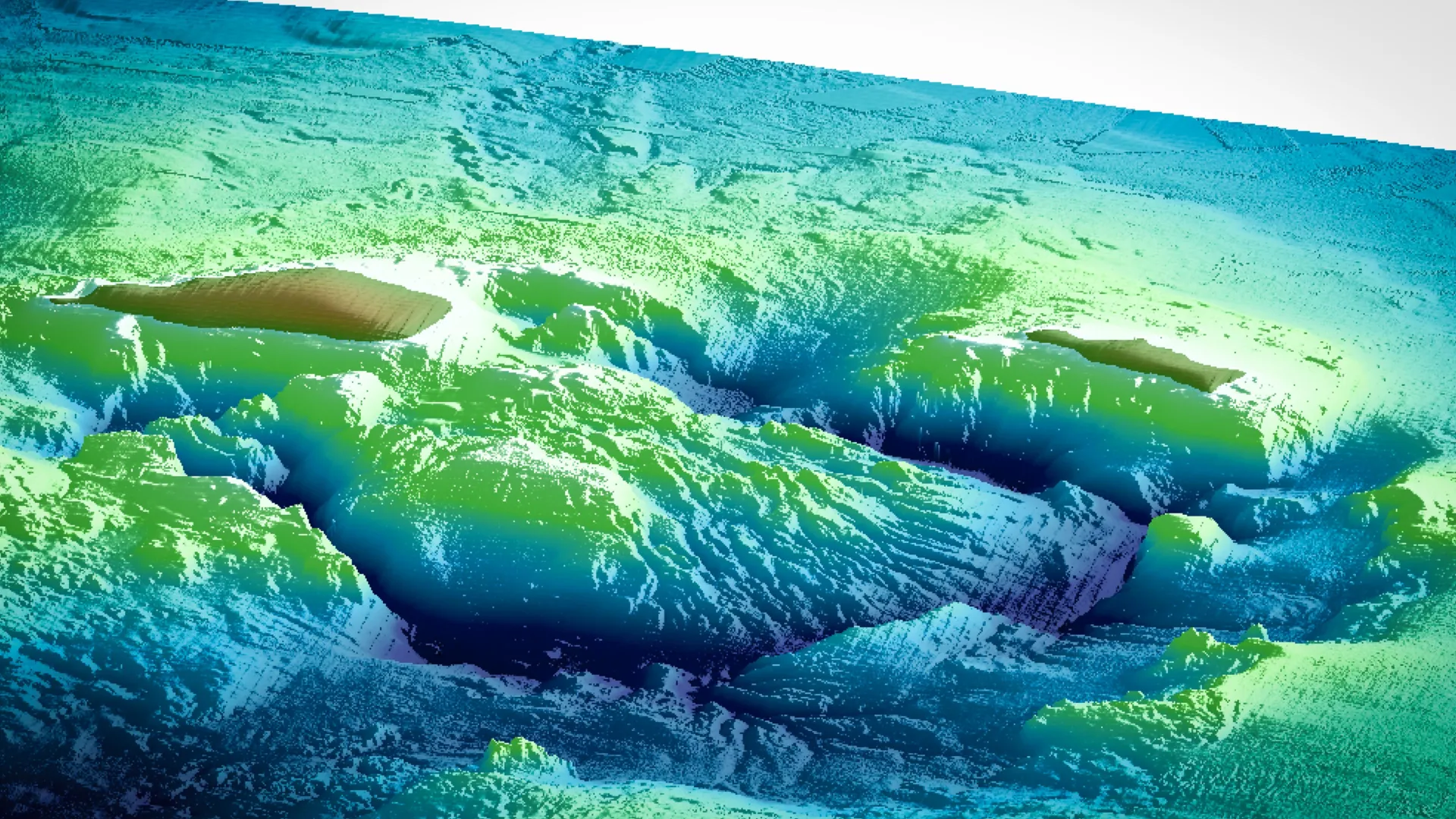
Deep beneath the sapphire-blue waters south of the Japanese archipelago lies a geological sleeping giant: the Kikai caldera. In a breakthrough that offers unprecedented clarity into the subterranean mechanics of Earth’s most formidable volcanoes, an international team of researchers has discovered that a vast, hidden reservoir of magma beneath Kikai is actively filling once more.
Led by geophysicists at Kobe University in collaboration with the Japan Agency for Marine-Earth Science and Technology (JAMSTEC), the study unveils a massive, molten-rich zone directly linked to the site of history’s most catastrophic Holocene eruption. Published in the journal Communications Earth & Environment, the findings reveal that the chamber is not merely a cooling remnant of past devastation; rather, it is being steadily recharged by fresh infusions of magma from deep within the Earth’s mantle.
While the discovery confirms that the underground plumbing system responsible for ancient disasters remains active, scientists emphasize that an imminent cataclysm is not on the horizon. Instead, the research provides a vital piece of a long-standing geological puzzle: how supervolcanoes and giant calderas manage to recover, reload, and prepare for future epochs of activity.
By taking advantage of Kikai’s unique underwater setting, the research team was able to deploy state-of-the-art seismic surveying techniques to map the hidden chamber with extraordinary precision. The implications of this study extend far beyond the coast of Japan, offering a new template for understanding other notorious supervolcano systems around the globe, including Yellowstone in the United States and Lake Toba in Indonesia.
Chronology of a Supervolcano: From Ancient Catastrophe to Modern Recovery
To understand the magnitude of the recent discovery at Kikai, volcanologists look back through the deep archives of Earth’s geological history. The timeline of the caldera is a stark reminder of the planet’s volatile nature.
The Holocene Cataclysm (approx. 7,300 Years Ago)
Long before recorded human history, the Kikai caldera was the site of the largest known volcanic eruption of the Holocene epoch—the current geological period that began roughly 11,700 years ago after the last major ice age. The explosion was unimaginably vast. It ejected an estimated volume of magma and volcanic ash so immense that it could bury the entirety of New York City’s Central Park under a scorching layer of rock and debris 12 kilometers (nearly 7.5 miles) deep.
When an eruption of this scale occurs, it catastrophically empties the shallow magma chamber beneath the volcano. Deprived of its internal support, the overlying crust collapses inward, forming a broad, saucer-shaped depression known as a caldera rather than a traditional cone-shaped mountain. In the wake of the Kikai blast, vast regions of southern Japan and surrounding areas were devastated, leaving behind a largely submerged volcanic structure.
The Post-Collapse Quiet and the Birth of a Lava Dome (approx. 3,900 Years Ago)
For millennia following the cataclysm, the Kikai system entered a prolonged phase of subterranean healing. Roughly 3,900 years ago, a new phase of activity began near the center of the submerged caldera with the formation of a lava dome. Unlike explosive eruptions that shatter rock and propel ash miles into the stratosphere, lava domes form when thick, viscous magma slowly oozes to the surface, piling up sluggishly around a volcanic vent because it is too sticky to flow away easily.
Chemical analyses of the rocks making up this dome, alongside samples from subsequent minor eruptions, revealed a crucial detail: the chemical signature of this post-collapse lava did not match the magma expelled during the colossal eruption 7,300 years ago. This chemical disparity signaled to geologists that Kikai was no longer drawing from the original, depleted batch of magma. A new, distinct source was feeding the system.
The Modern Discovery (Present Day)
Fast forward to the modern era, where advanced marine geophysics has allowed researchers to peer beneath the ocean floor. By utilizing controlled seismic imaging—firing airgun arrays and recording the bouncing sound waves with ocean-bottom seismometers—the Kobe University and JAMSTEC research team successfully mapped the modern-day reservoir. They discovered a massive, partially molten body of rock occupying the exact spatial footprint of the ancient magma chamber.
Crucially, the integration of historical eruption data, chemical sampling of the lava dome, and modern seismic profiles points to a continuous process of replenishment. Fresh magma is actively invading the old reservoir, proving that giant calderas can and do rebuild their explosive potential over evolutionary timescales.
Supporting Data and Methodology: Listening to the Earth Beneath the Sea
Conducting geological surveys of active supervolcanoes is notoriously difficult. Most of the world’s largest caldera systems are obscured by thick layers of overlying rock, dense forests, or rugged terrain. In the case of Kikai, however, its marine environment—which might initially appear to be a major obstacle—turned out to be an unprecedented scientific advantage.
Overcoming Geographic Barriers
"The underwater location allows us to implement systematic, large-scale surveys," notes Kobe University geophysicist and lead researcher Nobukazu Seama. Because the caldera lies beneath the sea, scientists were not hindered by land-based infrastructure, private property, or treacherous mountain topography. They could deploy instruments across the entire structure in a uniform, grid-like fashion.
The Science of Seismic Tomography
To image the interior of the Earth beneath the ocean floor, the research team employed a technique akin to a medical CT scan, but on a planetary scale:
- Controlled Seismic Sources: Researchers utilized specialized research vessels equipped with airgun arrays. These devices release high-pressure bursts of compressed air into the water, generating controlled acoustic pulses that travel down through the ocean and penetrate deep into the Earth’s crust.
- Ocean-Bottom Seismometers (OBS): A network of highly sensitive seismometers was strategically placed directly on the seafloor. These instruments recorded how the seismic waves traveled, refracted, and reflected off different underground rock layers.
- Velocity Variations: Seismic waves travel at different speeds depending on the density, temperature, and state of the material they pass through. Solid, cold rock transmits sound waves very quickly, whereas partially molten rock—magma—slows the waves down significantly and alters their trajectories.
By processing millions of data points gathered by the ocean-bottom seismometers, the team constructed a high-resolution 3D image of the crust beneath Kikai. The data revealed a substantial, low-velocity zone directly beneath the center of the caldera—the unmistakable seismic signature of a vast, melt-rich magma reservoir.
Furthermore, by comparing the dimensions and spatial orientation of this newly imaged reservoir with geological models of the ancient eruption, the team confirmed that the modern magma accumulation is housed within the same structural framework that fueled the disaster 7,300 years ago.
Official Responses and Expert Insights
The study has sent ripples through the global volcanological community, providing empirical backing for theories that have long been debated in academic circles.
Professor Nobukazu Seama, the driving force behind the research, has been forthright about both the significance of the findings and the measured interpretation that the public should take away. Addressing the nature of the magma inside the chamber, Seama explained during the release of the findings:
"This means that the magma that is now present in the magma reservoir under the lava dome is likely newly injected magma."
Elaborating on how this discovery fits into the broader picture of supervolcano mechanics, Seama emphasized the connection between Kikai and other global giants:
"We must understand how such large quantities of magma can accumulate to understand how giant caldera eruptions occur. This magma re-injection model is consistent with the existence of large shallow magma reservoirs beneath other giant calderas like Yellowstone and Toba."
While the data confirms that Kikai is an active system undergoing continuous subterranean nourishment, the researchers are careful to manage public perception. The discovery of a recharging magma chamber is not a sign of an impending apocalypse. Instead, it is a normal phase in the life cycle of a supervolcano.
The research project received substantial institutional backing in Japan, funded jointly by the Ministry of Education, Culture, Sports, Science and Technology (MEXT)—specifically through the Third Earthquake and Volcano Hazards Observation and Research Program—and the Japan Society for the Promotion of Science (JSPS grant 20H00199), in close coordination with JAMSTEC.
Global Implications: Rewriting the Rules for Supervolcano Monitoring
The implications of the Kikai study stretch far beyond the borders of Japan. For decades, volcanologists have grappled with a fundamental question: How do enormous caldera systems transition from periods of quiet dormancy back into active, potentially catastrophic states?
A New Model for Global Supervolcanoes
Prior to this study, the mechanisms governing magma re-accumulation in giant calderas were poorly understood, making long-term forecasting nearly impossible. The confirmation that fresh magma can systematically reinject and rebuild a depleted shallow reservoir provides a unifying model.
This model applies directly to other globally significant supervolcanoes:
- Yellowstone Caldera (United States): Known for colossal eruptions that have shaped the North American continent, Yellowstone possesses a massive, partially molten reservoir beneath its surface. The Kikai findings support the hypothesis that Yellowstone is similarly sustained by episodic injections of deep-seated magma.
- Lake Toba (Indonesia): Responsible for one of the most monumental volcanic events in human evolutionary history roughly 74,000 years ago, Toba also exhibits deep, shallow magma storage systems that share structural and geophysical similarities with Kikai.
The Path Toward Predictive Volcanology
Armed with the successful methodology deployed at Kikai, scientists now have a proven framework for monitoring underwater and remote volcanic systems. By combining marine seismic tomography with geochemical analyses of surface lava domes, researchers can begin to track how fast fresh magma enters these systems, where it accumulates within the crust, and how it alters the surrounding geological stress fields.
The ultimate goal of this line of research is not merely academic curiosity; it is hazard mitigation. By refining these seismic and monitoring methods, volcanologists hope to eventually develop the capability to distinguish between routine underground magmatic shifts and the dangerous precursors to a giant eruption.
As Seama concluded when outlining the future direction of the research group:
"We want to refine the methods that have proved to be so useful in this study to more deeply understand the re-injection processes. Our ultimate goal is to become better able to monitor the crucial indicators of future giant eruptions."
For now, Kikai rests quietly beneath the waves of the East China Sea, its vast internal engine slowly refueling. But thanks to the tireless work of Kobe University and JAMSTEC researchers, humanity has gained a clearer, sharper window into the subterranean heartbeat of Earth’s most powerful volcanoes—ensuring we are better prepared for whatever geological chapters lie ahead.
