

August 17, 2026
By Yoga Journal Archives Desk
Main Facts: The Anatomy and Philosophy of Baddha Konasana
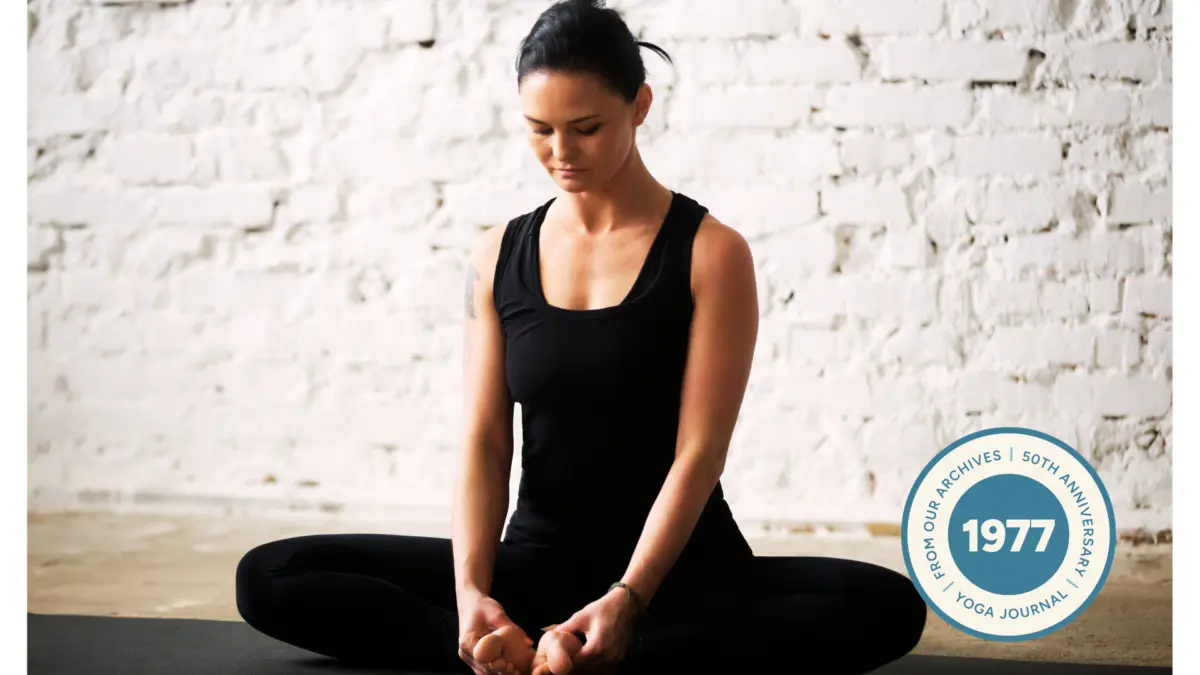
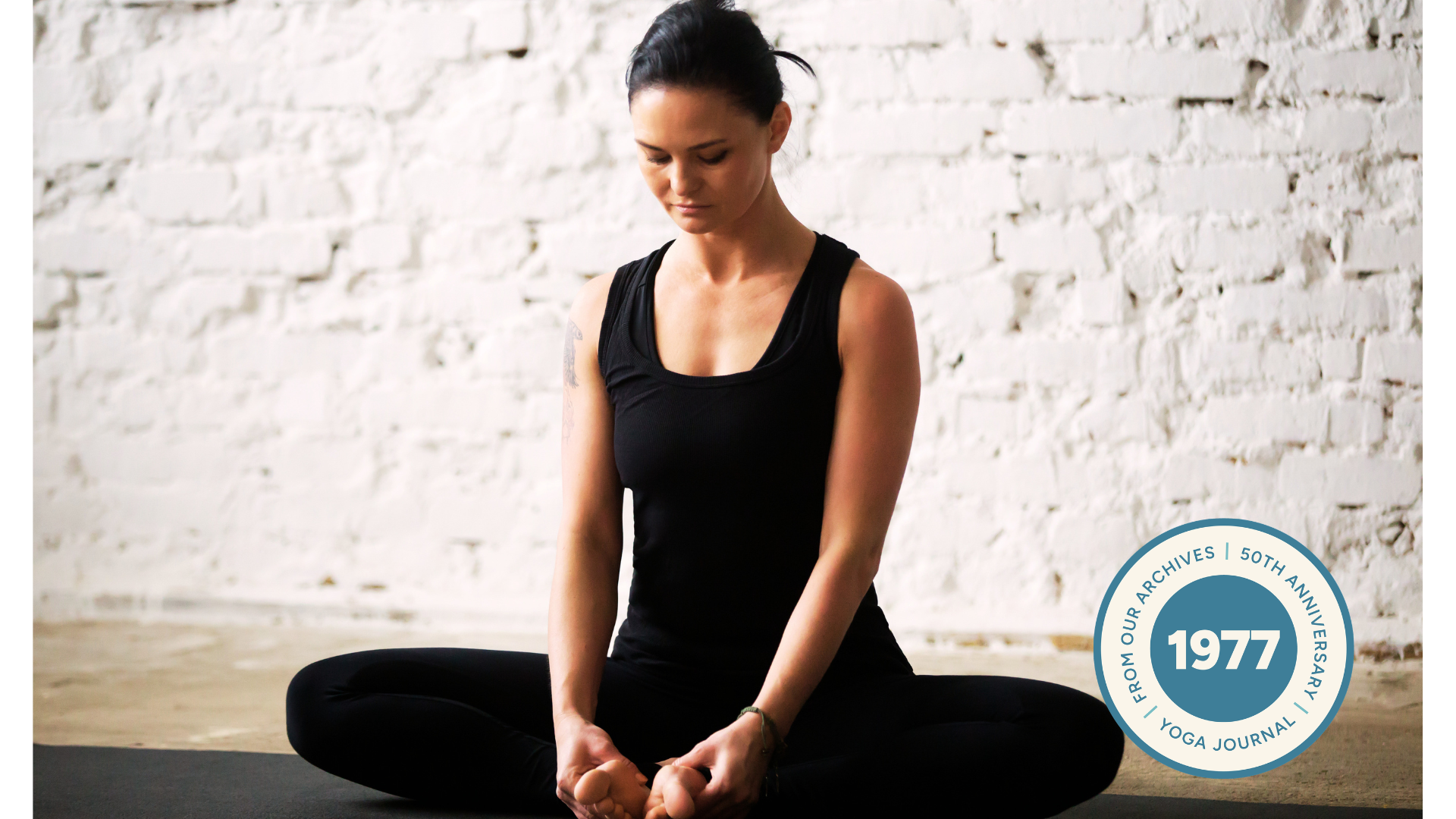
Baddha Konasana—widely known as the Bound Angle Pose, Cobbler’s Pose, or Restrained Angle Pose—stands as a cornerstone of modern and traditional postural yoga. First featured in the January–February 1977 issue of Yoga Journal and recently resurfaced through the publication’s digital archival series, this foundational asana offers a masterclass in physical paradox.
At first glance, Baddha Konasana appears deceptively simple: the practitioner sits upright, draws the soles of the feet together, lets the knees drop open toward the floor, and clasps the feet with the hands. However, beneath this accessible exterior lies a complex architecture of opposing vectors. While it is fundamentally a seated posture, the primary energetic and structural awareness is directed upward, preventing the slump or downward collapse common in resting seats. The hips and knees undergo a profound lateral opening, yet the feet remain firmly anchored and restrained. A strong vertical line is cultivated through the elongation of the spine, which is deliberately balanced against the horizontal expansion created by the widening of the knees.
Beyond its physical geometry, the pose demands a specific psychological and emotional attitude. It stretches the adductors—the powerful muscle groups lining the inner thighs—while simultaneously serving as an embodied practice of receptivity and surrender. In yogic philosophy, surrender is not an act of defeat, but an active alignment with the flow of life, the natural limits of the physical body, the shifting tides of the external world, and the internal guidance of the teacher or intuition.
Chronology: From Ancient Roots to the 1977 Yoga Journal Feature
To understand how Baddha Konasana is understood and practiced today, it is helpful to trace its journey from classical traditions to its documentation in Western media over the latter half of the 20th century.
- Ancient to Medieval Eras: Originating in the ancient traditions of Hatha yoga, variations of bound angle postures were utilized primarily as meditative seats (asanas) that could steady the body for prolonged periods of breathwork (pranayama) and internal concentration. Historical texts noted its ability to direct subtle energy upward from the lower torso.
- Mid-20th Century (The Global Diaspora): As yoga migrated from the Indian subcontinent to the West, master teachers such as B.K.S. Iyengar codified the alignment principles of Baddha Konasana. They emphasized its utility as both a therapeutic tool for opening tight hips and a preparatory gateway for more demanding lotus variations and forward bends.
- January–February 1977: Yoga Journal published a seminal feature on Baddha Konasana, offering Western practitioners a rare blend of anatomical insight and psychological introspection. The article explored why certain populations—particularly men influenced by cultural standards of emotional rigidity—struggled with the posture.
- Present Day (The Digital Archives Initiative): Yoga Journal formally integrated the 1977 text into its digital archives. This initiative allows contemporary yoga students, physical therapists, and movement scientists to reevaluate mid-century observations against modern understandings of biomechanics, pelvic health, and somatic psychology.
Supporting Data: Biomechanics, Pelvic Health, and Cultural Demographics
An examination of Baddha Konasana reveals why it continues to be heavily researched by movement educators, prenatal specialists, and somatic therapists.
Musculoskeletal Impact
- Adductor Flexibility: The posture targets the gracilis, adductor longus, adductor brevis, and adductor magnus, lengthening tissues that are routinely shortened by prolonged sitting in modern office chairs.
- Spinal Alignment: By anchoring the sit bones and lifting the crown of the head, practitioners engage the erector spinae, reducing compressive forces on the lumbar vertebrae.
- Subtle Energy Pathways: Traditional yoga theory posits that aligning the vertical axis clears the path for prana (life force energy) to travel from the lower abdominal centers toward the head. Modern physiology corroborates that proper upright sitting postures optimize diaphragmatic breathing and reduce vagal nerve compression.
Pelvic Rigidity and Cultural Demographics
The 1977 archival article highlighted a striking psychological dimension: the pelvic region houses the body’s center of gravity and acts as the primary anchor for bipedal stability. In many Western cultures, men exhibit higher rates of physical and emotional tension in the hips and pelvis. This phenomenon is often linked to cultural conditioning that equates emotional suppression with strength. Because the pelvis governs vital functions—including elimination and reproduction—releasing tension in this area can trigger subconscious feelings of vulnerability.
Furthermore, clinical and movement data consistently support the inclusion of Baddha Konasana in prenatal care routines. By gently stretching the inner thighs and pelvic floor muscles, the pose aids in physical preparation for childbirth while simultaneously cultivating the mental surrender required during labor.
Official Responses and Expert Perspectives
As the archival piece continues to circulate among modern practitioners, movement specialists, yoga therapists, and educators have weighed in on its enduring relevance.
Dr. Elena Vance, a somatic physical therapist specializing in pelvic floor rehabilitation, notes that the insights published in 1977 were remarkably ahead of their time.
"What our predecessors identified as an ‘attitude of surrender’ in Baddha Konasana is actually what modern neurology calls down-regulation of the sympathetic nervous system," Vance explains. "When we force the hips to open without letting go of muscular guarding, we trigger a stress response. The genius of this pose lies precisely in its demand for passive release rather than aggressive pushing."
Senior yoga educator Marcus Sterling highlights the shift in how male practitioners approach the posture today compared to decades past.
"Back in the late 1970s, yoga was still fighting stereotypes of being overly delicate or counter-cultural, and men often approached it with an athletic, hyper-competitive mindset," Sterling observes. "Today, we see athletes, weightlifters, and male corporate workers actively seeking out Baddha Konasana not just to fix tight groins, but to dismantle the physical armor they carry in their hips from chronic stress."
Prenatal yoga instructor Sarah Jenkins emphasizes the irreplaceable value of the pose for expectant mothers.
"The connection between pelvic physical freedom and emotional surrender during childbirth remains as true today as it was decades ago. When a pregnant person practices Baddha Konasana with props like blocks or blankets under the knees, they learn the art of non-resistance—a skill that translates directly into the delivery room."
Implications: The Future of Classical Yoga in a Stress-Driven World
The resurgence of this 1977 archival text offers profound implications for how society approaches health, fitness, and emotional well-being. As chronic stress and sedentary lifestyles continue to manifest physically as pelvic rigidity, lower back pain, and emotional detachment, ancient poses like Baddha Konasana provide a bridge between physical rehabilitation and emotional release.
- Bridging Somatics and Asana: The blending of anatomical stretch with psychological insight validates yoga as an integrative mind-body discipline rather than mere stretching.
- Redefining Strength: Cultural shifts are gradually dismantling the notion that physical and emotional rigidity equates to strength. Postures that require vulnerability—such as opening the pelvic region—are increasingly recognized as essential components of holistic fitness.
- Preserving Lineage: By digitizing and re-examining historical texts, the yoga community ensures that foundational wisdom is not lost in the commercialized fitness landscape, allowing modern practitioners to draw a direct line from past masters to current therapeutic applications.
Ultimately, Baddha Konasana remains far more than a simple hip opener. It is an ongoing invitation to pause, align, release the armor of daily life, and surrender to the natural flow of breath, body, and being.
