

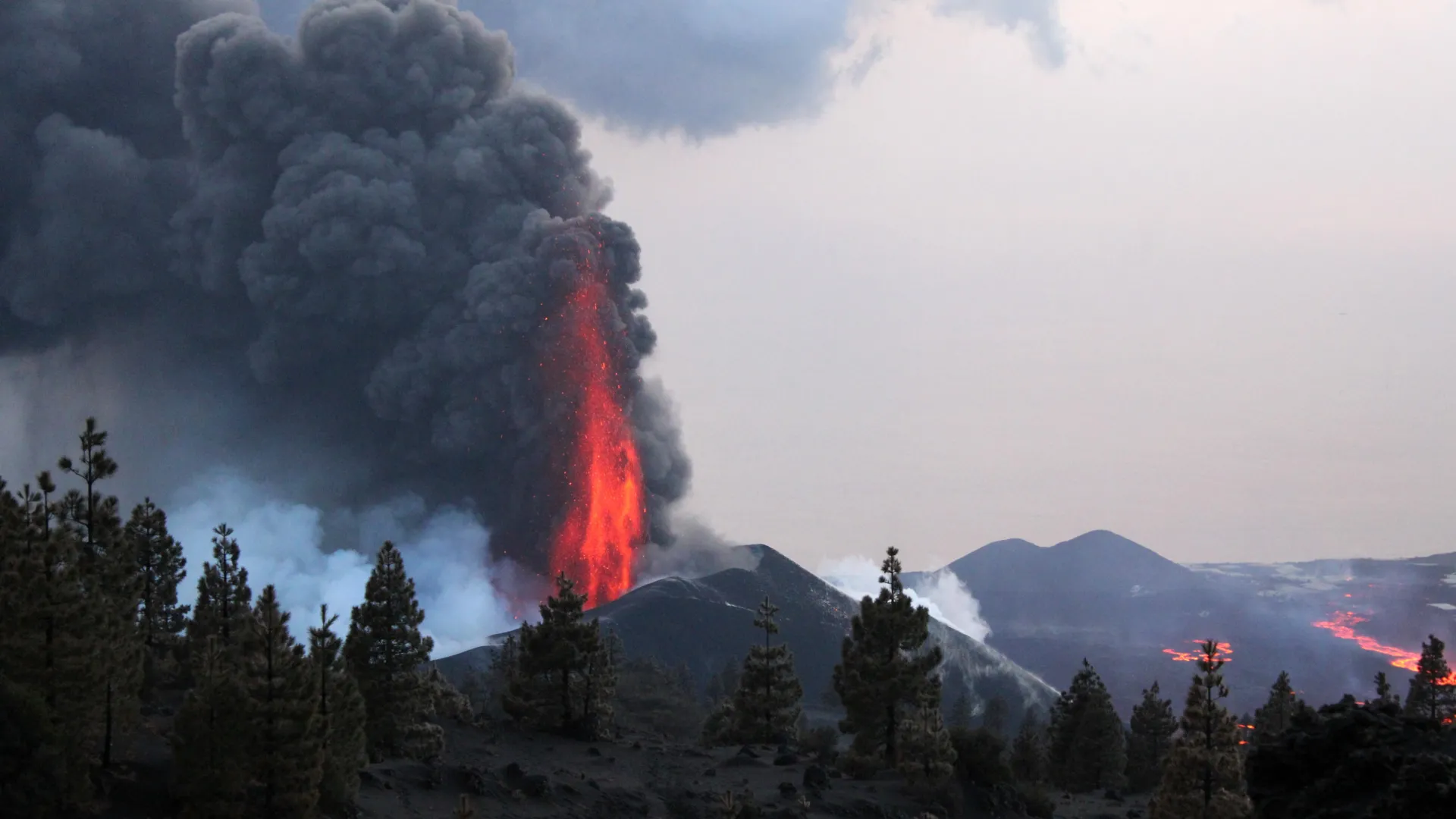
MANCHESTER, UK — For centuries, volcanologists have grappled with a perplexing geological enigma: why do volcanoes possessing nearly identical chemical compositions, gas contents, and pressures produce radically different types of eruptions? While one volcano might unleash towering, incandescent fire fountains that pierce the night sky, another with virtually identical baseline characteristics may instead produce a sluggish, oozing flow of thick lava.
Now, an international team of researchers led by The University of Manchester believes they have found a crucial missing piece of the puzzle. In a study recently published in the prestigious journal Nature Communications, scientists have identified a heat-driven process deep within subterranean magma chambers—known as "superheating"—that fundamentally alters how magma behaves as it surges toward the surface. By fundamentally rewriting our understanding of crystal formation and thermal history, this discovery could revolutionize how scientists assess volcanic hazards and forecast impending eruptions.
Main Facts: The Discovery of Magma Superheating
At the heart of the new study is a phenomenon called "superheating," which occurs when magma is heated beyond the exact temperature threshold where its mineral crystals remain stable. When an injection of intense heat penetrates a magma reservoir, it initiates a radical transformation at the microscopic level.
Historically, volcanic monitoring and hazard assessments have heavily prioritized three primary variables: magma chemistry, volatile gas content, and overarching pressure changes within the Earth’s crust. However, this new research demonstrates that thermal history—specifically, how a magma’s temperature fluctuates prior to and during its ascent—plays an equally decisive role in dictating eruptive style.
The research team focused on two primary mechanisms triggered by superheating:
- Dissolution of Crystal Seeds: Intense heat effectively melts and dissolves tiny, pre-existing crystals within the molten rock. In normal conditions, these microscopic crystals act as "seeds" or nucleation sites, encouraging the rapid growth of new crystals as the magma cools and rises.
- Microscopic Reorganization: Superheating reorganizes the internal structure of the magma, rendering it more uniform and fundamentally hostile to the rapid development of new mineral phases.
These microscopic modifications have macro-scale consequences. By delaying the formation of crystals, superheating keeps the magma drastically more fluid and less viscous as it travels upward. This fluidity dictates not only the speed at which the molten rock ascends through conduits in the Earth’s crust, but also the ease with which trapped volcanic gases can—or cannot—escape. Together, these interrelated factors act as a geological switchboard, determining whether a volcanic vent will produce dramatic lava fountains or a slower, gentler release of lava.
Chronology: From the Tajogaite Eruption to the Laboratory
The breakthrough was made possible by combining field observations from a recent, highly notable volcanic event with cutting-edge, real-time laboratory experimentation.
Phase 1: The 2021 Tajogaite Eruption
The investigation began in the wake of the dramatic 2021 Tajogaite eruption on La Palma, part of Spain’s Canary Islands. During this prolonged and intensely studied eruption, geologists collected fresh magma samples. Crucially, geological evidence suggested that these specific batches of magma had undergone a phase of superheating both before the eruption began and while the molten rock was actively migrating upward through the crust.
Phase 2: Simulating the Subterranean Inferno
To test whether this thermal history actively changed the physical properties of the magma, the international team took the La Palma samples to world-class scientific facilities.
At the Diamond Light Source—the UK’s national synchrotron science facility—the researchers utilized advanced synchrotron X-ray microtomography. This state-of-the-art imaging technique allowed the team to peer in situ inside the magma, watching in real-time as crystals formed under simulated volcanic conditions of extreme heat and pressure.
To complement these high-resolution, real-time scans, the team also conducted ex-situ experiments in Prague, Czech Republic. These secondary trials allowed scientists to observe long-term sample behavior over extended periods, ensuring that the short-term synchrotron data aligned with broader geochemical realities.
Phase 3: The Eight-Hour Crystallization Delay
When the experimental data was compiled, the contrast between superheated and non-superheated magma samples was nothing short of dramatic.
In control samples that had not been subjected to superheating, new crystals began forming rapidly—often within just 20 minutes of cooling conditions. By stark contrast, samples that had undergone strong superheating exhibited an astonishing delay in crystallization, successfully preventing crystal formation for more than eight hours.
To understand what this means for a real volcano, the researchers fed these experimentally measured nucleation delays into advanced numerical models of magma ascent. These computer simulations mapped out how magma moves, thickens, and transforms as it travels upward through kilometers of solid Earth crust.
Supporting Data and Experimental Insights
The numerical models painted a vivid picture of how an eight-hour delay in crystallization completely alters the dynamics of an eruption.
When crystal formation is heavily suppressed over an extended period, the magma retains a low viscosity. Because it remains relatively thin and fluid, it can accelerate rapidly as it navigates narrow conduits toward the surface. This rapid ascent prevents dissolved volcanic gases from peacefully leaking out of the magma column. Instead, the gases remain trapped under immense pressure until they violently expand near the surface, helping to drive dramatic lava fountains and explosive fire displays.
Conversely, when magma is not superheated, crystals begin forming early in the ascent process. As these mineral crystals multiply, they crowd the liquid matrix, causing the magma to thicken and become highly viscous. This sluggish, high-viscosity magma rises much more slowly through the crust. The prolonged ascent gives trapped volcanic gases ample time to slowly filter and escape through fissures in the rock, ultimately resulting in a much quieter, effusive eruption characterized by slow-moving lava flows.
Official Responses and Expert Commentary
The implications of the study have sent ripples through the global volcanology community, highlighting a vital parameter that has long been overlooked in standard hazard evaluations.
Dr. Barbara Bonechi, a Research Associate at The University of Manchester and lead author of the study, emphasized the technological leap that made these findings possible.
"The history of crystal and bubble growth can dramatically control how a magma erupts; in particular, as more crystals grow, they eventually have a dramatic effect on magma viscosity," explained Dr. Bonechi. "Until now, we did not fully understand the dynamics of crystal growth for magmas that received an injection of superheat just before ascent. But using our exciting and newly developed X-ray transparent pressure vessel combined with synchrotron X-ray microtomography, we can actually observe these processes ‘in situ’."
Dr. Margherita Polacci, Senior Lecturer in Volcanology at The University of Manchester and co-author of the study, pointed out how these findings demand a shift in how scientists approach volcanic risk assessment.
"Current volcanic hazard models typically focus on magma chemistry, gas content and pressure changes," Dr. Polacci noted. "This work suggests that pre-eruptive thermal history and crystallization kinetics may also play an important role in controlling magma ascent and eruptive behavior, with implications for volcanic hazard assessment."
Implications for Volcanic Hazard Assessment and Forecasting
Volcanic eruptions pose a persistent threat to millions of people living in active tectonic and hotspot zones around the globe. Accurate forecasting—knowing whether an awakening volcano will produce gentle lava flows that can be easily managed or catastrophic explosions and towering fountains—is a matter of life and death for nearby communities.
Historically, volcanologists monitoring restless volcanoes have relied heavily on seismic data to track magma movement, gas emissions to measure degassing rates, and ground deformation measurements to estimate pressure changes. While these tools remain indispensable, they do not always explain why two sequential eruptions from the same system can behave so differently.
By integrating the kinetics of crystal growth and pre-eruptive thermal history into future monitoring frameworks, scientists hope to bridge this critical knowledge gap. If volcanologists can better determine whether a rising batch of magma has undergone superheating deep within the crust, computer models can far more accurately predict its viscosity, ascent speed, and potential explosivity.
As research groups continue to refine these numerical simulations and test additional magma compositions from around the world, this study marks a monumental step forward. By peering inside the microscopic crystals of ancient and recent eruptions alike, scientists are steadily demystifying the subterranean forces that shape our planet, offering new hope for safer communities in the shadow of active volcanoes.
