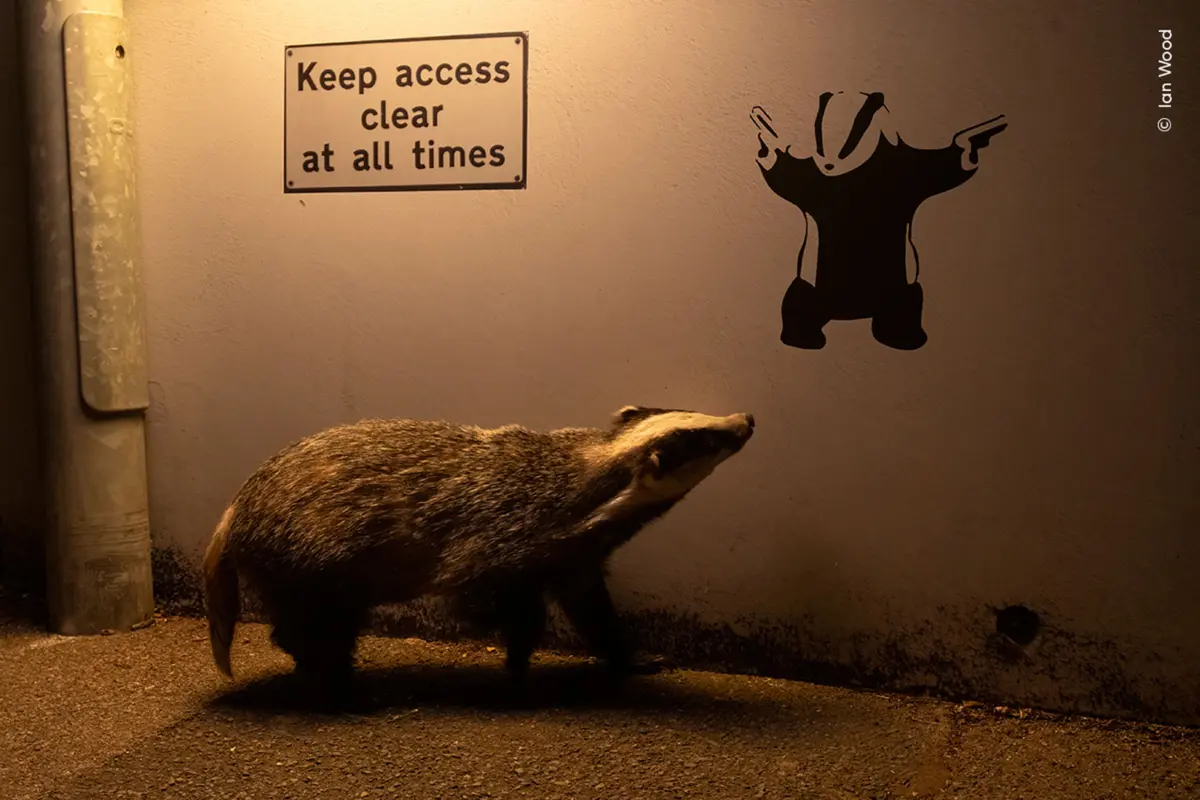
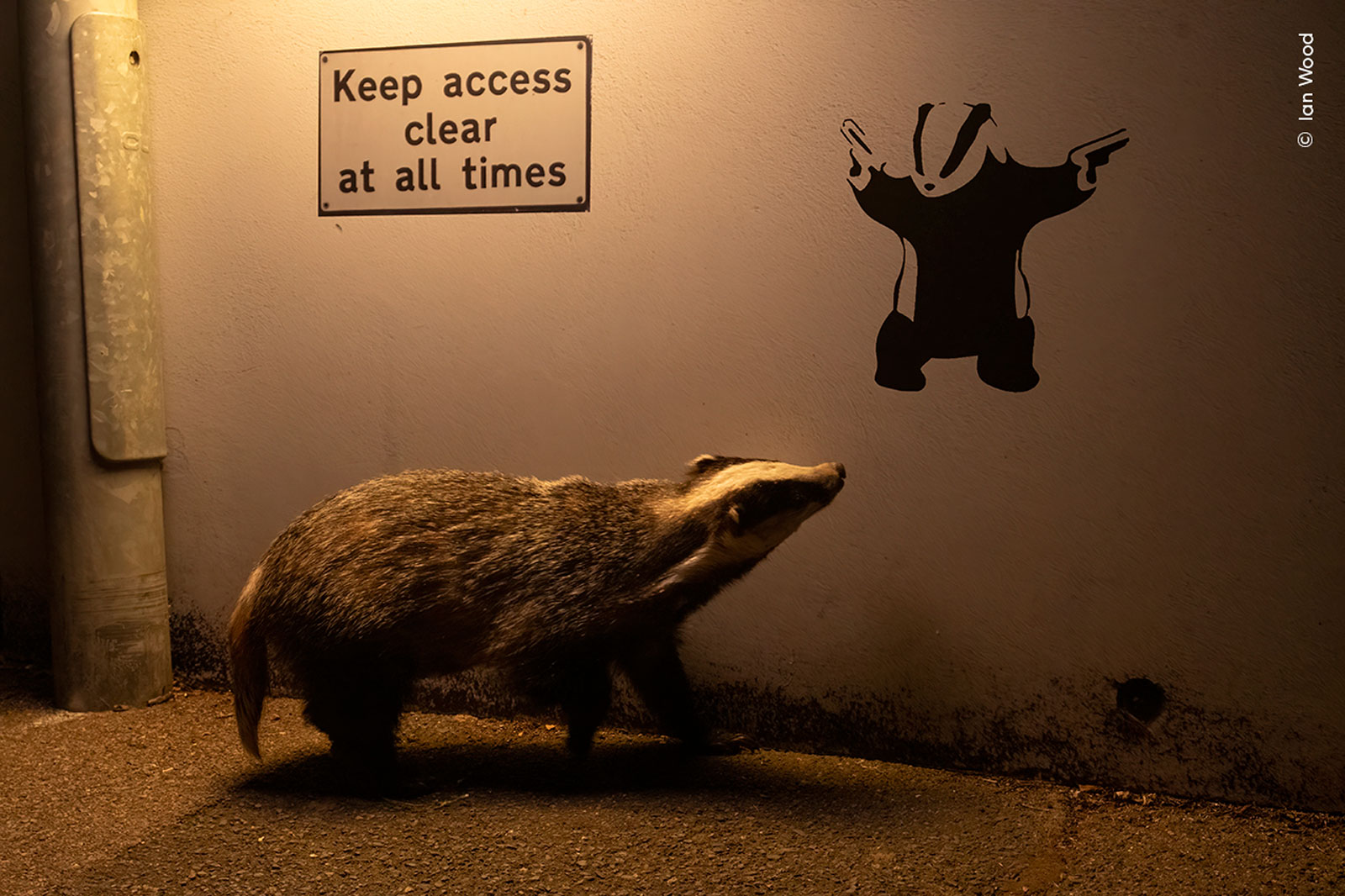
In a triumph for both urban ecology and poignant visual storytelling, British photographer Ian Wood has claimed the prestigious title of the Wildlife Photographer of the Year People’s Choice Award 2024. His winning photograph, appropriately titled "No Access", captures a solitary Eurasian badger pausing on a pavement in St Leonards-on-Sea, England, as it glances upward beneath the amber glow of a streetlamp. What elevates the frame—and what ultimately resonated with tens of thousands of voters—is the striking backdrop of local graffiti that mirrors the animal’s enigmatic presence.
Selected from a competitive shortlist of 25 breathtaking images, Wood’s photograph captured the imagination of nature lovers worldwide. The milestone tenth edition of the People’s Choice Award drew a record-breaking level of public engagement, with over 76,000 votes cast.
While the image celebrates the unexpected resilience of urban wildlife, it also serves as a stark warning. Behind the whimsical charm of a nocturnal mammal navigating human infrastructure lies a troubling narrative regarding habitat loss, rural persecution, and the controversial ongoing badger cull in the United Kingdom.
Main Facts: A Triumph of Urban Wildlife Photography
The Wildlife Photographer of the Year competition, developed and produced by the Natural History Museum in London, stands as one of the most rigorous and revered photography contests globally. For its sixtieth milestone competition, nearly 60,000 entries poured in from amateur and professional photographers across the globe, competing across various categories before a shortlist of 25 images was selected for the public-voted People’s Choice Award.
Ian Wood’s winning entry, "No Access", outperformed fierce international competition, capturing the public’s collective imagination. The top five images—comprising the winner and four "Highly Commended" finalists—will remain on display both online and via interactive voting screens at the Natural History Museum’s flagship London exhibition until June 29, 2025.
The extraordinary visual entries rounding out the top tier of the 2024 People’s Choice Award include:
"Earth and Sky" by Francisco Negroni: A mesmerizing capture from Chile of a double lenticular cloud dramatically illuminated at nightfall by glowing lava streaming from the Villarrica volcano.
"Edge of Night" by Jess Findlay: A ghostly, motion-filled action shot of a barn owl slipping out through the decaying hayloft window of a derelict barn to begin its nightly hunt.
"Whiteout" by Michel d’Oultremont: A masterclass in stealth and minimalism, depicting a solitary stoat sitting upright to survey its snowy domain in Belgium, perfectly camouflaged against a pristine white landscape.
"Spiked" by David Northall: A gripping, raw encounter showcasing a blood-mottled honey badger displaying incredible tenacity as it returns to confront a Cape porcupine after an earlier defensive skirmish.
Chronology: How "No Access" Came to Life
The story behind "No Access" is as much about human-wildlife proximity as it is about photographic patience. The sequence of events leading to the award-winning frame unfolded organically along the streets of the English seaside town of St Leonards-on-Sea.
The Foraging Shift
Months prior to the photograph being taken, local residents in St Leonards-on-Sea had established a routine of leaving food scraps on pavements to attract and feed local urban foxes. However, urban ecosystems are opportunistic; it was not long before badgers from a nearby subterranean sett realized that a reliable food source was available above ground within the residential streets.
The Stakeout
Ian Wood, attuned to the shifting behaviors of local wildlife, began noticing badgers regularly traversing the urban landscape late at night. Spotting a badger routinely moving along a particular pavement bordered by a graffiti-tagged wall, Wood decided to document the behavior.
Operating under the cover of darkness, he set up a discreet, small hide positioned carefully on the edge of the road. On the night of the capture, the scene was devoid of natural light; the entire composition relied entirely on the moody, artificial illumination cast by a single overhead lamppost. Patiently waiting for the precise alignment of subject, light, and urban environment, Wood pressed the shutter just as the badger paused and glanced upward, creating an unforgettable juxtaposition of wild biology and human urban art.
Supporting Data and Context
The scale of the Wildlife Photographer of the Year competition underscores its cultural and ecological impact.
Global Participation: Nearly 60,000 total submissions were evaluated by an independent international panel of experts for the sixtieth anniversary competition.
Public Engagement: A historic turnout of more than 76,000 individuals participated in the public vote for the People’s Choice Award across the 25 shortlisted images.
Exhibition Longevity: The flagship exhibition at the Natural History Museum in London continues to draw massive crowds, keeping the winning works on display until its scheduled close on June 29, 2025.
Future Timelines: Entries for the sixty-first iteration of the competition are currently undergoing rigorous evaluation by an international jury, with the next cohort of winners slated for announcement in October 2025.
Official Responses
The resonance of "No Access" drew praise from conservation and museum leadership, while also prompting a sobering call to action from the photographer himself.
Dr. Douglas Gurr, Director of the Natural History Museum, praised the winning image for bridging the gap between human civilization and the natural world:
"Ian’s flawlessly timed image offers a unique glimpse of nature’s interaction with the human world, underscoring the importance of understanding urban wildlife. His exceptional photograph serves as a powerful reminder that local nature and wildlife, often just outside our homes, can inspire and captivate us."
Reflecting on his victory, Ian Wood expressed gratitude while immediately pivoting the conversation toward the welfare of the species he documents:
"The outpouring of badger love since my photo was nominated for the People’s Choice Award has been beautifully overwhelming. Finding out that it has won is truly humbling. However, there is a darker side to this image."
Wood detailed the contrasting realities of wildlife preservation between rural and urban spaces:
"I live in rural Dorset where I’m on a re-wilding mission to enhance habitats for a huge array of wildlife. The badger cull—which is still ongoing—has decimated their numbers, and I fear that unless the cull is stopped, we’ll only see badgers in urban settings in several parts of England. My hope is for this image to raise awareness of the damaging effect of the badger cull and help push for change."
Implications: Urban Adaptation Versus Rural Persecution
While the public adoration of "No Access" highlights society’s growing affection for urban wildlife, conservationists point out that the presence of badgers on city streets is indicative of a deeper, systemic ecological crisis in the British countryside.
The Urban Refugee Phenomenon
For decades, Eurasian badgers (Meles meles) were viewed strictly as denizens of ancient woodlands, pasturelands, and rural hedgerows. However, increasing pressures from agricultural expansion, habitat fragmentation, and aggressive population control measures have forced animals to seek refuge on the fringes of human settlements. Towns and cities like St Leonards-on-Sea offer an abundance of artificial food sources—ranging from deliberately left scraps to unsecured residential waste—acting as a double-edged sword that draws wild animals closer to vehicular hazards, domestic pets, and urban conflict.
The Shadow of the Badger Cull
At the heart of Ian Wood’s message lies the contentious ongoing badger cull in England, authorized primarily as a measure to curb bovine tuberculosis (bTB) in cattle. Conservation charities, scientists, and animal welfare organizations have long debated the scientific validity and humane implications of culling badgers on such a massive scale. Critics argue that widespread culling disrupts social structures, forces surviving badgers to disperse into new territories, and fails to address the root causes of disease transmission within cattle herds.
Wood’s award-winning photograph transforms from a charming urban snapshot into a poignant political statement. If rural policies continue to decimate badger clans across the English countryside, urban environments may transition from being temporary foraging grounds to becoming the only safe havens left for a beleaguered native species.
Photography as an Advocacy Tool
The Wildlife Photographer of the Year competition has long positioned itself as more than an aesthetic showcase; it is a mechanism for generating planetary advocacy. By thrusting a soot-stained, lamplit badger into the global spotlight, "No Access" challenges viewers to look past the concrete and graffiti and reckon with how human policy actively dictates where—and if—wild animals are allowed to exist.
As the exhibition continues its run at the Natural History Museum through June 2025, millions of visitors will gaze upon the badger’s upward glance. Whether that gaze inspires systemic legislative reform for rural wildlife management remains to be seen, but the image has firmly ensured that Britain’s badgers can no longer be easily ignored or swept out of sight.