After a demanding, high-stakes day filled with deadlines, notifications, and continuous cognitive strain, transitioning into a state of rest can feel surprisingly difficult. For many modern professionals, the daily rhythm oscillates between two exhausting extremes: frantically over-delivering and racing through tasks, or feeling completely zapped and depleted with zero energy left for personal life.
This modern struggle to find a happy, energetic medium between action and rest is a universal human challenge. Yet, physiological and psychological research consistently demonstrates that sustainable wellness relies on equilibrium. In traditional yoga philosophy, this balance is expressed through the twin concepts of sthira (effort or steadiness) and sukha (ease or sweetness). True vitality requires both; knowing when to pull back and restore energy is just as critical as knowing when to push forward.
However, embracing this philosophy is notoriously easier said than done. When stress accumulates, the sympathetic nervous system—responsible for the "fight-or-flight" response—remains chronically activated. To counter this, practitioners turn to specialized movement practices designed not to build muscle fatigue, but to systematically transition the body out of overdrive.
Main Facts: The Science of Restorative Movement
The primary mechanism behind restorative yoga is its direct impact on the autonomic nervous system. Unlike dynamic, sweat-inducing fitness classes designed to elevate heart rates and build endurance, restorative and gentle yoga practices focus on slow, deliberate transitions and prolonged posture holds.
Nervous System Regulation: Holding postures for several minutes signals safety to the brain, shifting the nervous system from sympathetic dominance (stress, high cortisol, tension) to parasympathetic activity (rest, digestion, repair).
The Sthira-Sukha Dynamic: Even a gentle sequence requires a baseline of muscular engagement (sthira), but the ultimate goal is to let that effort melt seamlessly into profound relaxation (sukha).
Accessibility: Unlike rigorous athletic regimens that demand specialized equipment and high-impact exertion, restorative sequences require minimal physical entry barriers. They can be performed using basic household props—such as yoga blocks, bolsters, and blankets—or simply on a yoga mat or a comfortable mattress.
Chronology: Bridging the Gap Between a Busy Day and a Calming Evening
Transforming a chaotic afternoon into a peaceful evening does not require a grueling two-hour gym session. A carefully curated, 15-minute sequence can successfully bridge the gap between high activity and deep relaxation.
This step-by-step movement chronology is designed to release physical armor, alleviate tension stored in the neck, shoulders, and hips, and gently guide the body toward stillness.
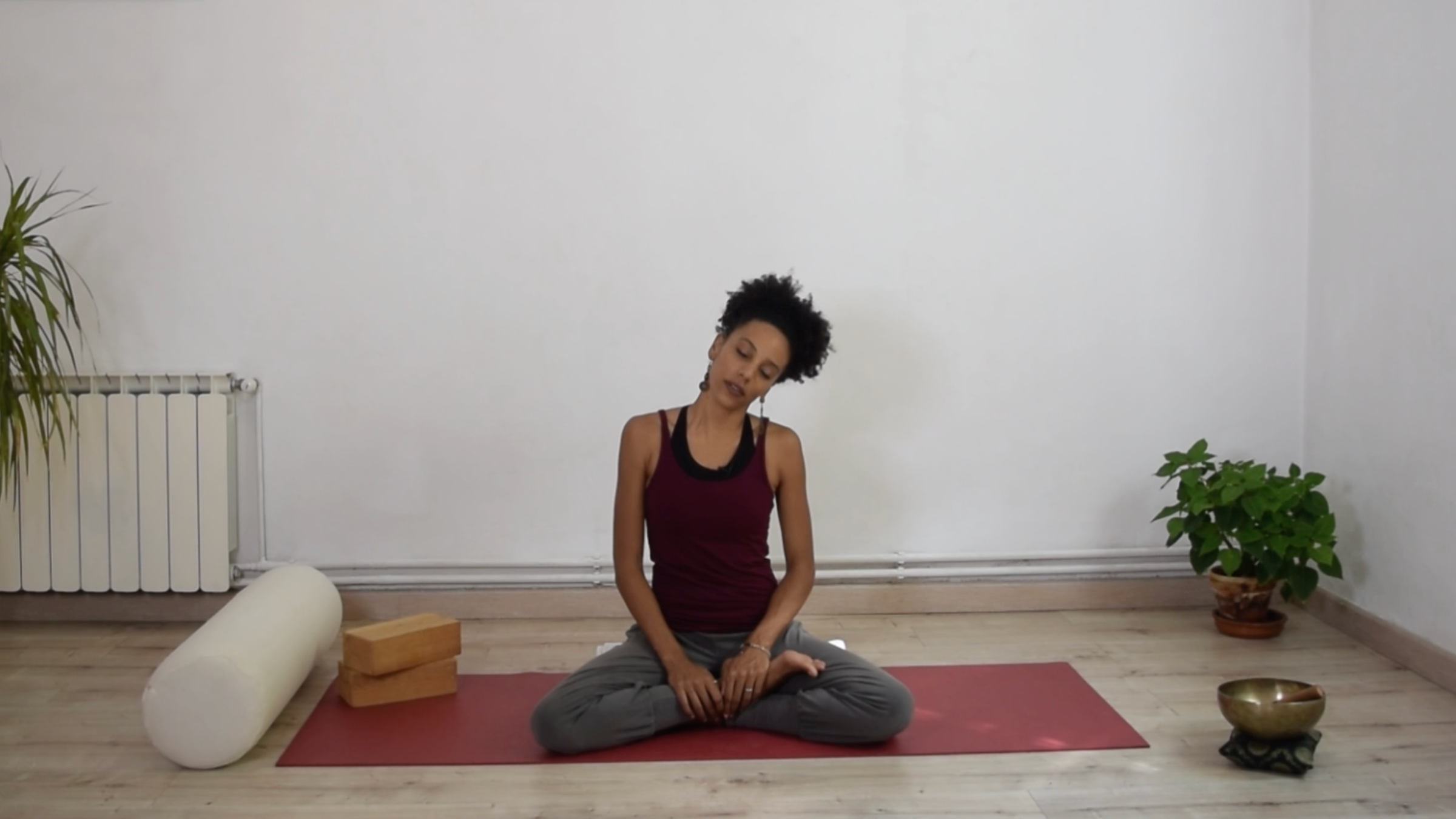
Begin in Easy Pose (Sukhasana) or any other comfortable, grounded seated position. Inhale deeply, lengthening your spine and lifting your chin toward the ceiling to open the front of the throat. Exhale slowly, lowering your chin toward your chest to stretch the back of the neck. Repeat this gentle nodding motion a few times. Next, tilt your head toward the right, drawing your right ear gently toward your shoulder. To deepen the sensation, extend your left arm straight out to the side. Breathe smoothly into the left side of the neck. Return your head to neutral, lower your arm, and repeat on the opposite side.
2. Wrist Stretches
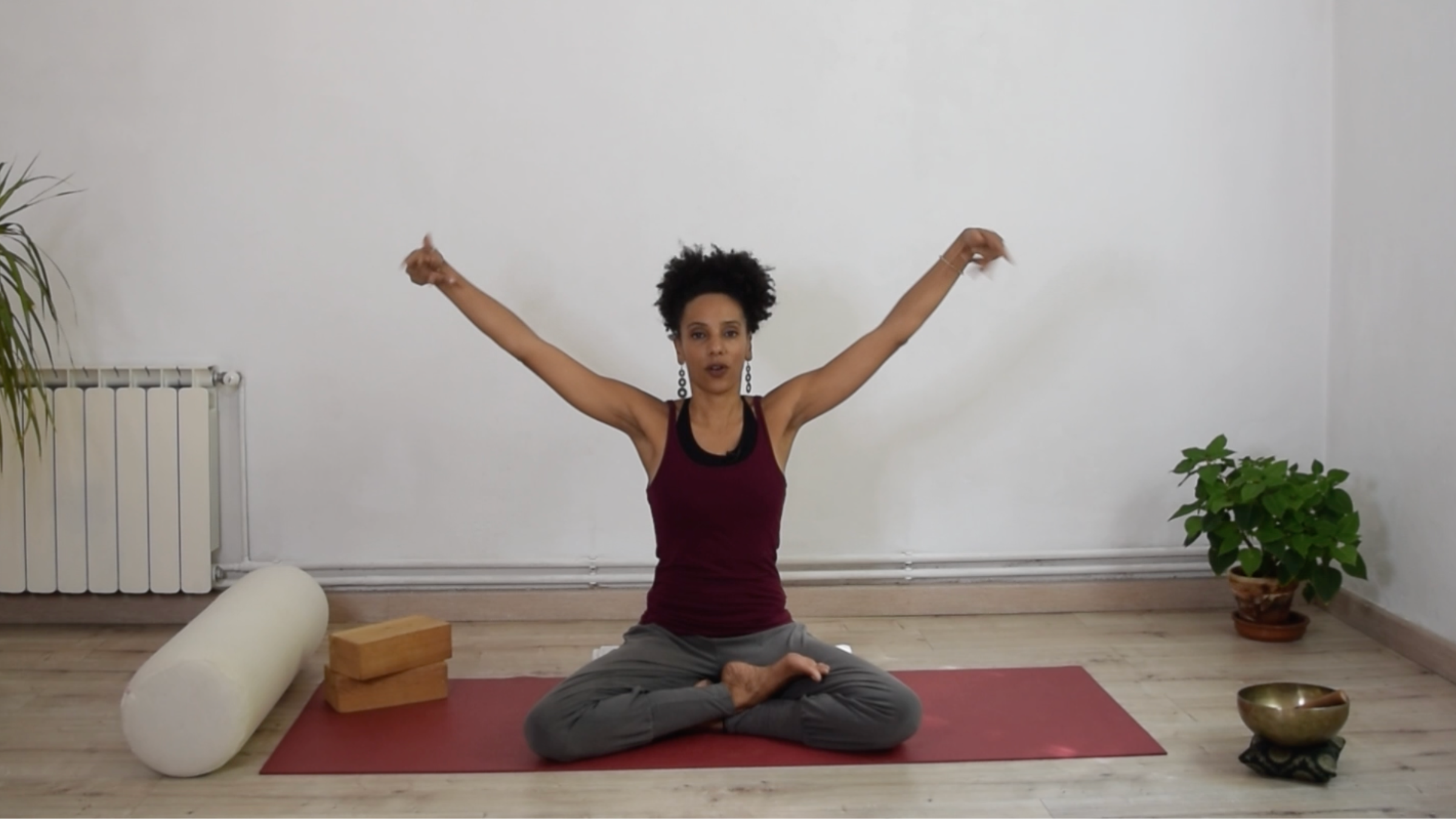
Modern digital lifestyles place immense strain on the hands and wrists. Inhale and sweep your arms out to the sides and overhead. Form soft fists with your hands and begin circling your wrists in one direction. Continue these slow circles as you gradually lower your arms down to your sides. Reverse the motion: keep circling your wrists as you sweep your hands back overhead in the opposite direction, then lower your arms once more.
3. Seated Side Stretch with Shoulder Stretch
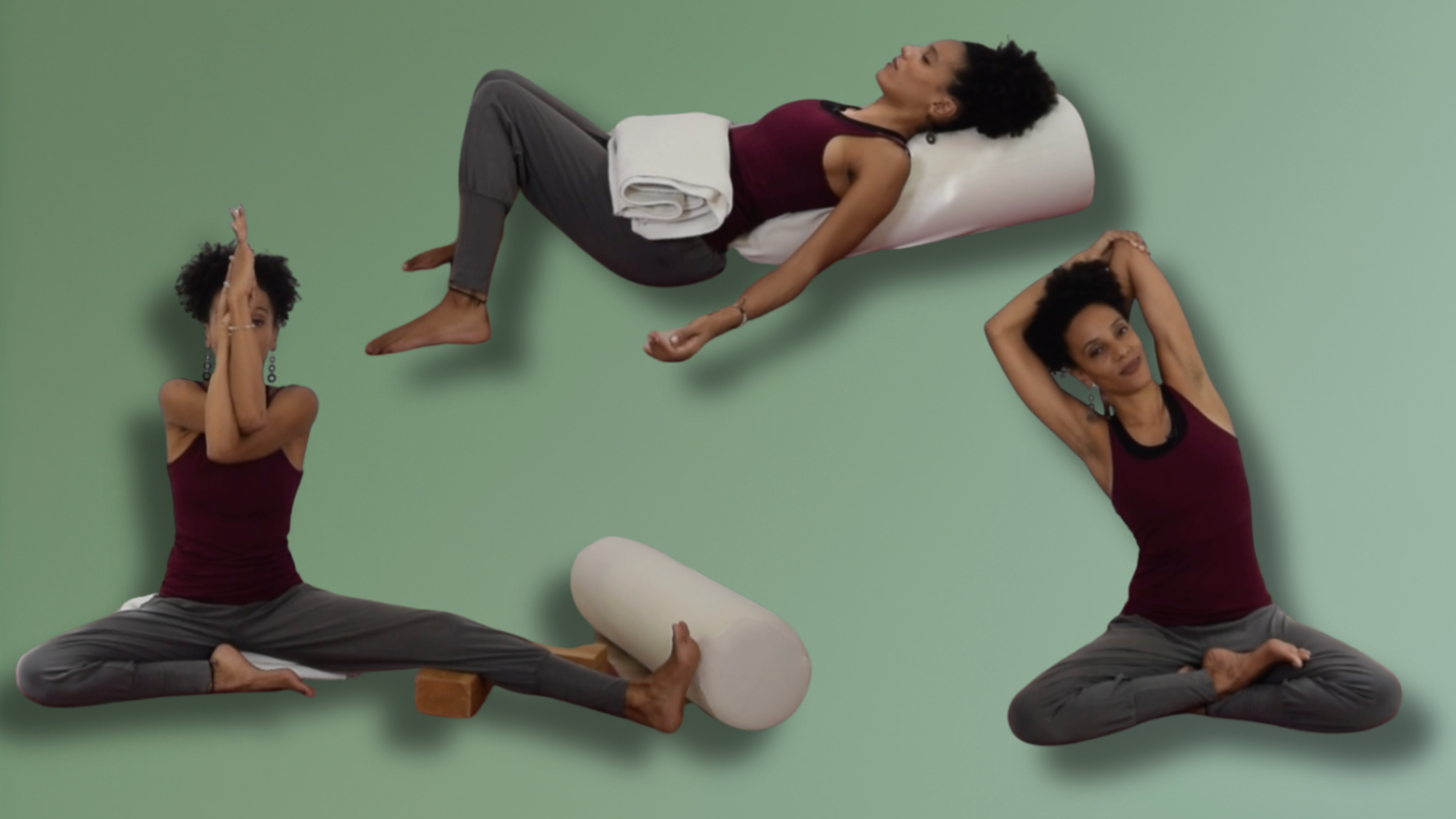
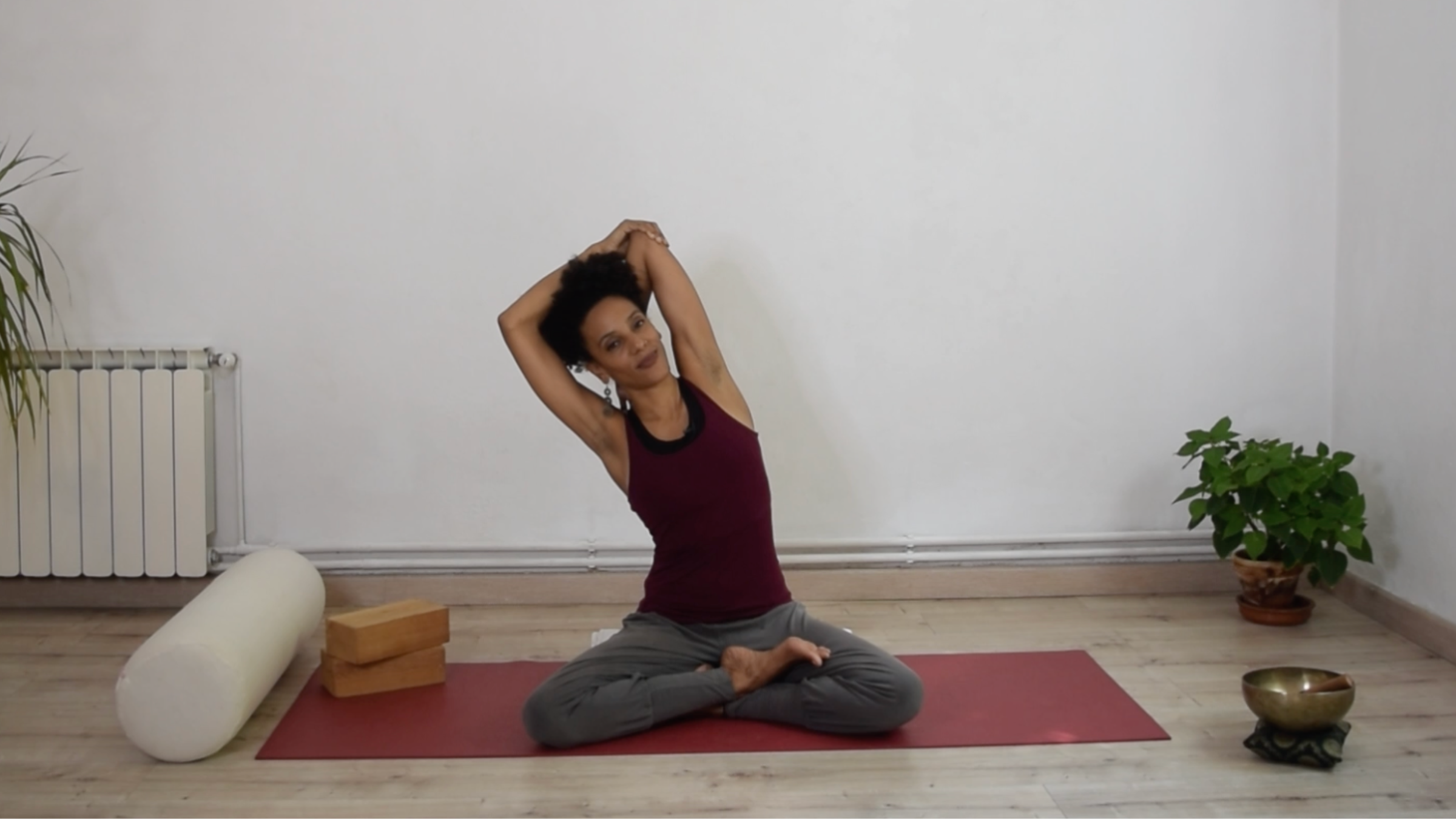
Remain seated with a tall spine. Reach your left arm overhead, bend your elbow, and rest your palm against the back of your head or gently between your shoulder blades, pointing your elbow toward the ceiling. Reach your right arm up and place your right hand on your left elbow or forearm. Slowly lean toward the right, feeling a rich, lengthening stretch along the entire left side of your torso. Take a full breath here, return to center, and repeat on the opposite side.
4. Chest Stretch
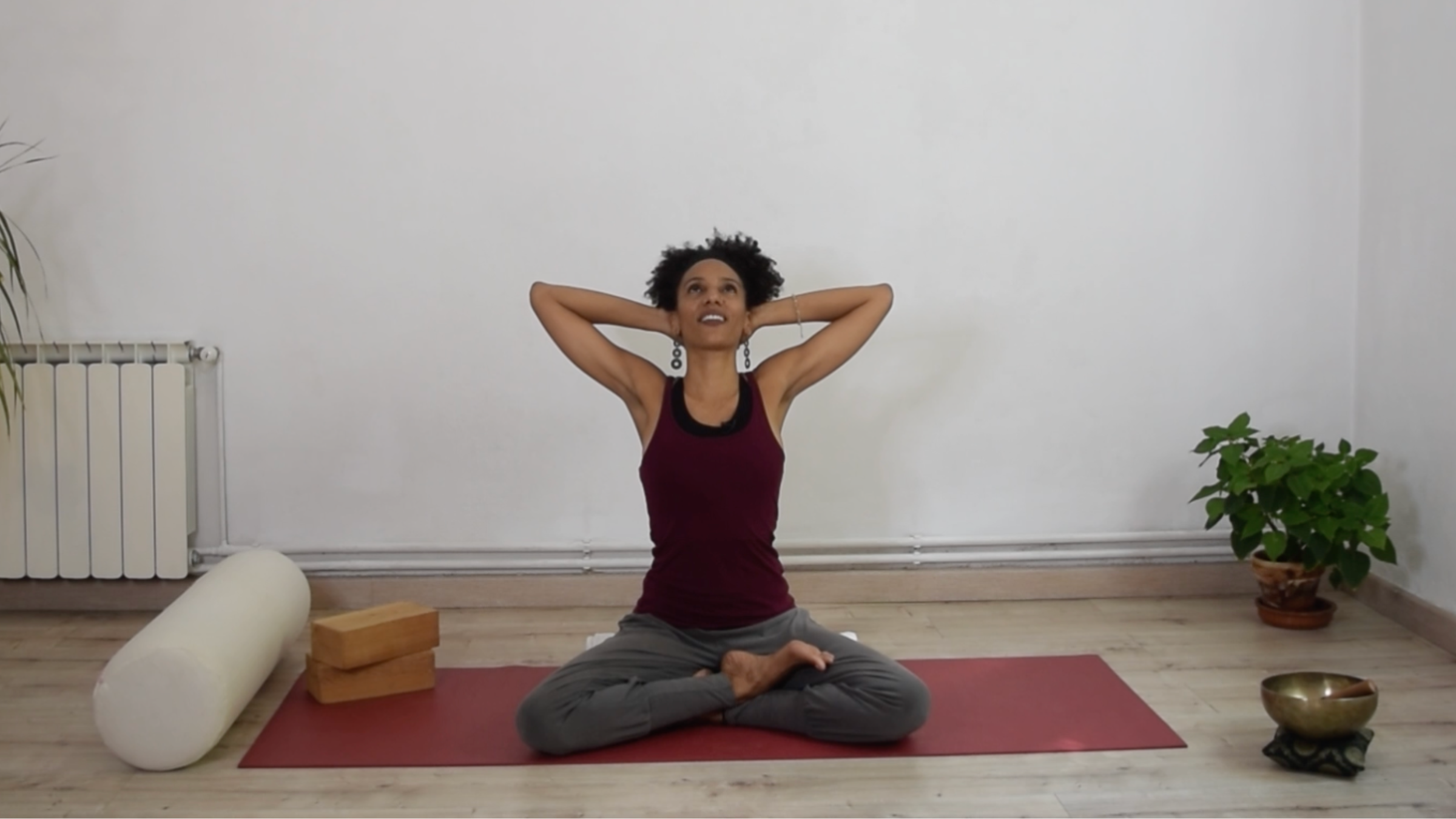
Interlace your fingers behind your head, allowing your elbows to open wide to the sides. Inhale as you gently press the back of your head into your hands, subtly arch your upper back, and draw your elbows back to open the chest cavity. Hold for a few natural breaths, then release your hands down.
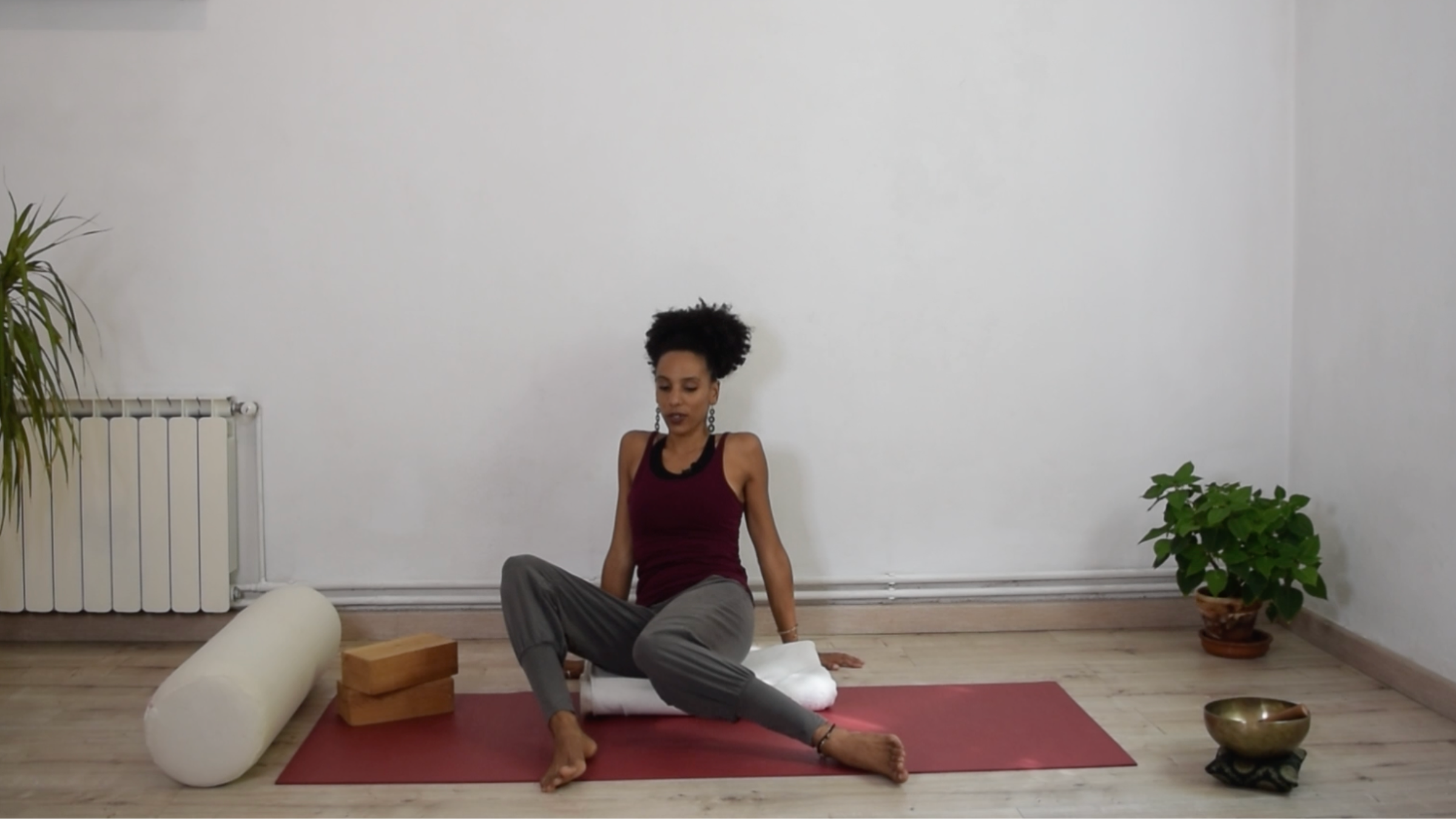
Plant your feet flat on the mat in front of you, placing them at least hip-distance apart with your knees bent. Lean back slightly onto your hands if needed. Lower both knees simultaneously to the right side, pause, and then sweep them across to the left side. Repeat this gentle windshield-wiper motion several times to lubricate the hip joints and relieve lower back stiffness.
6. Half Butterfly Pose
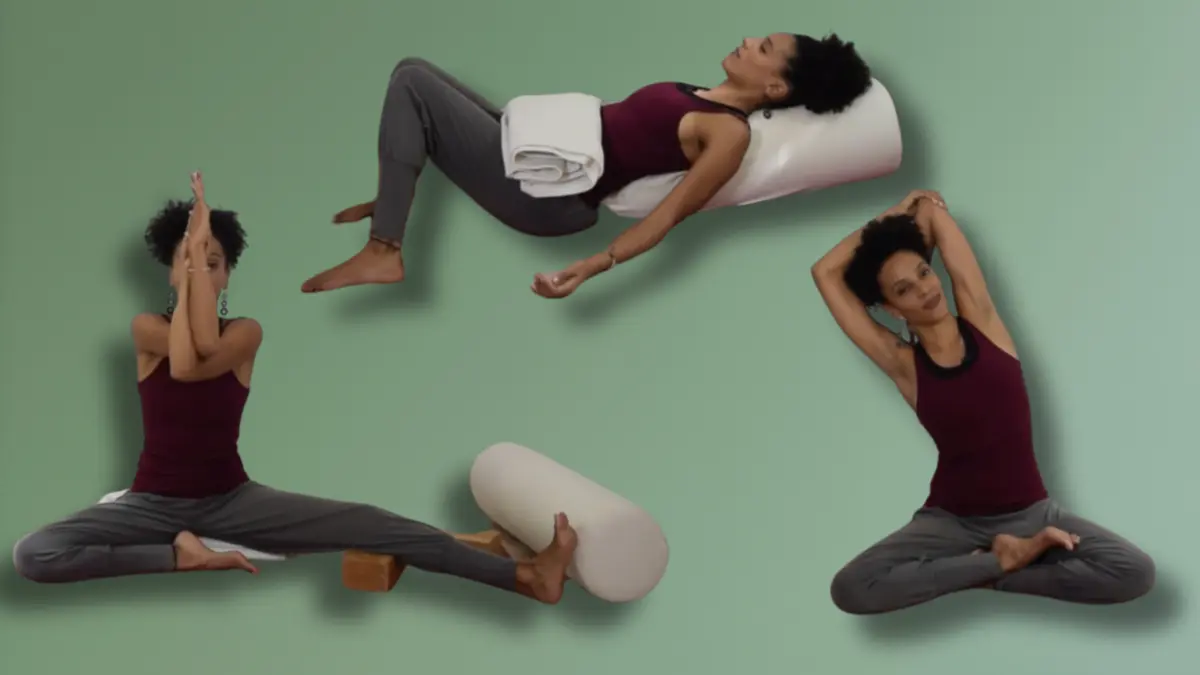
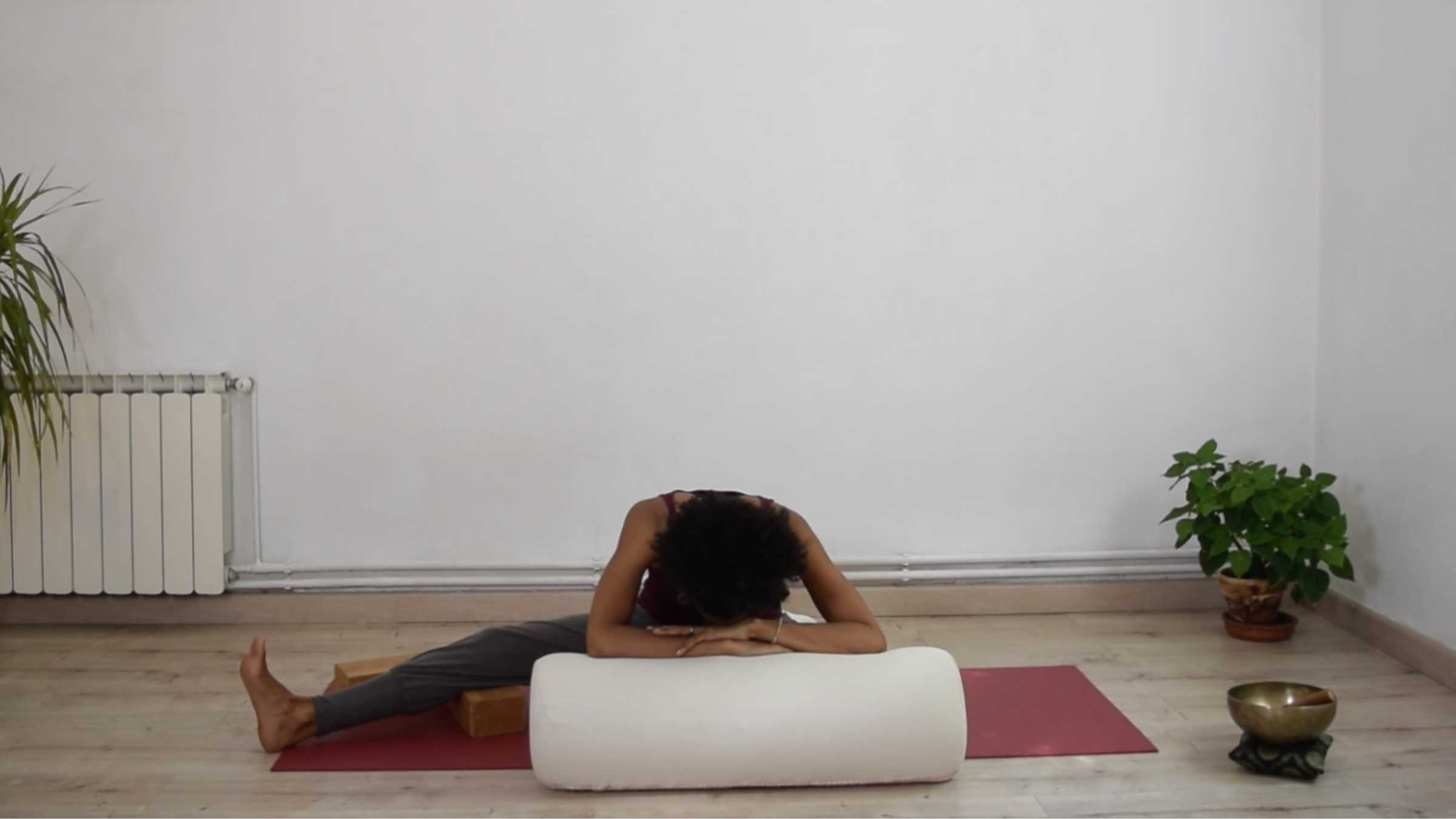
Extend your right leg slightly out to the right side with your toes pointing toward the ceiling. Draw your left foot inward toward your pelvis, allowing your left knee to open outward. Walk your hands forward, hinging from the hips, and reach your chest toward the floor. If flexibility is limited—or simply for added comfort—place a bolster or a stack of pillows in front of you, resting your hands or forearms on the prop. Allow your head and neck to hang heavy. Take several deep breaths here before slowly rolling your spine back up to a seated position.
7. Eagle Arms
While maintaining your legs in the Half Butterfly position, extend your arms straight out in front of you. Cross your left arm over your right arm at the elbows. Bend both elbows and draw the backs of your forearms together into Eagle Arms (Garudasana). If this bind feels too intense, simply wrap your arms around your shoulders in a comforting self-hug, left arm over right. Breathe deeply into the back body, feeling your shoulder blades widen, then release. (Note: Repeat both Half Butterfly Pose and Eagle Arms on the opposite side before moving to the final step.)
8. Supported Rest Pose
Conclude the sequence by lying flat on your back along a lengthwise bolster or a supportive stack of pillows. Plant your feet firmly on the mat, widen your stance to match the outer edges of the mat, and let your knees lean inward against one another so they support each other effortlessly. Relax your arms at your sides with your palms turned upward in a gesture of openness. Find any adjustments necessary to ensure absolute physical comfort, close your eyes, and take several deep, unhurried breaths. Remain in complete stillness for as long as your schedule permits.
Supporting Data: Why Evening Rest Matters
In an era defined by professional burnout and sleep deficits, incorporating intentional somatic resets yields measurable physiological benefits:
Cortisol Reduction: Studies in behavioral medicine show that somatic movement and restorative yoga significantly decrease salivary cortisol levels—the body’s primary stress hormone—within just 15 to 20 minutes of practice.
Vagal Tone Stimulation: Practices that emphasize slow breathing and supported spinal positions stimulate the vagus nerve, which moderates heart rate variability and enhances the body’s resilience to daily stressors.
Improved Sleep Architecture: Data from clinical sleep studies indicate that individuals who engage in light evening stretching report falling asleep faster and experiencing fewer nocturnal micro-awakenings compared to those who transition directly from screen-heavy work environments to bed.
Official Perspectives and Expert Responses
Health and wellness professionals universally emphasize that mental well-being cannot be achieved solely through cognitive effort; the physical body must be included in the relaxation equation.
"When we experience chronic mental stress, our muscles unconsciously brace for impact, locking tension into our neck, shoulders, and hips," notes clinical physical therapist Dr. Elena Vance. "A restorative practice doesn’t just stretch tissue; it sends an unmistakable neurological signal to the brain that the workday is officially over, allowing physiological repair to begin."
Holistic health educators echo this sentiment, pointing out that modern culture heavily rewards sthira (action, output, and productivity) while neglecting sukha (rest, integration, and ease).
"We treat rest as a luxury or an afterthought," says mindfulness instructor Marcus Thorne. "In reality, rest is the foundation that makes sustainable productivity possible. If you don’t schedule your downtime, your body will eventually schedule it for you through illness or burnout."
Implications for Daily Life
The implications of adopting a short, restorative evening ritual extend far beyond physical flexibility. By deliberately carving out 15 minutes to disconnect from external demands and reconnect with the breath, individuals can fundamentally shift the tone of their evenings.
Instead of carrying the accumulated stress of the workday into family dinners, social interactions, or restless nights of sleep, practitioners create a vital psychological buffer. This intentional pause fosters greater emotional regulation, sharper focus the following morning, and a renewed appreciation for the essential rhythm of human energy: knowing precisely when to strive, and knowing when to let go.