

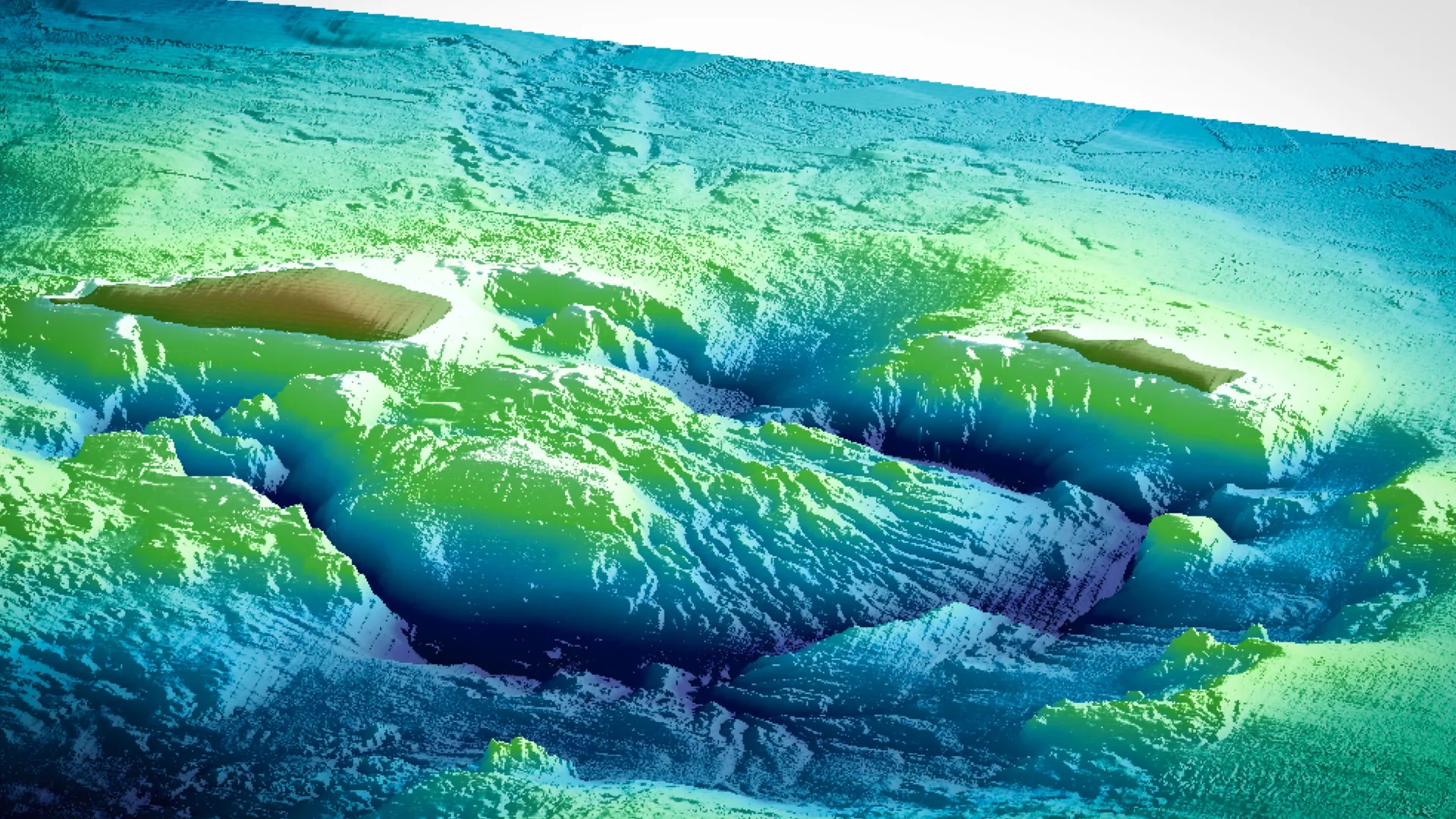
TOKYO — Deep beneath the rolling, azure waves south of Japan lies a subterranean monster slowly flexing its geological muscles. In a breakthrough that offers unprecedented insight into the planet’s most catastrophic volcanic systems, scientists have discovered that a vast reservoir of magma beneath the submerged Kikai caldera is actively refilling.
The finding, spearheaded by an intrepid team of researchers at Kobe University in collaboration with the Japan Agency for Marine-Earth Science and Technology (JAMSTEC), sheds light on a fundamental mystery of Earth sciences: how do Earth’s largest supervolcanoes heal, recover, and accumulate colossal amounts of magma following cataclysmic, world-altering eruptions?
Published in the journal Communications Earth & Environment, the study not only demystifies the mechanics of the Kikai caldera but also provides a vital comparative proxy for other legendary supervolcanoes across the globe, including Yellowstone in the United States and Lake Toba in Indonesia. While researchers emphasize that this subterranean recharging does not signal an imminent eruption, the discovery marks a critical step forward in understanding the hidden, long-term cycles of giant volcanic systems.
Main Facts: Unlocking the Anatomy of a Supervolcano
To comprehend the significance of the Kikai discovery, one must first grasp the sheer, terrifying scale of a caldera. Unlike traditional, cone-shaped mountains like Mount Fuji, calderas are formed during hyper-explosive eruptions that empty magma chambers so rapidly and completely that the overlying ground collapses inward, leaving behind a massive, sunken depression.
The scale of these events defies easy visualization. The volume of magma ejected in a single super-eruption can easily reach numbers so staggering that they alter global climates, plunging the Earth into volcanic winters. To put it into perspective, the magma involved in Kikai’s ancient past could blanket an area as dense and expansive as New York’s Central Park to a depth of 12 kilometers (about 7.5 miles).
Kikai itself is a predominantly submerged volcanic caldera situated south of the Japanese archipelago. Approximately 7,300 years ago, it was the site of the Akahoya eruption—the largest known volcanic event of the Holocene epoch, the current geological period that began roughly 11,700 years ago.
For decades, volcanologists have known that giant caldera systems are capable of erupting more than once over evolutionary timescales. However, the exact physiological processes that allow these colossal systems to accumulate and store the mind-boggling quantities of magma required for a repeat performance have remained shrouded in mystery. Without knowing how these reservoirs are fed, forecasting their future behavior has been akin to guessing the winner of a lottery.
The new study confirms that the massive magma-rich zone detected beneath Kikai is directly tied to the ancient eruption. By mapping the chamber’s spatial boundaries, researchers confirmed it occupies the exact same underground plumbing system that fueled the Holocene catastrophe. However, this is not merely a stagnant pool of primordial sludge left over from antiquity; chemical analyses and seismic imaging prove that the chamber is actively being replenished by fresh, newly injected molten material from deep within the Earth’s mantle.
Chronology of a Catastrophe and Rebirth: A Timeline of Kikai
To truly understand how Kikai operates today, scientists must look backward across millennia, tracing a timeline from total devastation to slow, subterranean recovery.
11,700 Years Ago: Dawn of the Holocene
The current geological epoch begins, setting the stage for one of the most violent geological chapters in human-adjacent history.
~7,300 Years Ago: The Akahoya Mega-Eruption
Kikai erupts in a cataclysmic display of geological fury. It ejects an incomprehensible volume of pyroclastic material, devastates vast regions of surrounding land, and triggers a localized collapse of the Earth’s crust, forming the vast underwater caldera we see today. The event leaves the regional magma chamber temporarily depleted and exhausted.
~3,900 Years Ago to Present: The Rise of the Lava Dome
As centuries pass, the volcano begins its slow resurrection. A lava dome starts forming near the center of the Kikai caldera. Lava domes develop when highly viscous, thick magma sluggishly rises toward the surface, piling up around a volcanic vent rather than flowing away smoothly. Chemical analyses of this dome material reveal a stark difference from the magma expelled during the ancient eruption 7,300 years ago, signaling that a completely new source of magma has begun feeding the system.
Modern Era: Seismic Breakthrough
Equipped with advanced ocean-bottom technology, researchers from Kobe University and JAMSTEC launch a coordinated campaign to image the crust beneath the sea, successfully revealing the modern, active magma-recharge cycle currently underway.
Supporting Data: Listening to the Earth Beneath the Waves
Studying an underwater volcano presents a logistical nightmare for most geologists. Yet, in the case of Kikai, its marine environment proved to be its most advantageous feature.
Because a significant portion of the caldera lies beneath the sea, scientists were granted an unobstructed canvas to conduct broad, systematic geophysical surveys without the interference of human infrastructure, dense forests, or rugged terrestrial topography.
To peer deep into the Earth’s crust, the Kobe University team partnered with JAMSTEC to execute a sophisticated seismic survey. The researchers deployed specialized airgun arrays towed behind research vessels to generate controlled, high-energy acoustic pulses. As these seismic waves traveled down through the water and slammed into the rock layers beneath the ocean floor, they bounced back or bent according to the density and state of the materials they encountered.
A network of sensitive seismometers placed directly on the ocean floor recorded these echoes. Because seismic waves change both speed and direction dramatically when passing through partially molten rock—which is far less rigid than solid crust—scientists were able to process the data to construct a high-resolution, three-dimensional "MRI" of the underground plumbing system.
The results, verified and published in Communications Earth & Environment, pinpointed a substantial, magma-saturated anomaly sitting directly beneath the vent area responsible for the ancient Akahoya eruption. By charting the seismic velocities, the team mapped the shape, volume, and depth of the reservoir, confirming that the modern subterranean system is an active, breathing continuation of the ancient chamber.
Official Responses and Perspectives: Insights from the Lead Researchers
The implications of the Kikai discovery stretch far beyond Japanese waters, offering a unified framework for understanding global supervolcanoes.
Lead researcher and geophysicist Nobukazu Seama of Kobe University emphasized the necessity of cracking the code on magma accumulation. "We must understand how such large quantities of magma can accumulate to understand how giant caldera eruptions occur," Seama stated, underscoring the fundamental motivation behind the research.
Discussing the technical hurdles of exploring a submarine volcano, Seama noted how the unique geography played to the researchers’ strengths: "The underwater location allows us to implement systematic, large-scale surveys." This logistical advantage ultimately enabled the team to capture a holistic picture of the volcanic structure that terrestrial calderas rarely afford.
Addressing the nature of the magma itself, Seama clarified that the chamber is not merely lingering from the past disaster. Through geochemical correlations with the central lava dome, the team realized the material was freshly introduced. "This means that the magma that is now present in the magma reservoir under the lava dome is likely newly injected magma," Seama explained.
This finding bridges a vital gap in volcanology, supporting a unified "magma re-injection" model. According to Seama, "This magma re-injection model is consistent with the existence of large shallow magma reservoirs beneath other giant calderas like Yellowstone and Toba."
Looking toward the future of global volcanic hazard mitigation, Seama outlined the ultimate objective of the research team: "We want to refine the methods that have proved to be so useful in this study to more deeply understand the re-injection processes. Our ultimate goal is to become better able to monitor the crucial indicators of future giant eruptions."
Global Implications: What Kikai Means for Yellowstone, Toba, and Beyond
The discovery at Kikai is not an isolated scientific curiosity; it serves as a critical piece of a much larger planetary puzzle.
Supervolcanoes like Yellowstone in the United States and Lake Toba in Indonesia are among the most heavily monitored natural hazards on Earth. Scientists have long known that these gargantuan systems harbor massive, shallow magma reservoirs beneath their surfaces. However, calculating when or how these dormant giants transition from a state of quiet recharging to catastrophic eruption has remained one of the most elusive challenges in modern geophysics.
By confirming that Kikai’s magma reservoir is actively being rebuilt through episodic injections of fresh molten rock from the mantle, researchers have gained a dynamic baseline for how supervolcanoes recover. When fresh magma enters an existing, cooling chamber, it releases gases, heats up the surrounding viscous rock, and increases internal pressure. If the rate of re-injection outpaces the system’s ability to cool or dissipate pressure, the risk profile of the volcano changes dramatically.
By refining seismic imaging and geochemical monitoring techniques at Kikai, scientists hope to export these methodologies to other caldera systems worldwide. The long-term goal is to establish a reliable early-warning diagnostic toolkit capable of detecting the subtle subterranean shifts that differentiate normal, harmless volcanic "breathing" from the lethal precursors of a giant eruption.
Is an Eruption Imminent?
For residents of Japan and observers worldwide, the word "magma" often triggers immediate anxiety. However, experts are quick to calm any fears.
The detection of a refilling magma reservoir beneath Kikai does not mean that a cataclysmic eruption is about to occur. Supervolcanoes operate on geological timescales that span millennia, meaning that the recharging process can take tens of thousands of years before reaching a critical threshold.
Instead of a harbinger of doom, the Kikai study represents a triumph of modern science—a vital step toward demystifying the hidden forces that shape our planet. By listening to the seismic waves echoing beneath the ocean floor, humanity is slowly learning to read the pulse of the Earth’s most powerful slumbering giants, ensuring we are better prepared for whatever geological chapters lie in the distant future.
This research was made possible through funding provided by the Ministry of Education, Culture, Sports, Science and Technology (MEXT) under the Third Earthquake and Volcano Hazards Observation and Research Program (Earthquake and Volcano Hazard Reduction Research), as well as the Japan Society for the Promotion of Science (Grant 20H00199). The project was executed in close collaboration with the Japan Agency for Marine-Earth Science and Technology (JAMSTEC).
