

Main Facts
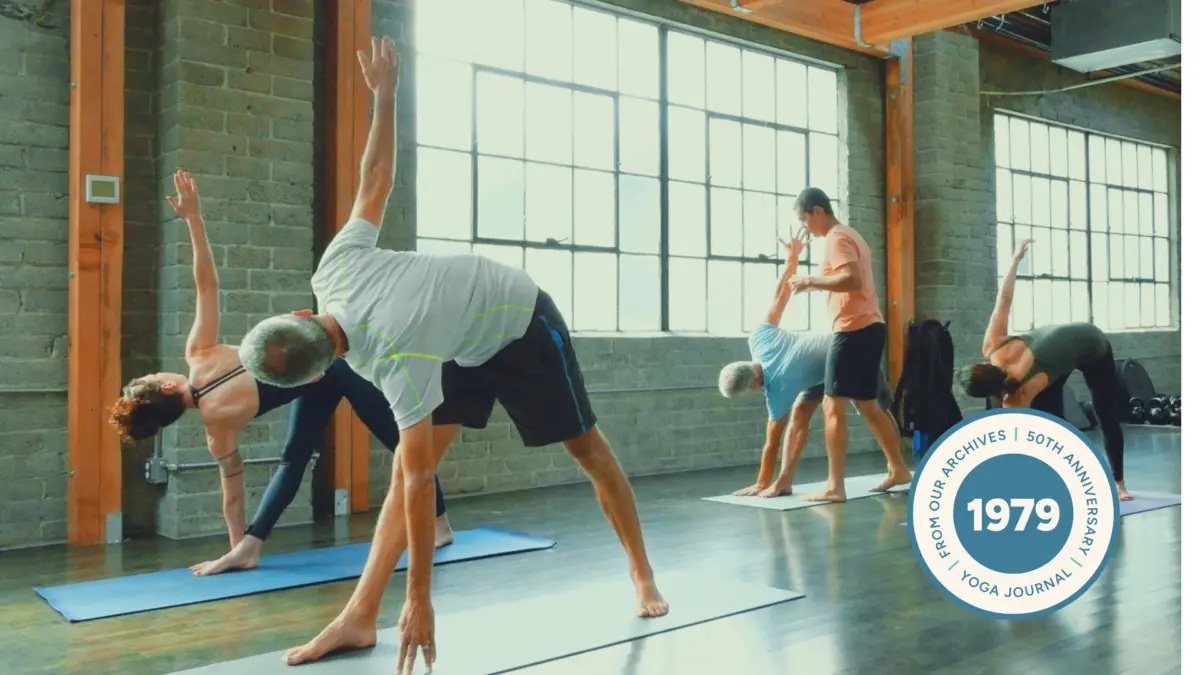
As part of its ongoing archival retrospective series celebrating decades of physical culture, mindfulness, and anatomical exploration, Yoga Journal has resurfaced a seminal instructional guide on Revolved Triangle Pose (Parivrtta Trikonasana). Originally published in the July–August 1979 issue of the magazine, this foundational text captures an era when modern postural yoga was rapidly standardizing its biomechanical vocabulary in the West.
The core premise of the historical article remains strikingly relevant to contemporary practitioners: Parivrtta Trikonasana is not merely an exercise in upper-body flexibility or a test of reaching the floor; it is a complex architectural integration of the lower limbs, pelvic girdle, and spinal column. The original author—acknowledging a profound debt to the legendary yoga master B.K.S. Iyengar and his definitive text, Light on Yoga—delineated the paradox inherent in the posture. While the arms and torso execute a dramatic open-sky rotation, true stability and depth originate from the lower body.
Key technical takeaways highlighted in the archival piece include:
- The Grounding Principle: The back leg acts as an anchor representing the "past," neutralizing the mind’s tendency to obsess over the "future" destination of the upper arms.
- Quadriceps Engagement: Firming the front thighs locks the knees and provides the structural resistance necessary to safely lengthen the spine.
- Pelvic Nuance: Proper alignment of the buttocks prevents over-rotation of the pelvis and shields the delicate sacroiliac joint from strain.
- Accessibility Modifications: The use of props such as walls and benches allows practitioners with tight hamstrings or calves to experience the full benefits of the posture without compromising safety.
Chronology
To understand the enduring significance of this archival piece, it is helpful to trace the timeline of Parivrtta Trikonasana from classical philosophy to its modern print documentation and digital preservation.
- Ancient Roots: While exact dates for the codification of classical asanas are elusive, triangular postures and their revolved variants have deep roots within the broader ecosystem of hatha yoga traditions, designed to purify the body and balance energy channels.
- 1966 (The Turning Point): B.K.S. Iyengar published Light on Yoga, introducing precise photographic plates and anatomical alignments to a global audience, transforming poses like Parivrtta Trikonasana from esoteric disciplines into accessible physical science.
- July–August 1979: A student of Iyengar synthesized these teachings into a personal essay for Yoga Journal, detailing the initial struggles of balance, spatial disorientation, and pelvic alignment that plague beginners.
- August 9, 2026: Yoga Journal digitally republishes the 1979 text as part of its curated archival series, bridging a nearly 50-year gap to showcase how foundational alignment principles persist across generations of practitioners.
Supporting Data and Biomechanical Analysis
The archival text relies heavily on precise biomechanical observations that modern sports science and physical therapy have since validated. Achieving a safe, full rotation in Parivrtta Trikonasana requires navigating several anatomical challenges:
1. The Kinetic Chain of the Lower Body
When attempting to twist to the right while the left foot is back, the natural tendency of the human body is to let the back heel lift and the back knee cave inward. The 1979 author noted that keeping the back heel firmly anchored counteracts this inward collapse. By tightening the quadriceps, the practitioner creates active tension in both legs. This muscular resistance forms a stable base, which in turn permits the spinal column to elongate upward. Extension must precede rotation; you cannot safely twist a compressed spine.
2. Pelvic Neutrality vs. Over-Rotation
One of the most sophisticated insights from the article concerns the management of the buttocks and pelvis. If a student forces both buttocks to remain on the exact same horizontal plane, the twist becomes isolated exclusively at the waist, restricting the thoracic and lumbar spine from reaping the rotational benefits. Conversely, allowing the back-side buttock (e.g., the left buttock in a right-side twist) to drop slightly lower toward the floor opens the pelvis just enough to allow a full, uniform spiral along the entire spinal column.
However, this drop must be monitored carefully. If one side of the pelvis dips too aggressively without foundational support, it places excessive, dangerous shear stress on the sacroiliac (SI) joint. This vulnerability is shared by all deep seated and standing twists, making Parivrtta Trikonasana an essential litmus test for pelvic stability.
3. Prop Utilization as a Diagnostic Tool
Recognizing that anatomical limitations—such as tight hamstrings, stiff calves (gastrocnemius and soleus), and restricted lateral hip mobility (gluteus medius)—often prevent novices from reaching the floor, the article champions props:
- The Wall Method: Wedging the back heel against a vertical surface provides immediate tactile feedback for grounding. Alternatively, standing near a wall allows the practitioner to use it for leverage, easing the torso into rotation without collapsing the chest.
- The Bench Method: Utilizing a small bench elevates the floor, making the pose accessible to individuals with restricted posterior chain flexibility while preserving the integrity of the spine.
Official Responses and Expert Perspectives
Modern movement specialists, physical therapists, and senior yoga instructors have weighed in on the enduring relevance of archival teachings like the 1979 Yoga Journal feature.
Dr. Sarah Jenkins, a physical therapist specializing in dance and yoga injuries, notes that the archival author’s warnings regarding the sacroiliac joint were remarkably prescient for the era. "In the late 1970s, the prevailing fitness culture often pushed students into hyper-extended or hyper-twisted shapes under the banner of ‘no pain, no gain.’ This text, rooted in the Iyengar method, understood that joint integrity—specifically safeguarding the SI joint through controlled pelvic asymmetry—is paramount," Jenkins explains. "When teachers instruct students to force both hips completely square while simultaneously forcing a deep thoracic twist, they often create shear forces across the pelvis. Dropping the back-side hip slightly, as noted in the archives, releases that mechanical trap."
Senior Iyengar yoga instructor Marcus Vance highlights the psychological observations embedded in the text. "The author’s comment about movement attracting the mind—how we rush forward into the ‘future’ of where our top hand is going while abandoning the ‘past’ of our back foot—is a masterclass in mindfulness," Vance states. "Yoga is fundamentally an inward inquiry. In a posture as disorienting as Revolved Triangle, the ego wants to grab the floor at all costs, leading to rounded shoulders and a compressed neck. Remembering that stability flows from the ground up changes the entire energetic and physical equation."
Implications
The resurrection of this 1979 archive piece carries several important implications for the modern wellness landscape, where yoga has increasingly merged with digital consumption and fast-paced fitness trends.
Re-Emphasizing Depth Over Appearance
In an era dominated by social media aesthetics, poses like Parivrtta Trikonasana are frequently mistranslated. Practitioners often strive to slap their bottom hand flat onto the floor or look straight up at the ceiling, sacrificing spinal length, breathing capacity, and knee alignment in the process. By returning to foundational texts, the yoga community is reminded that the true measure of an asana is internal precision, not external shapes. The text explicitly notes: "By centering attention on the precision of the pose, the range of the twist comes as a gift."
The Longevity of Classical Alignment
The dialogue between 1979 and 2026 proves that human anatomy does not change, even as fitness trends evolve. While modern exercise science has introduced new terminology regarding fascial lines, neural drive, and muscular slings, the underlying mechanical truths discovered by classical masters and documented in early yoga journalism remain timeless. Props are not signs of weakness; they are tools for neurological and structural education.
Ultimately, the half-century journey of this Parivrtta Trikonasana guide serves as an invitation to contemporary practitioners: slow down, anchor your back heel, respect your limitations, and allow the depth of your practice to unfold naturally through disciplined awareness.
