

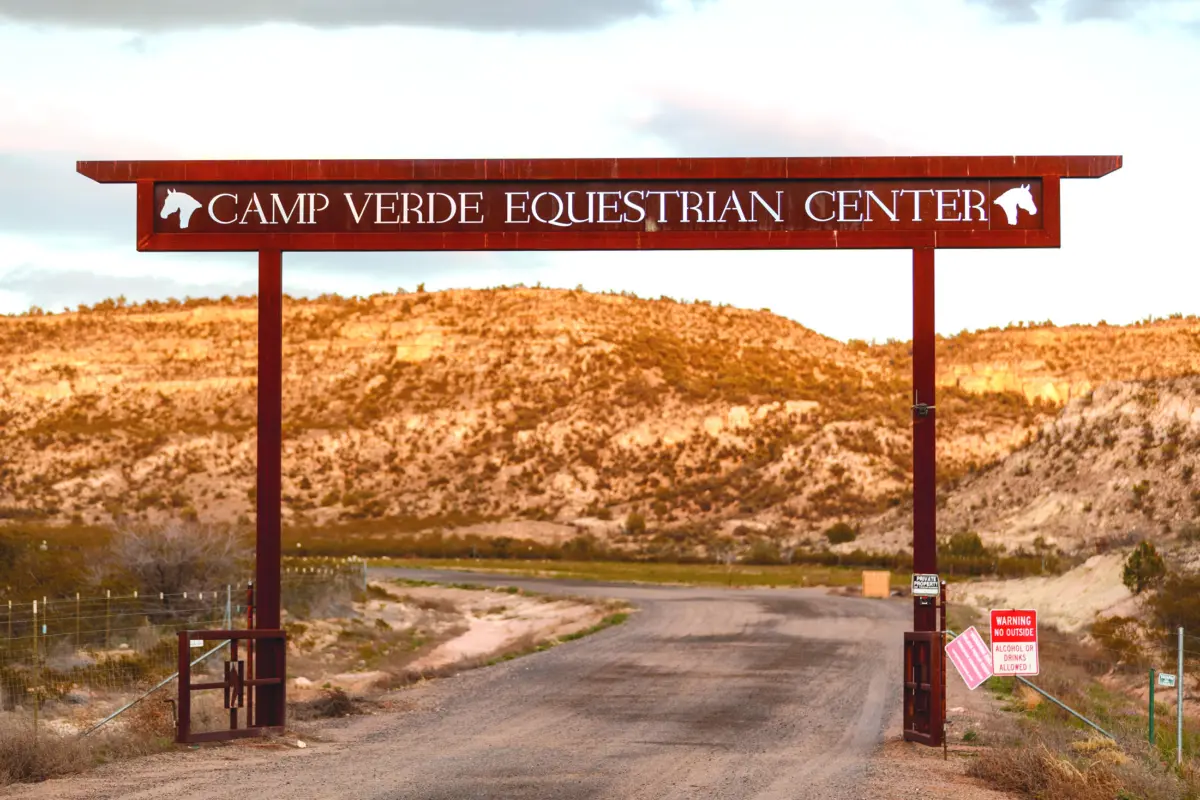
The future of one of Camp Verde’s most cherished cultural traditions, the annual Fort Verde Days Rodeo, hangs in the balance. Following a series of complex legal disputes, municipal lease cancellations, and local election shifts, the Camp Verde Town Council is working to chart a new path forward for the Camp Verde Equestrian Center.
At a special session, the Town Council confronted a pressing dilemma: whether to attempt to pull together a full-scale rodeo for the upcoming October festivities under tight deadlines, or to pivot toward alternative regional events while restructuring the management of the town-owned arena. With the recent primary election introducing new leadership and the town formally taking over the equestrian facility, the debate has highlighted the challenges of balancing community heritage, municipal liability, and financial transparency.
Chronology of the Transition: From Lease Cancellation to Council Debate
To understand the current state of the Fort Verde Days Rodeo, one must trace the timeline of administrative and political events over the past several months:
+--------------------------------------------------------------------------+
|                                TIMELINE                                  |
+--------------------------------------------------------------------------+
|  [Dec 3]  Town cancels CVAA's lease over Gift Clause & transparency concerns |
|     |                                                                    |
|  [Mar 31] CVAA vacates the Camp Verde Equestrian Center                  |
|     |                                                                    |
|  [Jul 21] Tanner Bryson wins primary election for Town Council           |
|     |                                                                    |
|  [Jul 29] Special Council Session; Bryson withdraws rodeo proposal       |
|     |                                                                    |
|  [Aug 5]  Election results canvassed; Bryson receives certificate        |
|     |                                                                    |
|  [Aug 12] Runoff results expected (Godwin vs. Baker)                     |
|     |                                                                    |
|  [Aug 26] Staff to present finalized Arena Commission founding documents |
|     |                                                                    |
|  [Oct 10] Fort Verde Days celebration weekend begins                     |
|     |                                                                    |
|  [Nov]    Newly elected council members sworn into office                |
+--------------------------------------------------------------------------+
The friction began on December 3, when the Town of Camp Verde officially canceled its long-standing lease agreement with the Camp Verde Arena Association (CVAA). The town cited concerns regarding financial transparency and potential violations of the Arizona State Constitution. Although the town offered a revised lease agreement to the CVAA, the association declined the terms.
Consequently, on March 31, the CVAA complied with the town’s requirement to vacate the Camp Verde Equestrian Center. This left the town in direct control of a major municipal asset but without an active, experienced external operator to manage its calendar of events.
On July 21, the local political landscape shifted when Tanner Bryson, owner of the private promotional firm Bryson Productions, secured a seat on the Town Council during the primary election.
On July 29, the Town Council convened a special session to address the fate of the upcoming Fort Verde Days Rodeo, scheduled as part of the broader town celebration on Saturday and Sunday, October 10 and 11. During this meeting, the council reviewed competing proposals to run the event: one from the displaced CVAA and another from Bryson Productions. However, citing the compressed timeline, Bryson withdrew his proposal during the public comment period, urging the town to instead support the "Bull Bash," an established annual event run by the Yavapai-Apache Nation and Cliff Castle Casino.
The administrative transition continues into August. On Wednesday, August 5, the council will formally canvass the July 21 election results and present Bryson with his certificate of election. Concurrently, an automatic runoff election is underway between incumbent Councilwoman Robin Godwin and former Councilwoman Jackie Baker, who were separated by a mere eight votes. The final results of this runoff are anticipated around Wednesday, August 12. The newly elected officials, including Bryson, will not be sworn into office until the scheduled council meetings in November, leaving the current council to make critical decisions regarding the October events.
Legal, Financial, and Asset-Related Data
The dispute between the Town of Camp Verde and the CVAA is rooted in complex legal and logistical realities. Central to the town’s decision to terminate the CVAA lease is the Gift Clause of the Arizona State Constitution (Article 9, Section 7).
The Gift Clause Constraint
The Gift Clause strictly prohibits public entities—including municipalities—from giving, donating, or lending public funds or credit to private individuals, associations, or corporations. To comply with the law, any transaction or lease agreement between the town and a private entity must satisfy two conditions:
- Public Purpose: The activity must serve a clear public interest.
- Consideration (Fair Value): The value of the public asset or funds provided must not far exceed the certifiable benefit, service, or product returned to the taxpayers.
Town officials determined that the lack of financial transparency in the CVAA’s operations made it impossible to legally verify that the public was receiving a fair return on the use of the municipal equestrian center, necessitating the lease cancellation.
The CVAA’s Counter-Proposal
In an effort to regain access to the arena and manage the 2025 rodeo, the CVAA submitted a proposal offering to return vital physical assets, including spectator bleachers, to the facility. However, the concessions requested by the CVAA in exchange were substantial. According to Mayor Marie Moore, the CVAA’s proposal demanded:
- The exclusive right to host 20 events annually at the equestrian center, with the CVAA retaining sole authority to select the events.
- The retention of 100% of the revenue generated from those 20 events.
- A guaranteed, permanent opportunity to host the annual Fort Verde Days Rodeo.
- Exclusive permission to sell alcoholic beverages and operate the concession stands during their scheduled events.
- Operational authority over the events, while the town would be left with the administrative burden of vendor coordination (excluding event sponsors, who would receive complimentary access).
The Battle Over Assets and Intellectual Property
The logistics of running a professional-grade rodeo are capital-intensive. CVAA President Mary Phelps pointed out that operating the arena requires specialized infrastructure, including:
- High-output audio systems.
- Specialized livestock panels and pens.
- Arena management tools and heavy maintenance machinery.
Because the CVAA owns much of this equipment, their departure has left the town-owned facility functionally bare.
Adding to the tension is a dispute over intellectual property. The Town of Camp Verde recently trademarked the name "Fort Verde Days Rodeo." Phelps criticized this move, arguing that it disregarded the years of volunteer labor and financial risk the CVAA undertook to revive the rodeo six years ago. "Purchasing or trademarking the name without consulting the funding group violates basic goodwill and community trust," Phelps stated, emphasizing that the CVAA logo is stamped on every championship buckle awarded at the event.
Official Responses and Key Perspectives
The July 29 special session featured direct, sometimes tense exchanges between council members, the incoming councilman, and community organizers.
Tanner Bryson, Incoming Councilman & Owner of Bryson Productions
Bryson took a pragmatic stance, arguing that attempting to organize a high-quality, multi-day rodeo in less than ten weeks was structurally unfeasible.
"I think it’s too late in the calendar to make a successful event at this time," Bryson stated. "So, Bryson Productions—I really want to withdraw any proposal to do anything at this point. I think the town should get behind the Bull Bash and make it as good as an event as possible."
Bryson also warned against attempting to repair the fractured relationship with the CVAA under the current terms, adding:
"But I think the fact that we’re still romantically engaged with CVAA is not the right path."
Mary Phelps, President of the Camp Verde Arena Association
Phelps defended the association’s legacy, arguing that the CVAA remains the cultural heart of the rodeo. She expressed hope that a compromise could be reached that respects the association’s historical contributions.
"Every Fort Verde Days Rodeo buckle has the CVAA logo on it, and we want to continue putting on the Fort Verde Days Rodeo," Phelps said, emphasizing that the association possesses the specialized heavy machinery and arena management tools required to run the venue safely and efficiently.
Mayor Marie Moore & Councilwoman Jessie Murdoch
Mayor Moore clarified that the council would not vote on or accept the CVAA’s proposal during the special session, signaling a desire to step back and build a more structured, legally compliant management framework.
Councilwoman Jessie Murdoch echoed this sentiment, arguing that rushing into an agreement with the CVAA would undermine the town’s long-term plans for the facility.
"I appreciate that they [CVAA] still want to be involved," Murdoch remarked. "But I think right now we’re still trying just to iron things out… I think moving forward with the proposal presented to us tonight would be disingenuine of the hopes and aspirations I think a commission could fulfill."
Dee Jenkins, Outgoing Yavapai County Supervisor & Former Camp Verde Mayor
Jenkins attended the meeting to advocate for the creation of a formal municipal commission to oversee the equestrian center. She distributed a draft charter outlining a proposed mission statement and strategic economic goals for the facility.
"I believe that economic benefit is a piece of this, but not the whole piece," Jenkins explained. "And there’s responsibilities associated with the commission… I don’t think we have an expectation, or at least I don’t, that all activities out there are going to make money. Fort Verde Days—we do that because it’s the right thing to do for our community; they support that."
Implications for Camp Verde’s Economy and Community
The decisions made in the coming weeks will have lasting effects on Camp Verde’s cultural identity and its local economy.
Transitioning to a Municipal Arena Commission
Rather than turning operations over to a single private entity, the Town Council is moving forward with plans to establish a formal Arena Commission. This body will operate similarly to the town’s Planning & Zoning or Parks & Recreation commissions.
+--------------------------------------------------------------------------+
|                       PROPOSED ARENA COMMISSION                          |
+--------------------------------------------------------------------------+
|                                                                          |
|  [Public Input] -------->  [Arena Commission]  --------> [Town Council]  |
|  - Resident feedback       - Industry expertise          - Final approval|
|  - User group needs        - Economic goal setting       - Policy & budget|
|                            - Operational oversight                      |
+--------------------------------------------------------------------------+
The commission will be tasked with:
- Gathering public feedback and representing various user groups.
- Utilizing member expertise to draft operational guidelines for the equestrian center.
- Setting economic development, recreation, and community entertainment goals.
- Presenting formal recommendations to the Town Council for final votes.
Town staff have been directed to draft the founding documents and application materials for the commission, which will be presented to the council on Wednesday, August 26. If approved, the town will immediately open the application process to the public.
Economic and Cultural Impact
The Fort Verde Days celebration is a major economic driver for Camp Verde, drawing thousands of visitors to the region. Historically, the rodeo has served as a primary anchor event, filling local hotels, restaurants, and retail shops.
Canceling the traditional multi-day rodeo for 2025 represents a financial risk to local business owners who rely on the influx of tourism. However, by shifting support to the Yavapai-Apache Nation’s annual Bull Bash, town leaders hope to mitigate these losses. The Bull Bash is a highly popular event that predates the CVAA-led rodeo, and a coordinated marketing effort between the town, the Nation, and Cliff Castle Casino could help preserve visitor turnout.
Ultimately, the creation of the Arena Commission represents a shift toward structured, transparent municipal management. While this transition may cause short-term disruptions for the 2025 Fort Verde Days, town leaders are betting that a legally compliant, publicly accountable oversight model will secure the long-term future of the Camp Verde Equestrian Center for decades to come.
