


Main Facts
The modern American offshore wind industry is locked in a high-stakes collision course between aggressive federal hostility and resilient state-level ambition. Despite an official national "energy emergency" declared by President Donald Trump and echoed by Energy Secretary Chris Wright—a crisis ostensibly centered on expanding reliable power and lowering energy costs—the administration has systematically targeted the domestic offshore wind sector. Through a combination of administrative delays, project freezes, aggressive lease cancellations, and multi-billion-dollar federal buyouts, the administration has sought to dismantle a burgeoning clean energy frontier.
Yet, rather than retreating, coastal states and bipartisan coalitions are looking past the current political horizon. From California’s massive 25-gigawatt vision to Maine’s deep-water floating turbine aspirations, local lawmakers, labor unions, and environmental advocates are actively laying the groundwork for a post-Trump offshore renaissance. The core conflict highlights a striking policy paradox: while federal authorities spend billions of taxpayer dollars to retire dormant leases and stall active developments, states view offshore wind as an indispensable engine for working-class jobs, maritime heritage preservation, and long-term electricity affordability.
Chronology
The timeline of the current offshore wind conflict reveals a calculated federal rollback met by swift legislative and judicial counter-strategies from coastal defenders:
- January 2025: President Trump takes office and formally declares an overarching national "energy emergency," setting the stage for executive actions prioritizing fossil fuels while aggressively scrutinizing renewable infrastructure.
- Early 2025 – Late 2025: The administration imposes specious, politically motivated re-reviews on numerous offshore wind pipelines before abruptly ordering a complete halt to five major offshore projects where construction is already underway.
- December 2025: A federal court rules that the administration’s sweeping re-reviews of offshore projects were legally unwarranted, though the presiding judge concurrently upholds executive authority regarding the issuance of brand-new federal leases.
- Early 2026: A series of subsequent judicial rulings clear the way for construction to resume on the five previously interrupted offshore projects, offering a temporary lifeline to developers. Concurrently, however, the Trump administration pivots to a new strategy: offering lucrative financial buyouts to convince leaseholders to permanently surrender their development rights.
- March – June 2026: The administration cancels four major floating wind leases in the Gulf of Maine previously awarded to Avangrid Renewables and Invenergy. Critics and energy economists note these buyouts largely target projects already slowed by high interest rates and post-COVID supply chain hurdles, utilizing $3.9 billion in taxpayer funds to permanently shelve them.
- August 11, 2026: U.S. Senators Alex Padilla (D-California) and Angus King (I-Maine) introduce federal counter-legislation designed to fast-track bought-out leases for development by adjacent, cooperative developers while expressly barring original leaseholders who accepted federal payouts from re-bidding.
- Fall 2026: With the midterm elections looming less than 100 days away, the economic fallout of canceled wind projects becomes a flashpoint in tight political races, notably the high-profile U.S. Senate contest in Maine between Republican incumbent Susan Collins and Democratic challenger Troy Jackson.
Supporting Data
A quantitative look at the federal interventions and regional wind resource potentials underscores the immense economic and energy stakes involved:
- $3.9 Billion: The estimated total cost of taxpayer funds utilized by the Trump administration to buy out and retire approximately 12 offshore wind lease areas across the country.
- 6,000 Jobs: The number of high-paying construction and maritime jobs projected to be generated by Maine’s nascent offshore wind sector alone—jobs now jeopardized by the cancellation of federal leases in the Gulf of Maine.
- 2.3 Million Homes: The clean energy capacity originally unlocked by the four Gulf of Maine lease areas auctioned off by the Bureau of Ocean Energy Management (BOEM) in 2024 to Avangrid Renewables and Invenergy before being scrapped by the current administration.
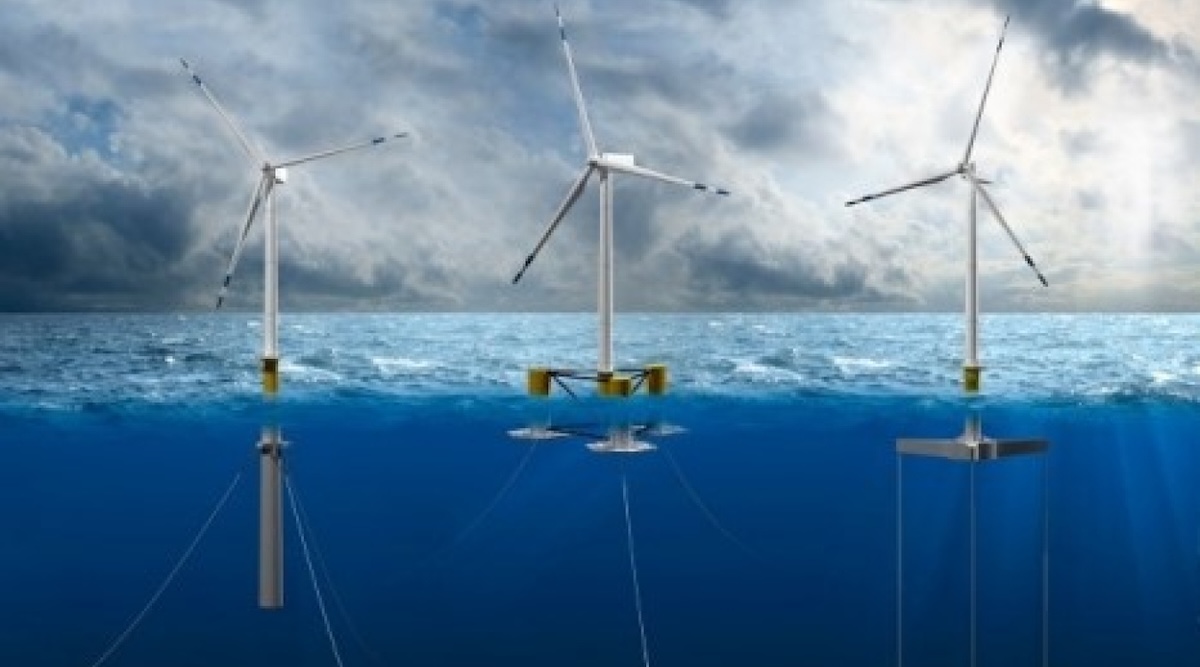
- 15 Gigawatts to 25 Gigawatts: BOEM’s assessed floating offshore wind potential for the state of Maine (15 GW) and California’s ambitious target for overall offshore wind deployment (25 GW), highlighting the heavy reliance on deep-water floating turbine technology.
- $0 (Original Auction Price): Under the Padilla-King legislation, adjacent developers would be offered the rights to abandoned lease areas at their original per-acre auction prices to accelerate deployment without bureaucratic interference from BOEM.
Official Responses
The battle over America’s coastal winds has drawn sharp contrasts between federal justification and state-level outrage:
- The Federal Administration and Department of Energy: Energy Secretary Chris Wright and administration officials have framed their actions as a necessary correction to unrealistic green mandates, arguing that prioritizing traditional fossil fuels and lowering immediate base-load electricity costs constitutes a vital national security imperative. The administration defends lease buyouts as a market-oriented method to clear up encumbered federal acreage, though energy analysts point out many of these sites faced artificial roadblocks erected by the White House itself.
- U.S. Senator Alex Padilla (D-California): Defending his home state’s sprawling coastline and green energy economy, Sen. Padilla emphasized that federal sabotage cannot permanently halt the green transition. Introducing the Padilla-King legislation, he stated: "We must reward developers who stand up to administrative overreach and streamline permitting to ensure our clean energy future is not held hostage by political maneuvers."
- Energy Economists and Academic Fellows: James Sallee, Faculty Research Fellow at the National Bureau of Economic Research, offered a sober assessment of the administration’s buyout strategy, noting: "The buyouts did not stop projects since the projects were not in the money or poised for development anytime soon." Sallee and other market observers suggest the administration capitalized on existing macroeconomic hurdles—such as high interest rates and supply chain bottlenecks—to manufacture the appearance of an industry collapse.
- Labor and Environmental Advocates: Organizations like the Natural Resources Council of Maine (NRCM) and the state’s AFL-CIO have aggressively pushed back against the job losses. Highlighting Maine’s 400-year maritime history, labor leaders have criticized federal cuts for stripping away thousands of union jobs while failing to offer viable economic alternatives for coastal communities.
Implications
The systematic dismantling of the first wave of large-scale U.S. offshore wind projects carries profound structural implications for the nation’s energy independence, economic competitiveness, and political landscape.

From an energy perspective, the deliberate mothballing of multi-gigawatt resources directly undercuts regional grid reliability in high-demand coastal corridors. States like California and Maine, which face unique geographic constraints that make land-based renewables insufficient for their full decarbonization targets, rely heavily on offshore wind to balance their energy portfolios. By stalling floating wind technology—which is uniquely suited for the deep waters of the Pacific and North Atlantic—the federal government risks ceding technological leadership and manufacturing supply chains to European and Asian competitors who are aggressively scaling up similar maritime energy infrastructure.
Economically, the administration’s strategy inflicts self-harm on working-class communities. The loss of thousands of well-paying manufacturing, staging port, and construction jobs contradicts the administration’s stated goal of bolstering domestic blue-collar employment. Furthermore, financial analyses from environmental groups indicate that abandoning offshore wind removes a critical downward pressure on future electricity rates, leaving ratepayers more vulnerable to the volatile price spikes of imported fossil fuels.
Politically, the offshore wind war has transformed into a dangerous gamble for incumbents ahead of the 2026 midterms. In states like Maine, where union backing and traditional maritime industries intersect with clean energy ambitions, political silence on federal rollbacks carries a heavy electoral penalty. While anti-wind rhetoric may play well in specific political echo chambers, the tangible destruction of local job pipelines and the frustration of bipartisan state goals ensure that the energy transition will remain a central, contentious battleground. Ultimately, as coastal states quietly draft contingency legislation and prepare for post-Trump legal and administrative realities, it is clear that America’s offshore wind future cannot be permanently repealed—it is simply waiting for the political tide to turn.
