

By Global Architectural and Travel Desk
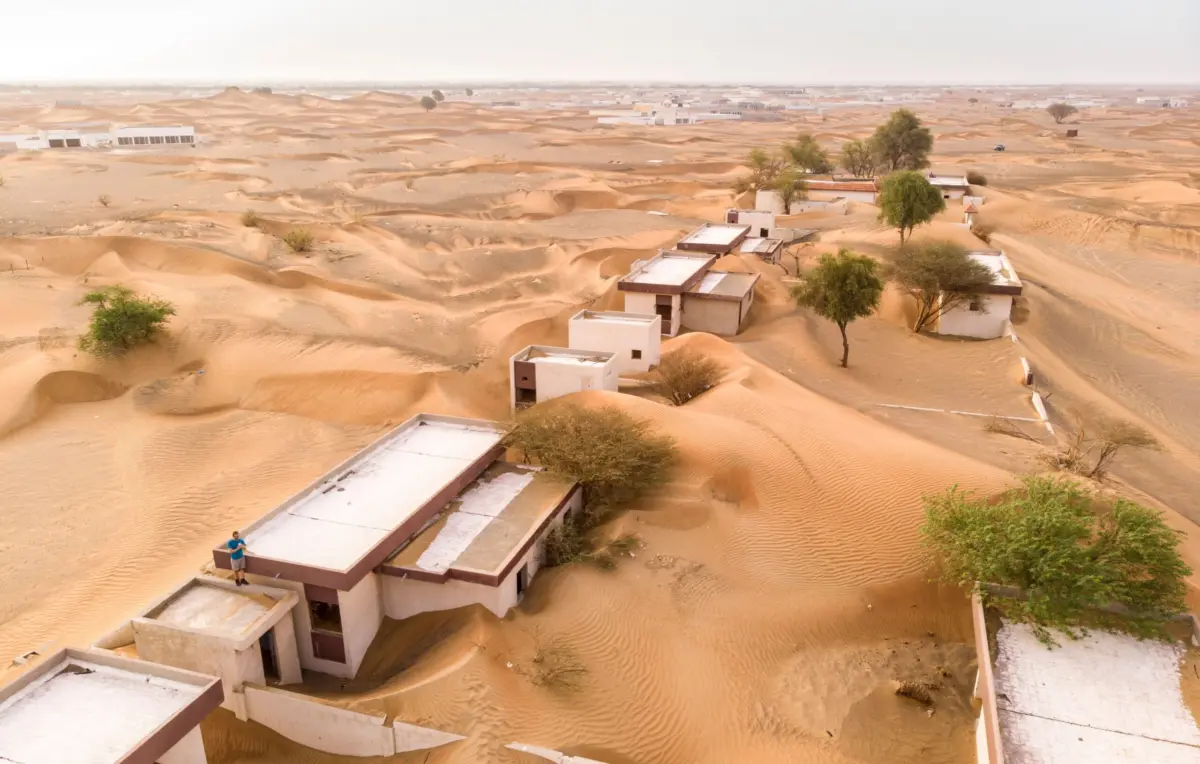
When human presence fades from a landscape, the natural world wastes no time staking its claim. From sprawling urban centers reduced to overgrown ruins to remote desert villages swallowed whole by shifting sands, abandoned locales offer a haunting testimony to the transience of human civilization. Vines creep relentlessly over crumbling masonry, aggressive root systems fracture reinforced concrete, and encroaching ecosystems gradually erase the footprints of industry, commerce, and daily life.

This uncanny juxtaposition of human engineering and raw ecological force has birthed a distinct niche in global tourism and architectural study. Travelers, photographers, and historians alike are drawn to ghost towns, abandoned forts, and forgotten settlements not merely for their melancholy aesthetic, but because they serve as tangible reminders of how quickly the earth can reclaim what was only ever momentarily ours. Whether abandoned due to catastrophic natural disasters, economic collapse, shifting trade routes, or enduring mysteries, these forgotten geographies invite us to contemplate a world unburdened by human hands.
Main Facts: The Anatomy of Reclaimed Spaces
The phenomenon of abandonment—and subsequent ecological reclamation—is driven by a variety of socio-economic and environmental catalysts. At its core, the transformation of an inhabited space into a wilderness sanctuary follows a predictable yet fascinating biological timeline.

- The Catalyst for Desertion: Settlements are typically abandoned due to resource depletion (such as exhausted mines), industrial obsolescence, geopolitical realignments, or catastrophic environmental events like volcanic eruptions, flooding, and desertification.
- The Biological Takeover: Once maintenance ceases, nature moves in methodically. Invasive and resilient flora are usually the first to arrive, exploiting cracks in foundations and roofs. As organic matter accumulates, larger plants, shrubs, and eventually trees take root, physically dismantling structures from the inside out.
- The Climatic Impact: The specific type of reclamation depends heavily on geography. In arid environments like the Arabian Peninsula, wind-driven sand dunes slowly bury entire communities, creating sculptural ruins frozen in time. In tropical and temperate zones, aggressive vegetation and moisture rapidly accelerate decay, turning concrete jungles into dense, green canopies.
- The Rise of "Dark Tourism": The eerie allure of these locations has catalyzed a booming travel sector. Urban explorers and tourists increasingly seek out legally accessible ghost towns, balancing the thrill of historical discovery with the sobering reality of ecological fragility.
Chronology: How the Earth Reclaims a City
The process of a human settlement transitioning back into the wild is a battle between human engineering and biological persistence. While every location is unique, the timeline of abandonment generally follows distinct ecological phases:
Phase 1: Year One — The Silence and the Stagnation
Within months of the last resident leaving, human control evaporates. Utilities are shut off, climate control systems fail, and interior spaces begin to experience extreme humidity or dryness. Dust settles undisturbed on floors and furniture. Without human interference, local wildlife—particularly rodents, insects, and opportunistic birds—moves into structures, treating abandoned homes and offices as shelter.

Phase 2: Years Two to Five — The Initial Breach
Nature makes its physical entrance during this window. Leaking roofs and unmaintained gutters lead to water damage, rotting wood, and the proliferation of mold and mildew. Seeds dropped by birds or carried by the wind sprout in damp corners, roof gutters, and masonry cracks. Pavement begins to buckle as subterranean root systems and weeds force their way upward through asphalt and concrete.
Phase 3: Years Six to Twenty — The Botanical Siege
During this decade, the transformation accelerates dramatically. Aggressive climbing plants, ivy, and creeping vines scale exterior walls, sealing windows and doors in a green embrace. Young trees establish root systems deep within foundations and retaining walls, acting as natural wedges that systematically fracture stone and brick. Paint peels away in sheets, and metal structures begin to succumb to rust and oxidation.

Phase 4: Decades and Centuries Beyond — Complete Integration
In the final stage of reclamation, the boundaries between the built environment and the natural landscape dissolve entirely. Multi-story buildings may suffer catastrophic structural collapses, filling their interiors with rubble that quickly becomes covered in topsoil, moss, and ferns. What was once a bustling grid of streets, homes, and public squares becomes indistinguishable from the surrounding forest, desert, or coastline, leaving behind only the most durable stone and steel skeletons as ghostly monuments to the past.
Supporting Data: Understanding the Scale of Abandonment
To truly grasp the magnitude of global abandonment, researchers look at demographic shifts, climate data, and economic indicators that trigger mass migrations:

- The Global Ghost Town Census: According to demographic and urban studies data, there are tens of thousands of officially registered ghost towns worldwide. China alone boasts numerous "megascale" modern ghost towns and unfinished developments resulting from rapid, speculative real estate booms followed by economic recalibration.
- Climate-Driven Displacement: The Internal Displacement Monitoring Centre (IDMC) notes that millions of people are displaced annually by sudden-onset natural disasters. A significant percentage of these displacements become permanent, particularly in vulnerable coastal and agricultural regions where rebuilding is economically unviable or ecologically unsafe.
- Desertification Pressures: In regions neighboring major deserts—such as the Sahara and the Arabian Desert—shifting sands and advancing arid conditions force the permanent abandonment of traditional farming and nomadic settlements at an increasing rate, swallowing historical villages within a matter of decades.
- Tourism Economics: "Dark tourism" and heritage exploration of abandoned sites now generate billions of dollars annually in local economies near famous ruins (such as Chernobyl’s exclusion zone, Hashima Island in Japan, and various historic mining towns in the American West), prompting governments to balance safety regulations with heritage preservation.
Official Responses and Preservation Policies
Governments, preservation societies, and environmental agencies view abandoned settlements through vastly different lenses, balancing historical preservation against public safety and ecological restoration.
Heritage Designation vs. Controlled Decay
For sites of immense historical or architectural significance—such as the volcanic-buried ruins of Pompeii or select medieval ghost towns in Europe—governments often implement strict conservation policies. Rather than attempting to restore these sites to a lived-in state, authorities utilize specialized stabilization techniques to manage "controlled decay," allowing visitors to experience the historic atmosphere while preventing catastrophic structural collapses.

Environmental Restoration and Rewilding
In contrast to historical preservation, some abandoned zones are deliberately handed back to nature. The most famous example is the 30-kilometer exclusion zone around the Chernobyl Nuclear Power Plant in Ukraine. Official government and scientific bodies have monitored the area closely, noting that despite radiological contamination, the absence of human activity has allowed rare and endangered wildlife populations—including wolves, lynx, brown bears, and Przewalski’s horses—to thrive in what has effectively become a massive, unplanned nature reserve.
Public Safety and Legal Restrictions
For the vast majority of modern abandoned locales—such as decaying industrial complexes, shuttered military bases, and abandoned desert villages—official responses focus heavily on restriction and deterrence. Structural instability, hazardous materials (such as asbestos, lead paint, and chemical residue), and unstable terrain make unmanaged exploration extremely dangerous. Local authorities frequently deploy fencing, surveillance, and heavy policing to keep urban explorers and unauthorized tourists at bay.

Implications: What Abandoned Cities Tell Us About Our Future
The phenomenon of cities reclaimed by nature offers profound philosophical, ecological, and urban planning implications for modern society.
A Mirror to Anthropocene Realities
As humanity navigates an era defined by climate change, resource scarcity, and shifting geopolitical landscapes, abandoned settlements serve as a sobering preview of the Anthropocene. They demonstrate that human dominance over the planet is entirely conditional. Long after our technological infrastructure falls silent, natural systems possess the inherent capacity, resilience, and time required to completely erase our presence, turning bustling metropolises back into wilderness.

Rethinking Urban Design and Sustainability
Urban planners increasingly study the mechanisms of natural reclamation to inform sustainable design. Concepts such as "biophilic design," urban rewilding, and eco-infrastructure seek to integrate nature into modern cities proactively, rather than waiting for abandonment to occur. By incorporating green roofs, permeable pavements, and urban forests into contemporary architecture, city designers attempt to harmonize human habitats with ecological processes, ensuring that our settlements age gracefully rather than decaying into hazardous ruins.
The Enduring Allure of the Forgotten
Ultimately, our fascination with cities swallowed by sand, reclaimed by jungles, or buried by ash speaks to a deep-seated human curiosity about the passage of time. These eerie landscapes challenge our obsession with permanence. They remind us that beauty often emerges in the spaces where human control ends and the relentless, restorative power of the natural world begins.
