


Main Facts
The passing of legendary American singer, songwriter, and philanthropist Dolly Parton on August 25, 2026, has sparked a profound global conversation regarding the responsibilities of immense wealth. Parton, who rose from extreme poverty in rural Tennessee to become a global cultural icon, dedicated her life and fortune to lifting others up through literacy programs, disaster relief, medical research, and educational support.
Her passing elicited an unprecedented international tribute, with major landmarks across the globe—from the Empire State Building in New York and the Willis Tower in Chicago to London’s Buckingham Palace and iconic bridges throughout Boston and Nashville—illuminated in pink.
In stark contrast to Parton’s lifelong commitment to grassroots philanthropy and tangible community investment, contemporary tech billionaires face mounting scrutiny over the efficacy, self-serving nature, and sheer minimalism of their charitable endeavors. Figures such as Elon Musk, Jeff Bezos, Mark Zuckerberg, and other titans of the modern technology sector have amassed unprecedented fortunes. Yet, critics argue their approaches to wealth distribution fall woefully short of addressing systemic societal needs.
Examining the philanthropic legacy of Dolly Parton alongside the structural mechanics of modern tech-billionaire foundations—specifically the Musk Foundation—highlights a fundamental philosophical split in how wealth is perceived, leveraged, and returned to society.
Chronology
To understand the vast gulf between traditional, community-focused philanthropy and modern corporate-adjacent giving, it is instructive to examine the timelines of Parton’s humanitarian milestones alongside the operational history of high-profile tech wealth management.
- The Early Roots (1946–1980): Born into a family of twelve children in Sevier County, Tennessee, Parton experienced firsthand the limits imposed by poverty and a lack of access to basic infrastructure. Her career trajectory shifted from regional performances to national stardom, culminating in her breakout film and musical role in the 1980 workplace comedy 9 to 5, which championed progressive labor reforms like equal pay and on-site childcare.
- Institutional Philanthropy Begins (1990–1995): Parton launched her high school "buddy" program in Sevier County in 1990, dramatically dropping the local dropout rate. In 1995, she established the Imagination Library, driven by the memory of her illiterate father, setting out to ensure every young child had access to books.
- Scaling Global Impact (2016–2020): Following devastating wildfires in her home county in 2016, the Dollywood Foundation launched the My People Fund, distributing over $12 million directly to displaced families. In 2020, Parton donated $1 million to Vanderbilt University Medical Center, seeding the foundational research that enabled the creation of the Moderna mRNA COVID-19 vaccine.
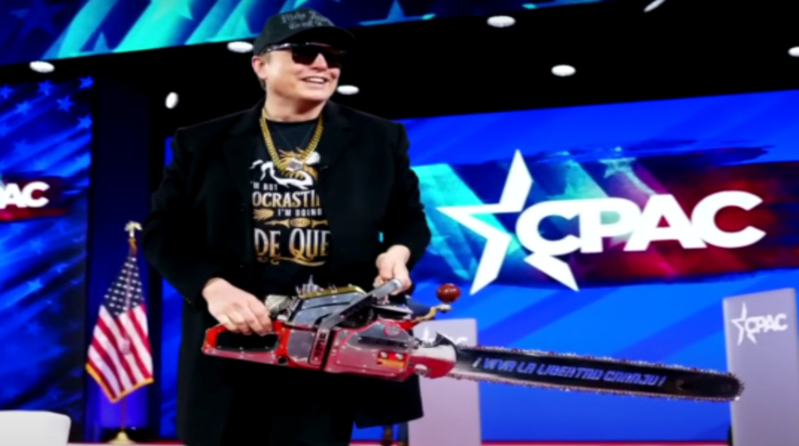
- The Modern Tech-Wealth Era (2024–2026): Investigations by outlets like The New York Times in early 2024 revealed that the $7 billion Musk Foundation operated with minimal staff, failed to meet federal distribution minimums, and frequently directed funds toward projects intersecting with Musk’s commercial enterprises. Following a historic $1 trillion pay package approval from Tesla in late 2025, Musk publicly lamented the complexities and challenges of traditional charitable giving.
- The Final Farewell (August 2026): Parton passed away on August 25, 2026, leaving behind a global literacy network that had delivered over 332 million books worldwide. Her death prompted global structural reflections on wealth disparity, capped by coordinated international light installations in her honor.
Supporting Data
The mechanics of wealth distribution reveal stark operational differences between legacy humanitarians and modern tech industrialists:
- The Imagination Library: Founded in 1995 to combat childhood illiteracy, the program expanded globally across the United States, Canada, the United Kingdom, Ireland, and Australia. By the time of her passing, the initiative had successfully delivered more than 332 million free books to children worldwide.
- Educational and Medical Interventions: Parton’s 1990 Sevier County buddy program reduced local high school dropout rates from 35% to 6% among participating classes. Her $1 million investment at Vanderbilt University directly catalyzed research that safeguarded millions of lives during the COVID-19 pandemic.
- The Musk Foundation Structural Deficit: Established with a tax-deductible transfer of $7 billion, the foundation yielded an initial federal tax break of approximately $2 billion for its founder. Federal regulations mandate that non-profit foundations distribute at least 5% of their assets annually to maintain tax-exempt status. Investigative reports from The New York Times and Forbes highlighted multiple cycles where the foundation fell short of these statutory requirements—distributing just $160 million in 2022, which was $234 million below the legal minimum.
- Self-Referential Giving: Investigations indicate that roughly half of the Musk Foundation’s historical donations possessed direct ties to Musk, his corporate entities, or his employees, including grants directed to SpaceX customers, private schools servicing employee compounds, and technological rollouts in nations that subsequently became Starlink clients.
- Macroeconomic and Policy Impacts: Analyses regarding the dismantling of federal agencies such as USAID under modern administrative restructuring efforts (including the DOGE initiative) cite catastrophic human costs. Studies published in The Lancet and reports by NPR estimate that disruptions to international aid could result in up to 14 million deaths by 2030, including 4.5 million children under the age of five.
Official Responses
Public figures, institutional analysts, and the philanthropic community have increasingly voiced tension regarding the alignment of tech wealth and social welfare.
Benjamin Soskis, a senior research associate at the Urban Institute who studies philanthropy, highlighted the profound disconnect between modern corporate executives and traditional social investment:
"The really striking thing about Musk is the disjuncture between his outsized public persona and his very, very minimal philanthropic presence. [His foundation] lacks any direction or any real focus, outside his business ventures."
Defending the complex nature of capital allocation, Elon Musk noted during an interview on the WTF podcast in December 2025 that modern philanthropy is fraught with systemic inefficiencies:
"I agree with love of humanity, and I think we should try to do things that help our fellow human beings, but it’s very hard. The biggest challenge I find with my foundation is trying to give money away in a way that is truly beneficial to people. It’s very easy to give money away to get the appearance of goodness. It is very difficult to give money away for the reality of goodness. Very difficult."
Conversely, cultural figures and organizations worldwide have pointed to Parton’s philosophy as the gold standard of ethical stewardship. Summing up her ethos shortly before her passing, Parton remarked:

"Find out who you are and do it on purpose. And do it with purpose. Don’t ever sacrifice who you are, your principles and your morals and your values to just try to get ahead in business. It ain’t worth it."
Implications
The juxtaposition of Dolly Parton’s life against the rising tide of hyper-concentrated tech wealth forces a rigorous reexamination of modern capitalism and social contract theory.
For generations, wealth accumulation was understood to carry a civic burden—a principle famously articulated in Andrew Carnegie’s The Gospel of Wealth, which argued that surplus wealth should be administered for the public good. However, the contemporary tech-bro paradigm increasingly favors libertarian self-reliance, algorithmic efficiency, and the privatization of social safety nets, often at the expense of established democratic institutions and public welfare programs.
When philanthropic vehicles are structured in ways that yield immediate personal tax advantages while failing to meet statutory distribution minimums—or worse, cycling capital back into corporate ecosystems—the foundational purpose of non-profit law is undermined. Furthermore, when federal restructuring initiatives systematically dismantle international aid architectures, the net effect is a form of "reverse philanthropy," where macroeconomic policies extract human capital and life safety from vulnerable global populations to optimize state balance sheets.
Ultimately, the global outpouring of grief and gratitude following Dolly Parton’s passing serves as more than a tribute to a beloved entertainer; it is a collective reminder of the enduring power of empathy. As society navigates an era defined by artificial intelligence, space exploration, and trillion-dollar net worths, the fundamental metric of human progress remains unchanged: not how much wealth can be accumulated at the top, but how effectively a society cares for those at the bottom.
