

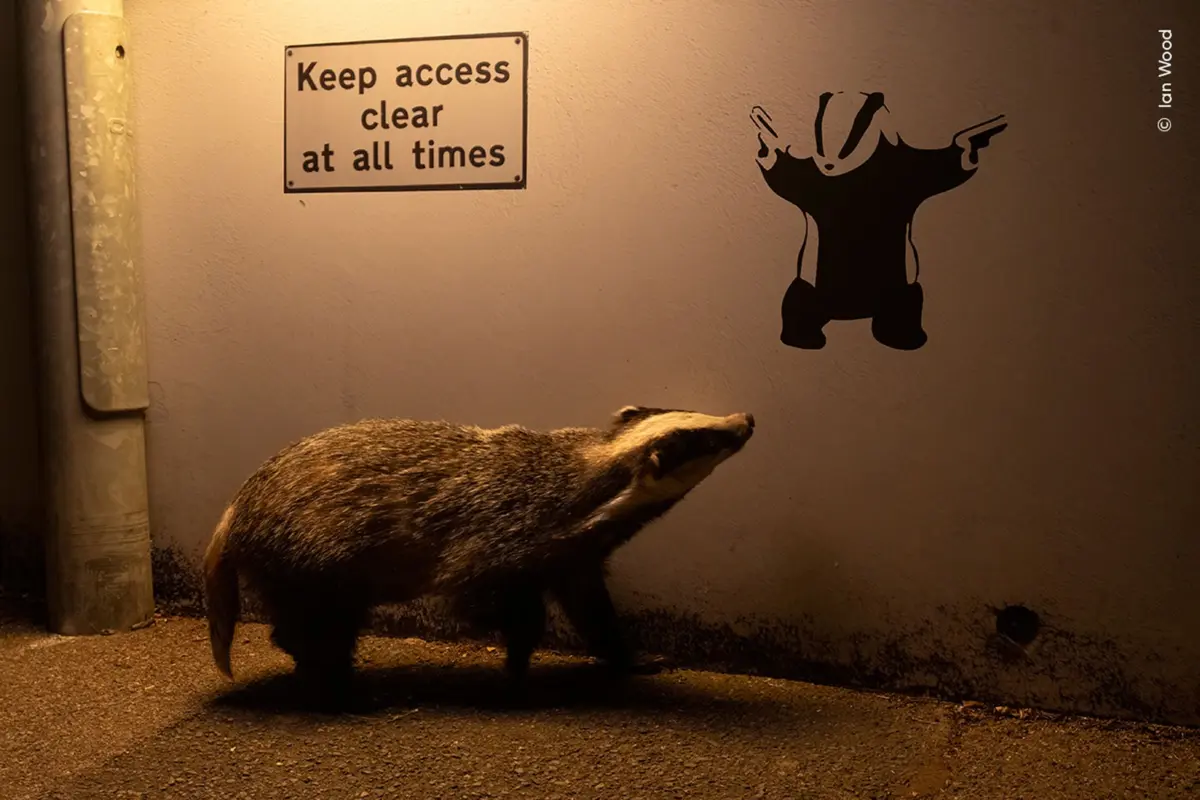
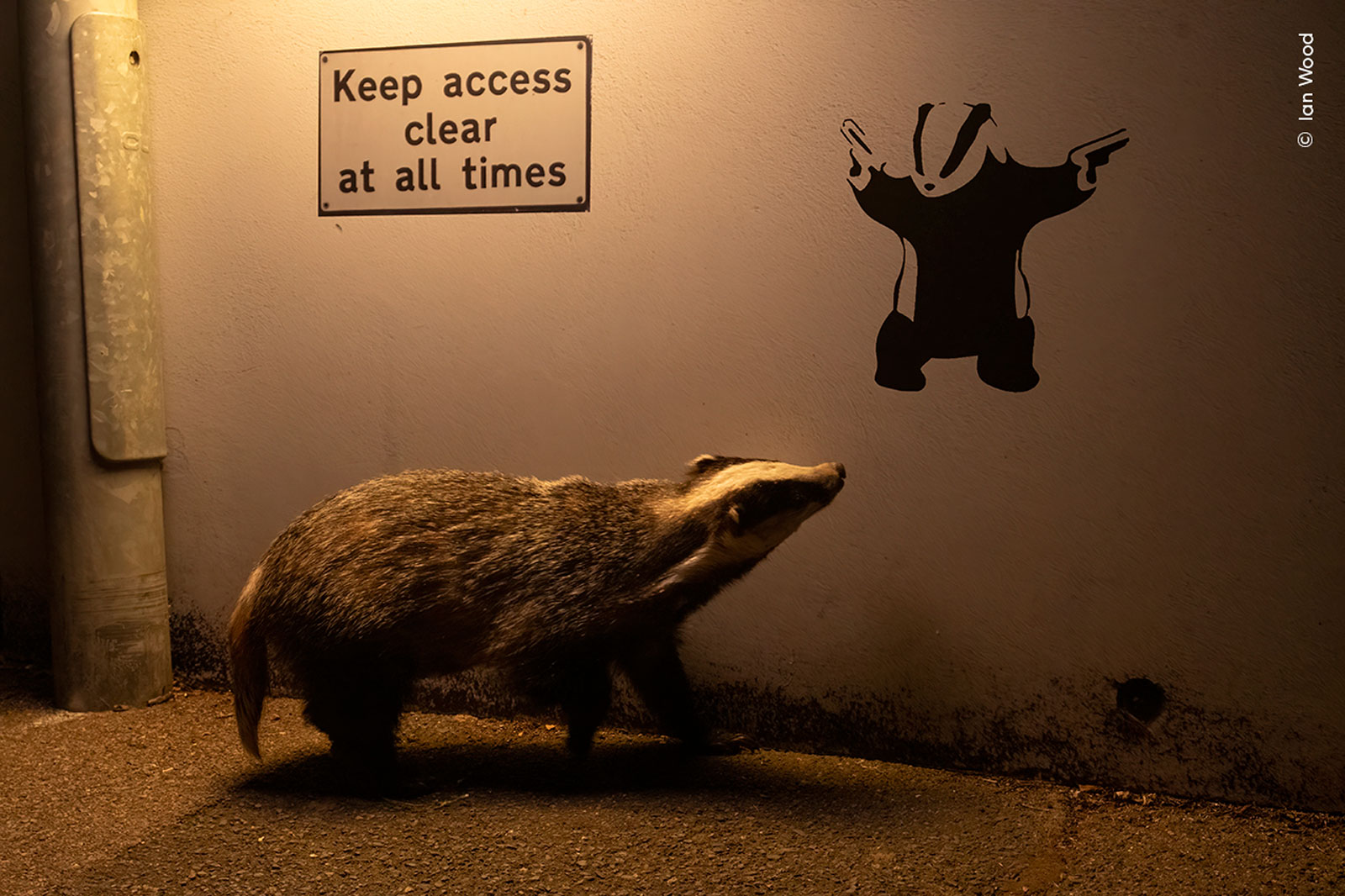
LONDON — In a celebration of nature’s quiet resilience and the intricate intersection of urban expansion and wildlife, British photographer Ian Wood has captured the prestigious title of the 2024 Wildlife Photographer of the Year People’s Choice Award. His winning image, a masterclass in patience and timing titled "No Access," features an ambling Eurasian badger pausing beneath the glow of a streetlamp, glancing upward at familiar graffiti on a wall in St Leonards-on-Sea, England.
The announcement, made by the Natural History Museum in London, marks the tenth anniversary of the People’s Choice category. Wood’s triumphant capture emerged victorious from a highly competitive shortlist of 25 images, which collectively drew a record-breaking response from nature enthusiasts worldwide. More than 76,000 votes were cast, highlighting the enduring public appetite for powerful visual storytelling that connects humanity with the natural world.
Main Facts and Overview of the Competition
The Wildlife Photographer of the Year (WPOTY) competition is widely regarded as the ultimate international showcase for nature photography, celebrating both amateur and professional talent across generations. Developed and produced by the Natural History Museum, London, the competition leverages the emotive and immersive power of photography to foster environmental advocacy and deepen public appreciation for Earth’s biodiversity.
Ian Wood’s winning photograph stood out not merely for its aesthetic composition, but for the profound narrative it encapsulates. Shot under the stark, golden glare of a municipal lamppost, "No Access" portrays an urbanized ecosystem where human infrastructure and wild animals share the same physical space.
Alongside Wood’s grand-prize winner, four "Highly Commended" finalists captivated global audiences:
- "Earth and Sky" by Francisco Negroni (Chile): A striking night capture of a double lenticular cloud illuminated by glowing lava erupting from the Villarrica volcano.
- "Edge of Night" by Jess Findlay: An ethereal action shot of a ghostly barn owl darting from the hayloft of a derelict barn to begin its nocturnal hunt.
- "Whiteout" by Michel d’Oultremont: A minimalist and serene portrait of a Belgian stoat blending flawlessly into a pristine snowy landscape while surveying its territory.
- "Spiked" by David Northall: A dramatic and gritty depiction of a bloodied yet resolute honey badger returning to finish an encounter with a fiercely defended Cape porcupine.
These five standout images were selected from an initial pool of nearly 60,000 entries submitted to the milestone sixtieth edition of the competition by photographers representing countries across the globe.
Chronology of an Urban Wildlife Encounter
The genesis of "No Access" traces back to a quiet coastal neighborhood in St Leonards-on-Sea, East Sussex. In the months leading up to the photograph, local residents had routinely left food scraps on pavements to feed urban foxes. However, these nocturnal offerings soon caught the attention of a nearby community of Eurasian badgers (Meles meles), which began venturing out of their setts to forage in the urban environment.
Noticing the regular nocturnal visits, Ian Wood recognized a unique photographic opportunity. Observing a badger consistently patrolling a specific stretch of pavement bordered by an urban wall, Wood decided to document the behavior.

Operating under the cover of darkness, he meticulously set up a discreet, portable hide on the edge of the road. On the night of the shoot, ambient light was sparse, relying entirely on the harsh, directional glow of an overhead streetlamp. Through patient observation and precise timing, Wood captured the exact millisecond the badger raised its head, creating a poignant visual dialogue between the wild mammal and the human-crafted graffiti looming above it.
Supporting Data and Exhibition Details
The sheer scale of participation in the 2024 People’s Choice Award underscores the cultural significance of modern wildlife photography:
- Total Submissions: Nearly 60,000 entries poured in for the 60th global competition.
- Shortlisted Entries: 25 exceptional photographs were curated by the Natural History Museum and an international judging panel.
- Voter Turnout: A record-breaking 76,000-plus nature fans worldwide participated in the public vote.
- Exhibition Run: The winning image, alongside the four highly commended finalists, will remain on display online and via interactive voting screens at the flagship exhibition at the Natural History Museum in London until June 29, 2025.
Looking ahead, the momentum of the competition shows no signs of slowing. The entry and judging phases for the sixty-first Wildlife Photographer of the Year competition are currently underway, managed by an international panel of experts. The winners of the next installment are scheduled to be revealed at an official awards ceremony in London in October 2025.
Official Responses and Perspectives
The victory has elicited profound reflections from both museum leadership and the winning artist, highlighting the dual nature of the award as both a celebration of artistry and a platform for urgent environmental messaging.
Dr. Douglas Gurr, Director of the Natural History Museum, praised the winning photograph for its thematic resonance:
"Ian’s flawlessly timed image offers a unique glimpse of nature’s interaction with the human world, underscoring the importance of understanding urban wildlife.
His exceptional photograph serves as a powerful reminder that local nature and wildlife, often just outside our homes, can inspire and captivate us."
For Ian Wood, who primarily resides in rural Dorset where he is actively engaged in habitat restoration and re-wilding projects, the accolade brings mixed emotions. While deeply moved by the public response, Wood emphasizes that the image points toward a troubling ecological reality.
"The outpouring of badger love since my photo was nominated for the People’s Choice Award has been beautifully overwhelming. Finding out that it has won is truly humbling. However, there is a darker side to this image," Wood shared.
"I live in rural Dorset where I’m on a re-wilding mission to enhance habitats for a huge array of wildlife. The badger cull — which is still ongoing — has decimated their numbers and I fear that unless the cull is stopped, we’ll only see badgers in urban settings in several parts of England. My hope is for this image to raise awareness of the damaging effect of the badger cull and help push for change."
Broader Implications: Conservation, Policy, and Urban Ecology
While "No Access" is celebrated for its artistic composition and technical execution, its deeper implications ripple far beyond the walls of the Natural History Museum. The photograph forces viewers to confront two critical facets of contemporary wildlife management and conservation in the United Kingdom: the expansion of urban wildlife habitats and the contentious debate surrounding the government-sanctioned badger cull.
The Rise of the Urban Badger
As agricultural intensification, habitat fragmentation, and suburban sprawl continue to compress natural ecosystems, many adaptable species are forced to alter their foraging behaviors. Badgers, traditionally creatures of ancient woodlands, pasturelands, and hedgerows, are increasingly adapting to suburban and urban environments. Access to domestic gardens, intentionally left food scraps, and unstructured green spaces offer both opportunities and hazards for these nocturnal mammals.

While urban environments can sustain badger populations when natural food sources dwindle, they also expose the animals to elevated anthropogenic risks, including road traffic accidents, domestic pet conflicts, and localized persecution. Wood’s photograph encapsulates this precarious boundary—a wild creature navigating an asphalt domain stamped with human expression.
The Badger Cull Controversy
Wood’s poignant commentary on the ongoing badger cull brings a sharp political and conservation-focused edge to his artistic success. Implemented in parts of England as a measure to curb the spread of bovine tuberculosis (bTB) in cattle, the badger cull has polarized conservationists, farmers, and policymakers for over a decade.
Critics of the cull, including numerous wildlife charities and animal welfare organizations, argue that the mass removal of badgers is scientifically flawed, ethically indefensible, and ecologically devastating. They advocate instead for enhanced cattle vaccination, stricter biosecurity measures, and badger vaccination programs. Conversely, proponents maintain that reducing badger densities is a necessary component in controlling a disease that poses significant economic threats to the agricultural sector.
By capturing a badger thriving on the concrete fringes of society, Wood highlights an unintended consequence of rural habitat disruption and population decimation: wildlife pushed to the very margins, seeking sanctuary in human settlements. Through the global platform provided by the Wildlife Photographer of the Year competition, "No Access" transcends its role as a striking visual artifact, transforming into a catalyst for dialogue on how humans coexist—or fail to coexist—with the wild neighbors sharing their world.
