

This report was prepared in collaboration with the Buddhist Justice Reporter, an initiative founded by Buddhist people of color in response to the police torture and killing of George Floyd, inspired by the pioneering anti-lynching journalistic legacy of Ida B. Wells-Barnett.
Main Facts: The Intersection of Grief, Parenting, and Systemic Violence
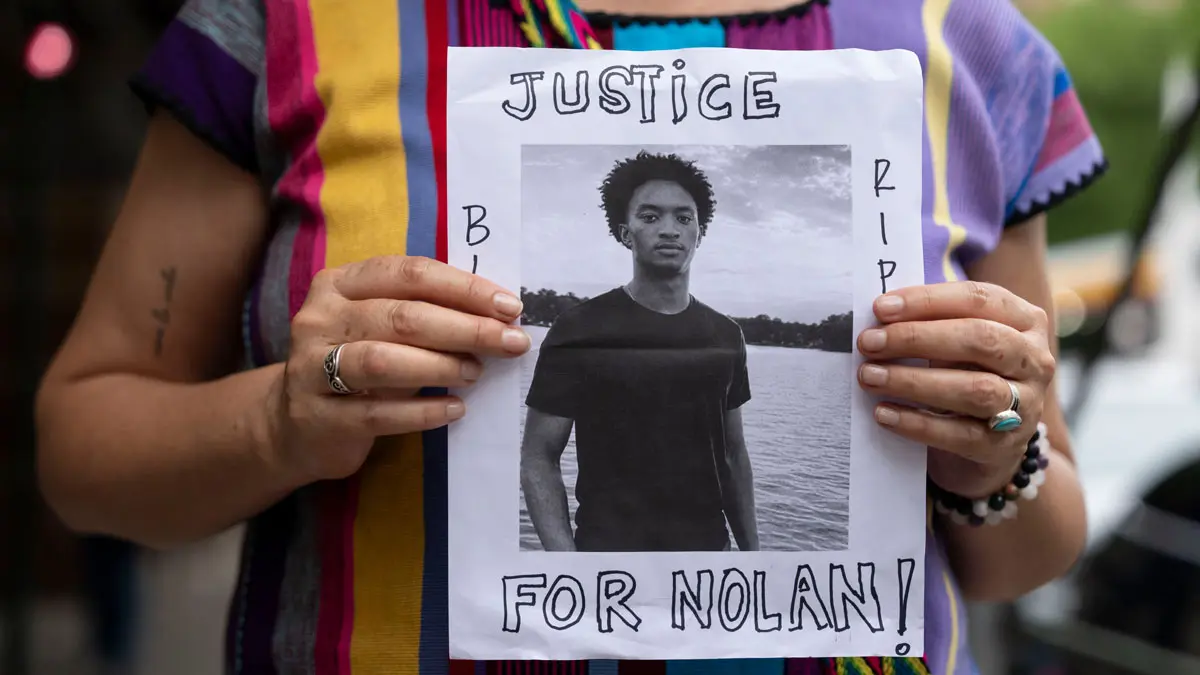
The landscape of modern American parenting for Black families is defined by an agonizing duality: the boundless joy of witnessing a child’s intellectual and emotional evolution, shadowed by the persistent, looming threat of state and vigilante violence. This reality was thrust back into the national consciousness following a devastating sequence of killings that claimed the lives of young Black individuals across the country, including Nolan Xavier Wells, Daniel Erving, Corey Ruiz in Madison, Wisconsin, and Anthoneil Williams II in Austin, Texas.
For Black parents in the United States, raising a child requires a specialized form of hyper-vigilance. It is an exercise in profound observation—not out of paranoia, but out of absolute necessity. Parents must continuously evaluate when and how their children can comprehend that their race places them under a unique, unrelenting societal threat. This protective burden forces families to navigate the delicate balance between fostering self-worth and issuing life-saving warnings about a culture historically and structurally hostile to actualized Black identity.
The emotional toll of this reality transcends cultural and spiritual boundaries, impacting families who must reconcile the beauty of raising resilient children with the generational trauma of systemic racism, mass incarceration, and racial profiling.
Chronology: A Wave of Tragedy and Legal Mobilization
The systemic vulnerability of Black youth in America is underscored by a relentless timeline of fatal encounters with law enforcement and vigilante justice:
- Preceding Incidents: The deaths of teenagers Nolan Xavier Wells and Daniel Erving sent shockwaves through their communities, serving as painful reminders of the precariousness of Black youth in America.
- Early July 2023: In the wake of these tragedies, families sought immediate legal recourse to demand transparency and accountability. Prominent civil rights attorney Ben Crump was retained by the Wells family on July 7, 2023.
- Mid-July 2023: Just days later, on July 13, 2023, the Erving family also retained Attorney Crump to represent them in their pursuit of justice.
- Succeeding Tragedies: This grim timeline extended further with the police killing of Corey Ruiz in Madison, Wisconsin, which occurred just five days after these systemic reflections were initially documented, followed closely by the fatal police shooting of unarmed Anthoneil Williams II in Austin, Texas, exactly one week later.
This unbroken chain of events highlights an urgent, ongoing crisis that continually forces grieving families into legal battles for basic accountability.
Supporting Data: The Architecture of Fear and the Prison Industrial Complex
The fear experienced by Black parents is not unfounded; it is rooted in measurable socio-legal realities and historical precedents deeply embedded in American institutions.
- Historical Residue: The paranoia that targets actualized Black individuals is not a reflection of the reality of Black children. Instead, it is the collective residue of colonialist history, centuries of chattel slavery, persistent racial degradation, and modern socio-economic land occupation.
- Systemic Exploitation: This institutionalized apprehension is repeatedly manufactured and amplified for political advantage, serving to justify systemic human rights atrocities. These include mass incarceration, racial profiling, and the systematic funneling of marginalized bodies into the prison and deportation industrial complexes.
- Linguistic Conditioning: As children mature, parents must meticulously manage the introduction of complex legal vocabulary—such as arrest, imprisonment, sentencing, trial, jury, public defender, and parole. This linguistic preparation functions as a defensive adaptation to a system where racialized quotas, profit-driven incarceration, and linguistic profiling dictate whether an individual receives due process or faces premature criminalization.
Official Responses and Legal Representation
As communities grapple with the human cost of these fatal encounters, institutional and legal responses remain heavily reliant on civil rights advocacy rather than proactive systemic reform.
Prominent civil rights attorney Ben Crump has repeatedly been called upon by grieving families—such as the Wells and Erving families—to step in where local accountability mechanisms frequently fail. While advocates express profound gratitude for the tireless work of legal teams fighting for civil rights, there is a pervasive sentiment that such advocacy should not be necessary in a just society.
Community leaders, spiritual organizations, and grassroots networks continue to demand institutional transparency, independent investigations into police conduct, and substantive legislative reforms to curb excessive force and racial bias within law enforcement agencies nationwide.
Implications: Spiritual Resistance and the Future of Black Childhood
The intersection of systemic racial violence and spiritual practice—specifically Buddhism—offers a unique framework for processing collective trauma. Traditional Buddhist philosophies emphasize equanimity, awakening, and the mitigation of suffering. However, for practitioners who are also Black parents, these principles cannot be weaponized to suppress righteous anger.
The Role of Mindful Anger
True spiritual practice in the face of systemic injustice requires confronting the burn of racial violence head-on. Rather than neutralizing anger with superficial breathing exercises or spiritual bypassing, practitioners must allow righteous indignation to rise to a clarifying level. This clarity fuels a profound love for Black children and a steadfast commitment to their survival and joy.
Navigating Protection in a Polarized Society
The implications of living under persistent threat demand concrete, sometimes controversial, safety measures. Modern parents must make difficult pragmatic choices to protect their children—such as advising them to navigate public spaces with white peers only when Black adults are present. Far from sowing unnecessary division, these precautions are viewed as vital survival tactics in a political climate where systemic threats seek to intimidate, incarcerate, and marginalize non-white communities.
Ultimately, the path forward requires a dual commitment: holding space for the existential dread of parenting under systemic oppression while fiercely and audibly validating the brilliance, resilience, and inherent worth of Black youth.
