


For mineralogists, lapidary artists, spiritual practitioners, and casual hobbyists alike, few experiences rival the sensory overload and geological wonder of attending North America’s premier mineral expositions. Often referred to simply as "The Big Shows," the annual gatherings in Tucson, Arizona, and Denver, Colorado, sit firmly at the top of the global bucket list for anyone enamored with the Earth’s hidden treasures.
Recently, Team HM’s crystal coach Lisa D’Arrigo pulled back the curtain on these massive trade and public exhibitions, releasing an in-depth video breakdown contrasting the two distinct environments. To fully appreciate what these shows offer—and to help prospective attendees plan their ultimate crystal pilgrimage—it helps to examine the history, logistics, visual splendor, and overarching cultural impact of the Tucson and Denver events.
Main Facts: What Are the Tucson and Denver Gem Shows?
At their core, the Tucson Gem, Mineral & Fossil Showcase and the Denver Gem and Mineral Show are colossal marketplaces and exhibitions, but their scales and formats differ significantly.
- The Tucson Phenomenon: Spread out across dozens of independent venues, hotels, and tents throughout the city every winter, the Tucson show is arguably the largest event of its kind in the world. It is not a single trade show, but a city-wide takeover involving an estimated 40+ separate shows running concurrently over several weeks. From wholesale-only dealer suites to massive open-air tents selling polished stones by the pound, Tucson is a global nexus where miners, international wholesalers, museum curators, and retail buyers converge.
- The Denver Dynamic: Taking place in the autumn, the Denver Gem and Mineral Show operates on a slightly more centralized, cohesive scale (primarily anchored at major convention centers like the Colorado Convention Center or the National Western Complex, depending on the specific seasonal events). While still massive, offering miles of aisles packed with mineral specimens, fossils, beads, and metaphysical tools, Denver is often praised by attendees for being slightly more navigable and approachable than its sprawling counterpart in the Arizona desert.
Both events serve as primary distribution hubs for newly discovered mineral finds from around the globe, making them crucial economic and cultural touchstones for the international lapidary community.
Chronology: The Evolution of the Great American Gem Expos
Understanding how these shows became institutional goliaths requires a look back at their origins.
- 1954 – The Birth of Tucson: The Tucson Gem and Mineral Show humble beginnings started in a school cafeteria, organized by the Tucson Gem and Mineral Society. What began as a modest local club exhibition gradually attracted regional rockhounds, eventually snowballing into an international phenomenon as global trade routes opened and the popularity of metaphysical healing surged in the latter half of the 20th century.
- 1967 – Denver Establishes Its Footprint: Roughly a decade after Tucson cemented its status, the Denver Gem and Mineral Show began carving out its own identity in the Rocky Mountain region. Benefiting from Colorado’s rich mining history and proximity to prolific domestic mineral deposits, the Denver show steadily grew into the premier autumn event for collectors in North America.
- The 21st Century Expansion: Over the past two decades, both shows have experienced exponential growth, driven largely by social media, a mainstream wellness boom focusing on crystal energies, and an increasing appreciation for home decor featuring raw earth elements. Today, these events draw tens of thousands of visitors, transforming local hospitality and tourism economies during their respective runs.
Supporting Data and Highlights: Exploring the Inventory
To visit either show is to bear witness to the staggering diversity and scale of the Earth’s crust. As Lisa D’Arrigo and Team HM documented in their recent comparative showcase, the sheer volume of material on display is staggering.
1. The Reign of Quartz
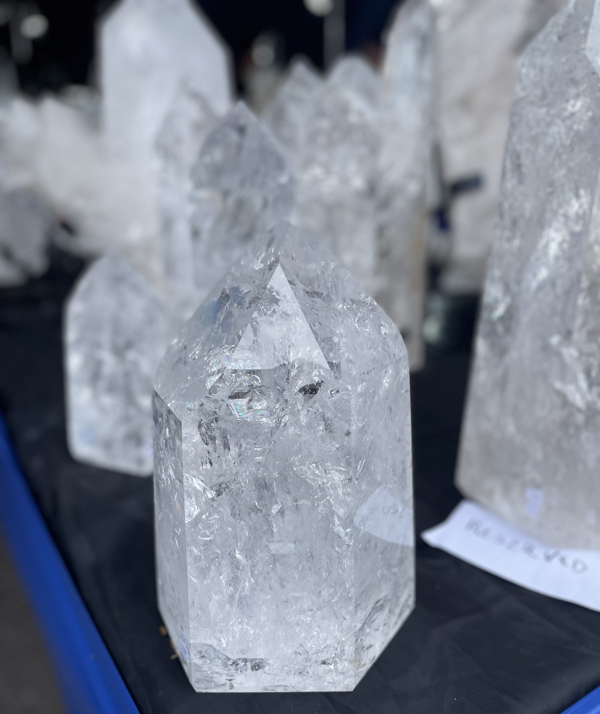
Clear quartz remains the undisputed rock star of the mineral world. Celebrated for its abundance, aesthetic versatility, and foundational role in crystal healing traditions, quartz appears at the shows in every conceivable form. From massive "Fire and Ice" quartz towers radiating internal fractures and rainbows to towering clusters, the material sets the visual baseline for both events. (For those interested in the deeper metaphysical properties, historical correspondences, and meanings of clear quartz, specialized guides such as those hosted on the Hibiscus Moon resource network offer deep dives into its energetic applications).
2. Earth Keepers and Monumental Specimens
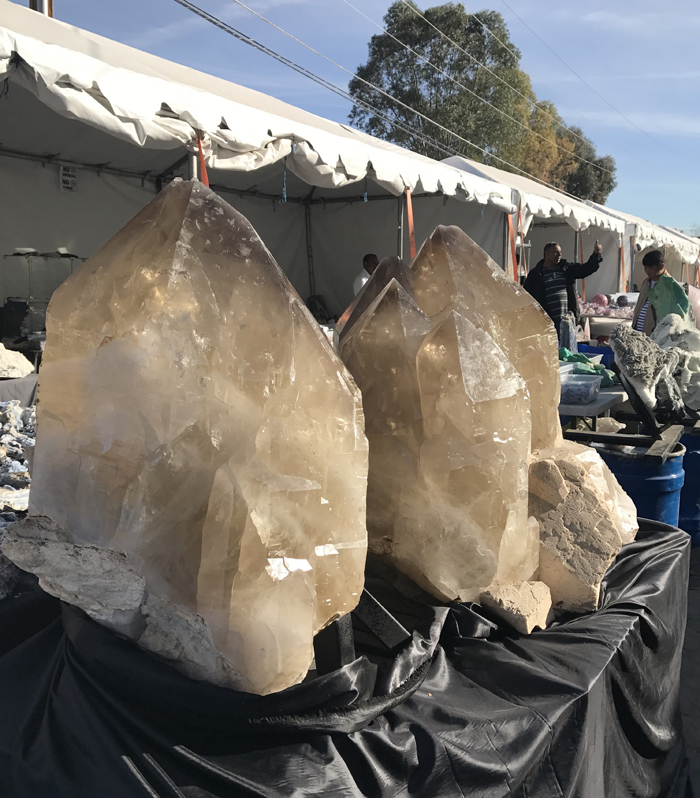
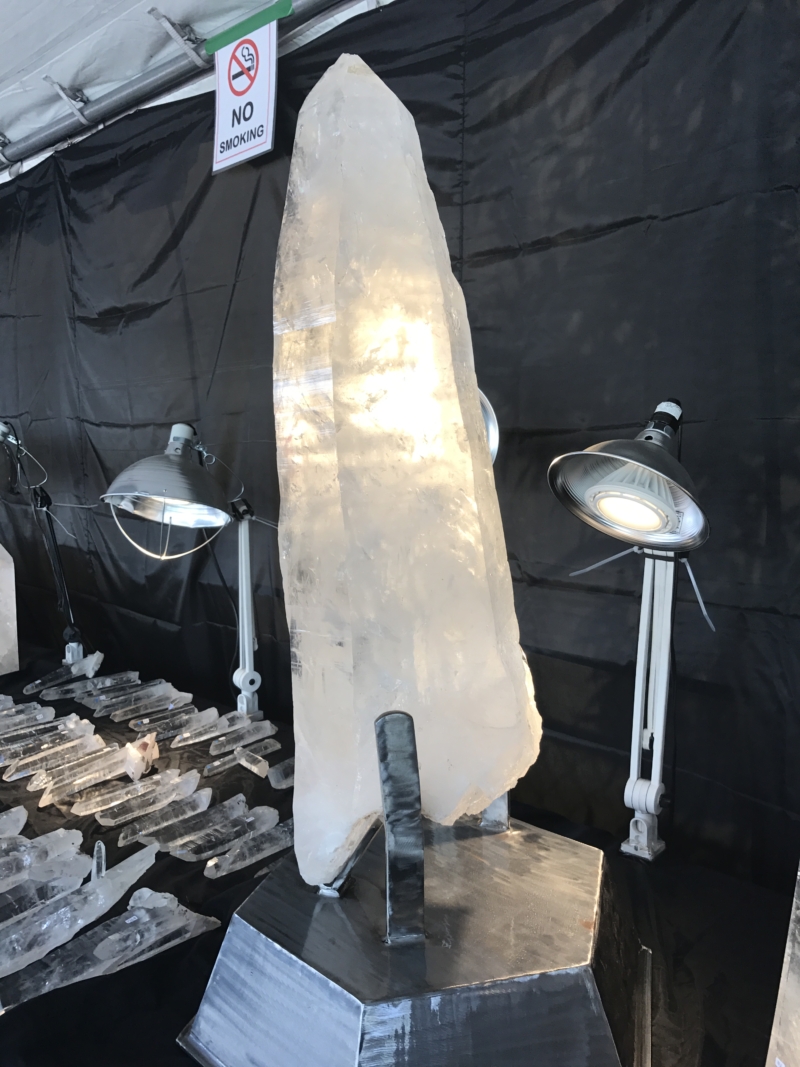
At the Tucson Gem Show, visitors frequently encounter monumental specimens known in the metaphysical community as "Earth Keepers"—such as massive, cathedral-sized Smokey Quartz points. Standing several feet tall, these monolithic crystals possess immense physical presence and are frequently discussed in terms of their energetic toroidal fields—the invisible, donut-shaped energetic patterns said to surround large crystalline structures.
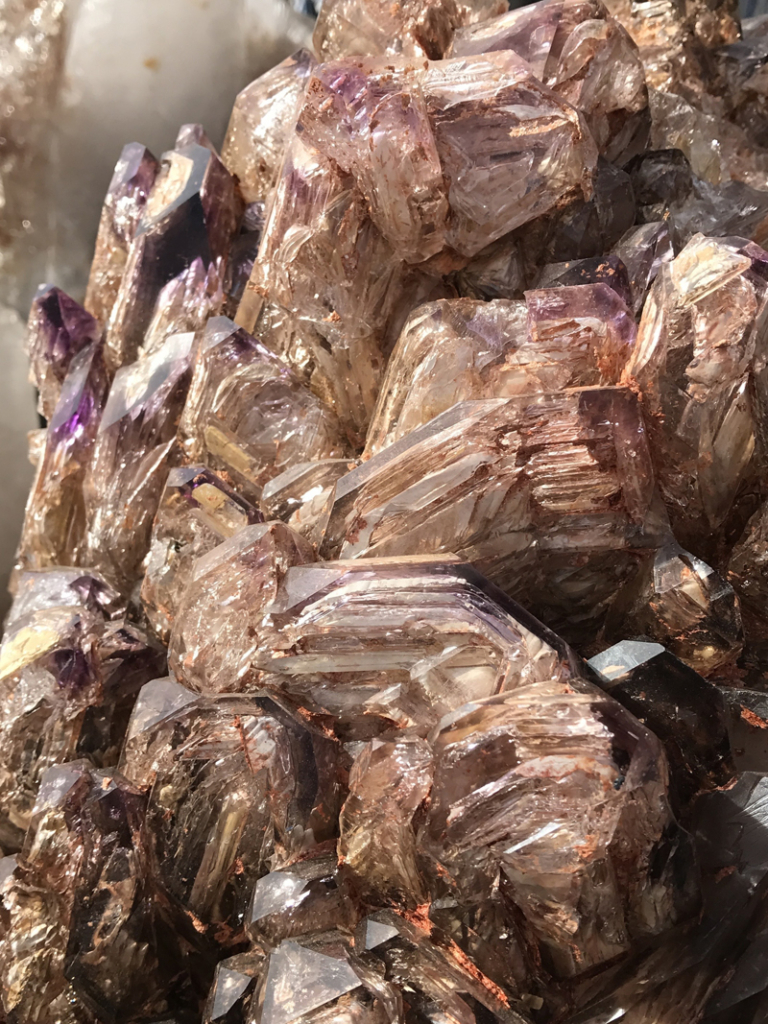
Similarly, visitors regularly stumble upon jaw-dropping rarities, such as skeletal "elestial" smokey-amethyst combinations that resemble ancient, multi-layered architectural ruins, or giant Lemurian quartz points featuring characteristic ladder-like striations along their faces.
3. Functional Art and Carvings
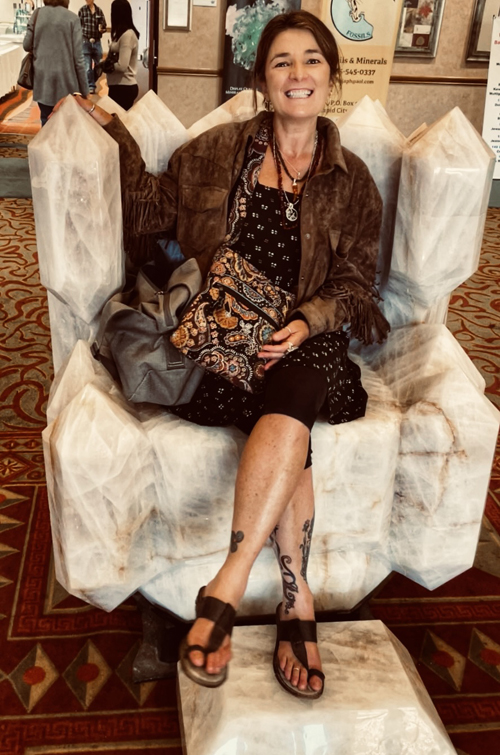
Beyond raw points and clusters, the artistry on display highlights the incredible skill of global lapidary carvers. Intricate deity statues—such as serene representations of Krishna carved from purple lepidolite—sit alongside functional statement pieces like natural crystal thrones crafted from milky quartz.

For jewelry makers and crafters, the bead pavilions at the Denver and Tucson shows offer seemingly endless rows of gemstone strands, ranging from common semi-precious agates and jaspers to ultra-rare meteorites and gem-grade tanzanite.
Official Perspectives and Practical Considerations
Attending a major gem show requires strategic planning. According to seasoned veterans like Hibiscus Moon and Lisa D’Arrigo, first-time visitors often experience "sensory overload" within the first hour.
Key Tips for Gem Show Attendees:
- Know Your Status (Wholesale vs. Retail): Many venues in Tucson require a business license or tax ID for entry, as they cater strictly to wholesale buyers. However, numerous tents and shows are entirely open to the general public (retail). Always check admission requirements beforehand.
- Footwear is Paramount: You will easily log 10,000 to 20,000 steps a day across concrete floors, dusty outdoor tents, and convention halls. Comfortable, supportive walking shoes are non-negotiable.
- Hydration and Sun Protection: In Tucson, you are operating in an arid desert climate where dry heat can quickly lead to dehydration. In Denver, the high altitude requires similar mindfulness regarding water intake and sun exposure.
- Cash and Transport Strategy: While many modern vendors accept credit cards, cash can still secure better deals in certain cash-only wholesale environments. Furthermore, if you plan on purchasing heavy mineral specimens or large quantities of beads, bring a rolling cart or backpack to save your shoulders.
Implications: The Cultural and Economic Ripple Effect
The impact of the Tucson and Denver gem shows extends far beyond commerce; they serve as critical educational and cultural hubs.
Economically, these events inject millions of dollars into their host cities, filling hotels, restaurants, and transportation networks for weeks. For international vendors—many traveling from remote mining regions in Madagascar, Brazil, Pakistan, India, and beyond—these shows represent a primary livelihood, connecting local artisanal miners directly with global markets.

Culturally, the shows foster a deeper connection to the natural world. In an increasingly digital age, holding a physical piece of geological history—such as a multi-million-year-old fossil or a flawlessly terminated crystal formed deep within the Earth’s mantle—provides a grounding, tactile reminder of planetary forces. Whether attendees are seeking spiritual alignment, interior design inspiration, or scientific specimens for a museum collection, the Tucson and Denver expositions validate the enduring human fascination with the mineral kingdom.
Conclusion: Which Show Belongs on Your Bucket List?
Deciding between the Tucson Gem Show and the Denver Gem Show ultimately comes down to personal preference and travel timing. Tucson offers an sprawling, sun-drenched, city-wide adventure unlike anything else on Earth, ideal for those seeking maximum variety and an immersive desert festival atmosphere. Denver offers a crisp, highly organized, and accessible mountain-city experience that packs an incredible geological punch into a slightly more concentrated timeframe.
As Lisa D’Arrigo’s video comparison demonstrates, you truly cannot go wrong with either choice. Whether you go home with a suitcase full of gemstone beads, a carved figurine, or simply a head full of inspiration and crystal energy, a pilgrimage to the Big Shows is an unforgettable rite of passage for any mineral enthusiast.
