

Main Facts: The Epicenter of Marine Biodiversity
Tucked away off the northwest tip of the Bird’s Head Peninsula in West Papua, Indonesia, lies Raja Ampat—an ethereal archipelago widely celebrated by marine scientists and professional photographers alike as the ultimate frontier for underwater imaging. Comprising over 1,500 jungle-crowned limestone islands surrounding the four primary landmasses of Waigeo, Batanta, Salawati, and Misool, this remote region sits squarely in the heart of the Coral Triangle.
Often dubbed “The Last Paradise,” Raja Ampat is a biological juggernaut. Marine biologists estimate that the area harbors roughly 75% of all known coral species on Earth, alongside an astonishing repertoire of marine life. Photographers visiting the region can expect to encounter over 1,000 species of reef fish, 540 distinct strains of hard and soft corals, 700 varieties of mollusks, saltwater crocodiles, dugongs, and cruising populations of reef sharks and oceanic manta rays.

Unlike many marine environments worldwide that are currently experiencing ecological degradation, areas of Raja Ampat—particularly around Misool—demonstrate a rare upward trajectory in biodiversity recovery, driven by rigorous local conservation initiatives, community-led marine protected areas (MPAs), and strict tourism regulations.

Chronology: Navigating the Journey to Remote Waters
Reaching this aquatic utopia is an expedition in its own right, requiring careful logistical planning, particularly for international travelers hauling delicate, high-value camera gear, bulky strobes, dome ports, and heavy lithium-ion battery banks.

- Phase One – International and Domestic Transit: For travelers originating from Oceania or Western hubs, the journey typically involves multi-leg commercial flights transiting through major Indonesian transport hubs such as Jakarta or Denpasar (Bali), followed by a domestic connection to Sorong (SOQ) on the mainland of Southwest Papua.
- Phase Two – Maritime Transfer to Waisai: From the port of Sorong, travelers board a slow, tropical ferry for a scenic, two-hour maritime crossing across the Dampier Strait, heading toward Waisai, the capital of the Raja Ampat Regency. Alternatively, high-speed private watercraft can be chartered, though weather and sea conditions dictate feasibility.
- Phase Three – Deep-Region Deployment: Upon reaching Waisai or Sorong, underwater photographers generally choose between two primary operational bases: land-based eco-resorts with dedicated house reefs, or specialized liveaboard vessels. Liveaboards remain the gold standard for serious image-makers, enabling continuous transit across expansive oceanic tracks to remote southern sectors like Misool, which would otherwise remain unreachable via day-boat operations.
Supporting Data: Photographic Ecosystems and Gear Strategies
Raja Ampat is a multifaceted theater for underwater image-making, demanding versatility from photographers who must constantly pivot between sweeping macro encounters and expansive wide-angle vistas.

Wide-Angle Opportunities and Split Shots
The flourishing, uninterrupted coral gardens and complex topography of the archipelago provide prime environments for wide-angle compositions. Photographers frequently rely on ultra-wide lenses (such as a 16–35mm zoom) to capture massive schools of barracuda, fusiliers, and batfish swarming over kaleidoscopic reef formations.

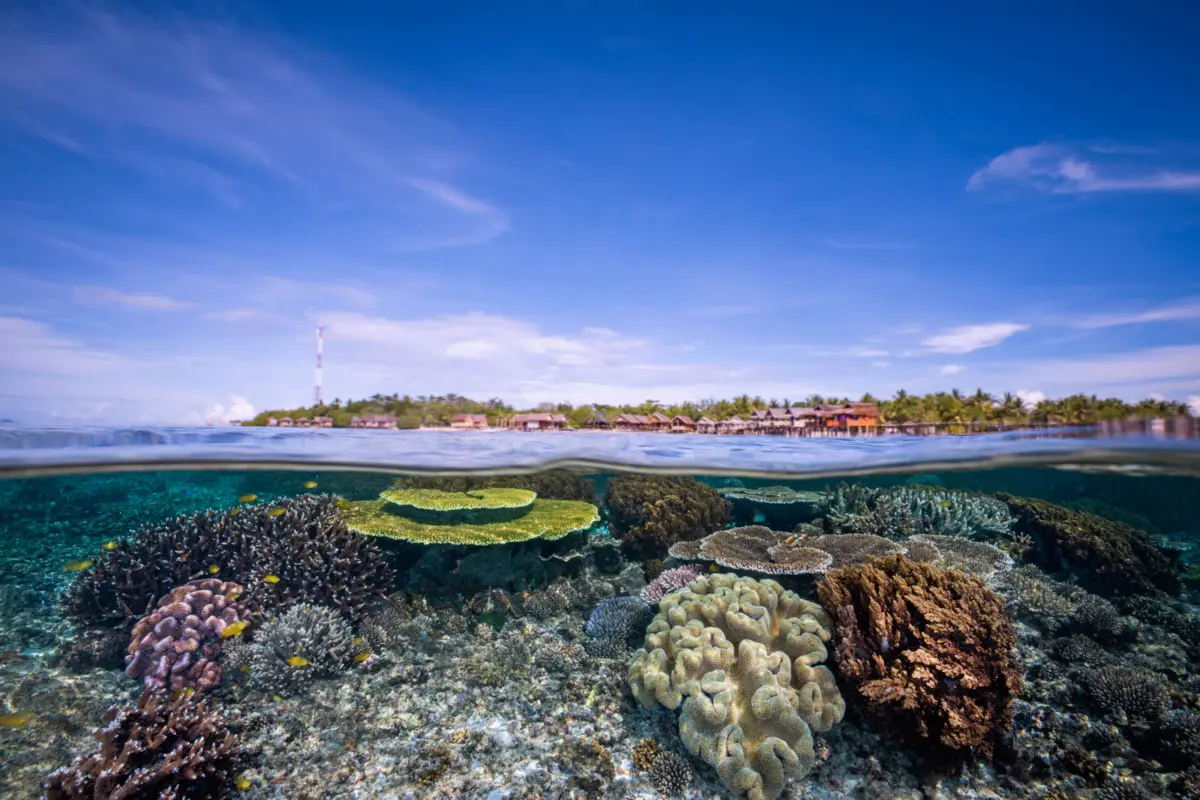
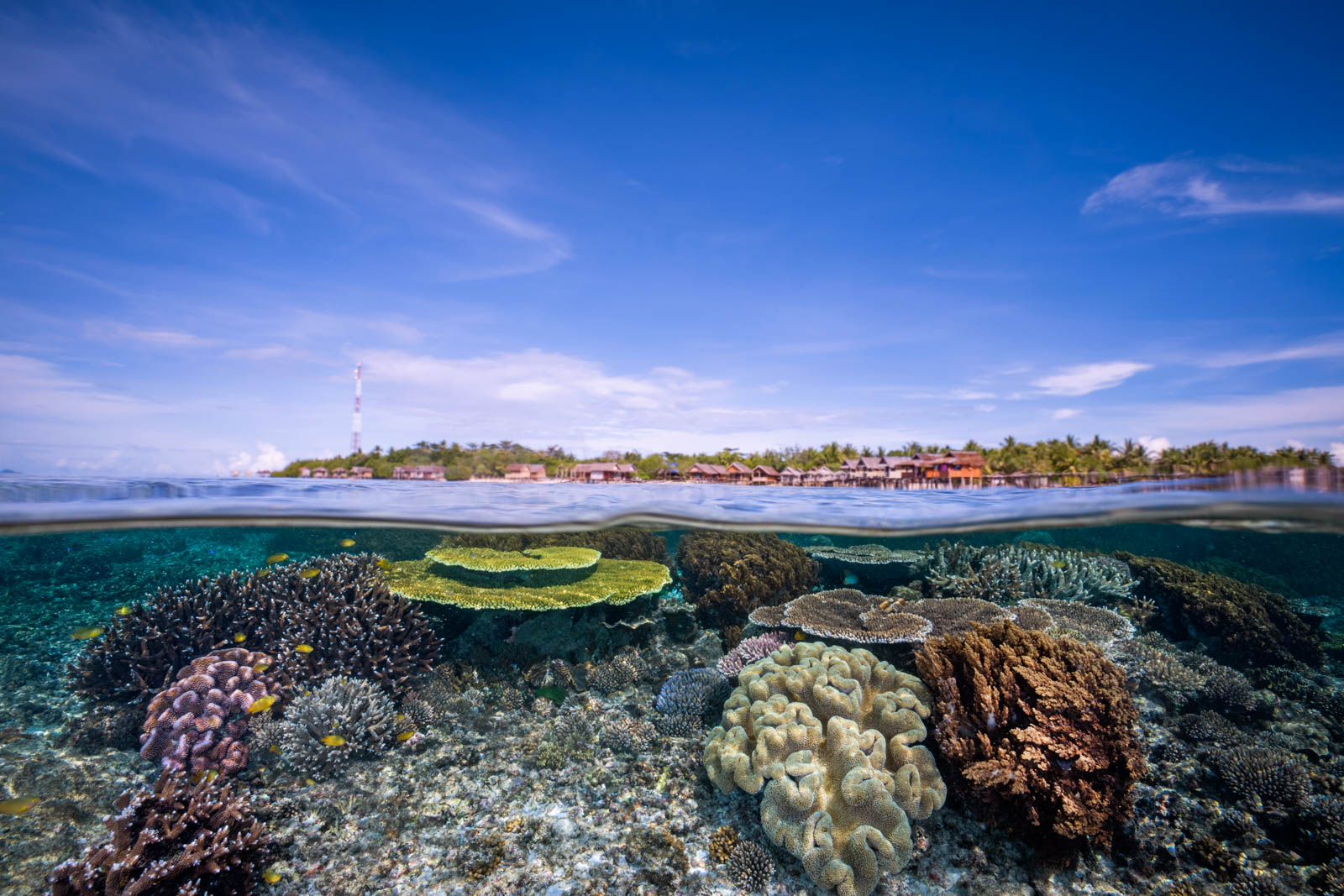
Furthermore, the calm, crystalline shallows surrounding island house reefs offer world-class conditions for over-under “split shots.” By utilizing the rich, fiery hues of West Papuan sunrises and sunsets against the dramatic silhouettes of limestone karst islands, photographers can simultaneously capture the terrestrial and marine worlds in a single frame.

Macro Marvels and Super-Macro Setups
Beneath the grand reefscapes lies a vibrant micro-universe. Raja Ampat’s crevices, walls, and soft coral gardens teem with elusive, highly sought-after macro subjects. While a mid-range macro lens (like a 60mm equivalent) is useful, professionals strongly advocate for longer focal lengths—such as 90mm or 120mm macro lenses—paired with external diopters to capture ultra-detailed portraits of tiny benthic residents. Common macro encounters include:

- Pygmy seahorses (Hippocampus bargibanti and H. denise) nestled inside gorgonian fans
- Rhinopias (leaf scorpionfish) and various species of frogfish
- Ghost pipefish, blue-ringed octopuses, flamboyant cuttlefish, and mantis shrimp
- Countless species of nudibranchs, flatworms, and blennies
Official Responses: Managing Environmental Pressures and Safety
As Raja Ampat’s global profile grows, local tourism boards, conservation authorities, and indigenous communities have implemented structured protocols to safeguard the fragile marine ecosystems against human impact.

Navigating Dynamic Currents and Environmental Hazards
The engine driving Raja Ampat’s prolific marine life is a complex network of powerful, nutrient-rich oceanic currents surging through channels like the Dampier Strait. While these currents feed the vibrant coral ecosystems, they present severe physical challenges for underwater photographers operating heavy, cumbersome camera housings.

Local dive guides routinely brief incoming divers on severe down-currents and high-velocity water movement. Experienced professionals recommend assessing the strength of incoming water before entering the water with expensive camera rigs. On days when currents are rated as extreme, many photographers choose to leave primary camera systems behind or rely strictly on secure lanyard attachment systems and comprehensive professional insurance policies to mitigate financial and physical risk.

Conservation Mandates
Visitors are legally required to purchase an annual Environmental Services Fee (the Raja Ampat Marine Park Entry Tag) prior to diving. This revenue directly funds local ranger patrols, community welfare programs, and marine conservation enforcement units designed to combat illegal fishing and anchor damage on sensitive coral reefs.

Implications: Selecting the Premier Photographic Sites
To maximize expedition efficiency, photographers must target specific dive sites tailored to their artistic objectives. Experts highlight five world-class locations across the archipelago:

1. Melissa’s Garden (Fam Islands)
An undisputed sanctuary for coral enthusiasts. Dropping down onto Melissa’s Garden immerses the photographer in an endless expanse of delicate, plate-coral gardens that stretch toward the horizon. The pristine structural topography makes it an exceptional wide-angle site, frequently visited by schooling snappers, unicornfish, and reef hunters.

2. Batu Rufus
Characterized by a dramatic entrance through an emerald-hued limestone swim-through lined with massive gorgonian fans, Batu Rufus leads into a protected, crystal-clear shallow lagoon. Ideal for natural-light freediving and split-level photography, the shallow sandy bottoms and coral bommies offer brilliant visibility and intimate encounters with marine life in calm conditions.

3. Cape Kri
Holding historic renown for yielding the highest recorded number of marine species observed on a single scuba dive, Cape Kri is an absolute must-visit. Its sloping topography drops to 40 meters, featuring intersecting currents that attract pelagic predators like sharks, giant trevallies, and schooling barracuda. Simultaneously, the abundant Muricella gorgonians on the wall serve as a prime habitat for pygmy seahorses, offering dual opportunities for both wide-angle and macro portfolios.

4. Manta Ridge
Positioned between Mansuar and Arborek Islands, Manta Ridge is a dynamic cleaning station where oceanic and reef manta rays congregate. Photographers must contend with brisk currents while positioning themselves near natural reef hooks to witness mantas gliding effortlessly overhead. Due to shifting oceanic conditions, sightings can vary, requiring patience and disciplined buoyancy control.

5. Citrus Ridge (Gam Islands)
True to its name, Citrus Ridge explodes with vibrant soft corals in neon yellows, oranges, and pinks. While the sweeping reefscapes invite creative wide-angle abstracts, the site is equally celebrated as a macro hotspot. Photographers can spend entire dives inspecting individual coral heads for cryptic bottom-dwellers, wobbegong sharks resting beneath ledges, and exquisite invertebrate life framed against a brilliant, living canvas.

Conclusion
An underwater photography expedition to Raja Ampat is a transformative experience that tests technical proficiency while rewarding dedication with scenes of unmatched natural beauty. Whether choosing the broad sweep of wide-angle reefscapes or the meticulous patience required for macro imagery, photographers must commit to their artistic vision while maintaining profound respect for the fragile ecosystems and powerful currents of Indonesia’s ultimate marine sanctuary.
