

Whether you have spent the last decade nurturing a temperamental sourdough starter or simply joined the pandemic-era home baking movement, you have likely experienced a familiar moment of culinary disappointment: comparing your proudest homemade loaf to a rustic, blistered masterpiece from your favorite local bakery.
For years, home bakers accepted this gap in quality as an inevitable consequence of residential kitchen limits. But according to culinary experts and equipment testers, the disparity is not a reflection of a baker’s skill—it is a matter of hardware. Professional bakeries utilize heavy-duty, commercial-grade deck ovens featuring rotating stone shelves that retain and distribute heat in ways standard wire racks and metal sheet pans simply cannot match.
Fortunately, bridging the gap between amateur and artisan no longer requires a commercial kitchen renovation. A single piece of specialized equipment—the heavy cast-iron bread oven—has emerged as the ultimate game-changer for home kitchens, transforming flat, pale loaves into golden, crackling works of art.
The Physics of Professional Bread: Why Cast Iron Reigns Supreme
To understand why traditional home ovens struggle with artisan bread, one must understand the physics of commercial baking. Professional deck ovens maintain intense, steady thermal mass. When raw, cold dough meets a blistering hot surface, a rapid transfer of thermal energy occurs. This sudden jolt triggers what bakers call "oven spring"—the rapid expansion of gas bubbles trapped within the dough during the first few minutes of baking.
Furthermore, commercial setups trap steam efficiently. When bread bakes, moisture within the dough turns to steam. If this steam escapes into a dry home oven environment, the outer skin of the dough sets prematurely, restricting the loaf’s vertical expansion. A specialized bread oven features a snug, domed lid that traps this escaping moisture, keeping the crust pliable long enough for the loaf to achieve its maximum volumetric potential. Once the steam is released midway through the baking process, the dry heat finishes the job, carving out a deeply caramelized, crackling crust.
Cast iron outperforms metal, silicone, glass, and ceramic because it heats slowly, retains thermal energy flawlessly, and distributes it with absolute consistency. The result is a more evenly shaped loaf, an open, airy crumb structure, and that signature acoustic "crackle" when the crust is finally sliced.
Evaluating the Market: Top Cast Iron Bread Ovens Compared
To identify the absolute best equipment for home bakers of all skill levels, culinary testers spent months evaluating the top contenders on the market. Performance metrics focused on heat retention, steam-trapping efficiency, physical dimensions, ease of maintenance, and overall value.
Quick Picks at a Glance
| Best For | Oven | Price | Overall Rating |
|---|---|---|---|
| Best for Serious Bakers | Challenger Breadware Bread Pan | $299.00 | 4.6 / 5 |
| Best Budget Option | Tramontina Cast Iron Bread Oven | $59.95 | 4.2 / 5 |
| Best Premium Option | Le Creuset Bread Oven | $324.95 | 4.4 / 5 |
1. The Heavyweight Champion: Challenger Breadware Bread Pan
- Price: $299.00
- Material: Bare black cast iron
- Dimensions: 15.5 x 10.5-inch base
- Overall Rating: 4.6/5
Design and Performance
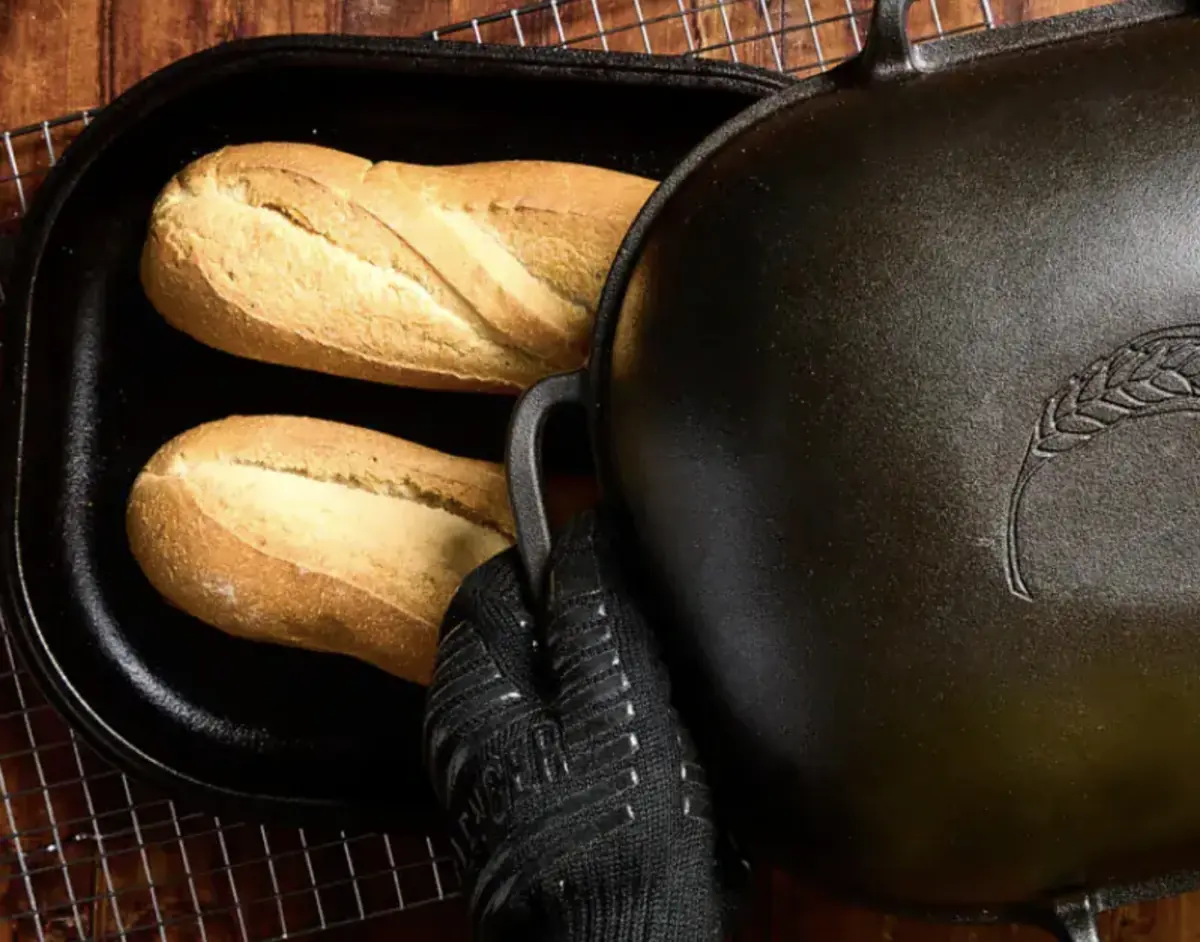
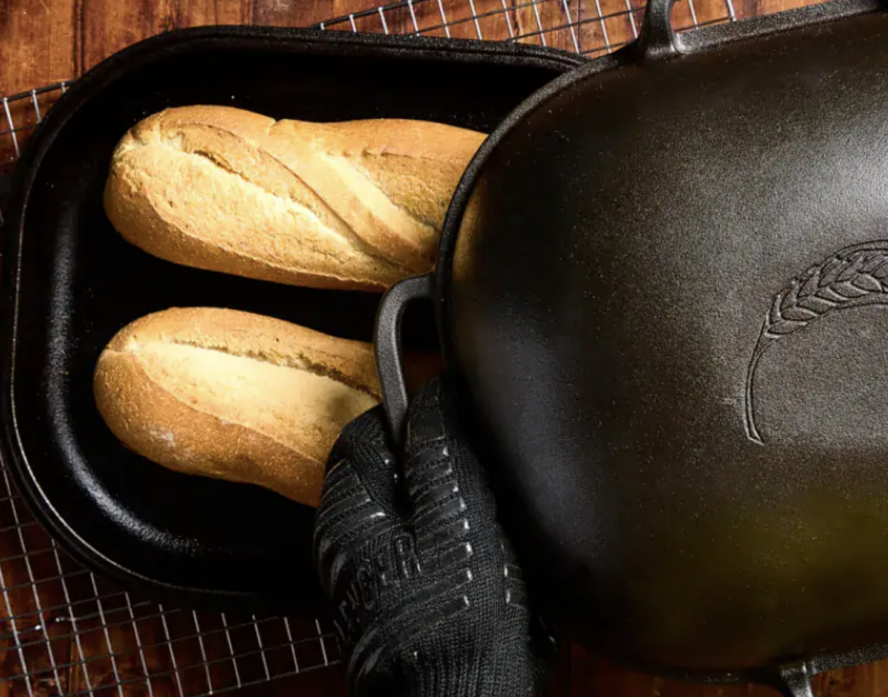
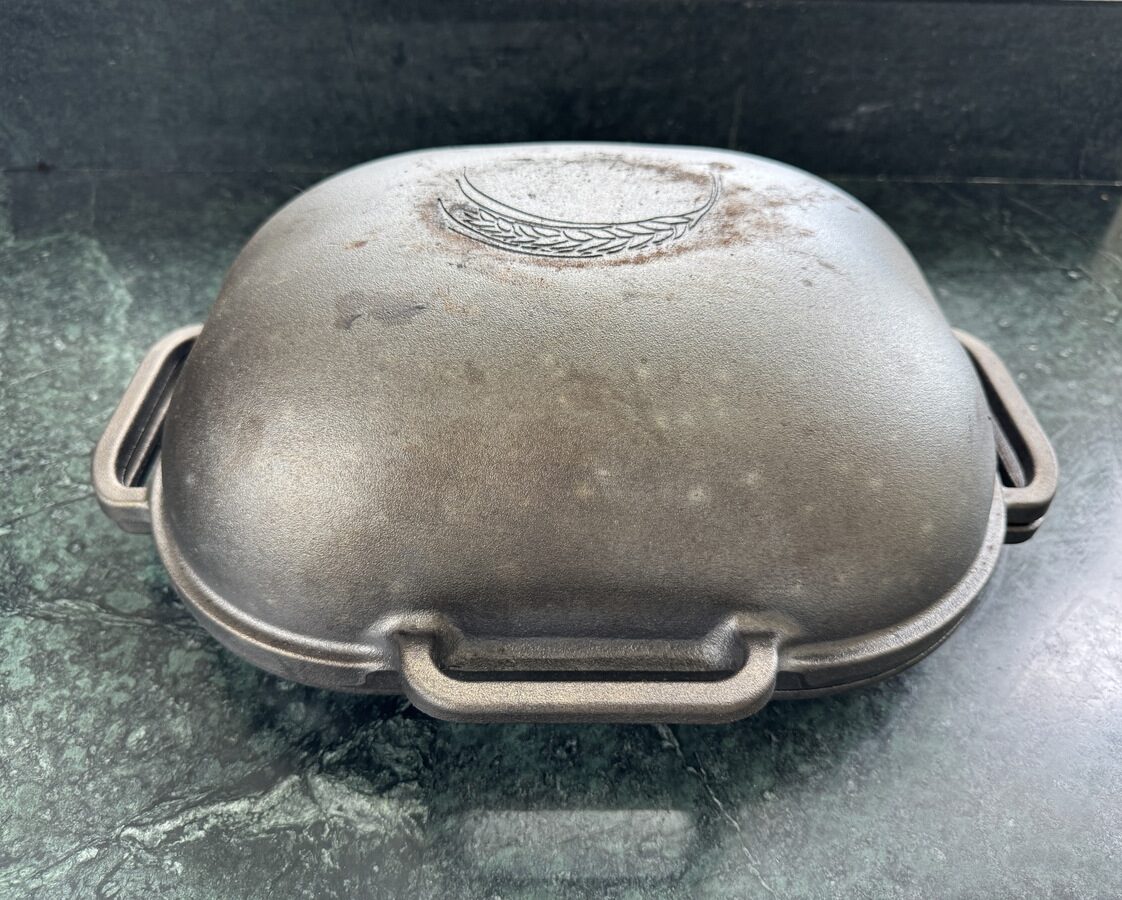
Designed by Jim Challenger—a frustrated home baker who could not find a commercial vessel large or versatile enough for serious artisan loaves—the Challenger Bread Pan is purpose-built for perfection. Featuring a broad, low-profile 15.5 x 10.5-inch base, it easily accommodates full-sized oval batards, large boules, baguettes, and even non-bread items like focaccias and roasted meats.
Cast from thick, heavy, bare black cast iron, the Challenger pan delivers maximum thermal radiation directly into the dough. During testing, loaves baked in this vessel consistently produced a rich, dark brown bottom crust and a aggressively blistered, crackling exterior. The gently domed rectangular lid forms an airtight seal, trapping steam efficiently to maximize oven spring.
Pros & Cons
- Pros: Massive base fits diverse loaf shapes; bare cast iron creates the darkest, crispest crusts; tight-sealing lid; pre-seasoned and oven-safe up to 500°F.
- Cons: At 20 pounds, it is the heaviest option tested; bare cast iron requires mindful maintenance to prevent rust; premium price point.
2. The Value Champion: Tramontina Cast Iron Bread Oven
- Price: $59.95
- Material: Enameled cast iron
- Dimensions: 9.5-inch round base
- Overall Rating: 4.2/5
Design and Performance
For bakers who want professional performance without breaking the bank, the Tramontina Cast Iron Bread Oven delivers remarkable value. Despite costing a fraction of its high-end competitors, this enameled vessel offers the dense thermal properties required for an exceptional crust.
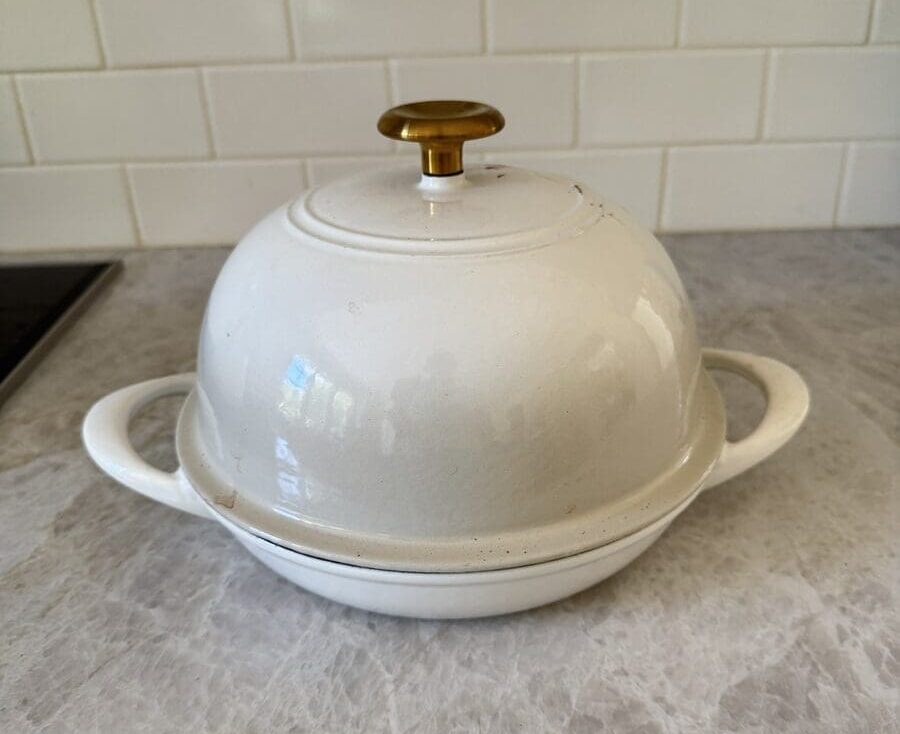
Available in five eye-catching colors, the Tramontina features an off-white porcelain enamel interior that prevents sticking and simplifies cleanup. Its high-domed lid sits firmly on a 9.5-inch round base, sealing in steam effectively. While the 9.5-inch circular footprint limits bakers to standard boules rather than elongated batards, the oven consistently produces well-shaped, golden-brown loaves.
Pros & Cons
- Pros: Highly affordable price point; enameled interior requires no seasoning and cleans easily; backed by a lifetime warranty.
- Cons: Smaller 9.5-inch diameter restricts loaf shape; enameled coating slightly dampens direct radiant heat compared to bare iron; white interior smudges easily.
3. The Design Icon: Le Creuset Bread Oven
- Price: $324.95
- Material: Enameled cast iron
- Dimensions: 9.5-inch round base
- Overall Rating: 4.4/5
Design and Performance
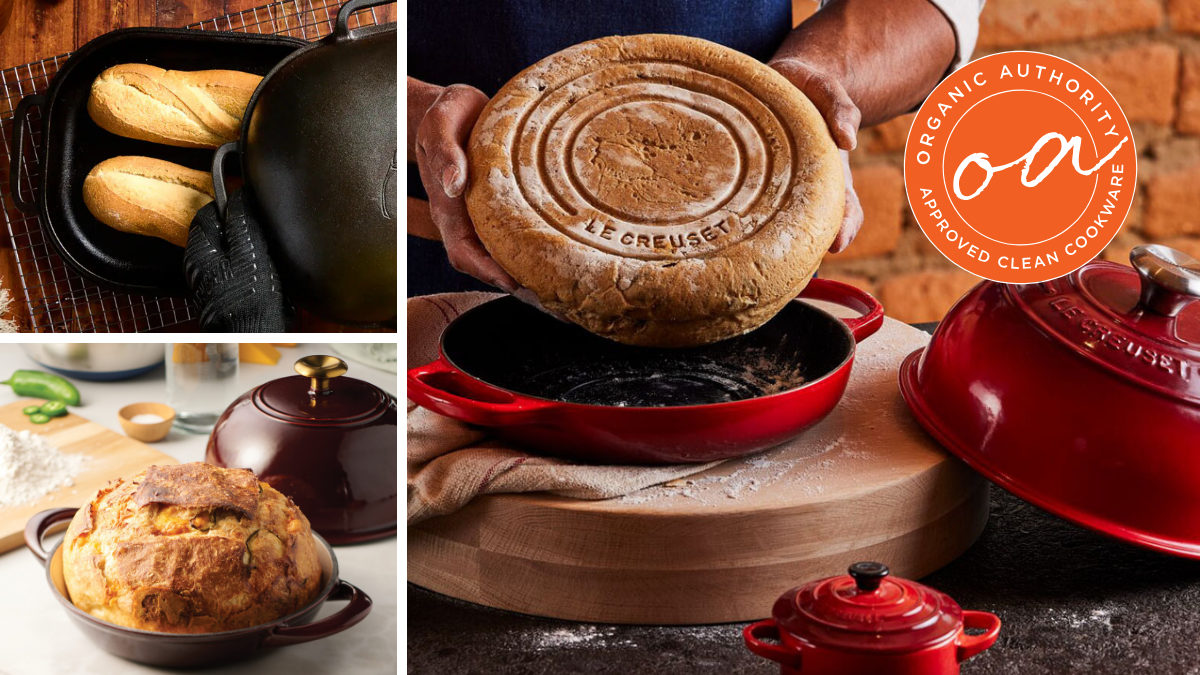
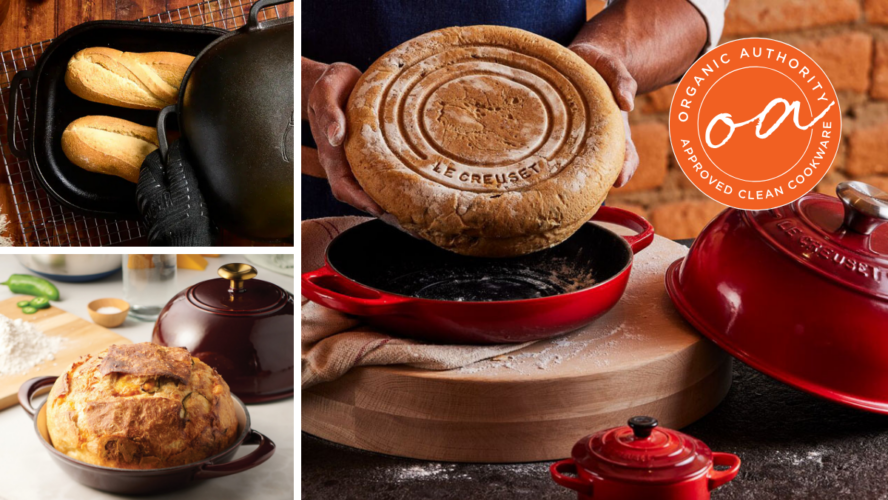
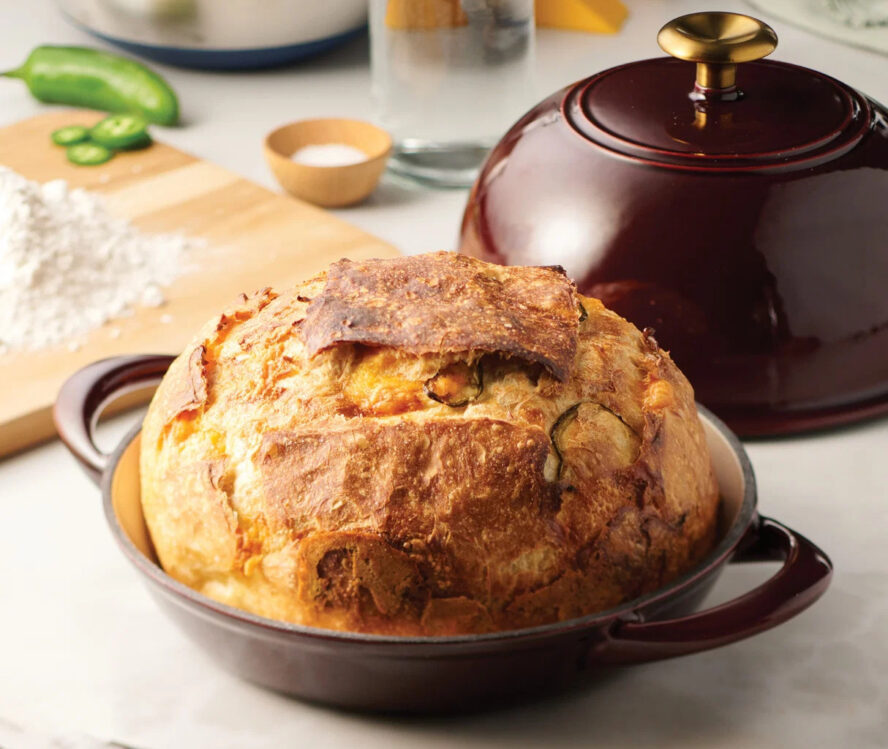
A staple for design-conscious kitchens, the Le Creuset Bread Oven translates the brand’s legendary Dutch oven durability into an inverted baking format. The deeper domed lid acts as the primary cover, trapping and circulating steam over the dough, while the shallow 9.5-inch base features three concentric rings that promote even heat distribution and imprint a subtle signature brand stamp onto the bottom of the loaf.
With a matte black enameled interior that absorbs and transfers heat efficiently, this oven is a premier choice for traditional round boules. It balances lighter maneuverability with high-end aesthetic appeal, making it a favorite for everyday bakers who value both form and function.
Pros & Cons
- Pros: Premium enameled construction; tight-fitting domed lid; requires no seasoning; lighter and easier to maneuver than bare cast iron alternatives.
- Cons: Most expensive option tested; circular diameter limits experimental loaf geometries.
Bare Cast Iron vs. Enameled Cast Iron: Which Is Better?
When selecting a bread oven, buyers must choose between bare metal and enameled surfaces. Understanding how each material interacts with dough is essential for achieving desired baking outcomes.
Bare Cast Iron
Bare cast iron offers direct thermal transfer. Without a porcelain barrier between the metal and the dough, heat radiates aggressively into the loaf. This produces a darker, more intensely caramelized bottom crust and a dramatic, crackling surface texture.
However, bare iron demands maintenance. It requires periodic seasoning with oil, cannot be soaked in water, and is vulnerable to rust if left damp. Fortunately, because bread dough naturally releases cleanly from cast iron, deep cleaning with soap is rarely necessary, making post-bake maintenance far easier than many expect.
Enameled Cast Iron
Enameled cast iron is virtually maintenance-free. It resists rust, requires no seasoning, and cleans effortlessly. The porcelain barrier, however, moderates direct heat transfer, often resulting in a slightly lighter crust color. Furthermore, light-colored enameled interiors can show discoloration or smudges over time, though these aesthetic quirks have zero impact on baking performance.
Essential Tips for Better Home Baking
To maximize the investment in a cast iron bread oven, expert bakers recommend adhering to several foundational guidelines:
- Preheat Thoroughly: Place your bread oven (both base and lid) into your home oven well before baking—typically preheating at 450°F to 500°F for at least 45 to 60 minutes. Thermal mass requires time to saturate fully.
- Handle with Care: Cast iron retains heat for hours. Always use heavy-duty, commercial-grade oven mitts when transferring the steaming vessel in and out of the domestic oven.
- Manage the Steam: Bake your loaf covered with the lid for the first 20 minutes to maximize oven spring, then remove the lid for the remaining baking time to develop a deep, mahogany crust.
- Cool Before Slicing: Resist the urge to slice hot bread immediately. Allowing the loaf to cool completely on a wire rack ensures the crumb structure sets properly.
Implications for the Home Baking Market
The commercial success of dedicated cast iron bread ovens signals a broader shift in culinary consumerism. As home cooks continue to elevate their domestic skill sets—investing in specialty flours, digital scales, and fermentation vessels—manufacturers are responding with precision-engineered tools previously reserved for commercial bakeries.
Whether you choose the uncompromising performance of the bare-iron Challenger, the budget-friendly accessibility of the Tramontina, or the luxury craftsmanship of Le Creuset, upgrading to a cast iron bread oven eliminates the frustrating guesswork of home bread-making. By replicating the thermodynamic environment of a professional hearth, these vessels empower home bakers to consistently produce bakery-quality artisan loaves, right from their own kitchens.
