

By In5D Editorial Staff
Metaphysical Research & Consciousness Desk
Main Facts: The Paradox of Connection in an Awakened Age
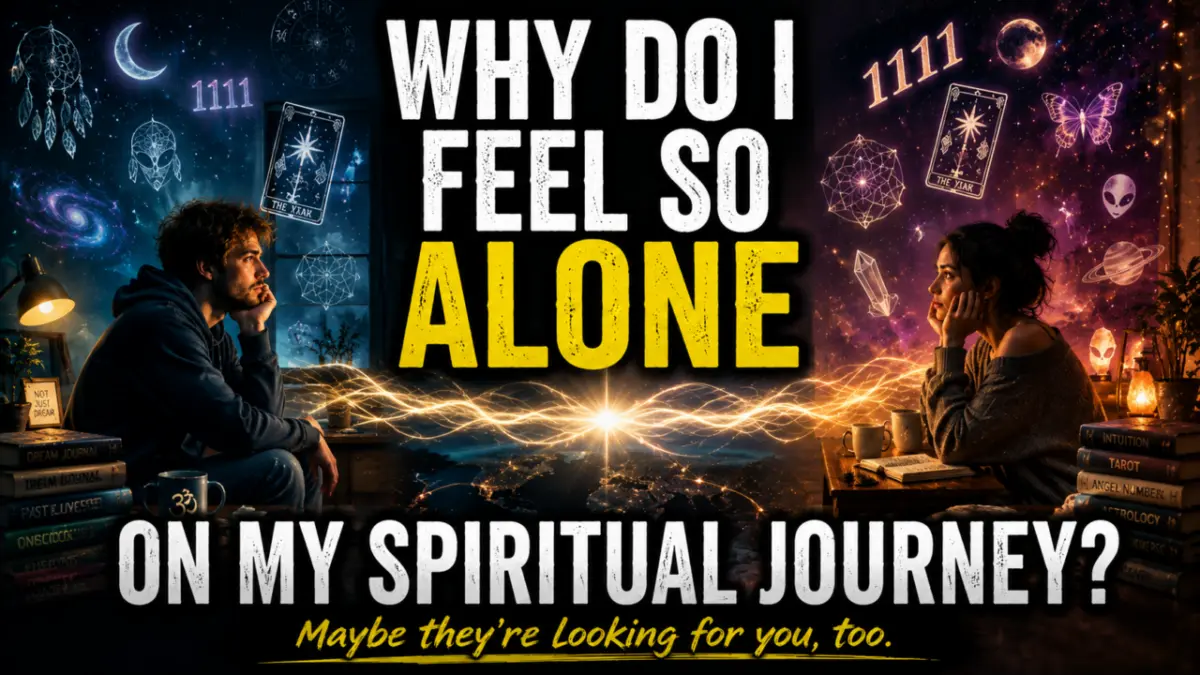
In an era defined by hyper-connectivity—where billions of people are linked by social media platforms, messaging applications, and digital contact lists—a silent epidemic is unfolding among those undergoing a spiritual transformation. According to metaphysical researchers, counselors, and community leaders, individuals experiencing a spiritual awakening frequently report a profound, unsettling sense of isolation.
This phenomenon, often described as the "spiritual loneliness paradox," occurs when a person is surrounded by friends, family, colleagues, and acquaintances yet feels utterly disconnected. The core driver of this disconnect is a fundamental shift in perception and values. While everyday social circles remain anchored in conventional 3D realities—such as career progression, pop culture, sports, politics, and daily routine—the awakening individual is increasingly preoccupied with expansive metaphysical concepts: consciousness shifts, synchronicities, past lives, energy dynamics, and existential purpose.
When an individual attempts to bridge this gap by sharing transcendent experiences—such as profound premonitory dreams, repetitive numeric sequences like 11:11, or meditative breakthroughs—they are frequently met with skepticism, confusion, or dismissal. Over time, this friction leads to self-censorship, social withdrawal, and a re-evaluation of long-standing relationships. Rather than pointing to a personal failure, experts suggest that this isolation is an organic, albeit uncomfortable, phase of personal evolution and inner restructuring.
Chronology: The Evolution of the Awakening Disconnect
To understand why spiritual loneliness occurs, it is essential to trace the psychological and energetic trajectory of an awakening individual over time.
Phase One: The Catalyst and Internal Shift
The journey typically begins with a catalyst—a vivid dream, a major life transition, an existential crisis, or a spontaneous moment of heightened awareness. The individual begins to question dogmas, historical narratives, and societal expectations that they previously accepted without hesitation. Internal priorities shift dramatically; the desire to understand the nature of existence supersedes superficial concerns.
Phase Two: The Mask of Adaptation
As the internal world transforms, the external world remains static. Recognizing that friends and family may not comprehend their new perspectives, the awakening individual begins to compartmentalize. They adopt social masks, playing the familiar roles expected of them in professional and familial settings. They engage in polite small talk while suppressing their authentic thoughts, creating a draining internal split.
Phase Three: The Onset of Exhaustion and Solitude
Eventually, the effort required to maintain these social masks becomes unsustainable. Small talk feels increasingly hollow, and conventional social engagements grow emotionally exhausting. The individual naturally gravitates toward solitude, finding peace in introspection, meditation, and research. However, this transition from active socialization to reclusion often triggers misunderstandings from outsiders, who may misinterpret the inward turn as depression, arrogance, or antisocial behavior.
Phase Four: The Search for the Soul Tribe
Having embraced solitude, the individual eventually reaches a stage where quiet self-reflection gives way to a renewed desire for authentic connection. They begin actively searching for a "soul tribe"—like-minded peers who not only understand metaphysical phenomena but provide a safe, non-judgmental space to share experiences.

Supporting Data & Psychological Dynamics: Introversion and Societal Expectations
Research into personality typologies offers valuable context regarding how individuals process spiritual growth. A significant correlation exists between spiritual awakening and introverted personality traits. For instance, personality frameworks like the Myers-Briggs Type Indicator (MBTI) frequently categorize deep spiritual seekers within intuitive and feeling subsets (such as INFP or INFJ profiles).
Solitude Versus Isolation
A critical distinction must be drawn between empowering solitude and detrimental isolation:
- Solitude is a conscious choice to withdraw from external noise in order to listen to one’s intuition, process emotions, and cultivate self-awareness. It acts as a sanctuary for personal growth.
- Isolation is an involuntary state born of alienation—the quiet wish for a kindred spirit combined with the painful belief that no such person exists within reach.
When individuals lose the capacity to share peak experiences—such as a sudden synchronicity or a powerful meditation session—the absence of a sounding board breeds emotional isolation. Furthermore, social psychology notes that relationships often operate on unspoken contracts regarding who a person "is supposed to be." When an individual outgrows these rigid identity templates, friction is inevitable.
Perspectives and Community Responses: Redefining Relationships
Metaphysical commentators and community builders emphasize that outgrowing relationships should not necessarily be viewed as a moral hierarchy where one person becomes "superior" to another. Instead, relationships are often understood through the timeless paradigm of Reason, Season, or Lifetime:
- Reason: Individuals who enter our lives temporarily to fulfill a specific need, offer guidance through a crisis, or teach a vital lesson. Once the lesson is integrated, the relationship naturally concludes.
- Season: Connections defined by shared experiences of joy, growth, or mutual exploration during a particular chapter of life.
- Lifetime: Deep-rooted foundational relationships that withstand profound personal transformations and provide enduring emotional anchors.
Recognizing these dynamics helps mitigate the grief of lost friendships. Rather than burning bridges out of frustration, awakened individuals are encouraged to honor past connections while refusing to shrink their authentic selves to fit old molds.
To address the modern challenge of spiritual isolation, digital infrastructure is increasingly being leveraged to bridge geographical divides. Platforms dedicated to metaphysics, consciousness studies, and esoteric dialogue now incorporate real-time global communication tools—such as dedicated chat rooms and interest-specific forums. These digital sanctuaries allow seekers separated by thousands of miles to connect instantly, sharing everything from dream interpretations and astrological insights to synchronicity reports and personal breakthroughs.
Implications: Finding Your Place in a Changing World
The implications of spiritual loneliness extend far beyond individual psychology; they point to a broader cultural shift in how human community is defined.
As more people undergo awakenings, traditional social structures built solely on proximity, workplace synergy, or shared entertainment are giving way to resonance-based connections. The realization that one does not need hundreds of superficial acquaintances to feel fulfilled—but rather a handful of authentic, emotionally resonant companions—liberates the individual from social pressure.
Ultimately, the journey through spiritual loneliness teaches a profound lesson in self-validation. By learning to be comfortable in their own company, seekers cultivate an internal anchor that makes them less reliant on external approval. And in doing so, they often discover that the very people they are searching for—other souls asking the exact same questions—are navigating the exact same path, looking for them, too.
