

Main Facts
In January 2025, Clayton Dalton, an emergency room physician in rural western New Mexico, a published journalist, and a recently ordained novice Zen priest, deployed to Gaza as a medical volunteer. Driven by a career spent treating the sudden, catastrophic collisions of human lives and structural realities, Dalton sought to bring his clinical training to the epicenter of modern geopolitical devastation.
His journey bridges two seemingly disparate worlds: the isolated, trauma-laden bays of a Southwestern hospital and the pulverized medical infrastructure of the Gaza Strip. Through the lens of Buddhist philosophy—specifically the principles of dependent origination, interbeing, and bearing witness—Dalton examines how human suffering, whether born of local domestic tragedies or global warfare, is inextricably linked to vast webs of historical causes and conditions.
The narrative centers on the psychological transformation required to look past immediate judgment, anger, and condemnation, replacing them with a spacious, radical compassion. Dalton’s account highlights the staggering human toll of the conflict in Gaza, contrasted against moments of profound grace, such as meeting survivors who, despite losing everything, offer smiles not for themselves, but for others.
Chronology
The ER in Western New Mexico
Weeks prior to his deployment, Dalton treated a six-year-old boy named Joseph in a New Mexico emergency department. Brought in by a foster care service, Joseph had survived a horrific single-vehicle accident. His mother, intoxicated behind the wheel, had lost control, causing the car to roll through red dirt and sage. Joseph was ejected through an open window, miraculously escaping physical harm.
Finding his family "sleeping" in the wreckage, the boy walked home to summon help. His relatives were either dead or airlifted to Albuquerque for emergency surgery. Left alone in a hospital bed with a white blanket pulled to his chin, Joseph embodied a sudden, life-altering crux moment.
Dalton reflects on a similar case from years prior involving an intoxicated woman who had crashed her car. Initially viewed through a lens of reckless endangerment and judgment, her story shifted when she sobered up and revealed she was a haunted former sex crimes detective whose crash was a suicide attempt. The realization fundamentally softened Dalton’s perspective, teaching him to look beyond outward destruction to the invisible suffering beneath.
The Deployment to Gaza (January 2025)
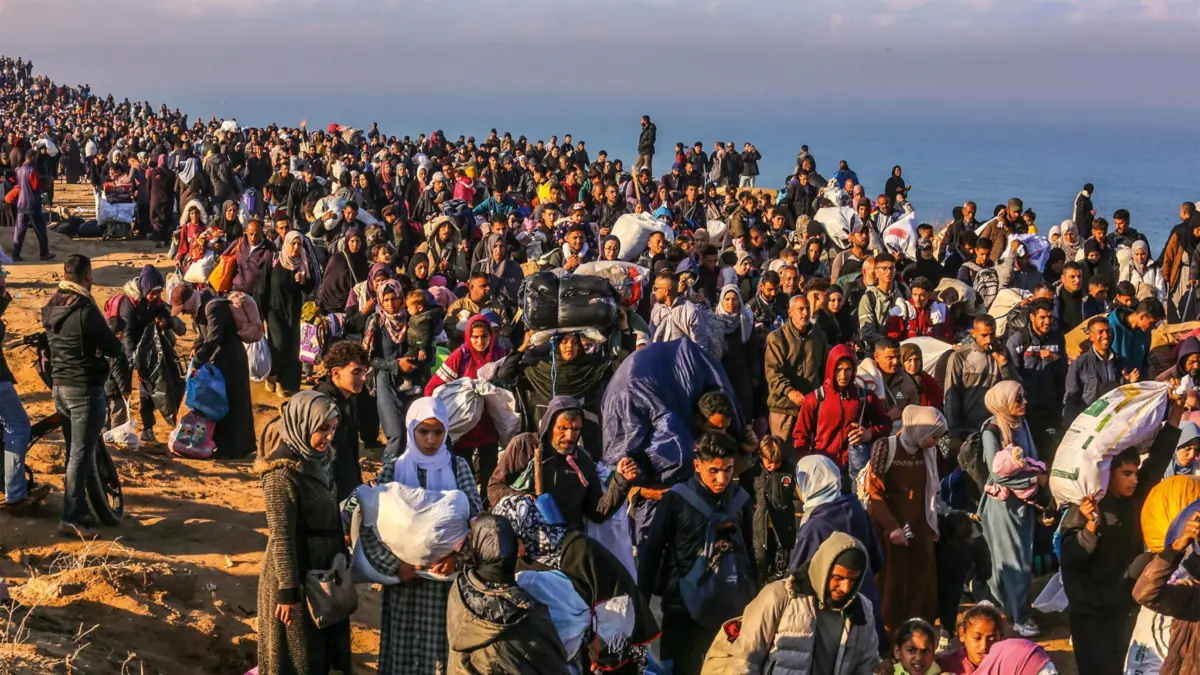
Propelled by an urge to apply his emergency medicine training where it was most desperately needed, Dalton traveled to Gaza in January 2025. He encountered a landscape of unprecedented destruction. Operating within a heavily fractured healthcare system, he witnessed a mosaic of ruin where entire towns had been reduced to unbroken fields of rubble.
During his time in the region, Dalton experienced the palpable tension of military checkpoints—such as being screamed at in Hebrew by a heavily armed, twenty-year-old soldier—and recognized the deep, systemic anger and suffering driving the occupier just as clearly as the occupied.
Encountering Abdullah
In the lobby of a ruined hospital where he was based, Dalton met Abdullah, a man whose home had been destroyed by an airstrike in November 2023. Twenty members of his family were killed; only Abdullah and his four-year-old son survived. The son had been critically evacuated to Tunisia, leaving Abdullah stranded in a hospital hallway with nothing but a few blankets, no life, and nothing to lose.
Despite this absolute desolation, Abdullah maintained a wide smile throughout their conversation, explaining to a stunned Dalton that he was not smiling for himself, but to bring comfort to others: "It’s not for me, it’s for you."
Supporting Data and Context
- The Scale of Destruction in Gaza: Dalton notes that the sheer volume of explosives dropped on the 25-mile-long Gaza Strip surpassed the combined tonnage dropped on London, Hamburg, and Dresden during the entirety of the Second World War.
- Global Complicity: While treating patients in Gaza, Dalton was shown a photograph of a massive, unexploded 250-pound guided munition stuck in the ground outside a doctor’s house. Researching its stenciled serial numbers revealed it to be manufactured by Boeing in the United States, illustrating the direct physical and economic ties linking distant citizens to the theatre of war.
- Historical and Philosophical Frameworks:
- Dependent Origination: The Buddha’s teaching that all phenomena arise from a vast, interconnected web of causes and conditions stretching across the universe.
- Interbeing: A concept articulated by Zen master Thich Nhat Hanh and Roshi Joan Halifax, positing that humanity is not separate from unfolding global events, whether they involve the violence of war or the pursuit of peace.
- Bearing Witness: A Zen practice pioneered by Tetsugen Bernie Glassman—historically conducted at sites like Auschwitz—wherein practitioners immerse themselves completely in darkness, poverty, illness, or violence without turning away, allowing right action and healing to emerge naturally.
Official Responses and Institutional Realities
While the personal narrative focuses on medical ethics and spiritual practice, the institutional backdrop of Dalton’s account reflects the complete collapse of civil infrastructure in Gaza. Hospitals, traditionally sanctuaries of healing, have been transformed into refugee outposts where medical professionals live in tents, ration meals so their children can eat, and operate under severe shortages of surgical supplies.
International aid organizations, humanitarian observers, and medical volunteers consistently report that the systematic targeting and destruction of medical facilities have left health workers facing impossible triage decisions. Patients arrive with catastrophic injuries—mangled limbs stabilized by protruding metal pins and severe abdominal trauma from shrapnel—while physicians grapple simultaneously with their own profound personal losses, having seen their entire lineages erased in single strikes.
Implications
The Transformation of Judgment
Dalton’s clinical and spiritual journey offers profound implications for how individuals process anger, political polarization, and interpersonal conflict. By recognizing that reckless behavior, violence, and vitriol are downstream symptoms of deep-seated suffering, observers can move past immediate moral condemnation. Much like the water rushing through a narrow culvert in a Maine estuary, crisis points make visible the massive, invisible tides of generational trauma, systemic injustice, and historical momentum that individuals inherit rather than choose.
The Mandate of Interconnectedness
The narrative challenges the comfortable illusion of geographical and moral distance. Whether tracing the manufacturing origin of an unexploded missile to a domestic defense contractor or acknowledging the psychological ripple effects of distant conflicts, the text asserts that modern citizens are active participants in a shared global ecosystem.
The Radical Power of Witness
Ultimately, the article posits that true social healing does not begin with political grandstanding, but with the capacity to bear witness. To look directly at suffering—whether in a New Mexico emergency bay, a destroyed hospital in Gaza, or the quiet struggles of daily life—without shrinking away is the foundation of compassion. As demonstrated by Abdullah’s enduring smile in the ruins of a war zone, human dignity and grace can survive total devastation, echoing outward to transform the consciousness of anyone willing to pay attention.
