

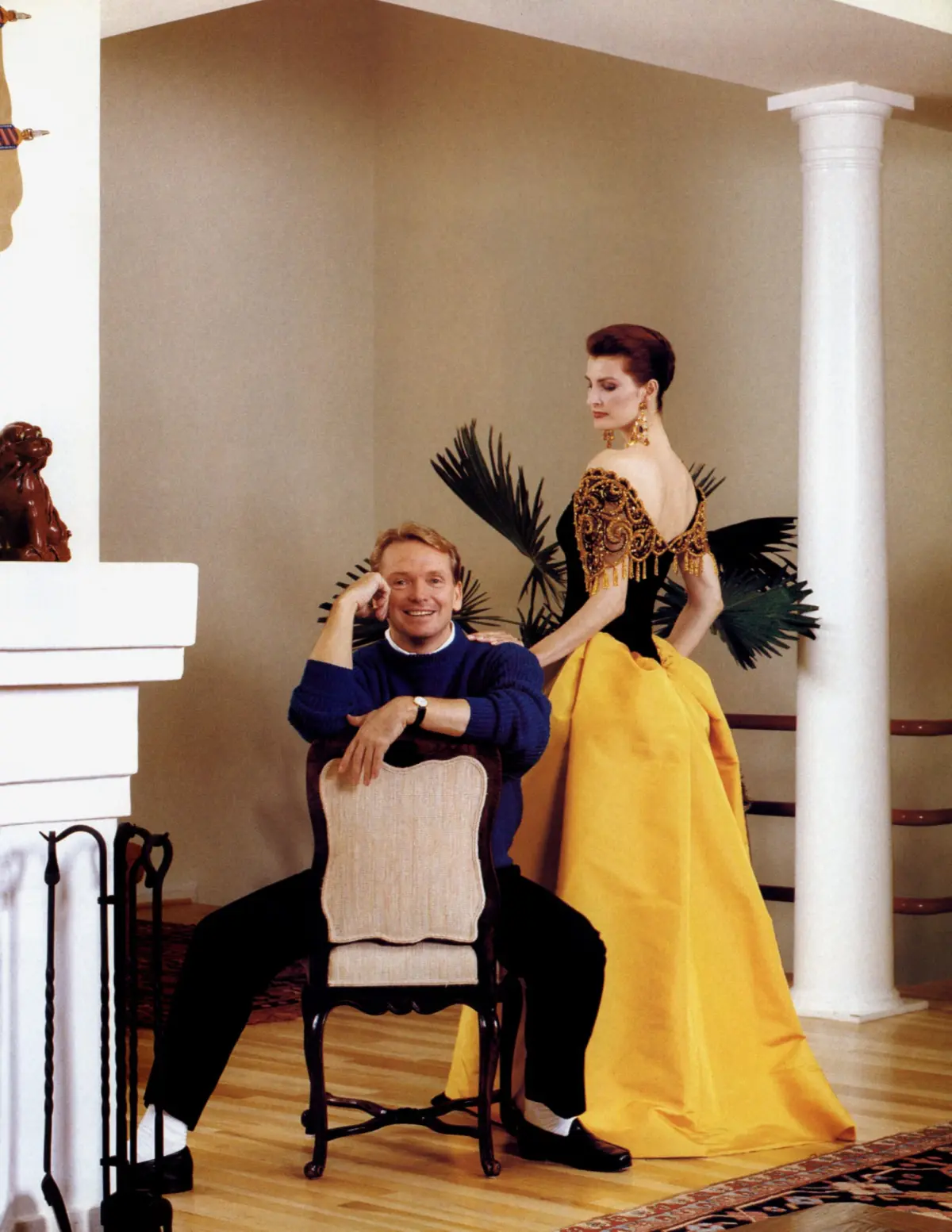
The fashion world is mourning the loss of a true icon. Bob Mackie, the visionary costumier and fashion phenomenon renowned for dressing the most luminous stars of stage, screen, and music in breathtaking, showstopping sequined ensembles, has passed away at the age of 87.
Affectionately dubbed the "Guru of Glitter," Mackie carved out an incomparable legacy over a career spanning decades. He was the creative genius behind the unforgettable looks worn by an extraordinary roster of celebrity clients, including Carol Burnett, Cher, Diana Ross, Barbra Streisand, Bernadette Peters, Raquel Welch, Elton John, and Tina Turner. His contributions to entertainment and fashion earned him nine Emmy Awards and a Tony Award, cementing his status as a titan of theatrical design.
Yet, while Mackie’s professional life existed in a dazzling universe of feathers, rhinestones, and high-octane glamour, his private world told a remarkably different story. In stark contrast to the high-voltage costumes that made him a household name, Mackie’s Beverly Hills home—profiled by Architectural Digest in September 1989—served as a tranquil, sun-drenched, and deeply personal sanctuary. Eschewing the neon-lit excess of his professional creations, the late designer’s California retreat was a masterclass in casual comfort, clean lines, and relaxed elegance.
A Chronology of a Legendary Career
To understand Bob Mackie’s impact on American culture, one must look at the remarkable trajectory of his life and career, which bridged the worlds of television, film, Broadway, and high fashion.

- Early Beginnings and Hollywood Roots: Born in California, Mackie studied at Los Angeles City College and the Chouinard Art Institute. His exceptional talent for illustration and design quickly landed him in the inner circles of Hollywood costume design, where he worked alongside legends like Jean Louis and Edith Head, contributing to iconic television and film projects.
- The Television Breakthrough: Mackie’s big break came when he began designing for television variety specials, most notably The Carol Burnett Show, which premiered in 1967. His weekly creations for Burnett and her cast showcased a rare combination of comedic timing through fashion and breathtaking sartorial artistry.
- The Reign of Cher: Throughout the 1970s and 1980s, Mackie’s creative partnership with Cher defined pop culture iconography. From her pioneering sheer, beaded red carpet gowns at the Academy Awards to her elaborate Las Vegas residency costumes, Mackie and Cher pushed the boundaries of fashion, censorship, and personal expression.
- Awards and Industry Recognition: Over his illustrious career, Mackie collected numerous accolades, culminating in nine Emmy Awards for his phenomenal television costume design and a Tony Award for his work on Broadway.
- The Ready-to-Wear Empire: Prompted by what he candidly referred to as a "mid-life crisis," Mackie expanded his footprint beyond custom theatrical pieces, launching a successful ready-to-wear empire in the 1980s. His commercial lines eventually grew to encompass furs, lingerie, eyewear, bridal wear, belts, and swimwear.
- The Beverly Hills Sanctuary: Acquired in the mid-1980s, Mackie’s Beverly Hills residence became his peaceful retreat from a grueling bicoastal schedule that required him to split his time between Los Angeles and a Manhattan apartment near his New York business headquarters.
Inside the Designer’s California Sanctuary
When visitors arrived at Bob Mackie’s Beverly Hills home expecting an extension of his glittering stage persona—surrounded by black lacquer, chrome, leopard print, and mirrors—they were invariably met with a surprise.
"People come expecting black and chrome and glitter—I don’t know what they expect," Mackie once remarked to Architectural Digest. "लेकिन जब वे अंदर आते हैं तो वे कहते हैं, ‘ओह।’ मुझे कभी भी ऐसी जीवनशैली पसंद नहीं आई जो मेरे द्वारा डिज़ाइन किए गए कपड़ों को दर्शाती हो… मैंने यह घर रोशनी और निजता के लिए खरीदा था।" ("I’ve never liked a lifestyle that reflects the clothes I design… I bought the house for the light and the privacy.")
Sunlit Architecture and Unfussy Interiors
Built by an architect who previously lived in the space, the house was intentionally designed to capture maximum natural light. Mackie preserved this airy, sun-soaked atmosphere, steering clear of aggressive decoration. He opted instead for clean lines, uncluttered rooms, and comfortable, relaxed furnishings. Aside from a bathroom adorned with vintage posters and photographs, and a single ceramic high-heeled shoe gifted to him by Cher resting on his bedroom table, the interior contained virtually no show business memorabilia.
Curated Treasures and Global "Toys"
Rather than filling his home with items reflecting his own 25-year career, Mackie surrounded himself with carefully selected furnishings and idiosyncratic objects gathered over a lifetime of travel. Collaborating with his close friend Robert Kelly, who operated the Los Angeles antiques store Baldacchino, Mackie curated a home rich in character without ever sliding into whimsy or clutter—a trap he famously avoided to prevent his interiors from getting "a case of the cutes."

Among his cherished possessions were:
- Global Artifacts: A dramatic Northwest Coast Indian mask commanding the entrance hall, complemented by Balinese, Mexican, and African masks distributed thoughtfully throughout the residence.
- Travel Finds: A striking blue-and-black striped wooden tiger acquired in Paris that frequently changed rooms with the designer, ultimately resting in a corner of his bedroom.
- Eclectic Displays: An English oak dresser in the living room populated by a diverse collection of small figures, including a 1930s hat mannequin wearing a cloche, an antique santo, a Mexican lay figure, and a Thai cat’s head.
- Dramatic Accents: In the primary bedroom, Mackie created an indoor jungle behind his bed using wooden banana trees sourced in Bali, paired with colorful Oaxacan "fantasy animals" set against mirrored walls. The living room similarly featured a rich Heriz carpet, an 18th-century French armoire, Japanese lacquered wood dogs, and mounted masks and elaborate chaps above the fireplace.
Supporting Data and Professional Ethos
Mackie’s ability to transition from the extravagant demands of the entertainment industry to the quiet comfort of his domestic life underscored a fierce, lifelong work ethic. Running a sprawling ready-to-wear business required immense discipline and a demanding travel schedule.
Yet, Mackie viewed work not as a burden, but as a vital creative necessity. Reflecting on his transition into commercial fashion, he shared a poignant perspective on time and ambition:
"When you’re in your twenties and thirties you think you have all the time in the world," he reflected. "Then you realize you’d better start doing your work because you may never get to it."
This sense of urgency made his hillside refuge all the more precious. Though he entertained guests only sparingly ("I’m terrible," he admitted with a laugh), Mackie deeply valued his private rituals: cooking in his kitchen, reading the Sunday morning paper, and enjoying quiet, restful weekends away from the spotlight.

Official Responses and Industry Tributes
Following the announcement of his passing at age 87, tributes from across the worlds of fashion, television, and music poured in to honor the legendary designer. Longtime collaborators, industry peers, and cultural icons shared memories of his unparalleled talent, warmth, and wit.
- Cher, whose decades-long friendship and creative partnership with Mackie produced some of the most iconic moments in fashion history, led the tributes, remembering him not only as a master designer but as a dear friend with an extraordinary vision and a profoundly kind heart.
- The Council of Fashion Designers of America (CFDA) and major cultural institutions praised Mackie for revolutionizing the intersection of costume design and high fashion, noting how his theatrical aesthetic permanently altered the language of red-carpet dressing.
- Peers and Protégés highlighted his generosity as a mentor and his unwavering dedication to his craft, emphasizing that behind the feathers and rhinestones was a classically trained artist of supreme discipline and technical skill.
Implications: The Enduring Legacy of the Guru of Glitter
Bob Mackie’s passing marks the end of an era for Hollywood glamour. In an era dominated by minimalist aesthetics and algorithmic fashion trends, Mackie’s maximalist approach—where more was always more, and joy was stitched directly into every seam—remains a masterclass in fearless self-expression.
His influence extends far beyond the history books of costume design. Contemporary pop stars and fashion designers frequently draw inspiration from Mackie’s archive, proving that theatricality, craftsmanship, and unbridled joy never go out of style.
Ultimately, Bob Mackie’s life demonstrated a profound duality that defined true genius: he possessed the rare ability to construct high-voltage fantasies for the world’s biggest stars while simultaneously cherishing the quiet, sunlit simplicity of a home built entirely for peace, privacy, and personal comfort.
