

Main Facts
The Tibetan community, Buddhist practitioners globally, and humanitarian advocates are mourning the loss of a towering figure in contemporary cross-cultural solidarity. For over three decades, Bob stood as an unyielding pillar of support for Tibet, merging academic scholarship, spiritual practice, and frontline activism. Known for his larger-than-life presence, booming laugh, and radiant energy, he was more than an ally to the Tibetan people—he was a devoted brother, a fearless advocate, and an irreplaceable friend.
His passing, coinciding with recent socio-political events in the New York Tibetan diaspora, has reignited global discourse on the ongoing struggle for Tibet’s autonomy, cultural preservation, and human rights. Across the globe, tributes are pouring in from monastic communities, political activists, and close friends who remember him not merely for his intellectual achievements, but for his profound capacity to make every individual feel seen, valued, and deeply loved.
Chronology of a Lifelong Dedication
Three Decades of Shared History
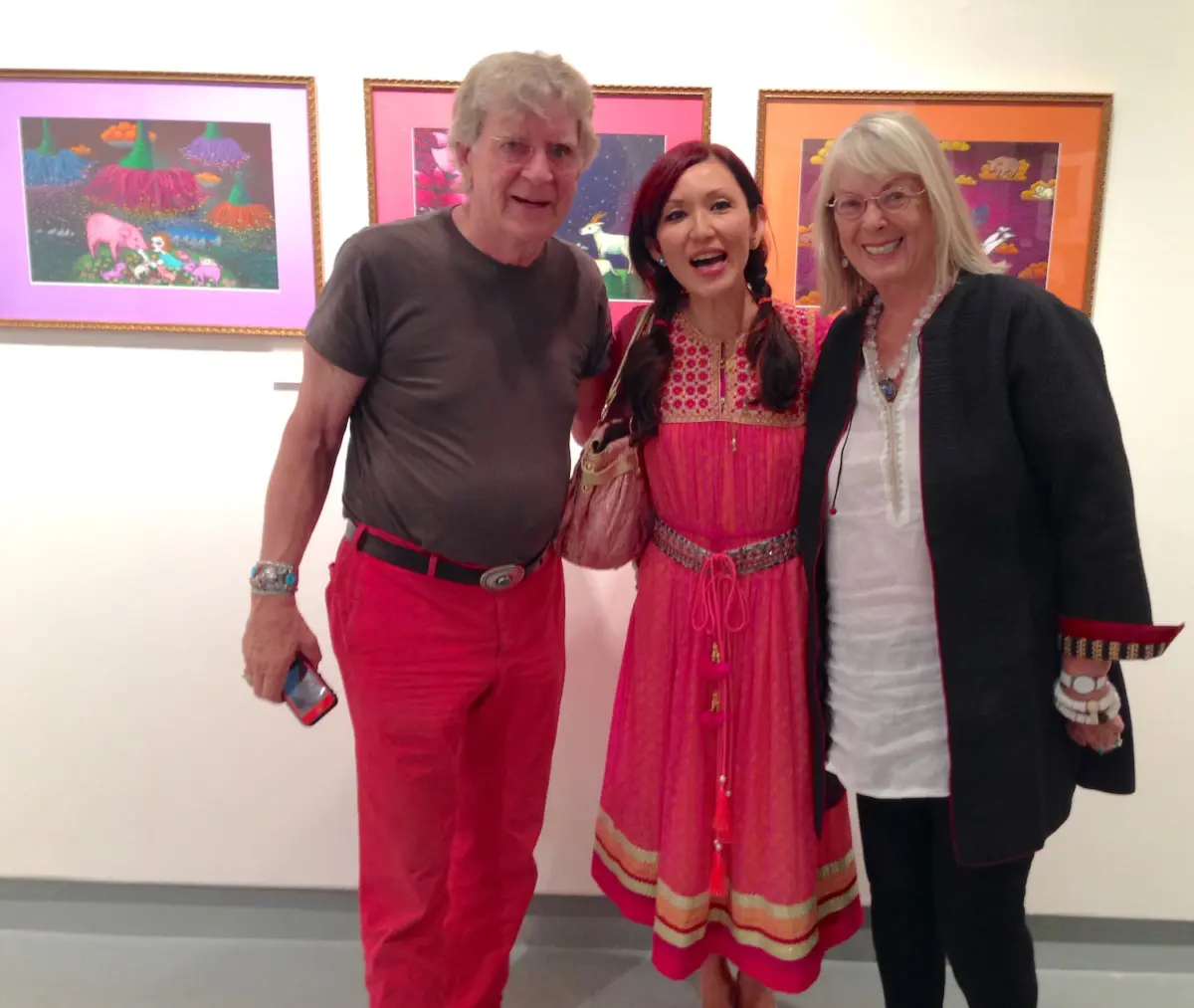
The bond between Bob and artist-author Rima Fujita spanned thirty-three years, characterized by mutual respect, shared spiritual values, and a joint commitment to the Tibetan cause. From encounters in bustling New York cultural hubs like Tibet House to solemn political demonstrations in the nation’s capital, Bob’s presence was always marked by complete attentiveness and joyful vitality.
Fujita recalls an iconic moment during one of His Holiness the Dalai Lama’s visits to Washington, D.C. Amidst a blistering summer heatwave, with temperatures nearing 100 degrees and suffocating humidity, Bob marched shoulder-to-shoulder with Tibetans and their supporters. Drenched in sweat, his signature golden hair soaked, and rivers of perspiration streaming down his face, he never wavered. While many prominent public figures retreated from the glaring sun and political complications, Bob walked the asphalt, raising his voice with absolute conviction: "Free Tibet! Free Tibet!"
The Evolution of an Activist Scholar
Unlike many fair-weather supporters who retreated as geopolitical dynamics shifted and China’s global economic influence expanded, Bob’s allegiance remained steadfast. He bridged intellectual traditions without compromising his principles. Though he deeply embraced the Middle Way Approach championed by His Holiness the Dalai Lama, he maintained fierce, vocal support for grassroots organizations like Students for a Free Tibet. He refused to take the easy way out, embodying a rare synthesis of contemplative stillness and courageous public action.
Supporting Data and Testimonies
The profound reach of Bob’s life is best measured by the testimonies of those who worked alongside him in both spiritual and political arenas.
Tributes from the Tibetan Leadership and Community
Dr. Tenzin Dorjee, a close friend and prominent scholar, captured the sentiment of the global Tibetan community:
"Bob stuck with us, the Tibetans, throughout the good times and the bad. While many supporters of Tibet became silent as China rose to global power, Bob remained outspoken and fearless… We have lost one of Tibet’s strongest friends."
Monastic institutions also benefited immensely from his generous patronage and enduring care. A monk from the historic Nechung Monastery in Dharamsala reflected on Bob’s cultural contributions:
"Bob was such a kind man. We all loved him. He contributed so much to preserving Tibetan culture, and he commissioned us to create many thangkas, which supported our monastery and our community."
Personal Reflections on Presence and Empathy
Those who interacted with Bob frequently noted a quality of presence so complete it mirrored the vibrational resonance of spiritual masters. Fujita notes that Bob possessed the rare gift—reminiscent of the Dalai Lama—of making his interlocutor feel as though they were the only person in the room. This quality, born from disciplined meditation and radical empathy, allowed him to comfort others even amidst his own challenges. In one of his final correspondences with Fujita, despite battling his own health realities, Bob reached out across time with characteristic grace to help her cope with a rare illness.
Official Responses and Institutional Impact
Bob’s life and passing have reverberated through major cultural institutions, most notably Tibet House US, where he frequently lectured and gathered with community members. His philosophy rejected the conventional metric of greatness based purely on titles or professional accolades, opting instead to measure a life by the number of hearts touched and spirits uplifted.
His commitment to commissioning traditional Buddhist religious art, such as thangkas, provided vital economic and structural support to displaced monastic communities striving to keep their endangered heritage alive in exile. Institutional leaders have noted that Bob’s framework of support offers a blueprint for how Western allies can ethically and sustainably engage with indigenous and refugee populations: not through paternalism, but through collaborative friendship and shared struggle.
Implications for the Future of the Tibet Movement
The timing of Bob’s transition coincides with a sensitive and emotionally charged period for the global Tibetan diaspora. Recent events in New York—including the self-immolation of former Tibetan monk Lobga Ranzen—have cast a sharp, painful spotlight back onto the plight of Tibet. These events have deeply affected community members and sympathizers alike, stirring complex waves of grief, helplessness, and renewed urgency.
Yet, rather than inducing despair, the convergence of Bob’s passing and these community trials has served as a catalyst for renewed activism. For advocates like Fujita, the initial feelings of helplessness have transformed into a revitalized commitment to pursue justice and cultural preservation through every available avenue—whether artistic, political, or humanitarian.
Bob’s legacy challenges the movement to remain steadfast, fearless, and compassionate. He taught those around him that true activism is rooted in love rather than anger, and in enduring presence rather than fleeting passion.
As friends and admirers process their grief, they lean into the spiritual worldview that Bob so vibrantly embodied. Far from succumbing to the finality of grief, those who knew him best choose to remember his philosophy on mortality—a perspective summed up in his own characteristic phrase: "We don’t die."
In the bardo, as in life, Bob is imagined precisely as he was remembered by those he loved: happy, curious, energetic, and wearing an unmistakable, radiant smile. His light continues to guide the movement, proving that a life lived with radical compassion leaves an imprint that transcends physical boundaries.
