

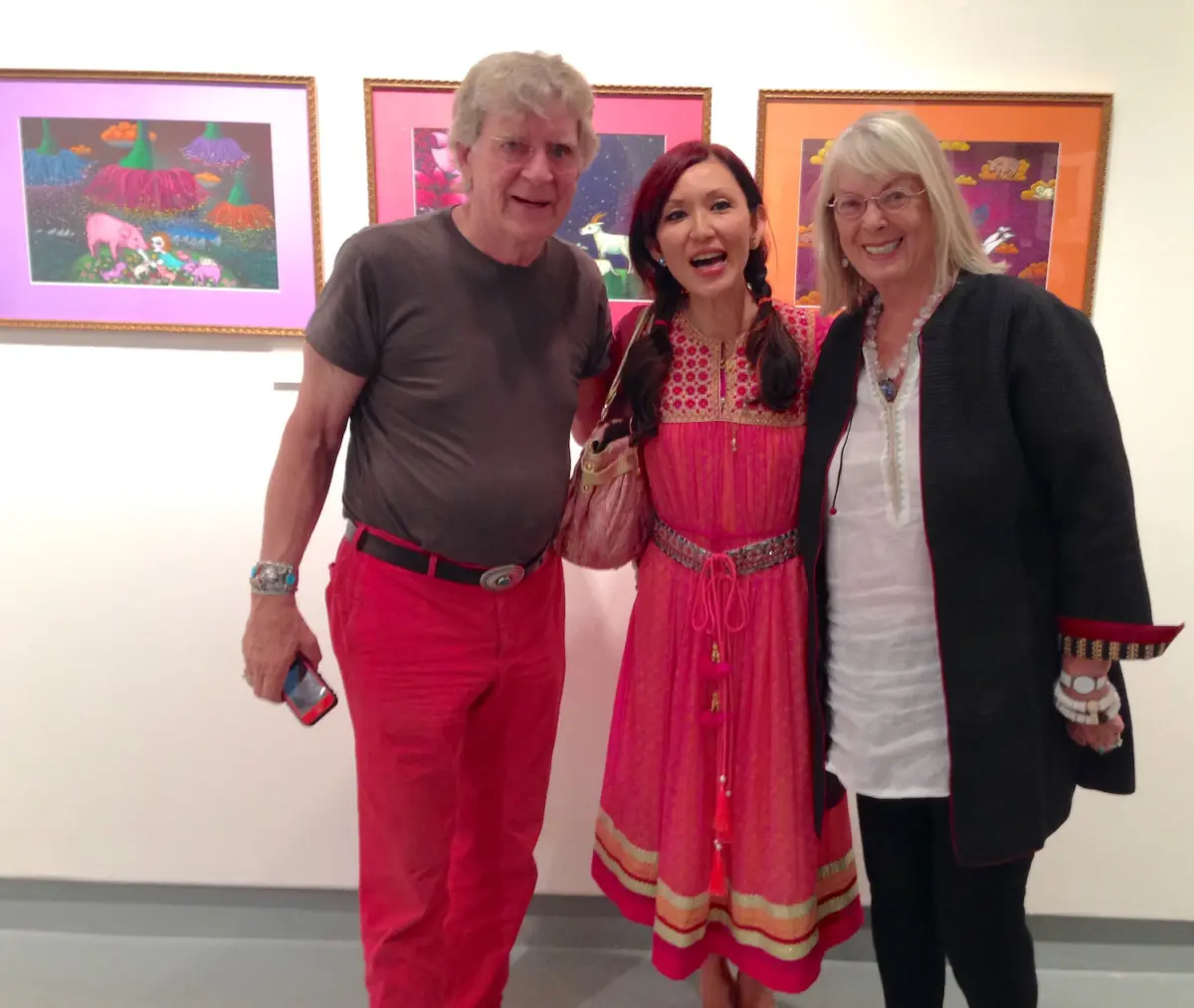
Main Facts: A Giant Among Supporters of Tibet
The global Tibetan community and advocates for human rights worldwide are mourning the loss of a towering figure in contemporary Buddhist studies and Tibetan solidarity. Known widely for his larger-than-life personality, booming laughter, and unwavering commitment to social justice, Bob Thurman left an indelible mark on everyone he encountered. Over a 33-year friendship, artist and author Rima Fujita recalls a man who embodied the very essence of a bodhisattva—an enlightened being dedicated to relieving the suffering of others.
Thurman’s life was defined by rare intellectual rigor, profound spiritual practice, and a fiercely loyal alliance with the Tibetan people during both prosperous and deeply challenging political climates. Whether lecturing packed auditoriums at New York’s Tibet House, marching under a sweltering Washington, D.C. sun, or comforting ailing friends through personal correspondence, Thurman moved through the world with absolute presence, vitality, and boundless compassion. His passing, compounded by recent geopolitical and domestic flashpoints concerning Tibet, marks the end of an era for the international Tibet movement. Yet, his legacy continues to galvanize artists, activists, and spiritual seekers globally.
Chronology: A 33-Year Journey of Friendship and Activism
To understand Thurman’s impact, one must trace a life dedicated to bridging Eastern spiritual wisdom and Western academia, anchored by decades of steadfast political and cultural advocacy.
- Early Foundations and Academic Stature: Long before becoming a household name in modern American Buddhism, Thurman established himself as a preeminent scholar, translating complex Tibetan philosophical texts and eventually serving as a professor of Indo-Tibetan Buddhist Studies at Columbia University. He co-founded Tibet House US in New York, creating a cultural sanctuary to preserve and promote Tibetan civilization.
- The New York Encounter (The 1990s): Rima Fujita first crossed paths with Thurman during the early years of their three-decade friendship. A quintessential memory highlights his magnetic warmth: spotting Fujita among hundreds in a crowded Tibet House lecture hall, Thurman enthusiastically called out, "Ah! There is Rima, the bodhisattva!"—demonstrating his characteristic habit of projecting the highest virtues onto others.
- The Washington, D.C. March (circa 2000s): During a blistering summer visit by His Holiness the Dalai Lama to the U.S. capital, temperatures neared 100 degrees with relentless humidity. While many high-profile supporters opted out of outdoor demonstrations, Thurman marched shoulder-to-shoulder with Tibetans and activists. Drenched in sweat, his golden hair plastered to his head and prayer beads slicked with moisture, he steadfastly chanted, "Free Tibet! Free Tibet!"
- Decades of Quiet and Public Support: Through shifting geopolitical landscapes—particularly as China’s global economic and political power surged—many international supporters of Tibet grew silent or modified their stances. Thurman, however, maintained an outspoken, fearless position, balancing his role as a devoted disciple of the Dalai Lama (embracing the Middle Way Approach) with public solidarity for organizations like Students for a Free Tibet.
- Final Communications and Passing: In his final days, despite battling his own health trials and witnessing renewed grief within the diaspora—such as the self-immolation of former Tibetan monk Lobga Ranzen in New York—Thurman reached out via email to comfort Fujita, who was coping with a rare illness. His physical passing has since sparked a deep re-evaluation and reinvigoration of the global Tibet movement.
Supporting Data and Testimonials: Pillars of the Tibetan Community
Thurman’s influence extended far beyond Western academic circles; he was deeply revered inside traditional monastic institutions and grassroots activist organizations alike. His contributions combined political fearlessness with sustained cultural preservation.
Dr. Tenzin Dorjee, a close friend and prominent scholar, encapsulated Thurman’s rare steadfastness:
"Bob stuck with us, the Tibetans, throughout the good times and the bad. While many supporters of Tibet became silent as China rose to global power, Bob remained outspoken and fearless. Although, as a disciple of His Holiness the Dalai Lama, he embraced the Middle Way Approach, he always supported Students for a Free Tibet. He was never afraid to raise his voice. He never took the easy way out. We have lost one of Tibet’s strongest friends."
Monastic communities also felt his profound economic and cultural impact. A monk from the historic Nechung Monastery in Dharamsala, India, shared a touching remembrance:
"Bob was such a kind man. We all loved him. He contributed so much to preserving Tibetan culture, and he commissioned us to create many thangkas, which supported our monastery and our community."
Fujita notes that Thurman possessed a rare interpersonal gift reminiscent of His Holiness the Dalai Lama: when speaking with someone, his attention never wandered. Complete presence defined his interactions, making individuals feel as though they were the only person in the room. This quality, born from decades of rigorous meditation, translated into tangible support. He did not merely champion abstract political philosophies; he invested in real human lives, commissioning sacred art to sustain displaced monks and offering unconditional friendship to artists, students, and marginalized voices.
Official Responses and Humanitarian Impact
The passing of a figure of Thurman’s stature reverberates across international advocacy networks, cultural preservation societies, and academic institutions. Leaders within the Tibetan government-in-exile and global Buddhist organizations have long recognized Tibet House US as a vital embassy for a nation without a sovereign state. Thurman’s structural contributions ensured that Tibetan art, philosophy, and history maintained a visible, dignified platform in Western media and intellectual capitals.
Furthermore, his death intersects with a painful period for the global Tibetan movement. The recent self-immolation of former Tibetan monk Lobga Ranzen in New York brought renewed, agonizing focus to the plight of Tibetans under Chinese rule. For many activists, these dual events—the loss of an irreplaceable elder statesman like Thurman and the desperate acts of resistance occurring overseas—have created a heavy emotional toll. Yet, rather than inducing permanent despair, these moments have served as a catalyst, re-activating both political and cultural approaches to Tibetan advocacy and moving individuals like Fujita from a sense of helplessness back into active, enthusiastic engagement.
Implications: The Enduring Legacy of a Modern Bodhisattva
The implications of Bob Thurman’s life and passing extend well beyond the immediate circle of his family, students, and Tibetan allies. His legacy challenges contemporary notions of activism, demonstrating that true solidarity requires emotional endurance, physical presence, and moral consistency, especially when political winds shift.
- Redefining Activism: Thurman proved that effective allies do not abandon their causes when geopolitical pressures mount. His refusal to quiet his advocacy as China’s global influence grew sets a high benchmark for human rights defenders across all international movements.
- The Power of Presence: In an increasingly fragmented, digital age defined by fractured attention spans, Thurman’s capacity for complete, meditative presence serves as a masterclass in human connection. He demonstrated that making individuals feel truly seen and valued is itself a revolutionary act of compassion.
- Cultural Preservation as Resistance: By commissioning traditional thangka paintings and supporting monastic communities in exile, Thurman understood that preserving a culture’s artistic and spiritual soul is just as vital as political lobbying. Cultural continuity acts as a bulwark against forced assimilation.
- Resilience in the Face of Grief: The convergence of Thurman’s passing and ongoing political tragedies in the diaspora underscores the psychological resilience required of activists. As Rima Fujita reflects on her friend’s final messages of comfort amidst her own illness, the narrative shifts from one of defeat to one of enduring inspiration.
Ultimately, Thurman’s life subverts conventional metrics of greatness. He cared little for static titles or superficial accolades, measuring his impact instead by the depth of his relationships and the alleviation of suffering around him. As those who knew him visualize his journey through the bardo—imagining him happy, curious, and flashing his unmistakable, warm smile—they carry forward his core teaching, encapsulated in a phrase he frequently repeated:
"We don’t die."
Through his timeless compassion, fierce advocacy, and the countless lives he touched, Bob Thurman’s radiant energy remains vibrantly alive.
