

Main Facts: The Epicenter of Marine Biodiversity
Tucked away off the northwest tip of the Bird’s Head Peninsula in Indonesia’s West Papua province lies Raja Ampat, an archipelago widely celebrated by marine biologists, conservationists, and professional image-makers as the ultimate underwater photography destination on Earth. Often referred to simply as "The Last Paradise," this expansive marine ecosystem comprises over 1,500 jungle-covered islands, dramatic limestone karsts, and shallow turquoise lagoons, centered around the four primary islands of Waigeo, Batanta, Salawati, and Misool.
Positioned directly in the heart of the Coral Triangle—the global center of marine biodiversity—Raja Ampat is estimated to harbor an astonishing 75% of all known coral species on the planet. Its pristine waters sustain a prolific biological inventory featuring more than 1,000 species of reef fish, 540 distinct types of hard and soft corals, 700 species of mollusks, as well as transient populations of dugongs, saltwater crocodiles, and schooling manta rays. For underwater photographers, this hyper-diverse environment offers a peerless canvas, balancing grand, wide-angle reefscapes with intricate macro photography subjects.

Chronology: Navigating the Logistics of Remote Expedition Travel
Reaching this remote oceanic sanctuary requires careful planning and a high tolerance for arduous transit. For travelers departing from Australia and other regional hubs, a typical journey involves a sequence of international and domestic flights featuring lengthy layovers, followed by a slow, humid two-hour ferry ride from Sorong to Waisai, and finally a bumpy, pothole-ridden vehicular transfer to local launching points.

[International Flight] ➔ [Domestic Transit to Sorong] ➔ [Ferry to Waisai] ➔ [Speedboat/Liveaboard Deployment]Strategic Itinerary Planning
Experienced underwater photographers generally recommend a two-pronged itinerary to maximize shooting opportunities across the vast geographic spread of the archipelago:

- Liveaboard Expeditions: Booking a liveaboard vessel is the most efficient way to cover significant ground, particularly if the itinerary includes the southern region of Misool. Conservation data indicates that Misool is one of the rare global locations where marine biodiversity is actively improving rather than declining, largely due to strict local management and community-led marine reserves.
- Island Homestays: Following a liveaboard voyage, photographers often transition to a shore-based homestay on selected islands. This allows for slower-paced decompression, prolonged access to pristine house reefs, and ideal scheduling for early morning or late afternoon ambient-light shooting.
Supporting Data: Photographic Ecosystems and Technical Demands
Raja Ampat’s rich photographic appeal stems from the juxtaposition of grand-scale topographies and hidden micro-habitats. Successful image-making in this region demands versatility, specialized gear selections, and an intimate understanding of marine animal behavior.

1. Wide-Angle Photography and Split Shots
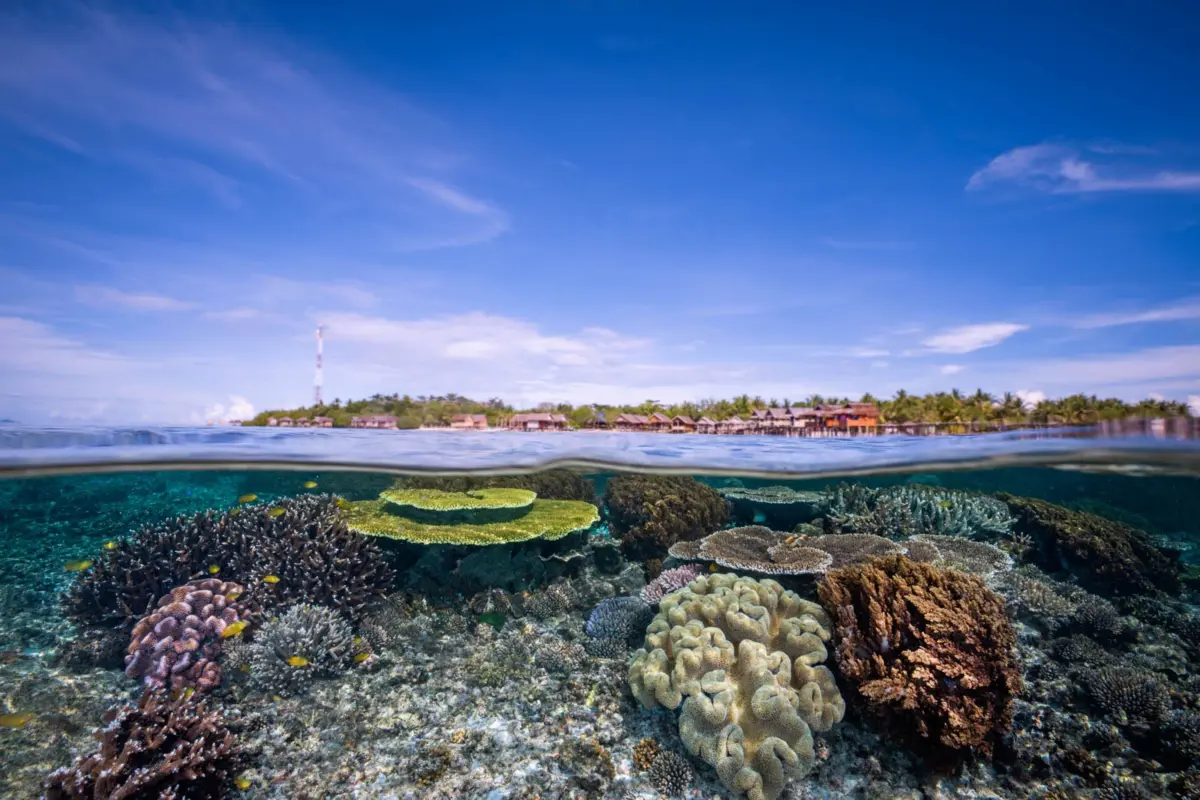
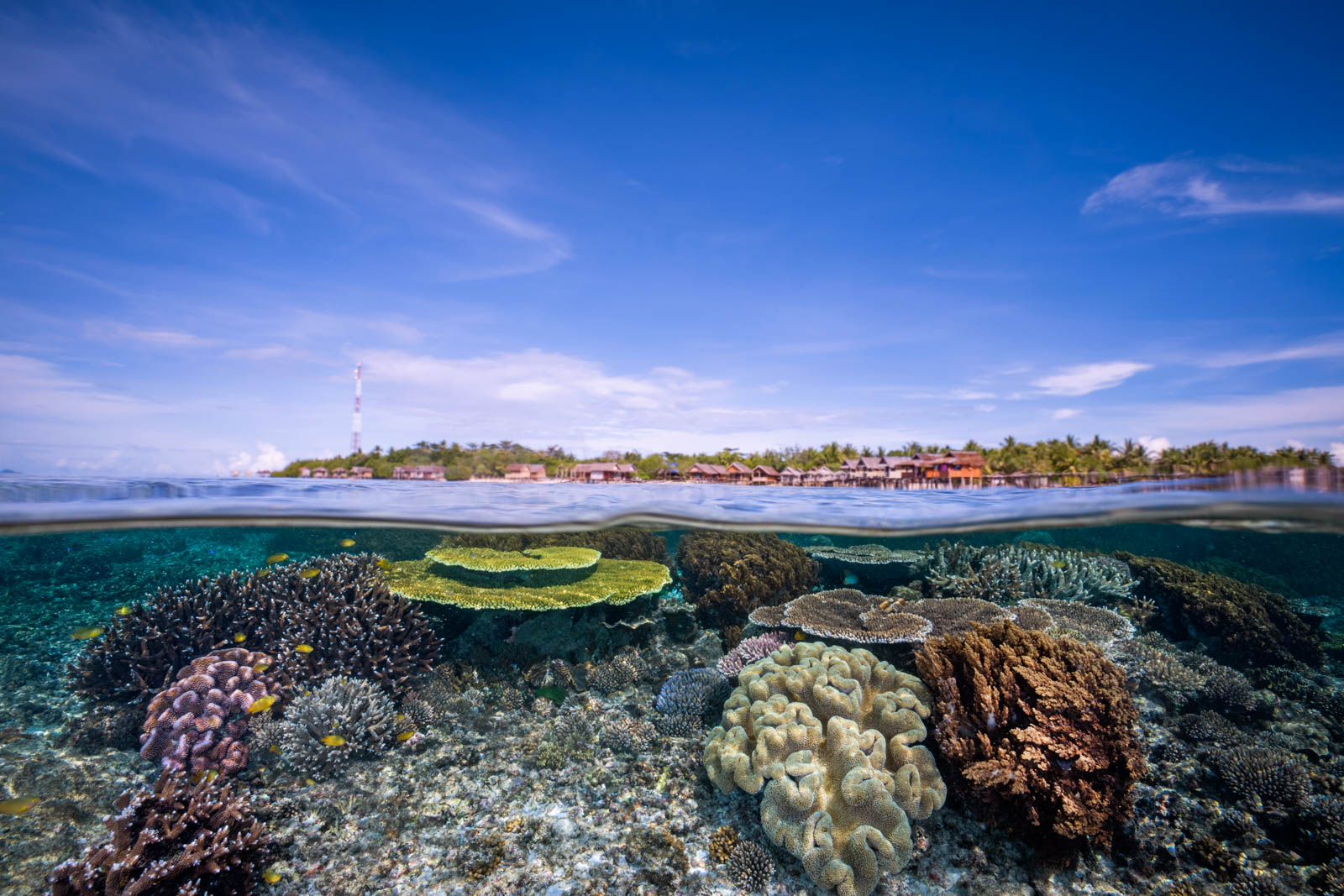
The region’s thriving coral gardens provide an ideal setting for wide-angle compositions featuring schooling pelagics, reef sharks, wobbegongs, and sea turtles. Photographers typically rely on ultra-wide lenses (such as a 16–35mm zoom) to capture expansive reefscapes. Additionally, the region’s calm, shallow island house reefs offer exceptional opportunities for over-under "split shots," where careful selection of homestays with direct reef access maximizes shooting windows during golden-hour sunrises and sunsets.

2. Macro Photography and Super-Macro Systems
While wide-angle scenes command initial attention, the intricate crevices of Raja Ampat’s reefs host an astonishing array of macro critters. While a mid-range macro lens (such as a 60mm) is useful, experts strongly recommend packing a longer focal length—such as a 90mm or 120mm macro lens—paired with an external diopter to capture extremely small subjects. Common encounters include:

- Pygmy seahorses and pygmy pipehorses
- Mantis shrimp and ghost pipefish
- Leaf scorpionfish and flamboyant cuttlefish
- Various species of frogfish, nudibranchs, and blennies
Official Responses and Environmental Realities: Managing Currents and Visibility
The very factors that make Raja Ampat an ecological powerhouse also introduce significant logistical and technical challenges for underwater photographers.

Nutrient-Rich Waters and Visibility
The extraordinary concentration of marine life is directly sustained by a complex system of deep-water upwellings and strong tidal currents, particularly through the Dampier Strait. While these nutrient-dense flows fuel coral growth and fish aggregations, they frequently result in reduced underwater visibility. Photographers attempting wide-angle captures must master strobe positioning and backscatter reduction techniques to maintain clarity in nutrient-hazy water.

Managing Strong Currents
Currents in the region can be exceptionally powerful. Dive briefings frequently warn participants of intense down-currents and sweeping flows where the primary objective is securing a stationary position behind a protective coral boulder while managing heavy camera housings.

- Safety Protocol: If dive guides characterize current conditions as "extreme," many professionals advise leaving heavy camera rigs behind to avoid equipment damage or safety compromises.
- Insurance: Given the physical demands of high-current diving, ensuring that all camera systems are securely tethered—and backed by comprehensive international equipment insurance—is a non-negotiable prerequisite.
Implications: Premier Dive Sites for the Dedicated Image-Maker
To assist photographers in maximizing their time underwater, local experts highlight several standout dive sites across the archipelago:

Melissa’s Garden
An iconic wide-angle site characterized by vast, undulating fields of table corals stretching toward the horizon. The structured topography creates a natural amphitheater for photographing schooling batfish, barracuda, snappers, and reef-dwelling lionfish.

Batu Rufus
Located near the Fam Islands, this site features a dramatic limestone lagoon accessible via a coral-encrusted swim-through. With startlingly clear water inside the shallow 5-meter basin, Batu Rufus serves as an ideal location for natural-light freediving and artistic split-shot photography framed by towering karst walls.

Cape Kri
Famed for holding historical records for species diversity on a single dive, Cape Kri combines deep sloping walls (reaching down to 40 meters) with shallow coral gardens. Because of its ecological density, photographers frequently dive this site multiple times—dedicating one tank to wide-angle pelagic action (sharks, mantas, and jacks) and another to scouring Muricella gorgonian sea fans for elusive pygmy seahorses.

Manta Ridge
Situated between Mansuar and Arborek Islands, Manta Ridge is a premier cleaning station for oceanic and reef manta rays. While encounters can be breath-taking, divers must remain vigilant against unpredictable surges and down-currents, maintaining a respectful distance to avoid disrupting natural cleaning behaviors.

Citrus Ridge
Located near the Gam Islands, Citrus Ridge lives up to its name with a hyper-colored array of soft corals and marine flora. It serves as a dual-purpose site: expansive enough for creative wide-angle abstracts, yet intricate enough for dedicated macro exploration along the sheltered reef walls.

Conclusion
Raja Ampat remains an unrivaled frontier for underwater photography, offering an immersive blend of untouched wilderness, complex oceanography, and extraordinary biodiversity. Success in this remote paradise hinges on preparation: photographers must commit to deliberate gear choices—balancing macro setups against wide-angle systems—while remaining adaptable to the region’s dynamic environmental conditions. By respecting fragile marine ecosystems, adhering to local safety guidelines regarding powerful currents, and planning logistically sound itineraries, image-makers can secure a portfolio of work that captures the true essence of the world’s last remaining marine utopia.
