

By Rod Meade Sperry
As the Uganda Buddhist Centre (UBC) marks its monumental 20th anniversary this year, a coalition of international Buddhist teachers, practitioners, and supporters has mobilized for a high-stakes campaign. Their mission is to help the center secure a crucial 13-acre parcel of land that organizers say will safeguard the institution’s future while protecting a fragile and vital ecosystem on the shores of Lake Victoria.
The acquisition represents more than just geographical expansion for the East African sanctuary. It is an opportunity to establish the African continent’s first dedicated retreat center built solely for the sharing of the dhamma, while simultaneously shielding a vulnerable wetland from commercial or military exploitation. However, with steep financial hurdles and tight deadlines looming, the global Buddhist community faces a race against time to meet the property’s multi-million-dollar price tag.
Main Facts: The Land, the Stakes, and the Campaign
At the heart of the current crisis is a 13-acre plot of wetland situated on Lake Nalubaale (internationally known as Lake Victoria)—the legendary source of the Nile River. Located adjacent to UBC’s existing campus in Bulega-Garuga, near Entebbe, this land is central to both the environmental health of the region and the spiritual ambitions of the center.
If successfully acquired, the property will enable UBC to construct a state-of-the-art retreat facility designed to foster deep contemplative practice within an African context. Crucially, ownership of the land ensures its permanent preservation. Without this intervention, the property faces the imminent threat of being sold for commercial resort development or converted into a military installation.
Environmental experts and community leaders warn that either outcome would introduce severe noise, light, and waste pollution into the delicate wetland. Such degradation would directly threaten the food and water security of local schools, an orphanage, and surrounding villages that rely on the ecosystem for their daily survival.
The asking price for the property is $1.75 million. To complete the purchase, cover legal fees, and handle taxes, organizers have set a total campaign goal of $2 million. As of this writing, generous donors have contributed $781,888, a sum that includes $760,000 in vital pledges from anonymous benefactors.
The financial timeline is aggressive: organizers must secure half of the total funds for an initial deposit by September 15, with the remaining $875,000 due by November 15. Because Bhante Buddharakkhita, as an ordained Buddhist monk, is bound by monastic vows that prohibit him from personally soliciting funds, the campaign is being entirely spearheaded by a devoted network of international supporters moved by his decades of tireless service.
Chronology: From Kampala to California, and Back to the Source
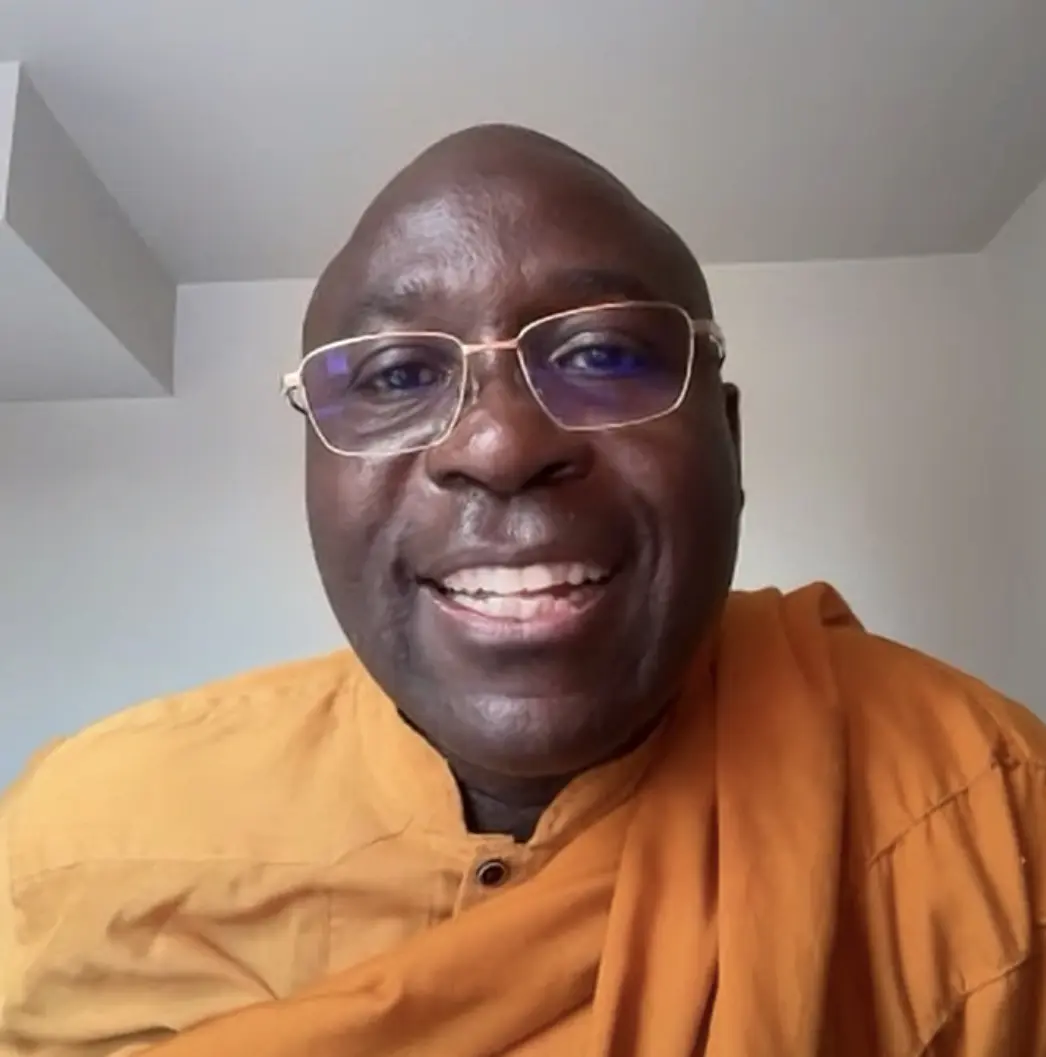
The story of the Uganda Buddhist Centre is inextricably linked to the remarkable personal journey of its founder and abbot, Bhante Buddharakkhita. His path from a Roman Catholic upbringing in Uganda to becoming one of the pioneering figures of African Buddhism is a testament to resilience, cross-cultural bridging, and profound spiritual awakening.
Early Life and Discovery of the Dhamma
Born Steven Kaboggoza in Uganda into a devout Roman Catholic family, Bhante Buddharakkhita’s life shifted trajectories in 1990 while he was studying business in India. Living in a hostel, he befriended two Thai Buddhist monks. Their serene presence and philosophical insights sparked his initial curiosity about the Buddha’s teachings.
This curiosity deepened over the ensuing years. Among the formative milestones he frequently shares with supporters is his first meeting with His Holiness the Dalai Lama. Reflecting on that encounter, he famously recalled thinking, "I’m hooked now." His intellectual exploration transformed into a vocational calling, leading him to document his experiences in his book, Planting Dhamma Seeds: The Emergence of Buddhism in Africa, which features a foreword by his primary teacher, the renowned meditation master Bhante Henepola Gunaratana.
Ordination and Rigorous Training
In 2002, Steven Kaboggoza took his final steps toward monastic life, receiving ordination from Sayadaw U Silananda at the Tathagata Meditation Center in San Jose, California. This milestone made him one of the very first African Buddhist monks in modern history.
Following his ordination, Bhante Buddharakkhita spent eight intensive years training under Bhante Gunaratana—author of the bestselling modern classic Mindfulness in Plain English—at the Bhavana Society in West Virginia. This rigorous grounding in Theravada monastic discipline, meditation, and philosophy prepared him for the monumental task he envisioned for his homeland.
Returning to Uganda and Founding the UBC
In 2005, Bhante Buddharakkhita returned to Uganda with a singular vision: to plant the seeds of the dhamma in African soil. Establishing the Uganda Buddhist Centre near Entebbe, he broke new ground as the first Buddhist institution in Uganda and the first in Africa founded and led by an indigenous African monk.
His homecoming, however, was far from easy. The path was fraught with misunderstanding and peril. In the early days of the center, local communities—unfamiliar with Buddhist robes, shaved heads, and monastic traditions—frequently viewed his mission with suspicion and hostility. In one harrowing incident recounted by supporters, Bhante Buddharakkhita was shot at, narrowly escaping a bullet. This history of localized friction, compounded by the region’s broader geopolitical and historical conflicts, deeply influenced his pedagogical approach. Rather than imposing an alien Asian cultural framework onto his students, he pioneered what he terms "Afro-Dhamma"—a harmonious integration of classical Buddhist mindfulness practices with indigenous African values of communal healing, resilience, and interconnectedness.
Supporting Data: Two Decades of Growth and Community Impact
What began twenty years ago as a modest vision has blossomed into a multifaceted humanitarian and spiritual hub. Over the past two decades, the Uganda Buddhist Centre has expanded far beyond its original meditation hall, evolving into an essential anchor for the local community and a bridge to the international dharma world.
- Educational Initiatives: UBC now operates the Buddhist Peace School, serving preschool and primary students, alongside the African Buddhist High School. These institutions provide holistic, values-based education to children from diverse backgrounds in the region.
- Infrastructure and Public Health: Recognizing that spiritual practice cannot thrive amidst physical deprivation, the center has invested heavily in community infrastructure. This includes developing sustainable water systems that supply clean water to surrounding villages, as well as offering basic medical services and outreach programs.
- International Hub: Beyond its local footprint, UBC has increasingly become a destination for global dharma practitioners seeking to witness how Buddhism adapts and flourishes within an African cultural framework.
Official Responses and Perspectives
The urgency of the land acquisition has drawn vocal support from international Buddhist teachers, leaders, and environmental advocates who recognize the dual significance of the campaign—protecting both a sacred sanctuary and an irreplaceable ecosystem.
Organizers of the GoFundMe campaign emphasize that the acquisition of the 13-acre wetland is an existential necessity for the center’s next chapter. "If we fail to secure this land, the consequences will be irreversible," campaign organizers noted in a joint statement. "Allowing a resort or a military base to take root at the edge of Lake Victoria destroys a fragile ecosystem that feeds and hydrates thousands of people. It strips the Uganda Buddhist Centre of its natural buffer, replacing peace and tranquility with industrial noise and pollution."
Supporters also highlight the unique nature of Bhante Buddharakkhita’s leadership. Because monastic rules preclude him from engaging in self-promotion or direct fundraising, his global community has stepped into the breach. Teachers and practitioners from North America, Europe, and Asia have leveraged their platforms to amplify the campaign, framing contributions not merely as a donation to a building fund, but as an investment in the global preservation of peace, ecology, and cross-cultural Buddhism.
Implications: The Future of "Afro-Dhamma" and Regional Ecology
The outcome of the current fundraising campaign—which faces hard deadlines on September 15 and November 15—carries profound implications that extend well beyond the borders of Uganda.
- Environmental Stewardship: By successfully purchasing the 13-acre wetland, UBC will legally bind the land to conservation, ensuring that the shores of Lake Nalubaale remain pristine. In an era of accelerating climate change and habitat loss, this grassroots conservation effort demonstrates how faith communities can act as fierce defenders of local ecosystems.
- The Institutional Longevity of African Buddhism: Securing the land allows UBC to construct Africa’s first purpose-built retreat center. This infrastructure will enable long-term intensive meditation retreats, teacher training programs, and larger gatherings, cementing UBC’s status as the institutional heart of African Buddhism.
- A Model for Global Pluralism: Bhante Buddharakkhita’s work with "Afro-Dhamma" offers a vital blueprint for how ancient spiritual traditions can take root in new cultural soils without losing their authenticity. The success or failure of this campaign will directly shape the trajectory of Buddhism’s footprint in East Africa for generations to come.
As the clock ticks down toward the autumn deadlines, the organizers continue to invite the worldwide dharma community to participate through what they term a "stretch gift." Whether through modest contributions of $100 or substantial donations from donor-advised funds, the message from Entebbe is clear: the future of the Uganda Buddhist Centre—and the ecological health of the Nile’s source—depends on a collective, global effort.
