The transition to electric vehicles (EVs) in Australia has traditionally been viewed through an urban lens, dominated by conversations surrounding inner-city apartment charging, kerbside solutions, and coastal highway networks. However, as the domestic EV market matures, a critical new frontier has emerged: regional and rural tourism.
A recent electric vehicle meetup in Kingaroy, Queensland, brought this reality into sharp focus. Situated roughly 218 kilometers northwest of Brisbane at the intersection of the D’Aguilar and Bunya Highways, Kingaroy serves as a vital artery for holidaymakers traversing scenic mountain ranges, national parks, and rural townships. Known colloquially as the "peanut capital of Australia," the town of 10,000 residents is a prime stopping point for travelers—particularly southerners fleeing the chilly Victorian winter to bask in Queensland’s sunshine.
Yet, the event underscored a persistent vulnerability in Australia’s regional tourism blueprint: the precarious state of high-speed EV charging infrastructure outside major metropolitan areas. While local authorities and regional networks are increasingly enthusiastic about welcoming EV-driving tourists, inconsistent maintenance, out-of-order equipment, and sparse high-speed deployment threaten to bypass rural economies that rely heavily on passing traveler revenue.
Chronology of the Kingaroy EV Showcase
The narrative surrounding Kingaroy’s infrastructure readiness played out over several months, culminating in a high-profile gathering organized by the Australian Electric Vehicle Association Queensland (AEVA Qld) in collaboration with the local South Burnett Sustainable Future Network (SBSFN).
Months Prior to the Event: Local EV advocates and community groups grew increasingly frustrated as Kingaroy’s sole high-speed DC fast charger fell into disrepair, remaining out of service for several months. For a town positioned at a major regional highway junction, the outage represented a significant bottleneck for long-distance electric tourism.
The Weeks Leading Up to the Meetup: Prompted in part by the planning and advocacy surrounding the upcoming AEVA event, local maintenance crews successfully repaired the high-speed charging unit. Stakeholders reported that the equipment returned to service and has operated reliably since.
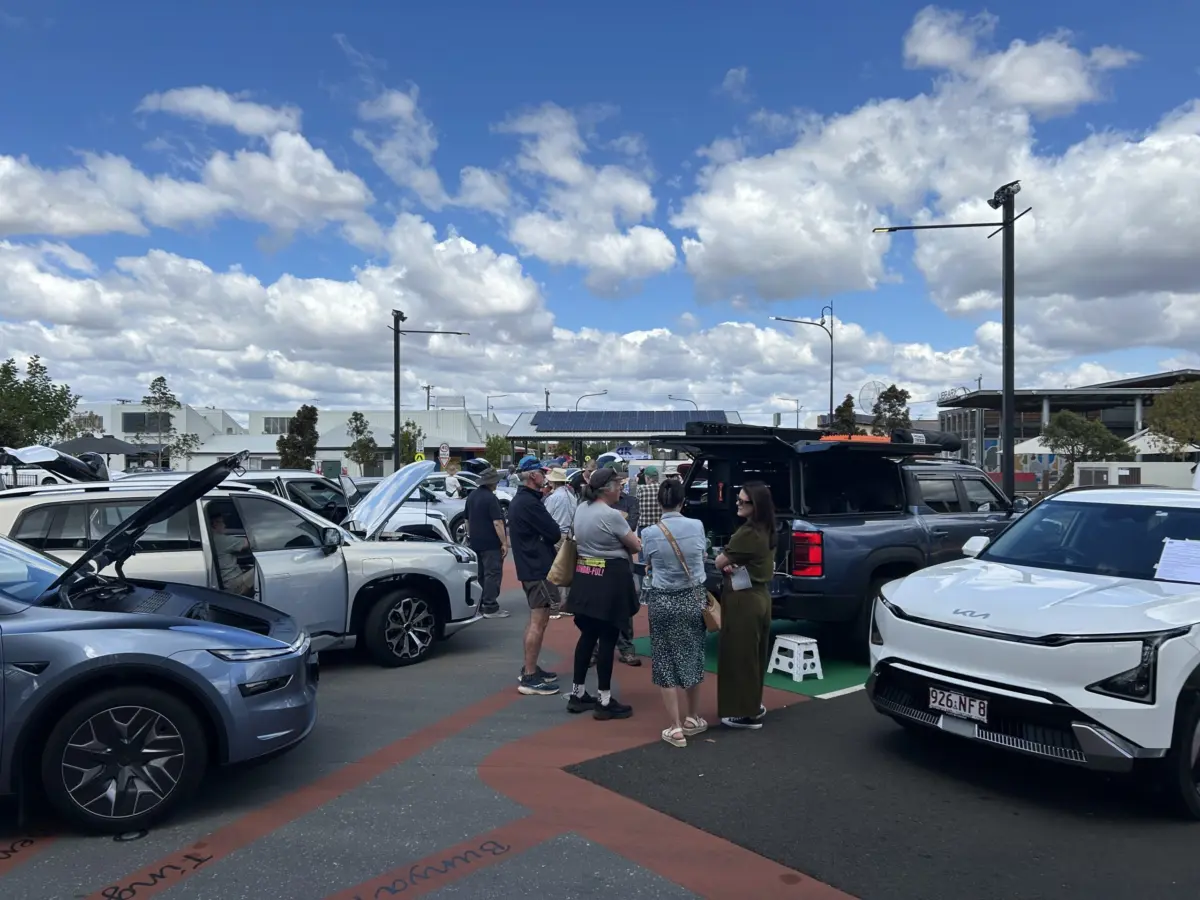
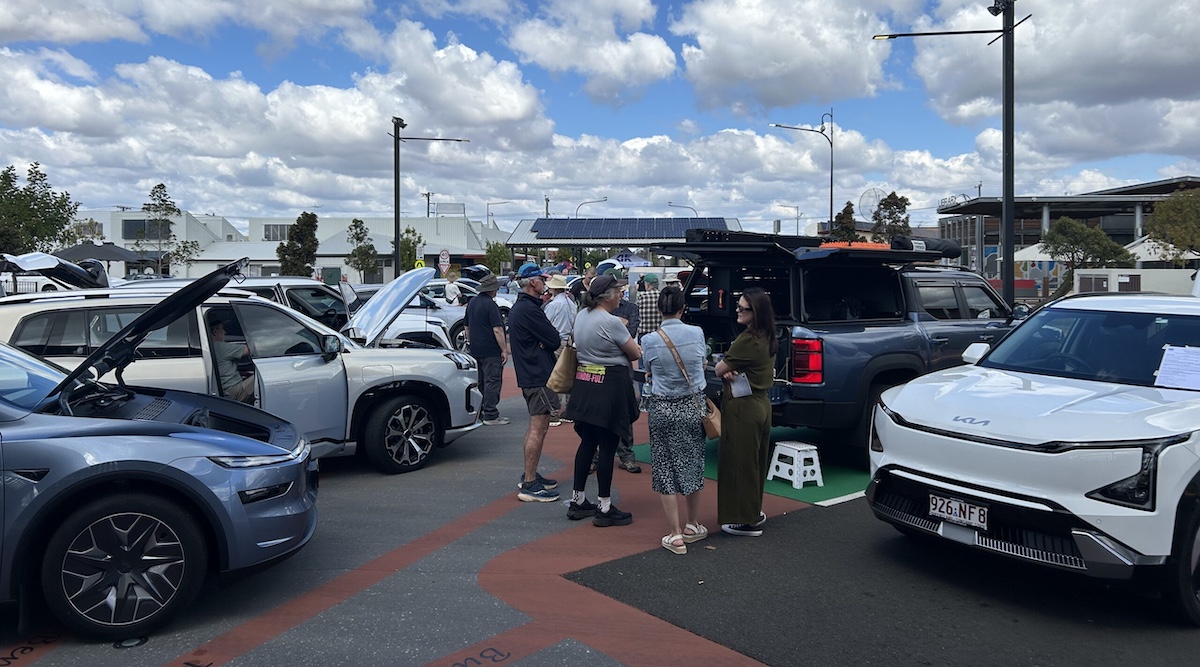
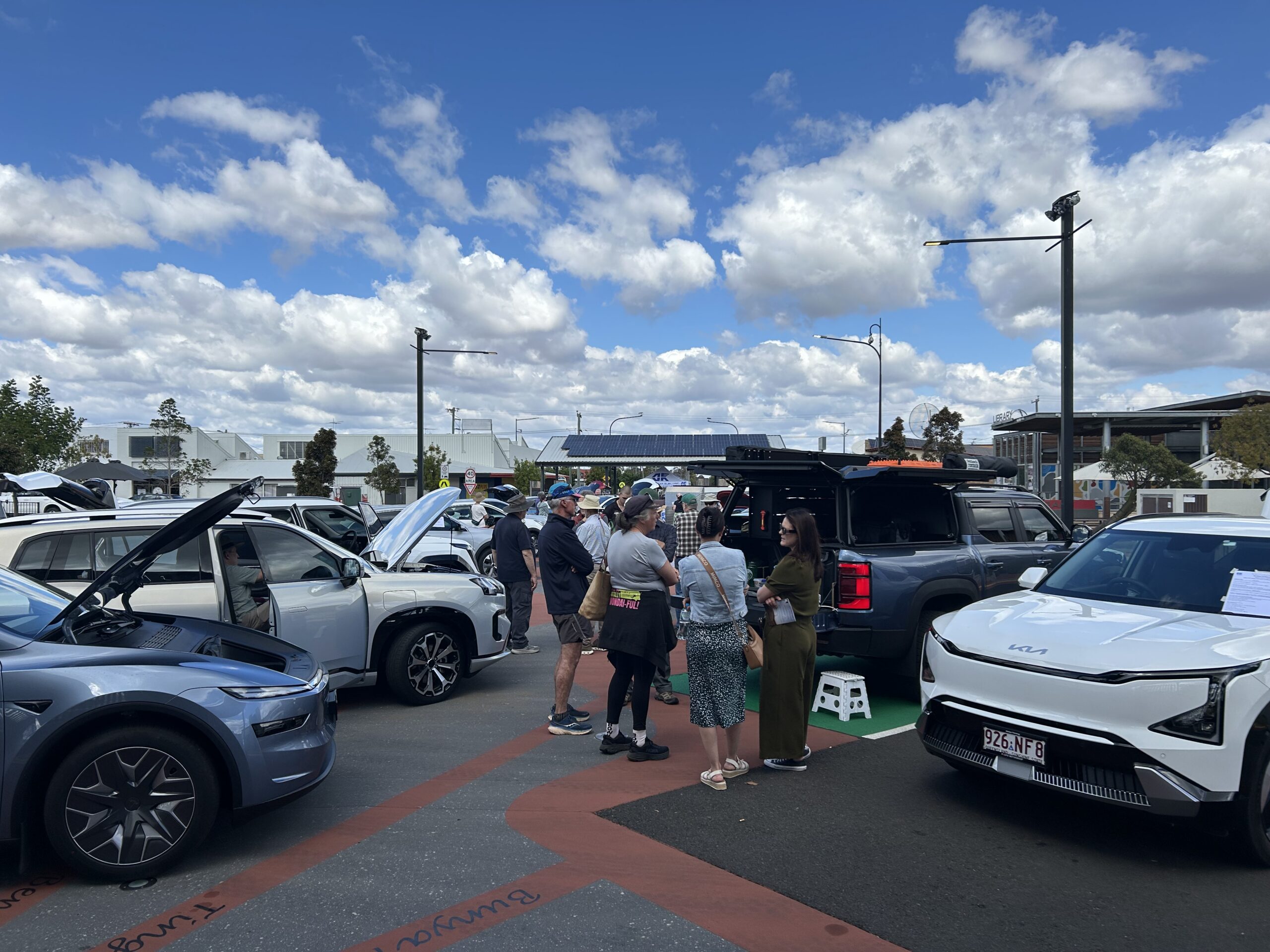
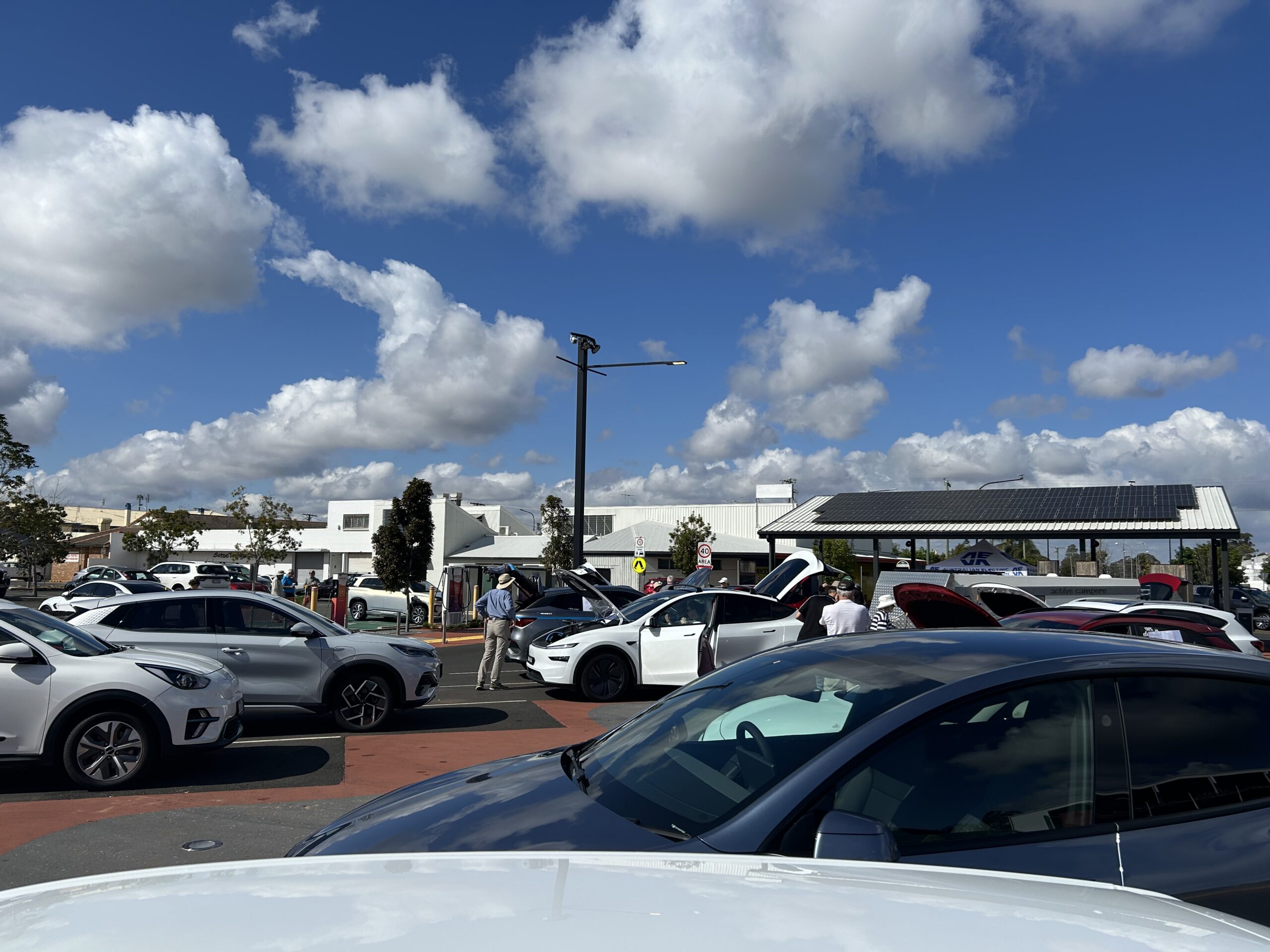
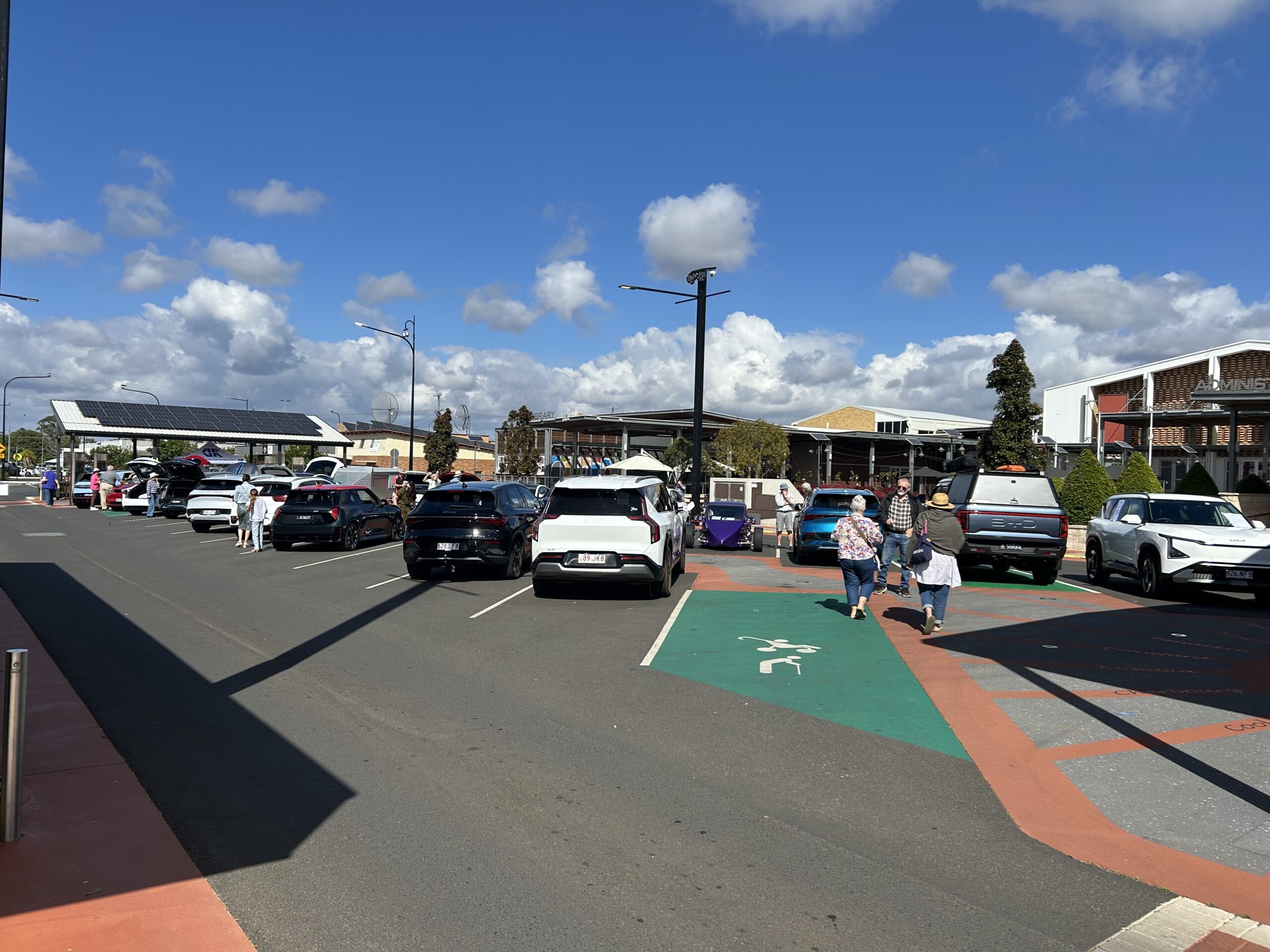
Event Day: More than 20 electric vehicles converged on Kingaroy, drawing participants who traveled from as far away as Mackay, Gympie, the Sunshine Coast, Toowoomba, and Brisbane. Local EV owners from the SBSFN also turned out in force.
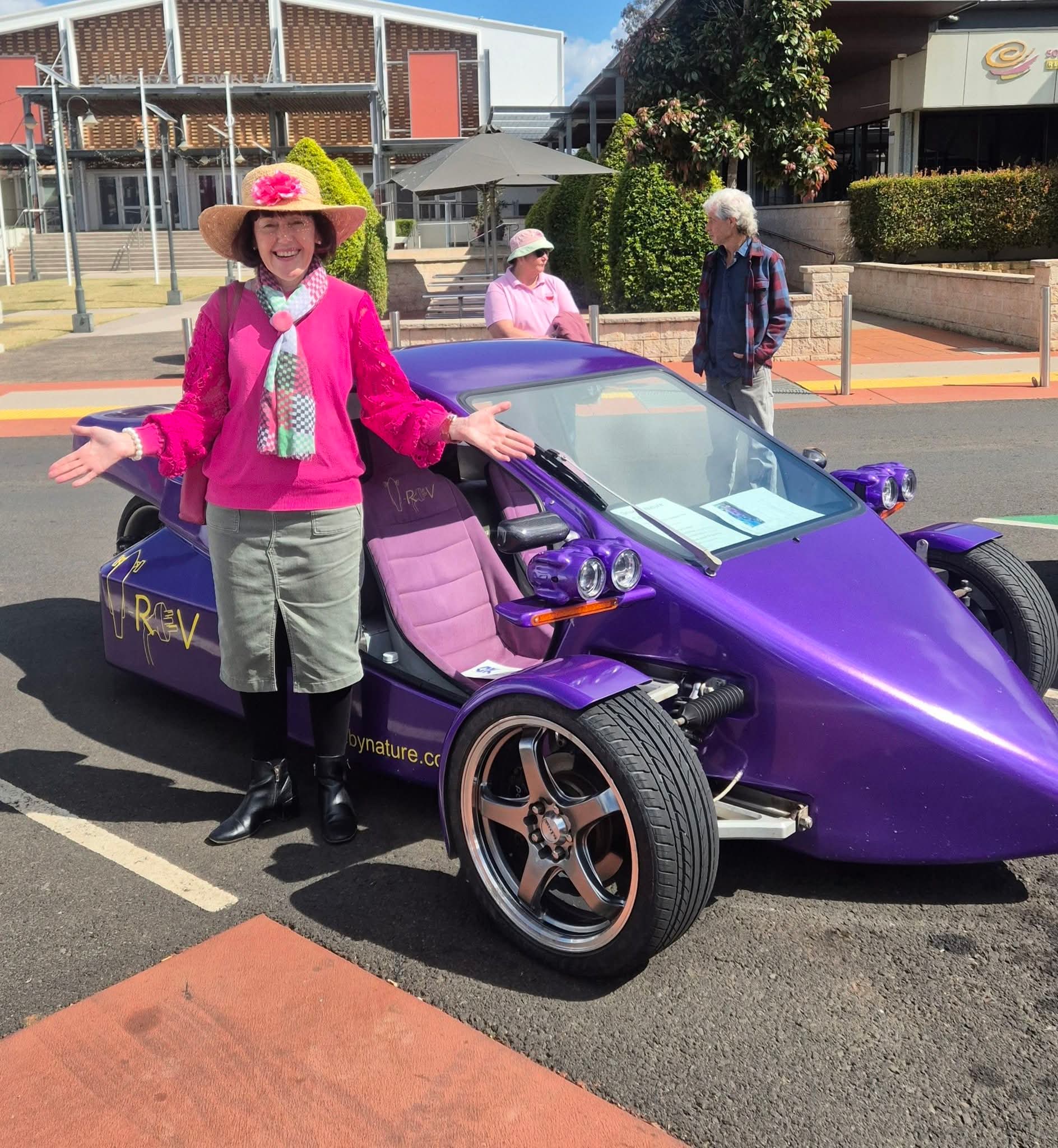
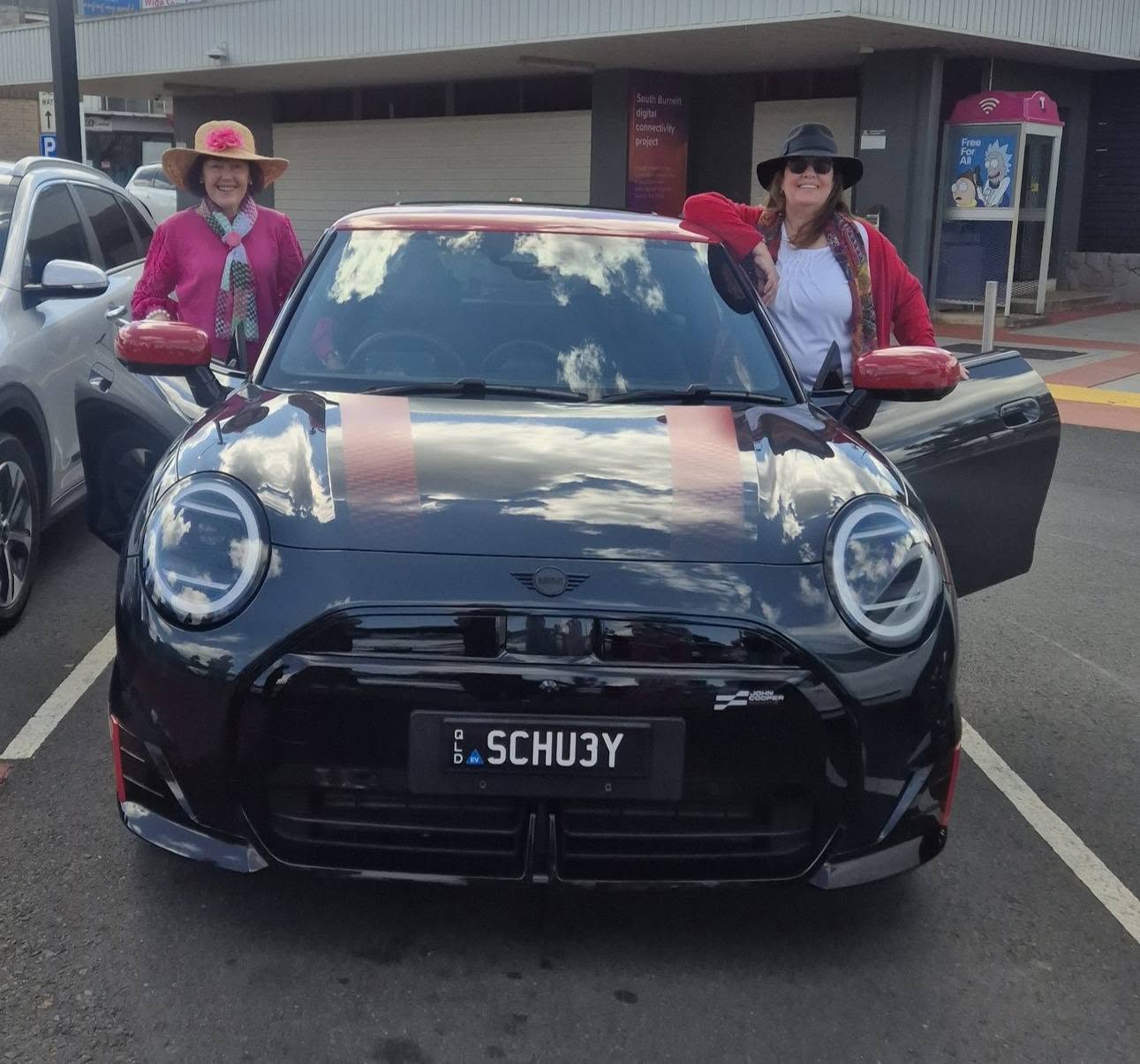
The Gathering: Throughout the day, the meetup attracted steady public interest. Curious locals engaged with vehicle owners to demystify EV technology, discuss practical range limits, and explore models ranging from Teslas and BYD Atto 3s to Hyundai, Kia, Mini Cooper, and Aion vehicles. Notably, the display included a Tesla towing a caravan, providing regional onlookers with a tangible demonstration of EVs handling demanding touring and towing applications.
Political Engagement: South Burnett Mayor Kathy Duff attended the event, engaging directly with EV owners and advocates to discuss the future of regional charging networks and the economic imperatives of sustainable tourism.
Supporting Data and Regional Adoption Trends
While inner-city adoption rates in Brisbane and the Gold Coast often command media headlines, recent data reveals a fascinating paradigm shift: regional and rural Queensland are experiencing explosive percentage growth in EV ownership.
According to data from the Royal Automobile Club of Queensland (RACQ), regional adoption is outpacing southeastern Queensland in relative terms. Between June 2025 and June 2026, the Western Downs region recorded a staggering 97.8% increase in EV ownership. This surge was closely mirrored by Gladstone (95.6%) and the Somerset region (87.2%), significantly outstripping the growth rates seen in metropolitan hubs like Brisbane (43.4%), the Gold Coast (47.1%), and the Sunshine Coast (60.3%).
Dr. Michael Kane, Executive Manager of Public Policy at RACQ, emphasized the expanding geographical footprint of electric mobility. "We are seeing decent growth in EVs in western Queensland too," Dr. Kane noted, stressing the urgent need for public charging infrastructure to future-proof road tourism in rural sectors.
Despite this rapid relative growth, baseline numbers in remote postcodes remain modest. Government and registry data indicate that Kingaroy’s postcode garages roughly 80 plug-in electric vehicles—reflecting a broader national trend where regional postcodes typically record an EV penetration rate of less than 1% of total vehicle registrations.
However, local infrastructure demand is driven less by resident ownership rates and more by transient tourism. As more Australians adopt EVs for daily driving, they naturally expect to use them for long-haul holiday road trips. When high-speed chargers are offline or unavailable, these potential tourist dollars are diverted elsewhere.
Official Responses and Perspectives
The intersection of regional economics, local politics, and clean technology elicited a range of perspectives from civic leaders, advocacy groups, and attendees during the Kingaroy showcase.
Local Leadership
South Burnett Mayor Kathy Duff offered robust support for expanding the region’s charging infrastructure, recognizing its direct correlation to economic vitality.
"EV chargers are a benefit to our region as they encourage more travellers and tourism to the South Burnett," Mayor Duff stated during the event.
In private conversations with AEVA members, however, Mayor Duff offered a practical perspective that underscored existing infrastructure gaps. Traveling roughly 1,200 kilometers per week across rural regions for official duties, she noted that a hybrid vehicle currently aligns better with her demanding schedule than a pure battery-electric vehicle—a calculus that highlights precisely why robust, reliable fast-charging networks are vital for regional drivers and public servants alike.
AEVA Members and Advocates
AEVA participants shared mixed observations regarding the day-to-day utility of the local chargers during the meetup. Allan, an AEVA member who spoke on the event’s dynamics, remarked:
"I think I only saw about four vehicles charging during the day. Not many attendees appeared to need a recharge, which perhaps says something about either the availability of destination charging or the practical range of modern EVs."
Allan also highlighted the milestone presence of a Tesla towing a caravan, calling it "a good example of how EVs are increasingly being used for touring and towing applications."
Don, another AEVA participant, praised the diversity of the vehicle lineup on display.
"Tesla and Atto 3 were the predominant vehicles, however [there were] a couple of exceptions—a Mini Cooper EV, an Aion V, a few Hyundais and Kias… Those with whom I did speak were all happy with their vehicles."
Robert, reflecting on the cultural reception in a traditionally conservative rural enclave, noted that public engagement defied expectations.
"Nothing really—it was as you would expect from a conservative area. Although, I was surprised that we had as much interest and as little abuse as we did."
The sole notable exception involved an aggressive drive-by from a local motorist hauling a load of curing wild game, shouting abuse from a diesel-choking utility vehicle—a minor discordant note in an otherwise overwhelmingly positive community exchange.
Implications for Regional Economies and the Future of EV Tourism
The Kingaroy showcase illuminates a broader strategic question facing rural Australia: Who bears the financial responsibility for installing and maintaining high-speed charging infrastructure, and how can regional townships capitalize on the impending wave of electric tourists?
The Business Case for Regional Fast Charging
For small-to-medium enterprises in regional hubs—cafes, bakeries, boutique wineries, accommodation providers, and retail stores—the math is straightforward. An EV charging stop mandates a dwell time of 20 to 40 minutes on a DC fast charger. Unlike traditional fuel stations where motorists pay at the pump and immediately depart, EV drivers routinely patronize local businesses, grab coffee, eat meals, or shop while their vehicles replenish energy.
Consequently, reliable high-speed chargers act as economic magnets, pulling motorists off major transit corridors and into rural main streets.
Funding Models and Precedents
While EV drivers are universally prepared to pay fair market rates for electricity, the primary hurdle remains the capital expenditure (CapEx) required for installation, grid connection, and ongoing maintenance. Industry analysts suggest that a collaborative funding model—sharing costs among local municipal councils, private business syndicates, and state and federal government infrastructure grants—offers the most viable path forward.
Skeptics who argue that remote regions cannot support advanced technology need look no further than Australia’s Red Centre. High-speed charging is already operational at Ayers Rock (Uluru), proving that logistical challenges can be surmounted even in extreme remote environments. If Uluru can be serviced, commercial tourist hubs like Kingaroy and the wider South Burnett region are more than capable of supporting robust fast-charging networks.
The Road Ahead
As EV registrations continue their upward trajectory across rural and regional Australia, proactive planning will determine which communities reap the tourist dividend. Maintenance reliability must be prioritized alongside initial deployment to prevent frustrating outages that mar the holiday experience.
Ultimately, the transition to electric mobility is no longer confined to metropolitan postcodes. From the coastal highways to the boutique wineries of the South Burnett and beyond, the future of Australian road tourism is fast, green, and electrified.