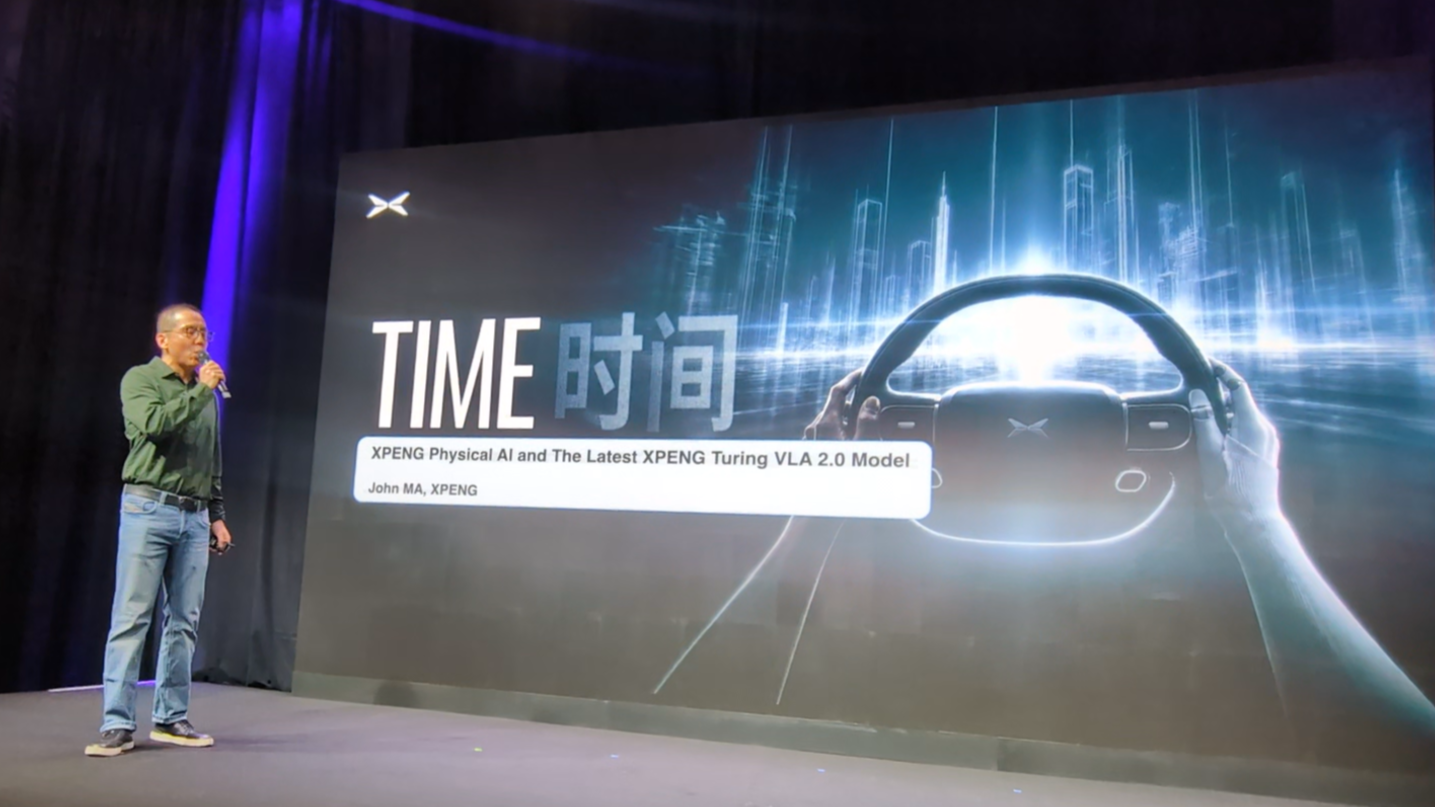
At the IFA Berlin technology trade show, Chinese smart EV pioneer XPENG delivered a compelling look into the future of automated machinery, anchoring its presence around the concept of "Physical AI." John Ma, XPENG’s Senior Director and Head of ADAS & Smart Cabin Overseas Delivery, took center stage to introduce the company’s cutting-edge VLA 2.0 Turing model. Unlike software-locked intelligence systems that rely on constant cloud connectivity, XPENG’s architecture places heavy computational power directly onboard its hardware, utilizing its proprietary Turing chipsets.
The core takeaway from XPENG’s exhibition is its holistic approach to automation. By uniting vision, language, and action (VLA) into a singular foundation model, XPENG is bridging the gap between digital processing and real-world execution. This technology is not merely theoretical; it is already powering autonomous vehicles and robotaxis in China, with imminent rollouts slated for European markets. Alongside its vehicle fleet, XPENG showcased physical innovations that captured the attention of European attendees, including its advanced humanoid robot, "IRON," and a production-bound flying car. Through localized R&D, stringent compliance with data privacy regulations, and an uncompromising focus on safety, XPENG is positioning itself as a dominant multi-modal tech titan on the global stage.
Chronology of the Event and Announcements
The trajectory of XPENG’s presentation and subsequent showcases at IFA Berlin followed a distinct timeline of technical revelation, executive interaction, and hands-on public engagement:
Keynote Presentation: John Ma opened XPENG’s programming with a high-level briefing tailored to the diverse European audience. He outlined the physical constraints of onboard AI—such as energy consumption, latency, and regulatory safety thresholds—before detailing the mechanics of the VLA 2.0 Turing model.
Exclusive One-on-One Interview: Following the keynote, Ma sat down for an in-depth interview to discuss hardware scaling, upcoming multi-language voice integration, and the broader macro-applications of XPENG’s AI ecosystem.
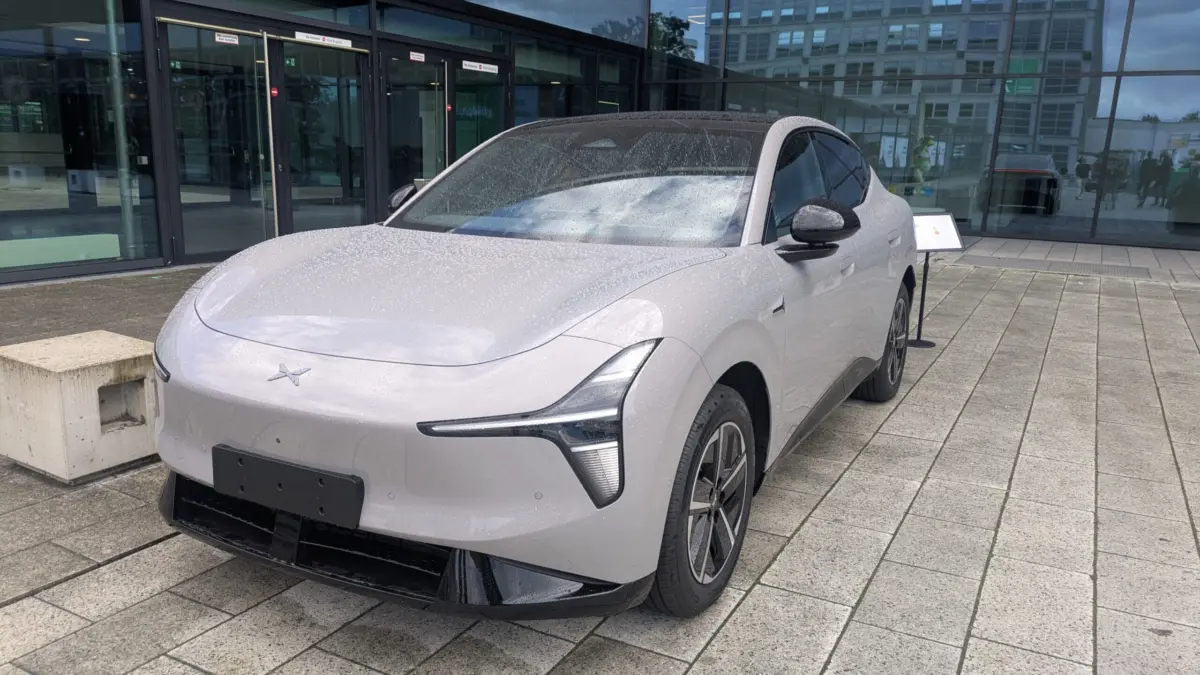
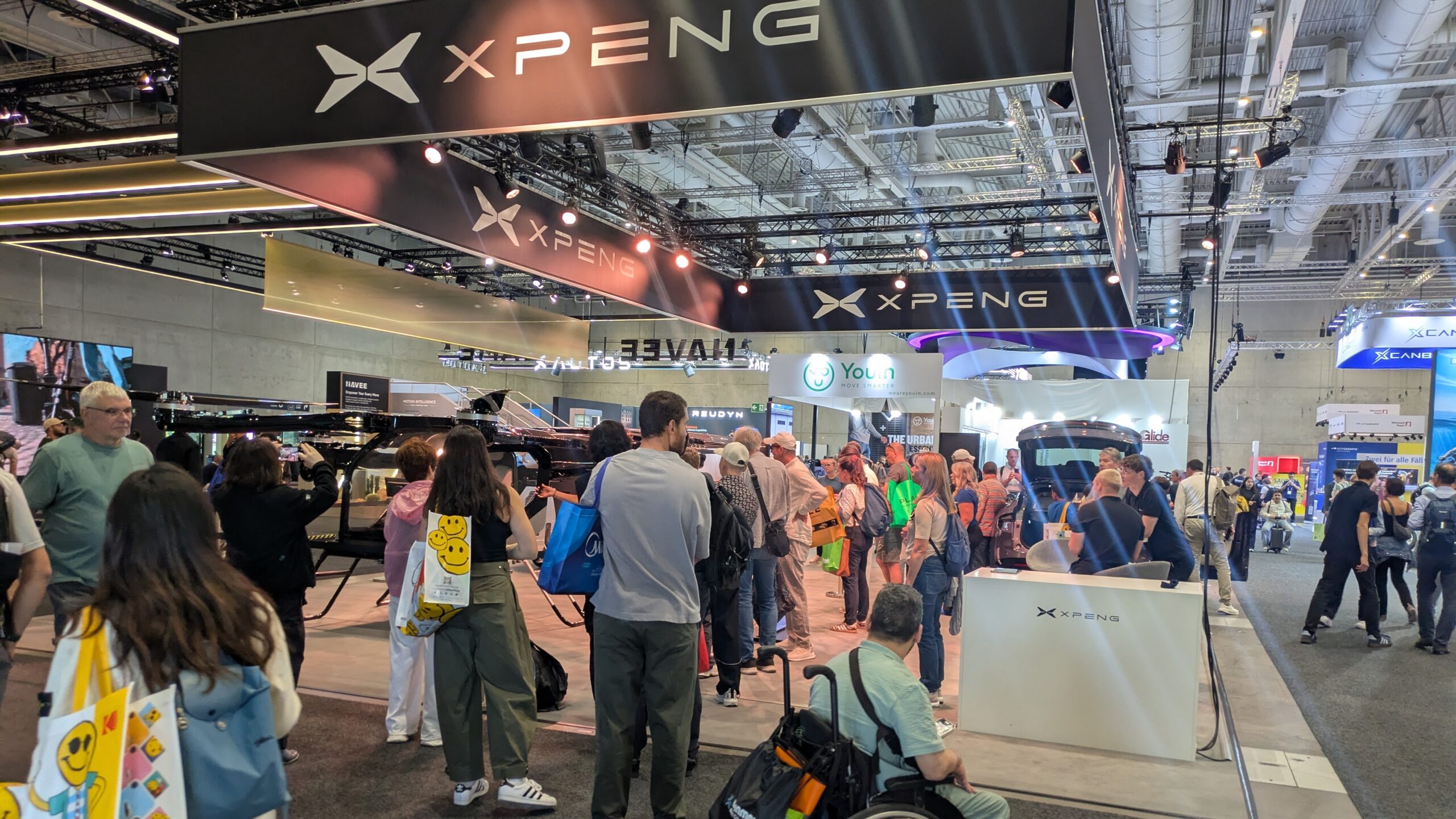
Show Floor Exploration: The narrative transitioned from the stage to XPENG’s interactive booth. Attendees interacted directly with the L03 sedan, marveled at the working prototype of the flying car, and crowded around the IRON humanoid robot.
Global Roadmap Execution: Looking ahead, XPENG confirmed upcoming milestones, including a major feature showcase at the upcoming Paris Car Show and the progressive rollout of VLA 2.0 systems across single-chip architectures and older dual-Orin platforms.
Supporting Data and Technical Architecture
XPENG’s VLA 2.0 (specifically version 6.3.0) represents a massive leap forward in how autonomous systems perceive and interact with the physical world. Crucially, the system introduces a sophisticated temporal framework designed to maximize processing efficiency while drastically cutting down response times.
The Temporal Mechanics of VLA 2.0
Traditional AI models often react to isolated frames, but XPENG’s Infini-VLA architecture puts onboard decision-making into a strict temporal context:
Historical Context (30 Seconds): The system continuously references up to 30 seconds of historical data, allowing the vehicle to understand past events that led up to the present moment.
Streaming Inference: Building on this history, Streaming Inference actively anticipates upcoming events, boosting system response times by an impressive 300%.
X-Foresight: Looking further ahead, X-Foresight predicts environmental changes and obstacles within a 6-second window, carefully budgeted to conserve onboard computing power.
Flow Matching: Once future trajectories are anticipated, Flow Matching maps out multiple potential navigation paths, instantly selecting the safest and most optimal trajectory.
Hardware Scaling and Processing Power
To run these complex algorithms locally, XPENG utilizes its proprietary Turing chipset. High-tier configurations—such as the "Ultra" vehicle specifications and XPENG’s commercial Robotaxis deployed in Guangzhou—feature a triple-chip array for primary processing, supplemented by a fourth chip dedicated entirely to redundancy and fail-safe operations.
Recognizing that not all vehicles feature three Turing chips, XPENG has developed a "distilled" version of the VLA 2.0 model. This scaled-down software is optimized to run smoothly on single-chip setups and legacy dual-Orin hardware architectures without sacrificing core safety parameters.
Official Responses and Executive Insights
During the exclusive post-keynote interview, John Ma provided vital context regarding how XPENG plans to translate its advanced Chinese-market technology into a seamless European consumer experience.
Balancing Performance Across Hardware Tiers
When asked about the user experience differences between the high-end triple-Turing "Ultra" machines and the upcoming distilled single-chip versions, Ma emphasized that safety remains non-negotiable:
"We just did some public trials of our single Turing chipset machine, and Orin execution is still under development. I would not like to say that we want to do something for the experience. We still think that at least for safety, that must be guaranteed. There’s no safety issue. And for the smoothness, maybe some slight difference, because the computing power has some physical constraints… In theory, we do not want to lose anything. We will try our best to make sure that it can be comparable with our Ultra machine."
Ma added that XPENG is actively gathering real-world user feedback during initial trials and will utilize Over-The-Air (OTA) updates to continuously fine-tune the distilled software.
Multilingual Voice Integration via Master Agent
The 6.3.0 update also introduced Master Agent voice control, which leverages large language model (LLM) technology for natural, conversational vehicle interaction. Addressing how this translates to international markets, Ma noted:
"It’s still based on our foundation model, and it’s a large language model itself, which means that it’s very natural… We have supported multiple languages, including not only English, but also Mandarin and Cantonese. And also including some other foreign languages: French, German, Spanish, Italian… There’ll be some news released during the Paris Car Show, and maybe we have some demos on that. So, stay tuned."
The Convergence of Vehicles, Robotics, and Flying Cars
Perhaps the most visionary aspect of XPENG’s strategy is its refusal to box its technology into a single product category. Because the VLA 2.0 architecture integrates vision, language, and action locally, the foundation model can be effortlessly ported across different form factors.
Ma elaborated on the grand vision of combining physical AI devices into a unified ecosystem:
"If we only limit our AI to vehicles, it will be very narrow. So, another application is humanoid robots… The robots can be onboard the vehicles and do things for the customers. For example, you want to buy something. Previously, you have to go out and drive your vehicle… For now, maybe you can ask your vehicle to drive itself, and ask your robot to step out from your vehicle to the supermarket and get the bag and return to the vehicle… It’s a new physical agent. It’ll be fantastic."
Implications for the Global Automotive and Tech Industries
XPENG’s showcase at IFA Berlin signals several profound shifts for the future of consumer technology, mobility, and regulatory compliance:
1. The Onboard Computing Advantage vs. Cloud Centralization
While many Western and domestic competitors rely heavily on massive centralized data centers and human data labeling pipelines, XPENG’s commitment to onboard processing changes the game. By executing heavy AI computations locally via the Turing chipset, XPENG sidesteps massive cloud-infrastructure overhead. More importantly, this architecture ensures native compliance with strict European data privacy regulations (such as GDPR), as environmental video feeds and user data do not need to be perpetually streamed back to foreign servers.
2. Redefining the Automotive Showroom Experience
Public reactions on the IFA Berlin show floor proved that consumers are eager for multi-modal innovation. Vehicles like the L03—offering premium spaciousness, high-end audio fidelity, and competitive pricing—are shattering expectations of what an affordable smart EV can deliver. Furthermore, the realization that XPENG’s flying cars and humanoid robots are real, production-bound hardware projects rather than vaporware concepts elevates XPENG from a traditional car manufacturer to a comprehensive physical AI enterprise.
3. A Multi-Modal Future
By treating cars, flying vehicles, and humanoid robots as nodes on the same software network, XPENG is pioneering a closed-loop lifestyle ecosystem. If successful, the synergy between an autonomous vehicle navigating city streets and a humanoid robot handling physical delivery tasks will redefine personal convenience. As XPENG prepares for its upcoming product deployments in Europe—backed by a massive workforce where nearly 45% are dedicated entirely to R&D—the traditional automotive landscape is officially on notice.