

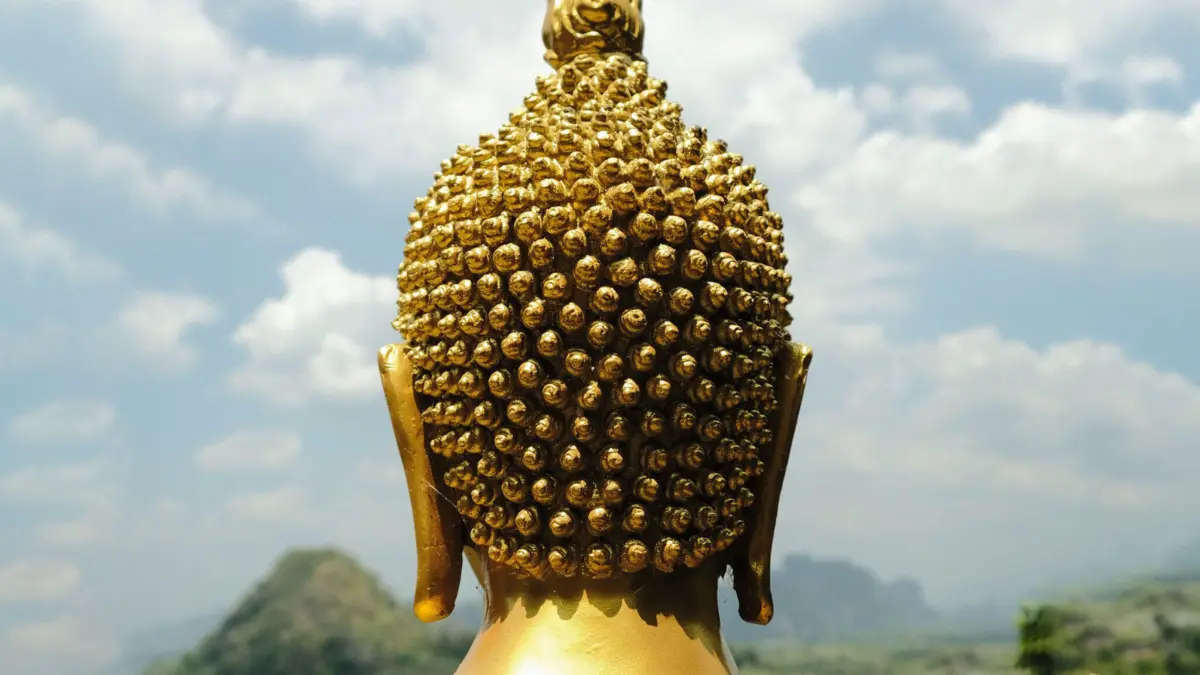
LOS ANGELES — In an era defined by high-speed internet, instant messaging, and the relentless optimization of daily life, the ancient art of waiting has become an endangered state of mind. Modern society demands constant acceleration, framing patience as a tedious obstacle or an outdated compliance test. Yet, beneath the veneer of modern efficiency, a growing movement among psychologists, mindfulness practitioners, and everyday individuals is redefining patience not as a passive burden, but as an active, transformative superpower.
At the intersection of animal behavior, Buddhist philosophy, and contemporary neuroscience, experts are revealing that the capacity to wait with grace is the ultimate anchor for navigating the turbulence of modern existence.
Main Facts: The Anatomy of Modern Urgency
The friction between our biological wiring and the demands of contemporary life has created a collective crisis of urgency. Whether caught in bumper-to-bumper traffic, demanding rapid resolutions to systemic crises, or simply trying to exit a front door with a high-energy pet, human beings increasingly struggle with the discomfort of delay.
- The Canine Catalyst: Threshold training—the practice of teaching an animal to pause calmly before crossing a boundary—serves as a living laboratory for human emotional regulation. When animals and humans struggle against boundaries, they mirror each other’s inner agitation.
- The Buddhist Framework: In Buddhist traditions, patience (paramita in Mahayana, parami in Theravada) is classified as a fundamental virtue or "perfection" of the mind and heart, positioned alongside generosity, ethical conduct, and wisdom.
- The Power of the Pause: Far from being a doormat or a form of spiritual bypassing, psychological frameworks view patience as a "sacred pause" that bridges raw emotional triggers—such as rage, fear, or frustration—and intentional, wise action.
Chronology: From the Bodhi Tree to the Modern Foyer
The philosophical evolution of patience spans millennia, transitioning from ancient ascetic disciplines to practical, everyday applications in the 21st century.
Ancient Roots and the Defeat of Mara
The concept of patience as a supreme spiritual force dates back over 2,500 years. In foundational Buddhist teachings, patience was the primary virtue that allowed Siddhattha Gotama—the historical Buddha—to triumph over Mara, the personification of delusion, temptation, and fear. While meditating under the Bodhi Tree, the Buddha remained entirely unswayed by the onslaught of doubt and desire. By refusing to turn away or fight back aggressively, he demonstrated that patience holds the human heart present long enough for deep awareness to blossom.
Centuries later, the 8th-century Buddhist monk Shantideva codified this sentiment, writing famously in the Bodhicaryavatara: "There is no evil like hatred, and no austerity like patience."
The Evolution of Modern Mindful Integration
In the latter half of the 20th century and into the 21st, Eastern philosophies were systematically integrated into Western psychology through mindfulness-based interventions. Educators, psychologists, and dharma teachers began translating ancient paramis into accessible tools for emotional regulation. Today, institutions of higher education and mental health clinics utilize these principles to treat chronic stress, anxiety, and the psychological fallout of a hyper-connected society.
The Everyday Micro-Practices of Today
In contemporary settings, the practice of patience has scaled down from monastic caves to ordinary domestic spaces. Pet trainers, parents, commuters, and activists utilize threshold moments—such as waiting at a red light, standing in a checkout line, or holding space during a social injustice protest—as modern training grounds for emotional resilience.
Supporting Data and Expert Perspectives
Mental health professionals and spiritual leaders emphasize that patience is deeply physiological, structural, and evolutionary.
Dr. Allyson Pimentel, a psychologist, long-time Insight Meditation practitioner, and the director of Mindful USC at the University of Southern California, notes that human habits of mind—both wholesome and unwholesome—have been building for eons.
"We did not invent fear, anger, and frustration in our short lifetimes; they’ve been dawning in us since our earliest evolution," Dr. Pimentel explains. "Just as it has taken deep time for these states of mind to develop, it will take sweet time for them to be understood and metabolized and to lead to wisdom."
Dharma teacher Leslie Booker expands on this reframing, famously observing that "patience isn’t giving up our power; patience is our superpower." Booker notes that experiencing strong emotions like rage, fear, and sadness is a natural, healthy response to the challenges of modern life. However, rather than acting as a tool for suppression or spiritual bypassing, genuine patience creates a vital gap between a thought and an action.
Furthermore, Theravada monk Ajahn Chah and contemporary teacher Ajahn Sucitto have frequently highlighted the stabilizing utility of patience. Sucitto notes that patience possesses the unique capacity "to carry the heart through the turbulence of existence so that it no longer shakes, sinks, or lashes out."
Official Responses and Institutional Shifts
As corporate burnout, clinical anxiety, and societal polarization reach record highs, mental health organizations and academic institutions are formally responding by integrating patience-building frameworks into stress-reduction programs.
- Mindfulness in Higher Education: Programs like Mindful USC and similar initiatives across global universities are actively teaching students and staff how to navigate academic and personal pressures through contemplative pauses, reframing stress not as an emergency, but as an object of study.
- Clinical Psychology Integrations: Cognitive Behavioral Therapy (CBT) and Dialectical Behavior Therapy (DBT) increasingly incorporate concepts akin to the Buddhist paramis, teaching patients distress tolerance and radical acceptance—modern clinical terms for what ancient traditions called patience.
- Workplace Wellness: Human resources departments are beginning to move beyond superficial productivity hacks, exploring resilience training that emphasizes long-term emotional stamina over reactionary crisis management.
Implications: Reframing Patience as Devotion, Not Punishment
For most people, the word "patience" triggers memories of scolding authority figures demanding, "Just be patient!" It highlights a lack of control and forces individuals to confront their inability to secure immediate gratification.
However, shifting the cultural narrative requires looking at patience through the lens of devotion. As dharma teacher Beth Sternlieb articulates, patience is fundamentally an act of devotion: to reality as it is, to non-harming, and to the slow, generational awakening of human consciousness.
When viewed as love’s stamina rather than an endurance test, patience changes the physiological experience of waiting.
- Nervous System Regulation: By dropping the shoulders, softening the jaw, and taking conscious breaths, individuals can signal safety to their autonomic nervous systems, expanding their subjective sense of time.
- Ethical Fortitude: In moments of socio-political outrage, patience prevents individuals from reacting with destructive hatred, fostering instead a dignified, measured response.
- Interpersonal Harmony: Whether applied to training a 95-pound rescue dog or communicating with a difficult colleague, patience offers the gift of deep listening.
A Practical Blueprint: How to Cultivate Patience in Daily Life
For those looking to transition from reactive frustration to spacious awareness, mindfulness experts recommend a four-step framework that can be applied anywhere—from a traffic jam to a meditation cushion.
1. Pause
When you feel the familiar tightening in your belly, the shallow breathing, or the restless urge to rush, pause. Name the experience softly to yourself: "Impatience is here." Take slow, conscious breaths and ground your feet on the floor.
2. Widen the Perspective
Investigate the physical and emotional landscape of your impatience. Ask yourself: What am I resisting right now? What am I rushing toward? What am I wishing were different? Opening inquiry around the discomfort often dissolves its sharpest edges.
3. Practice Self-Compassion
Acknowledge the inherent difficulty of the human condition. Place a hand on your heart and silently validate the moment: "Waiting is hard. Not knowing is hard. May I rest in patience." Extend this kindness not just to yourself, but outward to all beings navigating similar struggles.
4. Choose the Next Wise Step
Operating from a place of steadiness rather than agitation, cross the threshold into your next action with care, clarity, and kindness.
Conclusion
Ultimately, the ancient teachings on patience converge with modern behavioral science on a singular truth: we cannot force the seedling to grow faster, nor can we outrun the natural laws of emotional processing. As poet Mary Oliver famously wrote, "Things take the time they take. Don’t worry."
By transforming our relationship with waiting—moving away from punishment and toward devotion—we reclaim our inner nobility. Whether standing at the threshold of a front door with an eager dog or facing the vast complexities of modern life, patience remains the gentle rain that waters the ground most deeply, allowing wisdom, compassion, and ease to finally cross the threshold.
