

By the Editorial Desk
With contributions and insights from metaphysical researchers and consciousness advocates
Main Facts: The Phenomenon of Existential Dislocation
Across the globe, a quiet yet pervasive demographic is experiencing a profound sense of alienation. Millions of individuals—ranging from young adults to seasoned elders—look at contemporary society and experience a jarring cognitive dissonance, frequently summarizing their internal state with a singular, haunting question: “What am I doing here?”
This sentiment transcends standard seasonal depression, localized discontent, or standard generational angst. Instead, it manifests as a foundational, lifelong impression that Earth is not one’s true home. According to spiritual researchers, holistic counselors, and metaphysical authorities, this phenomenon affects a vast network of individuals who feel fundamentally misaligned with the standard metrics of human success.
Key markers of this existential dislocation include:
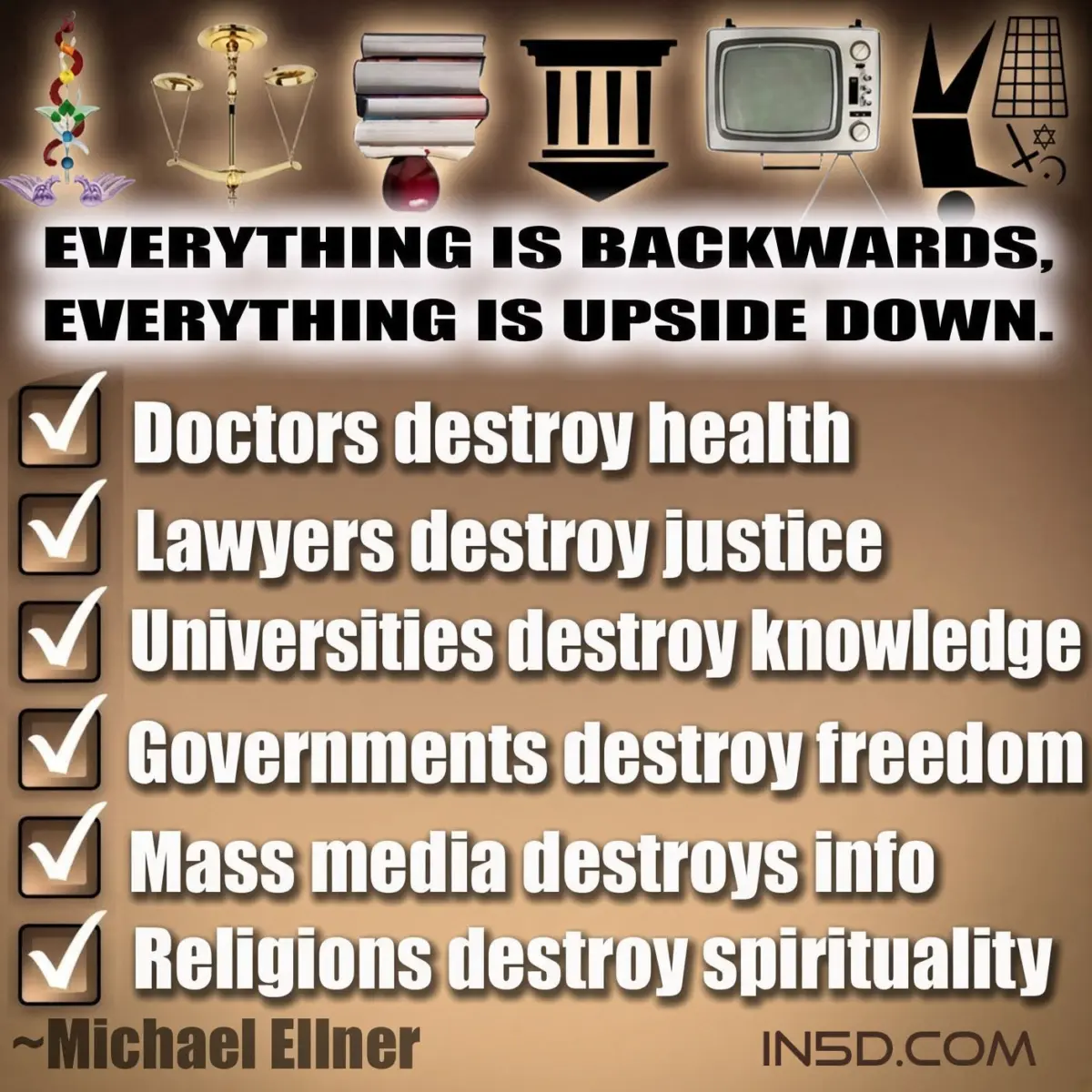
- The Inversion Paradox: A persistent impression that societal structures—ranging from formal education and organized religion to career trajectories and economic systems—operate in an "upside-down and backwards" manner.
- The "Homesick" Syndrome: An inexplicable, chronic longing for a place or state of being that the individual cannot physically identify or remember ever visiting.
- The Alienation of Conformity: A lifelong struggle to adopt traditional societal roles, often accompanied by friction within standard institutional frameworks such as schools, corporate environments, and dogmatic religious bodies.
While mainstream psychology frequently attributes these feelings to introversion, neurodivergence, or situational maladjustment, an expanding subculture of metaphysical thinkers argues that this profound sense of non-belonging points toward a much deeper, cosmological origin.
Chronology: Tracing the Evolution of the "Out-of-Place" Narrative
To understand how individual alienation transforms into a collective cultural movement, one must examine the timeline of how humanity has historically addressed the feeling of being an outsider.
Early Childhood Disconnection (Ages 5–12)
For many who experience this phenomenon, the sensation does not arrive in adulthood; it is present from the earliest memories of socialization. Biographical accounts from spiritual leaders frequently highlight early childhood friction with authority figures. Questioning Sunday school narratives, challenging rigid classroom structures, or expressing confusion over playground hierarchies are often the first documented milestones in an individual’s journey toward spiritual non-conformity.
The Catalyst of Metaphysical Exploration (Young Adulthood)
As individuals enter early adulthood, the friction between internal values and external expectations typically reaches a breaking point. Confronted with the standard societal script—education, debt accumulation, career bondage, and retirement—many experience an existential crisis. This stage often triggers active exploration into alternative philosophies, meditation, and regression techniques. Historical frameworks like past-life regression therapy, popularized by pioneers such as Dolores Cannon, have provided millions with a narrative architecture to explain their lifelong sense of displacement.

The Awakening of the "Scattered Tribe" (Mid-Life and Beyond)
A defining chronological shift occurs when isolated seekers begin to find one another. What begins as decades of quiet internal monologue transitions into community building. Through digital networks, local circles, and specialized applications designed to track metaphysical journeys, individuals discover that their isolation was merely geographical scattering. Conversations that last hours replace years of silence, validating long-held intuitive suspicions and solidifying a collective identity among modern seekers.
Supporting Data: Examining the Metaphysical Frameworks
While empirical science relies on measurable, physical data, the study of human consciousness often requires qualitative frameworks. Researchers investigating the "non-belonging" phenomenon rely on several primary theoretical models to categorize and understand these experiences.
1. The Starseed Hypothesis
Derived from esoteric and modern metaphysical traditions, the Starseed hypothesis posits that certain human consciousnesses possess origins, previous incarnations, or energetic signatures connected to planetary systems beyond Earth. Common points of resonance cited by proponents include:
- The Pleiades: Often associated with themes of healing, teaching, and emotional evolution.
- Orion’s Belt: Frequently linked to analytical depth, energetic transformation, and systemic restructuring.
- Sirius & Andromeda: Connected to advanced technological understanding and foundational spiritual architecture.
While these concepts cannot be quantified in a laboratory setting, practitioners argue that their value lies in their utility: they offer individuals a cohesive framework to contextualize lifelong traits such as star-gazing fascination, vivid anomalous dreams, and deep-seated empathy.
2. The Concept of "Volunteer Souls"
Pioneered extensively by hypnotherapist and author Dolores Cannon, the theory of "Volunteer Souls" suggests that during critical junctures of planetary instability, consciousnesses from higher-vibrational dimensions volunteered to incarnate on Earth. Their core directive is not necessarily to achieve standard worldly success, but to anchor higher frequencies of awareness, love, and light into a dense, chaotic reality. This framework explains why many individuals feel a persistent, unspoken "mission" without possessing a physical instruction manual or map.
3. Old Souls and Introspective Personality Typologies
From a more grounded psychological perspective, researchers note a heavy overlap between feeling like an outsider and recognized personality traits. Assessments like the Myers-Briggs Type Indicator (MBTI) frequently reveal high concentrations of intuitive and introverted types (such as INFPs) among those questioning societal norms. Coupled with the concept of the "Old Soul"—an esoteric term for a mind carrying deep introspection and wisdom across multiple cycles of experience—these frameworks provide a bridge between psychological introspection and spiritual identity.
Official and Institutional Responses: The Clash of Paradigms
Mainstream institutions—namely traditional academia, orthodox religion, and institutional psychiatry—maintain a vastly different interpretation of existential alienation.
The Medicalization of Spiritual Distress
Clinical psychology and psychiatry traditionally view chronic feelings of detachment, derealization, or a sense of not belonging through a diagnostic lens. Conditions such as maladaptive daydreaming, depersonalization, or generalized anxiety are often treated with behavioral therapy and pharmaceutical interventions designed to anchor the individual more firmly into consensus reality.

Critics from the holistic community argue that modern psychiatry frequently pathologizes what is actually a natural evolutionary or spiritual awakening. When a child questions dogmatic religious teachings to the point of institutional disruption, traditional education systems historically respond with disciplinary action rather than philosophical engagement.
The Societal Need for Conformity
Sociologists point out that complex civilizations rely heavily on shared myths, predictable behavioral loops, and economic compliance to function efficiently. Educational pipelines are intentionally structured to produce specialized laborers rather than independent philosophers. Consequently, institutional systems are structurally incapable of validating the premise that an individual’s true home is non-terrestrial or that societal norms are fundamentally "upside down."
This structural friction guarantees that anyone operating outside the consensus trance will experience friction, isolation, and marginalization by design.
Implications: Re-framing the Journey from Alienation to Purpose
The realization that one does not fit into contemporary society carries profound personal and collective implications. Rather than viewing alienation as a pathological defect to be cured, modern metaphysical philosophy encourages individuals to view it as a catalyst for profound transformation.
1. Shifting the Core Question
The journey typically begins with a lamentation: “Why am I stuck here?” This phrasing frames the individual as a victim of cosmic misplacement. However, as spiritual maturity develops, the inquiry evolves into a more empowering interrogation: “Why did I choose to come here?” By reframing incarnation as a deliberate, conscious choice rather than an accidental imprisonment, the individual reclaims agency over their life path.
2. Embracing Authenticity Over Assimilation
History demonstrates that societal paradigms are rarely revolutionized by those who seamlessly conform to them. True paradigm shifts are invariably driven by outliers who look at consensus reality and refuse to accept its contradictions. The discomfort of non-belonging serves an evolutionary purpose: it prevents the soul from going to sleep within the matrix of societal expectations, driving the seeker inward to discover their authentic voice.
3. Building the New Paradigm
As scattered seekers find one another through shared languages, digital platforms, and community spaces, the implications extend beyond individual healing. A collective consciousness is forming—one that prioritizes ecological harmony, intuitive wisdom, and genuine human connection over materialistic accumulation and institutional control.
Ultimately, the persistent feeling of not belonging on Earth may not be a sign of permanent exile, but rather an invitation. It suggests that those who feel displaced are not broken citizens of this world, but pioneers tasked with bringing a higher vision of home down to the physical plane.
