

By C. J. Bahnsen
Introduction: The Call of the South Orange County Coast
In the sun-bleached expanse of Southern California’s coastline, the Pacific Ocean serves as both a playground and a profound psychological mirror. For locals like Omar, a lifelong surfer from South Orange County who long ago traded fiberglass surfboards for the purer, unmediated art of bodysurfing, the sea is an old and trusted friend. To Omar, bodysurfing represents the ultimate communion with wave-riding: nothing stands between the human form and the dynamic, liquid power of the ocean.
For others, however, entering that formidable environment requires crossing a threshold of fear, physical limitation, and existential reckoning. This narrative chronicles a transformative afternoon at the southern edge of Crystal Cove State Park, where crashing sets, heavy wetsuits, and deep-seated personal inquiries converge. Through the lens of Buddhist philosophy and the haunting memories of a brother living with profound disabilities, this piece explores how the undulating power of the ocean can reflect—and temporarily heal—the turbulent waters of the human mind.
Chronology of an Ocean Odyssey
Preparing for the Big Water: Gear and Physics
The journey began long before the first toe touched the Pacific brine, anchored by instructional "surf checks" where Omar patiently imparted the complex physics of wave formation to a visiting transplant from Toledo. Destination: the rugged southern boundary of Crystal Cove State Park. Here, towering coastal cliffs loom over the shoreline, forcing incoming swells to break with striking consistency, yet creating an unnerving atmosphere of scale. This was not a gentle wading pool; it was big water—endless, powerful, and writhing with kinetic energy.
The ritual of preparation highlighted immediate contrasts. Omar donned a state-of-the-art wetsuit crafted from ultraflexible geoprene, designed to move seamlessly with the body’s natural contours. By contrast, his companion wore a garage-sale artifact constructed from stiff, unforgiving neoprene.
"Man, that wetsuit is old-school," Omar observed, taking in the relic.
With flippers strapped on last, the physical divergence between the two men became stark. Omar stepped lightly and fluidly into the surf, diving effortlessly beneath an oncoming wall of water. The stiff neoprene, however, forced a rigid, mechanical gait—a "Tin Man walk" that instantly evoked memories of the author’s brother, Ben, who lives with profound physical disabilities and cannot walk at all. Confronted with even minor bodily restrictions, a wave of hesitation washed over the author at the tideline. Fear gripped him with the tightness of the rubber suit, yet he pushed forward into the foamy shallows.
Navigating the Impact Zone and the Void
Swimming past the punishing shorepound required sustained physical exertion. Mild offshore winds teased four-foot swells that rolled steadily toward the coast. Buoyed heavily by the thick neoprene, the author bobbed up and down as the waves passed underneath, until his flippers no longer found purchase on the sandy bottom. In that instant, the psychological reality shifted: the ocean was in control.
Out past the safety of the shallows, the sheer vastness of the deep water triggered memories of past aquatic assignments—specifically a harrowing deep-sea dive 150 miles off the coast of Southern Baja for the Los Angeles Times. Locked inside a shark cage with visibility extending over ninety feet, the author had watched the bright cerulean surface shift into a lavender blush, before plunging into a somber, dim abyss resembling the black maw of a predatory beast. That encounter with the silent, immense emptiness of the deep sea left an indelible imprint regarding the ocean’s capacity to induce profound isolation.
Yet, this exact confrontation with emptiness forms the bedrock of Buddhist meditative teachings. Noted teacher Yongey Mingyur Rinpoche frequently compares intense human emotions—such as fear and anxiety—to surface-level waves that agitate an otherwise tranquil mind. In his book In Love with the World, Mingyur Rinpoche advises:
"Acknowledge each wave but stay with the ocean. This will pass if [you] let it."
The Crucible of the Swell: Suffering and Surrender
Back in the impact zone of Crystal Cove, theory collided with brute physics. Larger sets—swells originating from distant meteorological events carrying immense kinetic energy—crashed down with relentless fury. To the uninitiated, these waves acted like a violent washing machine, inducing immediate queasiness and disorientation.
While Omar floated nearby with total equanimity, effortlessly riding the crests and expertly ejecting over the shoulders of breaking waves, his companion was repeatedly driven into the dark, churning depths. Panic threatened to take hold before a vital lesson was learned: rather than fighting the overwhelming wall of water, the stiff neoprene wetsuit could be trusted to naturally bring the swimmer back to the surface.
Still, the physical and mental toll accumulated quickly. After enduring a relentless series of beatings, the author retreated to the shore, collapsing exhausted onto a towel while Omar remained as cozy and untroubled as a harbor seal.
Sitting on the sand, feelings of inadequacy and frustration bubbled up. Why retreat when positioned in a world-class surf spot handpicked by an expert? Refusing to succumb to defeat, the author stood up and waded back into the fray.
The Breakthrough: Weightlessness and Presence
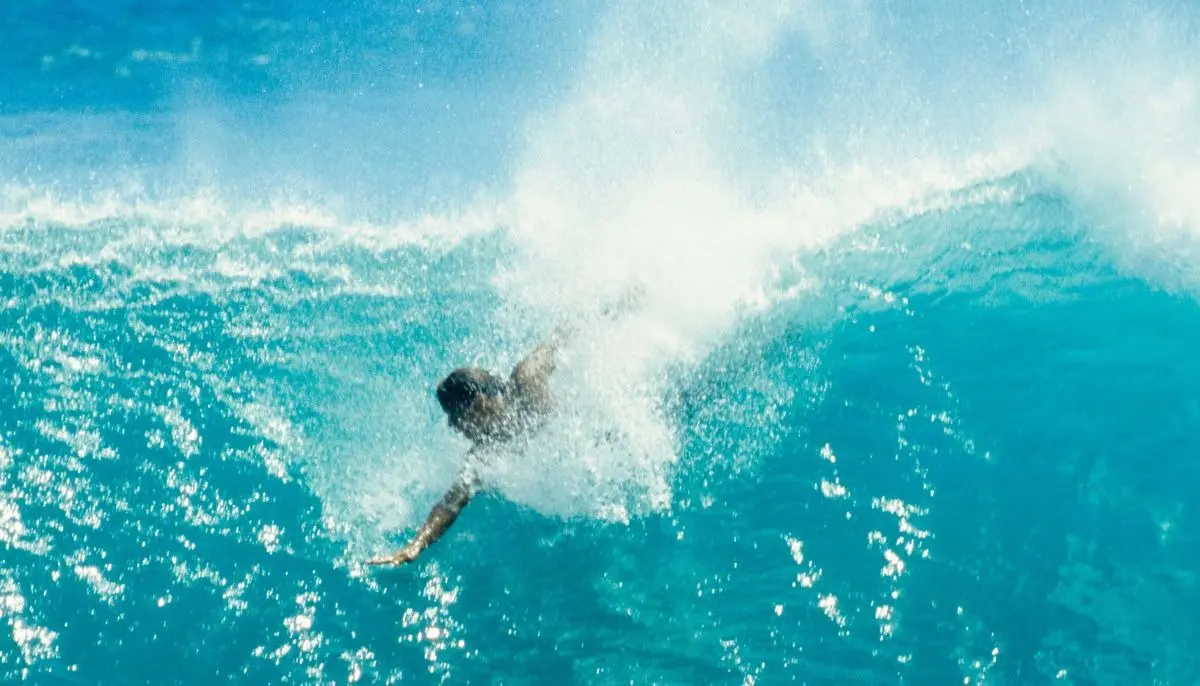
The reward for persistence arrived suddenly. As a new swell approached, instinctive panic whispered that it was too late to catch it. Yet, a powerful upward thrust caught the swimmer beneath the chest. Suddenly, head and torso were lifted high above the face of the swell, echoing the figurehead of a majestic tall ship.
In that fleeting moment, pure weightlessness took over. Negative thoughts, existential questions, and internal anxieties vanished, replaced by an acute, vibrating presence. The vast ocean no longer felt like a hostile, alien entity, but rather acknowledged the swimmer as an essential droplet within its grand ecosystem.
Supporting Data and Philosophical Frameworks
To contextualize the psychological landscape of the experience, several intersecting dimensions of human endurance, neurological conditions, and meditative discipline provide vital backing:
- The Physics of Bodysurfing: Unlike board-riding, bodysurfing relies entirely on hydrodynamic efficiency, human propulsion via swim fins, and precise timing relative to the wave’s steepness and velocity. Mastery requires suppressing the mammalian panic response to asphyxiation and turbulence.
- Mindfulness and Emotional Regulation: Teachings from modern Tibetan Buddhist masters like Yongey Mingyur Rinpoche emphasize that psychological distress—grief, survivor’s guilt, and existential questioning—operates identically to meteorological swells. When individuals identify exclusively with the turbulent surface thoughts ("the waves") rather than the underlying consciousness ("the ocean"), suffering intensifies.
- Neurological Conditions and Resiliencies: The narrative touches upon severe medical conditions including cerebral palsy, epilepsy, double scoliosis, visual impairment, and intellectual disability. Medical data indicates that severe epileptic episodes (tonic-clonic seizures) involve massive neurological disruptions that momentarily freeze voluntary motor functions, followed by intensive recovery phases characterized by emotional swings from terror to profound euphoric relief.
Official and Expert Perspectives
While this narrative is deeply personal, insights from psychological and somatic experts underline the therapeutic intersection between extreme environments and internal healing:
- Somatic Therapy Insights: Wilderness and adventure therapists frequently note that confronting controlled physical risks—such as open-water swimming or bodysurfing—forces individuals out of ruminative thought loops and anchors them firmly in somatic awareness.
- Mindfulness Research: Clinical studies on meditation practices modeled after teachers like Mingyur Rinpoche demonstrate that cultivating "spacious awareness" significantly lowers cortisol levels and reduces chronic anxiety by training the brain to view emotional stressors as transient phenomena rather than permanent threats.
Implications: Confronting Survivor’s Guilt and Brotherly Bonds
The transcendent joy of riding the wave ultimately served as a conduit for deeper emotional processing regarding the author’s brother, Ben. Throughout the day, recurring questions had surfaced: Why him and not me? Why did Ben endure a lifetime marked by cerebral palsy, epilepsy, double scoliosis, visual impairment, and intellectual disability, while his older brother was spared to walk freely through the world?
This persistent survivor’s guilt often casts a long shadow, compounded by memories of witnessing Ben’s terrifying seizures. Those medical episodes—where Ben’s body would instantly stiffen like stone, followed by arduous recovery phases marked by weeping and sudden, joyous yips of relief—represent emotional extremes far beyond anything encountered in the Pacific surf.
Yet, observing Ben’s daily life offers a paradoxical lesson in tranquility. Despite severe physical constraints and sensory limitations, Ben frequently rests in a state of deep, untainted peace on his porch chair, appreciating the subtle taste of a spring breeze or the simple relief of a seizure-free period.
As Mingyur Rinpoche writes, "Big emotion leads to big skylike mind." But the heavy price paid by individuals like Ben often complicates such philosophical abstractions.
Conclusion: Remaining with the Ocean
By the afternoon’s end, after enduring another breathless thrashing in the shallows and a subsequent triumphant ride straight onto the sand, clarity emerged.
The bodysurfing session yielded a profound metaphor for human consciousness. Life will inevitably deliver crashing waves of grief, physical challenge, and existential doubt. Individuals can choose to fight the current, getting repeatedly pulled under into the dark churn, or they can learn the delicate balance of riding the crest between the open sky above and the fathomless depths below.
To live mindfully does not mean escaping the storms; rather, it means acknowledging each rising wave while remaining steadfastly anchored in the vast, unshakeable ocean of the mind.
