


July 31, 2026 — Decades after she retreated from the commercial jazz spotlight to forge a singular path of spiritual devotion, the profound artistry and inner world of Alice Coltrane are once again capturing the global cultural imagination. Matador Records has announced the upcoming release of the long-awaited Ashram Tapes—a collection of rare, previously unheard recordings captured by Coltrane during the 1980s and 1990s.
These historic recordings present a breathtaking synthesis of traditional Indian chants, deep-rooted gospel, and avant-garde jazz, constructed using synthesizers, organs, and the ethereal voices of the ashram choir. While an official release date remains forthcoming, the announcement has prompted a profound reassessment of Coltrane’s extraordinary life, her pioneering musicianship, and the distinct spiritual framework that guided her transformation into Swami Turiyasangitananda.
More than forty years after her seminal 1982 profile was first published in Yoga Journal, cultural critics and music historians alike are recognizing how Coltrane—as a Black woman, visionary composer, and spiritual leader—deliberately stepped outside conventional societal norms. For too long, historical narratives framed her trajectory strictly through the lens of her marriage to jazz icon John Coltrane. Today, a broader appreciation is taking root: Alice Coltrane’s journey was one of absolute autonomy, where musical innovation and divine worship were inextricably bound.
Main Facts: The Intersection of Music and Transcendence
The core of Alice Coltrane’s legacy rests on her dual identity as a virtuoso of the avant-garde and a dedicated ascetic. Born Alice McLeod in Detroit in 1937, she emerged as a formidable jazz pianist, eventually stepping into the legendary Coltrane quartet to replace McCoy Tyner. Following the untimely death of her husband, John Coltrane, in 1967 at the age of 41, Alice embarked on a rigorous spiritual and creative odyssey.
She translated her grief and spiritual awakening into groundbreaking instrumentation, most notably introducing the harp—an instrument largely foreign to mainstream jazz—into her compositions. Her sweeping, powerful glissandi on albums like Transcendence, Journey in Satchidananda, and Lord of Lords redefined the boundaries of modern music.
Her creative output was never separate from her spiritual evolution. As she evolved into Swami Turiyasangitananda—meaning "the transcendental Lord’s highest song of bliss"—she founded the Vedantic Center in Woodland Hills, California. There, she established a racially diverse, interconnected spiritual community where music, Vedic philosophy, and communal living flourished in tandem.
Chronology: From Jazz Royalty to Spiritual Ascetic
1962–1967: The Jazz Years and Musical Partnership
Alice McLeod, then touring with vibraphonist Terry Gibbs, crossed paths with John Coltrane in 1962. They married a year later, rapidly building a family with three sons and a daughter. Alice became an integral part of John’s musical circle, contributing to his boundary-pushing explorations in avant-garde jazz. During this period, the couple also delved deeply into meditation and spiritual philosophy, steering John’s music toward what Alice described as "an acceptable offering to God."
1967–1970: Loss and Tapasaya
The death of John Coltrane in July 1967 from a liver ailment left Alice a widow with four young children. It also marked the beginning of her profound spiritual awakening. Unburdened by domestic duties of marriage, Alice entered a phase known as tapasaya—cleansing by fire. Between 1968 and 1970, she endured intense periods of penance, austerity, renunciation, and isolation. Describing these trials in her 1977 book Monument Eternal, she detailed how these self-imposed tests of long fasts, extended meditations, and sleepless vigils were designed to forge the strength and tenacity of the soul.
1972–1975: The Birth of the Vedantic Center
Following a vision of herself with Swami Sivananda outside his ashram in Rishikesh, India, Alice relocated her family from New York to California in 1972. Guided by meditative directives, she was initiated as Swami Turiyasangitananda and officially opened the Vedantic Center in Woodland Hills in 1975. The center served as a sanctuary for students seeking instruction in meditation, yoga, and Vedic scriptures, balanced with everyday life and careers.
1982: Tests of Resilience
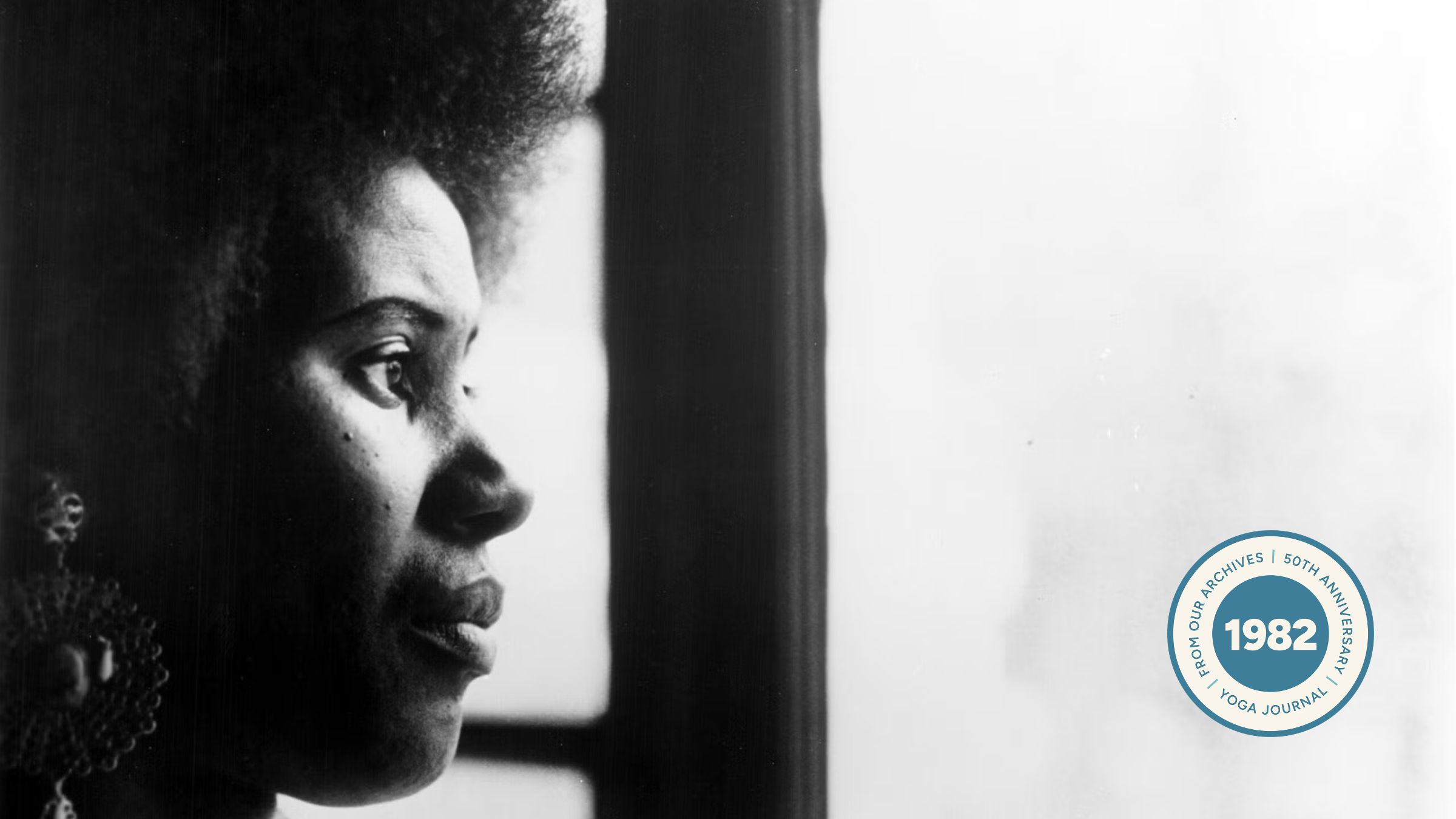
The year 1982 brought both public recognition and devastating personal trial. In the summer of that year, Alice was featured prominently in Yoga Journal. Shortly after, on August 7, 1982, her 17-year-old son, John Coltrane Jr.—a brilliant, rising jazz musician who had just performed alongside his brothers Ravi and Oran in the newly formed group "Sons of Coltrane"—was killed in a car accident. Drawing upon her deep spiritual foundation, Alice navigated this immense tragedy while maintaining her steadfast commitment to her ministry and inner world.
Supporting Data: Discography and Literary Works
Alice Coltrane’s contributions span across multiple artistic mediums, blending recorded sonic mastery with profound spiritual literature:
-
Key Musical Releases:
- Transcendence (Warner Brothers) – Showcasing her pioneering, unorthodox harp tunings and sweeping glissandi.
- Journey in Satchidananda (1971) – A landmark recording blending modal jazz with spiritual eastern instrumentation.
- Lord of Lords (1972) – A majestic fusion of classical orchestration and spiritual jazz.
- Illuminations (1974) – A collaborative masterpiece recorded with Carlos Santana (Devadip).
- Transfiguration (1978) – Capturing her transcendent live performances at the The Interfaith Chapel.
- Turiya Sings (1982/Remastered releases) – Deep, melodious Sanskrit chants infused with subtle rhythm-and-blues cadences.
- The Ashram Tapes (Upcoming via Matador Records) – Archival recordings from the 1980s and 1990s blending gospel, Indian chants, and avant-garde jazz via synthesizers and choir arrangements.
-
Literary Works:
- Monument Eternal (1977) – Exploring the spiritual philosophy of sacrifice, austerity, and inner transformation.
- Endless Wisdom: Volume 1 – A collection of biblical-language verses and divine truths transmitted through meditation.
Official Responses and Archival Perspectives
The rediscovery of the Ashram Tapes has sparked renewed commentary from music institutions and cultural critics. Matador Records noted in their official release announcement that the upcoming tapes capture a rarely heard cross-section of cultural and sonic traditions: "The recordings blend gospel, traditional Indian chants, and avant-garde jazz using synthesizers, organs, and the Ashram choir."
Reflecting on her life’s work in her 1982 Yoga Journal interview, Alice Coltrane emphasized that her music and her spiritual devotion were entirely indivisible. She remarked on the nature of her art:
"Music can be very complex, very technical, very experimental, but it can also be very spiritual. Out of all these considerations, spirituality, as music, is what I appreciate most."
Unlike many contemporary spiritual leaders of her era, Turiya steadfastly resisted the commercial limelight and the exercise of coercive power over her students. She championed free will as a cornerstone of genuine spiritual evolution, stating that true loyalty must arise organically from love rather than intimidation. Furthermore, her annual pilgrimages to India—where she lived simply in an earth-built dwelling, bathed in rivers, and observed the ministry of Satya Sai Baba—demonstrated a continuous commitment to personal humility and grounding.
Implications: The Enduring Cultural Resonance of Turiyasangitananda
The re-evaluation of Alice Coltrane’s life and the imminent release of the Ashram Tapes carry profound implications for contemporary music and spiritual studies. For decades, her devotional cassette releases—originally distributed solely within her ashram community—were treated as obscure collector’s items by the mainstream music industry. Today, however, contemporary artists, producers, and listeners are increasingly looking toward genre-defying creators who refuse to be bound by commercial categorizations.
Coltrane’s ability to weave together the improvisational freedom of free jazz, the ecstatic devotion of gospel, and the meditative drone of traditional Indian ragas anticipated the modern ambient and spiritual music revivals by decades. More importantly, her legacy serves as a vital blueprint for Black women artists seeking creative and spiritual sovereignty on their own terms.
By stepping away from the expectations of the commercial jazz world to build a sustainable, community-focused spiritual center, Alice Coltrane proved that artistic creation can be an act of supreme devotion. As the world prepares to hear The Ashram Tapes, listeners are invited once again into a sacred space where sound dissolves the boundaries between the human and the divine.
