

Published: October 5, 2026
Author: Fitness & Wellness Desk
For fitness enthusiasts and casual gym-goers alike, the quest for a stronger core is an eternal pursuit. Across studios, living rooms, and fitness centers, individuals of all ages and backgrounds constantly seek the elusive formula for sculpted, resilient midsections. Yet, despite the obsession with core conditioning, a vital component of muscular anatomy is routinely overlooked: the oblique muscles.

While traditional fitness culture often associates oblique training with aggressive side bends, weighted Russian twists, and endless crunches, longtime yoga teacher and personal trainer Amber Sayer argues that simplicity is the ultimate sophistication. According to Sayer, achieving profound oblique strength does not require heavy contortions or high-impact twisting. Instead, it can be unlocked through static holds, mindful alignment, and isometric engagement in foundational yoga postures.
Main Facts: Decoding the Anatomy of the Oblique Core
The human core is far more than just the superficial "six-pack" muscles running down the front of the body (the rectus abdominis). True core stability relies heavily on the muscular architecture along the side body, specifically the superficial external obliques and the underlying internal obliques.
These two muscle groups run perpendicular to one another, creating a natural corset-like structure around the torso. When contracted, they perform a dual function:
- They enable dynamic movements such as spinal rotation and lateral side-bending.
- Just as importantly, they act as anti-rotational stabilizers, resisting unwanted movement to keep the spine safe and balanced during complex physical activities.
Historically, yoga has tended to underserve these lateral muscles. When yoga classes do bring awareness to the obliques, the focus is almost exclusively on stretching rather than strengthening. However, modern movement science reveals that many yoga postures activate the obliques through a different mechanism: reduced points of contact with the mat. When the body is supported by a minimal base, core muscles must continuously engage to prevent tipping, sagging, or unauthorized rotation.
Chronology: The Shift From Traditional Crunches to Functional Isometric Yoga
- Pre-2010s: Core training was dominated by flexion-heavy movements. Crunches, sit-ups, and weighted wood-choppers were prescribed universally, often leading to lower back strain and neck fatigue without addressing true functional stabilization.
- Mid-2010s to 2020: Kinesiological studies began emerging in sports science literature, utilizing electromyography (EMG) to measure muscle activation during non-traditional exercises. Researchers started mapping core recruitment during weight-bearing yoga asanas, challenging the assumption that yoga was only for flexibility.
- 2021–2024: Landmark scientific studies published in peer-reviewed journals confirmed that static, weight-bearing yoga poses—such as Planks and Downward-Facing Dog—significantly recruit the external and internal obliques to maintain postural integrity.
- October 2026: Fitness experts like Amber Sayer synthesize this clinical data into accessible, daily practices. The current wellness paradigm officially pivots toward isometric, anti-rotational core work, proving that holding a simple shape can yield superior muscular endurance compared to rapid, repetitive crunches.
Supporting Data: What Clinical Research Reveals About Yoga and Core Activation
The transition from gym-floor crunches to yoga-based stabilization is backed by a growing body of biomechanical research. Clinical studies examining electromyographic (EMG) activity during various movement patterns provide compelling data on how yoga shapes the core:
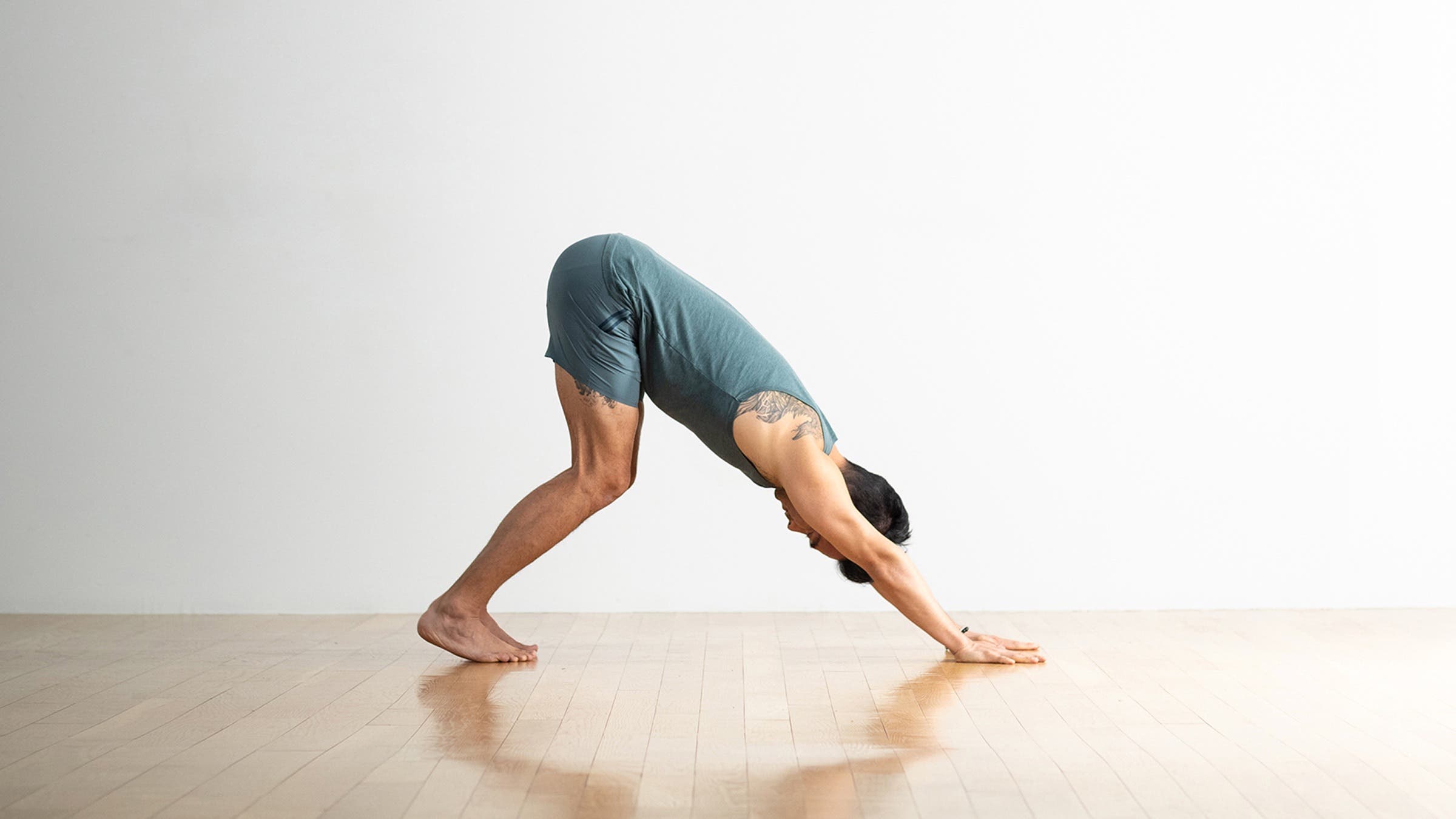
- Plank Variations and Downward-Facing Dog: A pivotal study analyzing core muscle activation across multiple yoga poses found that High Plank, Low Plank (Chaturanga), and Downward-Facing Dog (Adho Mukha Svanasana) consistently trigger high levels of external oblique activation. While Down Dog functions primarily as a muscular endurance builder rather than an explosive strengthener, it serves as an ideal thermal primer for deeper core work.
- Triangle Pose Mechanics: Research into standard Triangle Pose (Trikonasana) demonstrates that maintaining the elongated lateral shape engages the external obliques, rectus abdominis, and gluteal complexes simultaneously, as the torso works to resist gravitational collapse.
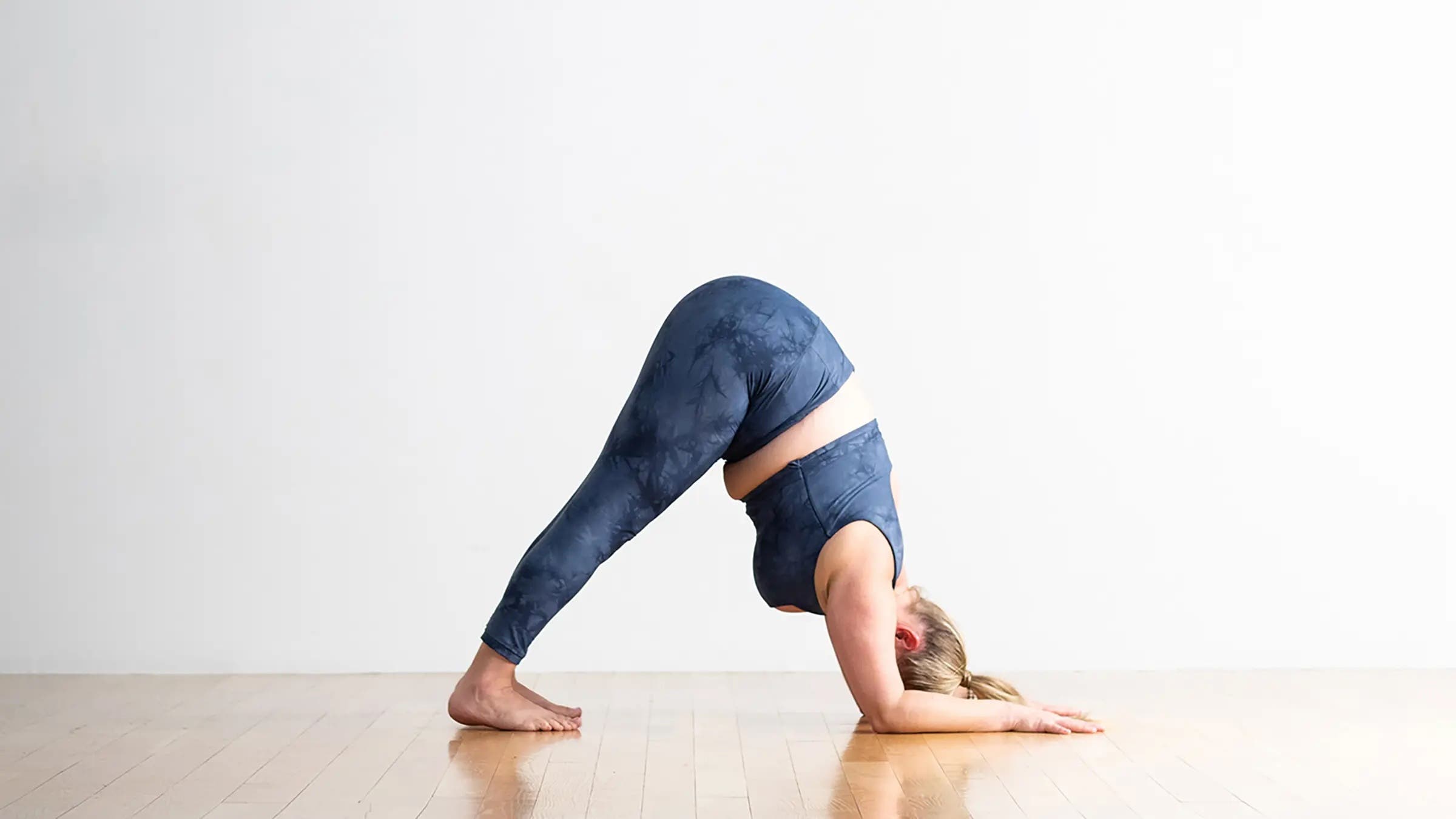
- Dolphin Pose and Spinal Support: EMG-based assessments focusing on Dolphin Pose highlight its unique efficacy in targeting both internal and external obliques, alongside the erector spinae—the vital back-body muscle group responsible for upright posture and spinal health.
Official Perspectives: Expert Insights on Functional Core Stability
Fitness professionals and movement educators emphasize that the primary job of the obliques in daily life is not to twist us into pretzels, but rather to keep us stable.
"Many people assume that yoga for oblique muscles must innately involve complicated poses in which the body is twisted or the torso is bent to one side," notes Amber Sayer. "But the internal and external obliques help ensure the torso doesn’t rotate or bend when we don’t want it to. In this way, they resist these motions as much as they assist them."
Physical therapists and personal trainers echo this sentiment, noting that anti-rotation training protects the lumbar spine from disc injuries. By teaching the abdominal wall to brace against gravity without relying on spinal flexion, practitioners build a functional armor that translates directly to everyday movements, from lifting groceries to running and cycling.
Implications: 5 Essential Yoga Poses for Oblique Strengthening
For practitioners looking to integrate these insights into their routines, Sayer recommends focusing on slow, breath-led execution. Inhalations should be directed toward the back and side ribs, keeping the mind actively connected to the lateral abdominal walls to ensure the obliques work in concert with the rest of the core.
1. Downward-Facing Dog Pose (Adho Mukha Svanasana)
- The Benefit: Acts as an exceptional baseline builder for muscular endurance, effectively activating the external obliques.
- How to Optimize: While maintaining length through the spine, subtly draw your lower ribs inward toward your front hip points to deepen engagement. Use this pose as an active warm-up.
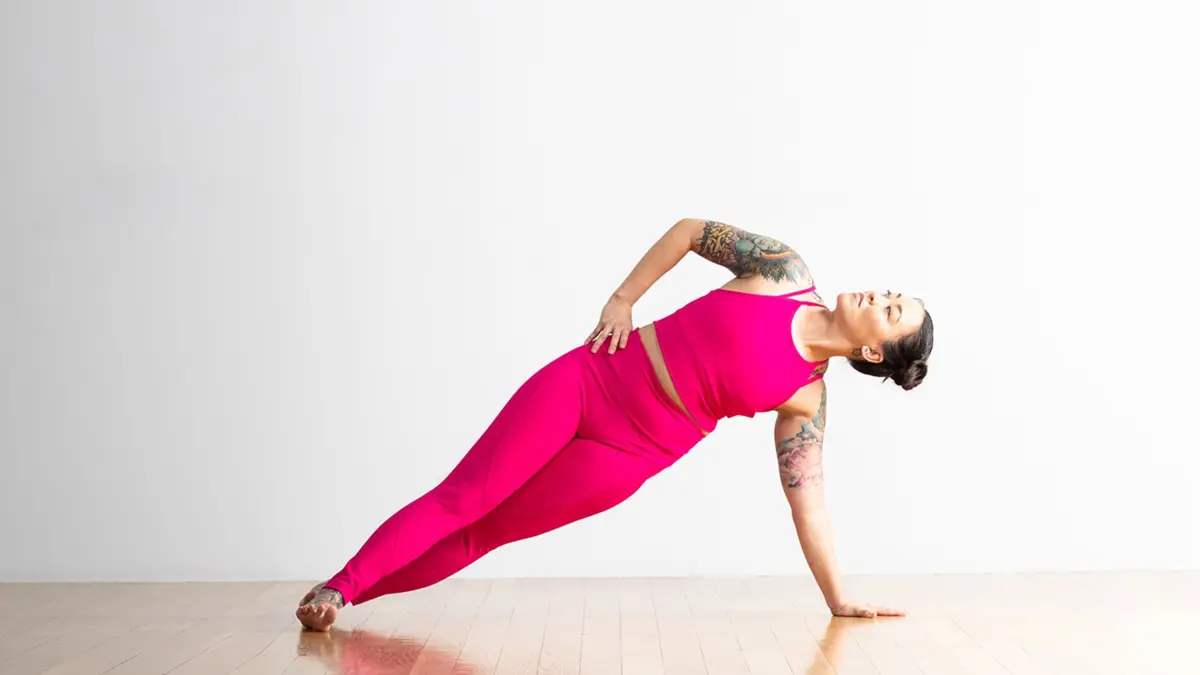
2. Fallen Triangle Pose (Patita Tarasana)
- The Benefit: A hidden gem of core sequencing that merges the foundational shape of Triangle Pose with the unilateral balance of a Side Plank and the challenge of a twist.
- How to Optimize: Beginners should master standard Triangle Pose to build coordination and side-body awareness. As upper-body strength increases, transition into Fallen Triangle, where balancing on one hand and the outer edge of one foot forces the internal and external obliques to lock into place.
3. Dolphin Pose
- The Benefit: Proven by EMG data to aggressively strengthen both sets of obliques while reinforcing the erector spinae along the back body.
- How to Optimize: Press your forearms firmly into the mat, drive your sit bones toward the ceiling, and maintain a completely neutral, uncompressed spine.
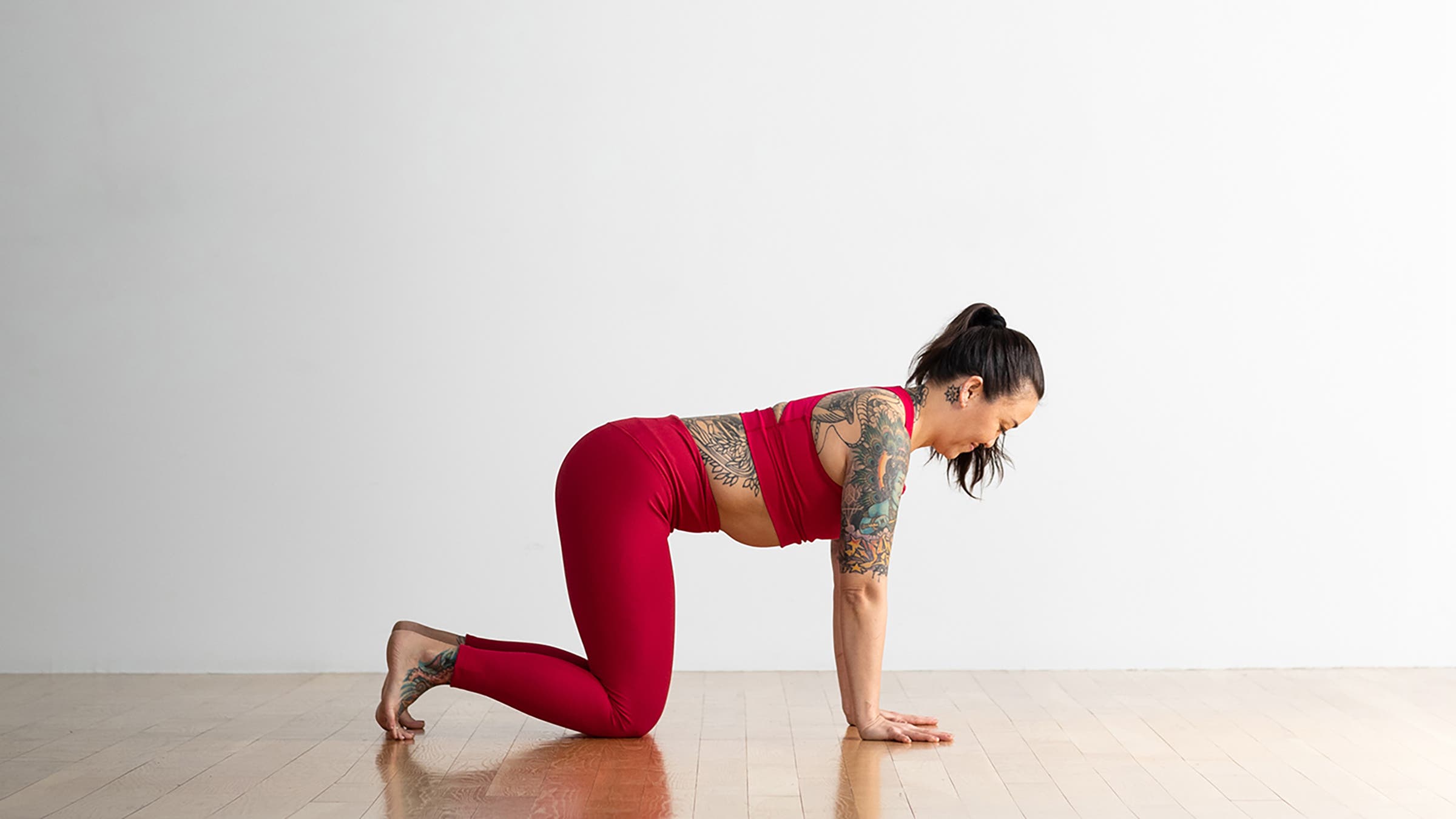
4. Bear Pose
- The Benefit: Bridges the gap between modern gym-based calisthenics and yoga. Starting in a tabletop position and hovering the knees a couple of inches off the mat challenges the entire core.
- How to Optimize: Keep your weight evenly distributed across your hands and feet. The obliques act as synergistic stabilizers here, preventing your trunk from sagging toward the floor.
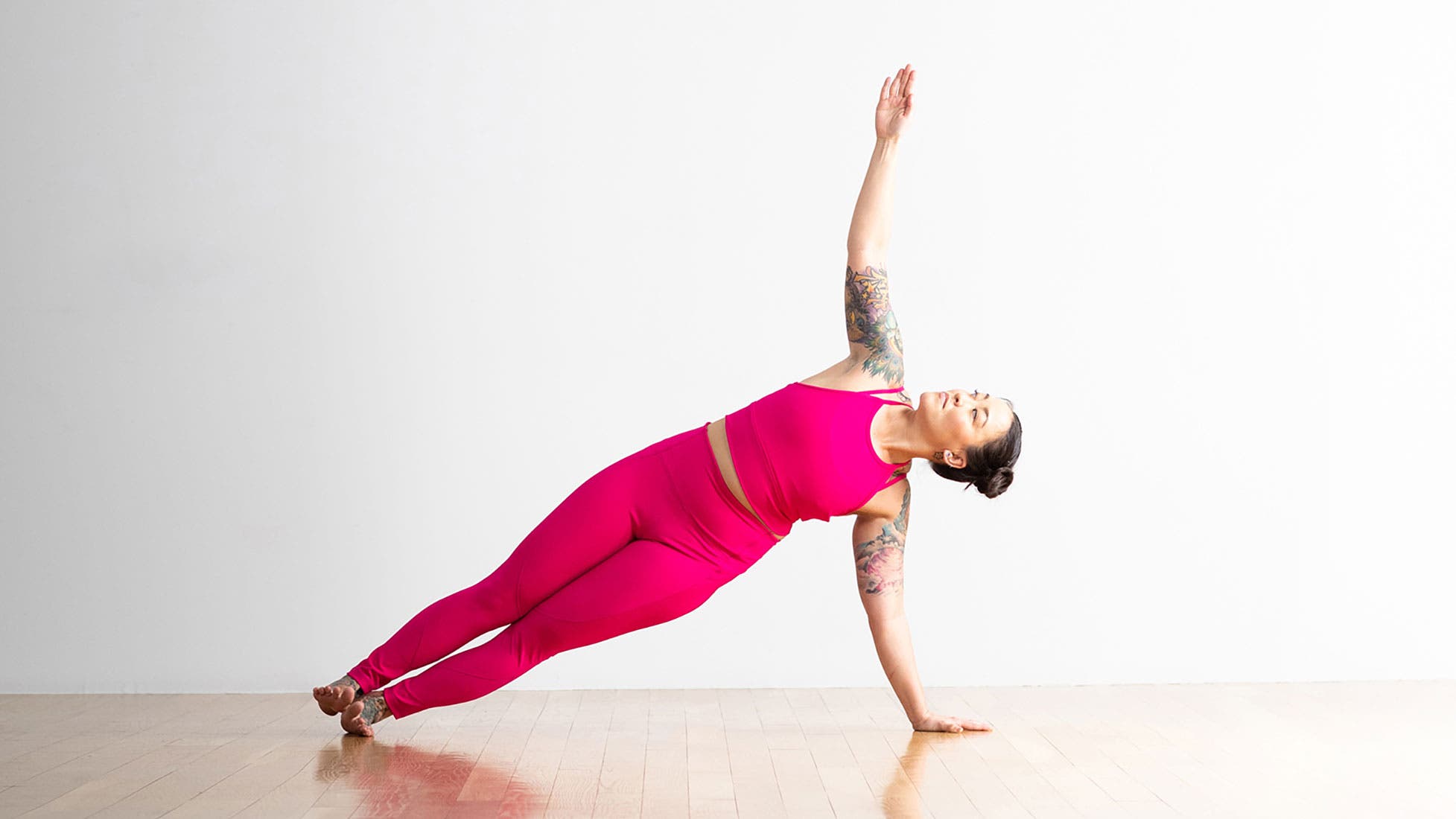
5. Side Plank (Vasisthasana)
- The Benefit: The ultimate test of lateral core strength. Because your body balances on a narrow base of support, the obliques must work overtime to prevent the hips from sinking or rotating.
- How to Optimize: Beginners can stagger their feet or drop the bottom knee to the mat to establish a stable foundation. Advanced practitioners can intensify the movement by lifting the top leg or exploring asymmetrical leg placements that demand maximum anti-rotational control.
Conclusion
Strengthening the midsection does not require punishing the spine with endless flexion exercises. By harnessing the anti-rotational power of foundational yoga asanas, practitioners can build deeply functional, resilient oblique muscles that support posture, balance, and overall physical longevity. As fitness science continues to validate ancient movement patterns, the message is clear: sometimes, the most effective way to transform your core is simply to hold your ground.
