

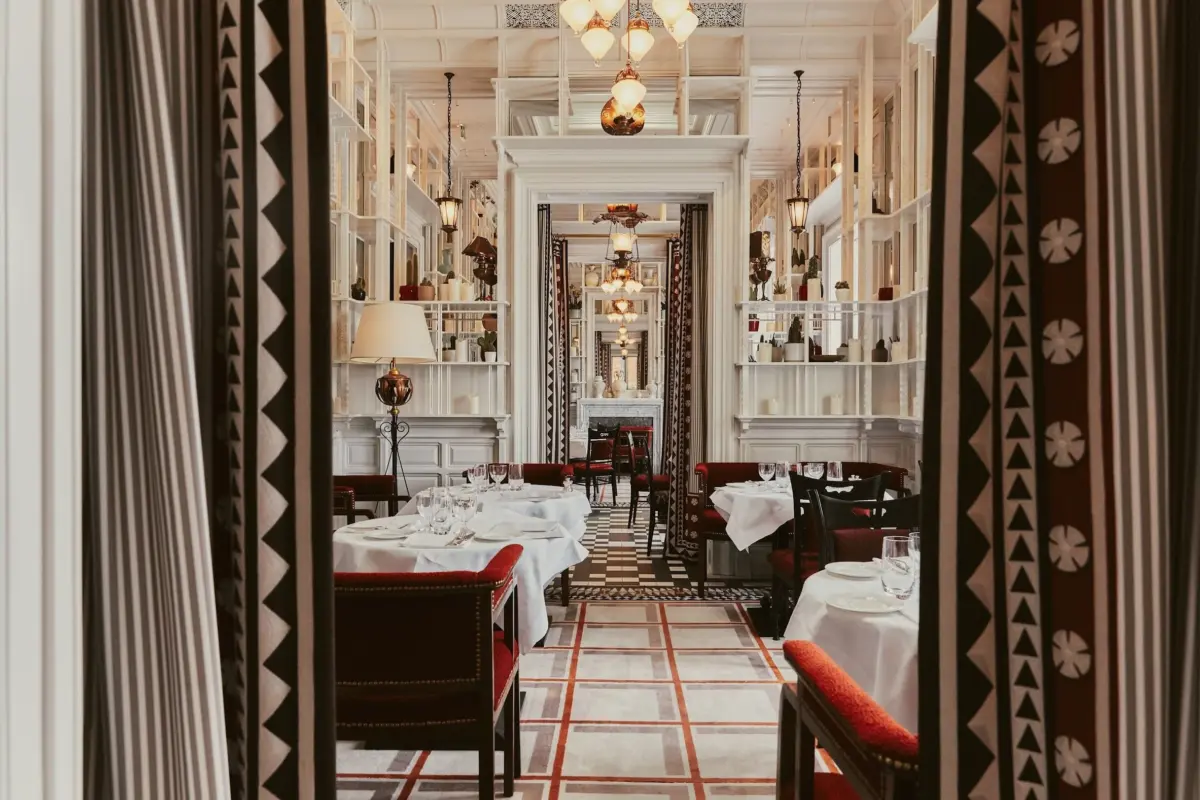
London’s hotel landscape is a fascinating study in contrasts. With over 1,500 properties scattered across the British capital, the lodging market stretches effortlessly from century-old bastions of traditional English hospitality to sleek, sustainable contemporaries that challenge conventional design norms. Whether you choose to base yourself centrally within walking distance of Soho and Mayfair’s culinary powerhouses, or retreat to the leafy, boutique-lined streets of Kensington, Chelsea, and Notting Hill, London offers a stay tailored to every aesthetic and ambition. While legendary grande dames command top-tier rates for their historic weight and peerless service, a burgeoning class of independent, design-forward hotels has emerged, providing elegant interiors and high-end amenities at more approachable price points.
Below is a curated look at London’s most striking hotels, embodying the city’s timeless charm, cosmopolitan evolution, and world-class service standards.
1. Main Facts: The Evolution of London Hospitality
The capital’s accommodation sector is currently experiencing a renaissance, driven by a dual demand for timeless heritage preservation and radical, contemporary design.

- Scale and Diversity: London boasts upwards of 1,500 hotels, catering to a vast spectrum of travelers ranging from royalty and Hollywood elites to eco-conscious digital nomads and design aficionados.
- Neighborhood Segmentation: Central locations like Mayfair and Soho put guests near iconic shopping corridors (Bond Street, Regent Street) and the West End theatre district. Conversely, western enclaves like Kensington and Chelsea offer a more residential, gallery-dense atmosphere.
- Price Spectrum: Nightly rates vary wildly, starting from around $200 for smart, hyper-local boutiques like the Grand Hotel Bellevue up to $1,300+ for legendary suites at properties like The Dorchester or Claridge’s.
- The Rise of the Independent & Design-Forward: Recent years have seen a surge in boutique properties conceptualized by global design visionaries (such as Martin Brudnizki, Patricia Urquiola, and André Fu), shifting the hospitality paradigm toward hyper-curated, residential-style spaces.
2. Chronology: A Timeline of London’s Iconic Stays
London’s hotel history mirrors the political, cultural, and architectural evolution of the city itself.
- 1812 — Claridge’s Opens its Doors: Establishing the blueprint for polished, quintessentially English service in Mayfair, evolving into a historic magnet for monarchs and international elite.
- 1837–1901 (The Victorian Era): Grand townhouses across Paddington, Kensington, and Chelsea are constructed, later laying the physical foundation for today’s intimate boutique hotels and conversion properties.
- 1930s — Art Deco Glamour Arrives: Properties like The Dorchester open their doors, captivating dignitaries, royalty, and international stars with avant-garde architecture that survives major modern renovations.
- 2019–2021 — The Modern Wave: Post-pandemic arrivals like The Standard London (bringing Brutalist cool to King’s Cross) and NoMad London (housed in the historic Bow Street Magistrates’ Court) reshape the city’s social and cultural geography.
- 2022–Present — The Suite-Only and Design-Forward Era: Openings like The Emory, The Newman, At Sloane, and the Zetter Bloomsbury redefine luxury through hyper-focused wellness amenities, private residence-style layouts, and sustainable design principles.
3. Supporting Data: Curated Hotel Profiles
The Historic Heavyweights & Grande Dames
Brown’s Hotel (Mayfair)
- Starting Rate: From $966 per night
- Key Perks: Historic design, celebrity guest roster, traditional afternoon tea, live music, and unbeatable proximity to Buckingham Palace and Hyde Park.
- Overview: Recognized as London’s oldest luxury hotel, Brown’s balances heritage (untouched entryways and stained glass) with modern updates like glossy marble bathrooms and mahogany walk-in closets. It has hosted literary legends like Rudyard Kipling, Agatha Christie, and Stephen King—who outlined Misery on-site—alongside modern film stars grabbing Sunday roast at Charlie’s.
Claridge’s (Mayfair)
- Starting Rate: From $1,259 per night
- Key Perks: Legendary Art Deco style, 24-hour butler service, a five-story basement spa, and a rooftop pool suite.
- Overview: Operating since 1812, Claridge’s remains the gold standard of English service. Fresh from a major multi-million-dollar renovation, it features shiny chinoiserie, polished salons, and world-famous festive holiday installations designed by fashion houses like Dior and Jimmy Choo.
The Connaught (Mayfair)
- Starting Rate: From £930 per night
- Key Perks: The world-renowned Connaught Bar, Hélène Darroze’s 3-Michelin-starred restaurant, and the subterranean black-granite Aman Spa.
- Overview: Tucked just off Mount Street, The Connaught pairs heritage details—corniced fireplaces and wood paneling—with cutting-edge modern comfort. Its legendary cocktail bar continues to set global standards with its tableside martini cart service.
The Dorchester (Mayfair)
- Starting Rate: From $1,300 per night
- Key Perks: 1930s Art Deco architecture, dining by Alain Ducasse, and a historic royal legacy.
- Overview: Once Eisenhower’s WWII headquarters and a favorite of Elizabeth Taylor, The Dorchester underwent a sweeping 2023 refresh by Pierre-Yves Rochon and Martin Brudnizki, preserving its glamorous social status at The Promenade and China Tang.
The Design-Forward & Boutique Contenders
The Emory (Hyde Park Corner)
- Starting Rate: From £1,140 per night
- Key Perks: All-suite layout, glass-and-steel architecture by Richard Rogers’ firm, Tracy Anderson fitness studio, and ABC Kitchen.
- Overview: Maybourne’s sleek modern addition offers a bold departure from heritage aesthetics. Six international designers, including Patricia Urquiola, shaped the interiors to feel like private residences rather than traditional hotel rooms.
The Newman (Fitzrovia)
- Starting Rate: From £930 per night
- Key Perks: Finnish spa, rooftop/penthouse cold plunge pool, and Art Deco-meets-Scandi minimalism.
- Overview: The debut property from Kinsfolk & Co features interiors by Lind + Almond, blending 1930s modernism with a moody, creative subterranean bar (Bar Gambit) and a deeply restorative wellness suite.
The Broadwick Soho (Soho)
- Starting Rate: From $711 per night
- Key Perks: Studio 54 disco aesthetic, Murano chandeliers, rooftop bar (Flute), and Dear Jackie restaurant.
- Overview: Designed by Martin Brudnizki, this eccentric 57-room bolt-hole is an ode to maximalism. Featuring custom Pierre Frey fabrics and minibars disguised as brass elephants, it pulses with authentic Soho energy.
At Sloane (Chelsea)
- Starting Rate: From $812 per night
- Key Perks: Parisian-inspired interiors by Atelier Mériguet-Carrère, secret basement bar, and prime Sloane Square location.
- Overview: Operating with a hybrid members-club and speakeasy model, this redbrick Victorian conversion channels French flair right into the heart of West London.
Neighborhood Hideaways & Quirky Retreats
- The Portobello Hotel (Notting Hill): From $731/night. Eclectic maximalism set against the pastel townhouses of West London, steps from Portobello Road Market.
- Zetter Bloomsbury: From $358/night. Created by joining six Georgian townhouses, featuring a light-filled Orangery and collected-over-time antiques inspired by the nearby British Museum.
- Grand Hotel Bellevue (Paddington): From $203/night. A quiet Victorian townhouse reimagined by Fabrizio Casiraghi and Emily Adams Bode Aujla, accessed via a discreet front door bell.
- NoMad London (Covent Garden): From $670/night. Housed in the former Bow Street Magistrates’ Court, featuring Roman and Williams’ moody aesthetics and a soaring glass-roofed atrium.
- The Standard London (King’s Cross): From $271/night. A restored Brutalist icon offering retro styling, a hip ground-floor bar, and sweeping rooftop city views.
- The Berkeley (Knightsbridge): From $1,219/night. Claridge’s playful sister property featuring a historic rooftop pool, a Cedric Grolet patisserie, and rooms styled by five distinct designers.
- The Kensington: From $496/night. Spanning seven white stucco Victorian townhouses, offering an approachable, residential atmosphere near South Kensington’s world-class museums.
- 1 Hotel Mayfair: From £500/night. An eco-conscious oasis off Green Park featuring living green walls, reclaimed timber, and a Bamford wellness spa.
- The Twenty Two (Mayfair): From $880/night. An Edwardian manor near Grosvenor Square channeling 18th-century French design with a private members’ club atmosphere.
4. Official Responses & Industry Insights
Hospitality leaders and expert editors emphasize that London’s hotel boom reflects a fundamental shift in traveler expectations.
- The Shift Toward "Home": Shopping editor Audrey Lee notes that properties like Brown’s Hotel succeed not merely due to their proximity to royal landmarks, but because their "inviting staff and dapper design… make this stay more like a home than a stopover."
- Architectural Innovation: The opening of properties like The Emory demonstrates that modern high-end travelers increasingly value privacy, spatial autonomy (all-suite models), and cutting-edge wellness infrastructure over traditional, high-density hotel floor plans.
- Sustainability as a Baseline: With brands like 1 Hotel Mayfair pioneering zero-waste architecture, living walls, and filtered water systems, eco-consciousness has transformed from a niche marketing angle into an operational requirement for new luxury developments.
5. Implications: What This Means for Travelers and the Local Economy
The diversification and expansion of London’s hotel market carry profound implications for tourism, urban development, and traveler behavior:
- Democratization of Boutique Design: While historic institutions like Claridge’s and The Dorchester continue to serve high-spending traditionalists, the arrival of independent, mid-to-high tier design hotels (such as The Newman, Zetter Bloomsbury, and Grand Hotel Bellevue) allows design-conscious travelers to access world-class interiors at more competitive price points.
- Geographic Dispersion of Tourism: By establishing luxury and lifestyle properties in transitional or residential districts—such as King’s Cross (The Standard), Paddington (Grand Hotel Bellevue), and Fitzrovia (The Newman)—hospitality developers are successfully alleviating tourist congestion in traditional hubs like Mayfair and Covent Garden, distributing economic benefits across a wider array of London neighborhoods.
- Wellness Integration: The heavy investment in subterranean spas, hydrotherapy pools, and partnerships with elite fitness brands (such as Tracy Anderson at The Emory and BXR at The Twenty Two) highlights a permanent lifestyle shift. Modern luxury travelers no longer view fitness and wellness as holiday indulgences, but as core components of their travel itinerary.
