

SAN FRANCISCO — For centuries, meditation has been celebrated as a transformative pathway to mental clarity, emotional equilibrium, and spiritual awakening. From ancient monastic traditions to modern corporate boardrooms, millions turn to the practice to quiet the incessant chatter of the conscious mind. Yet, anyone who has ever attempted a prolonged meditation retreat or even a modest thirty-minute sitting session is intimately familiar with the physical hurdles that inevitably arise.
While practitioners often learn to observe physical discomfort—such as throbbing knees, aching lower backs, tense shoulders, and creeping waves of lethargy—as transient phenomena of the mind and body, overcoming these physical barriers can significantly deepen the practice. Bridging the gap between physical tension and mental stillness requires preparation. According to wellness experts, integrating a few targeted, restorative yoga postures before and after a meditation session can profoundly transform the experience, alleviating physical strain and allowing the practitioner to focus entirely inward.
The Physical Toll of Stillness: Main Facts
Meditation is fundamentally a mental discipline, but it is experienced entirely through a physical medium. Sitting cross-legged or in the traditional lotus position for extended periods places unique stress on the human musculoskeletal system. When the body is unaccustomed to prolonged floor sitting, gravity exerts a heavy toll.
Common physical complaints reported by meditators include:
- Joint Compression: Sharp or dull aches in the knees, hips, and ankles resulting from tight connective tissues.
- Spinal Fatigue: Slouching or rounding of the upper and lower back due to core fatigue, which strains the spinal erectors.
- Upper Body Tension: Tightness in the shoulders, neck, and jaw from unconscious stress retention.
- Circulatory Stagnation: Numbness and tingling in the legs and feet caused by compressed blood vessels and nerves.
While a core tenet of many meditative traditions—such as Vipassana or Zen—is to witness pain without aversion, physical agony can easily hijack attention. When a practitioner spends forty-five minutes wrestling with the sensation that their knees are being subjected to a pressurized drill, little mental space remains for tranquility.
To mitigate this, Zen priest and experienced yoga teacher Victoria Austin emphasizes that yoga and meditation were historically designed to complement one another. "A simple sequence of stretches can prepare the vessel for stillness," Austin notes, ensuring that physical aches do not prematurely abort a session.
A Historical Retrospective: Chronology of Body-Mind Integration
The synthesis of physical movement (asana) and contemplative stillness (dhyana) is far from a modern wellness trend; it is deeply rooted in the ancient lineages of Eastern philosophy.
- Ancient Roots (Pre-Classical to Classical Era): In foundational texts such as the Yoga Sutras of Patanjali, physical postures are primarily described as a means to steady the body so that the mind can sit comfortably in meditation (Sthira Sukham Asanam). Historically, asanas were minimalist—largely seated shapes designed to condition the body for hours of unbroken breathwork and contemplation.
- The 20th-Century Western Awakening: As yoga and meditation migrated to the West in the mid-to-late 20th century, practitioners encountered a population whose bodies were largely shaped by sedentary desk jobs, driving, and chair-sitting. The traditional cross-legged seat became an instrument of torture for tight Western hips and hamstrings.
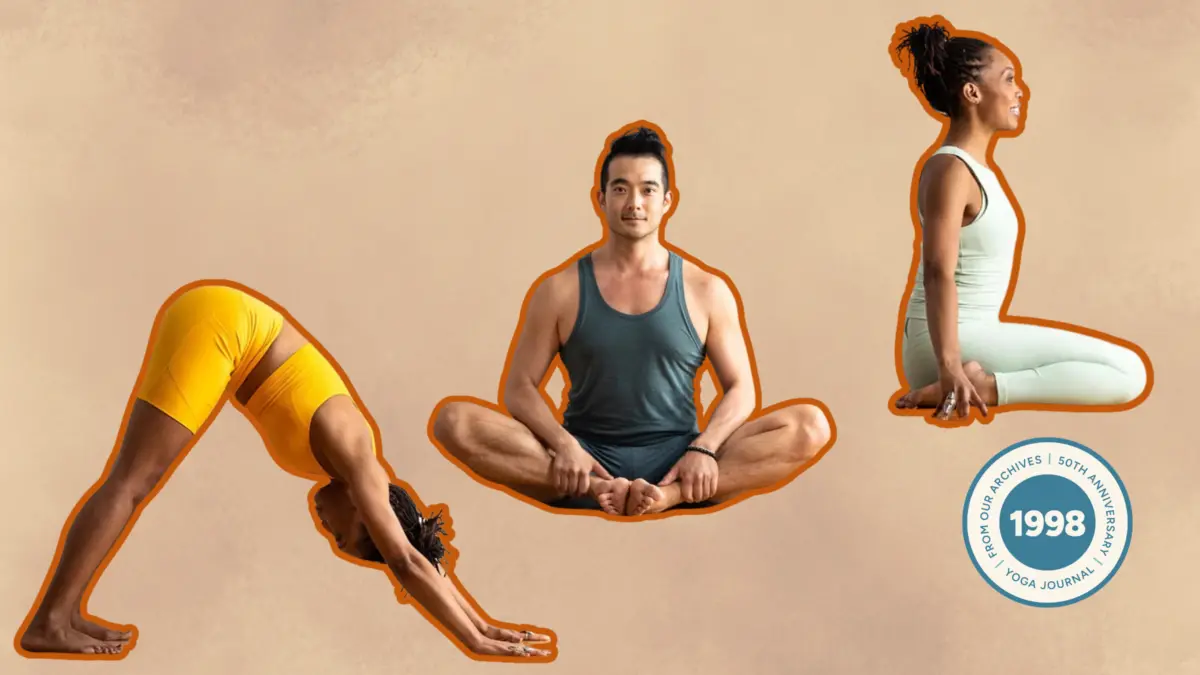
- The 1998 Yoga Journal Archives: Recognizing this widespread physical friction, publications like Yoga Journal began documenting practical integrations. A landmark feature originally published in the September–October 1998 issue detailed specific pre- and post-meditation movement routines curated by teachers like Victoria Austin.
- Modern Resurgence (Present Day): Today, the integration of somatic movement before meditation is widely recognized across secular mindfulness-based stress reduction (MBSR) programs and traditional monasteries alike, validating the 1998 insight that physical priming is essential for deep mental focus.
The Four Essential Postures: Supporting Data and Mechanics
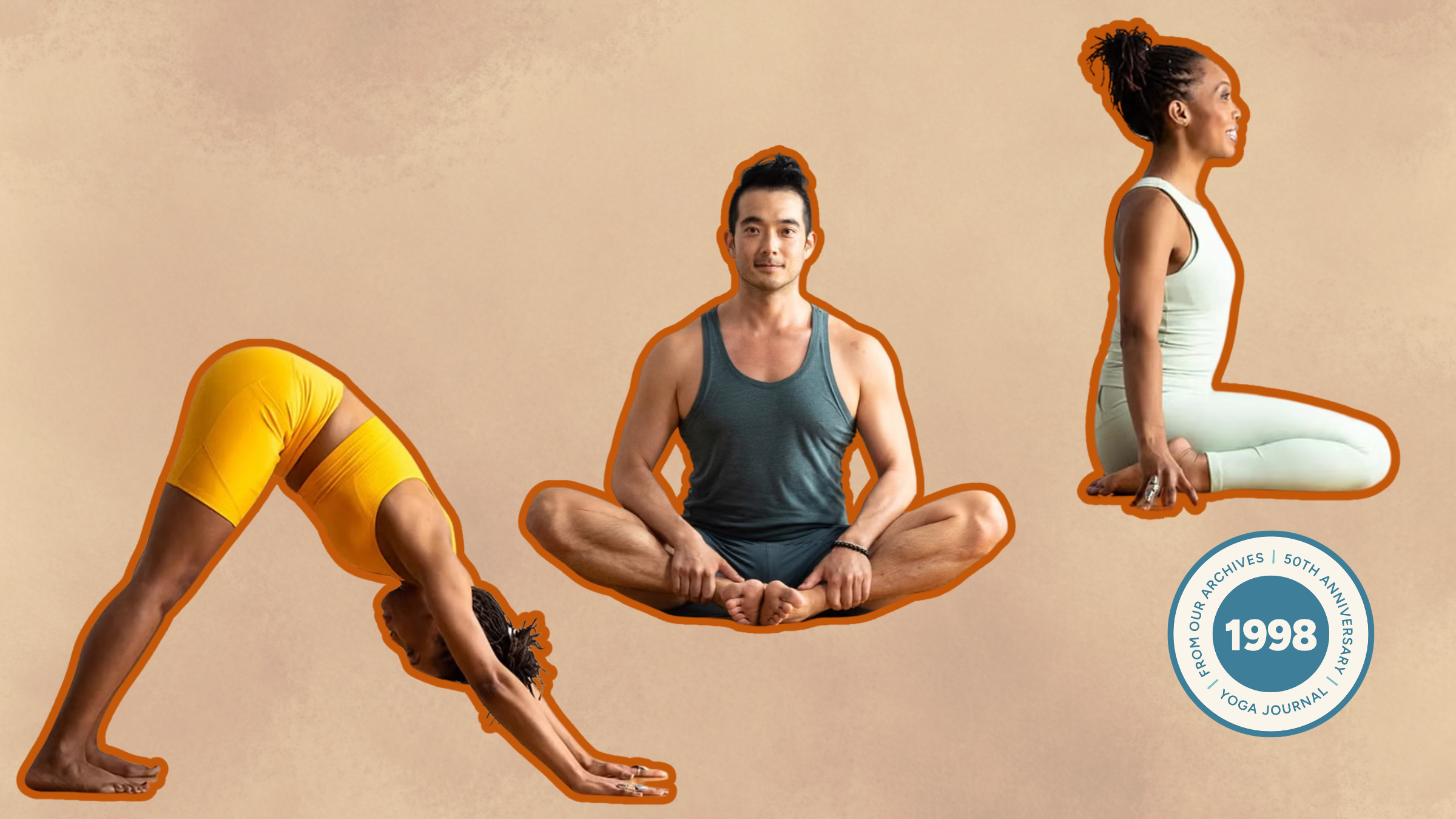
To prepare the body for stillness and gently reset it afterward, Austin recommends four foundational yoga postures. Each targets specific muscle groups prone to contraction during meditation.
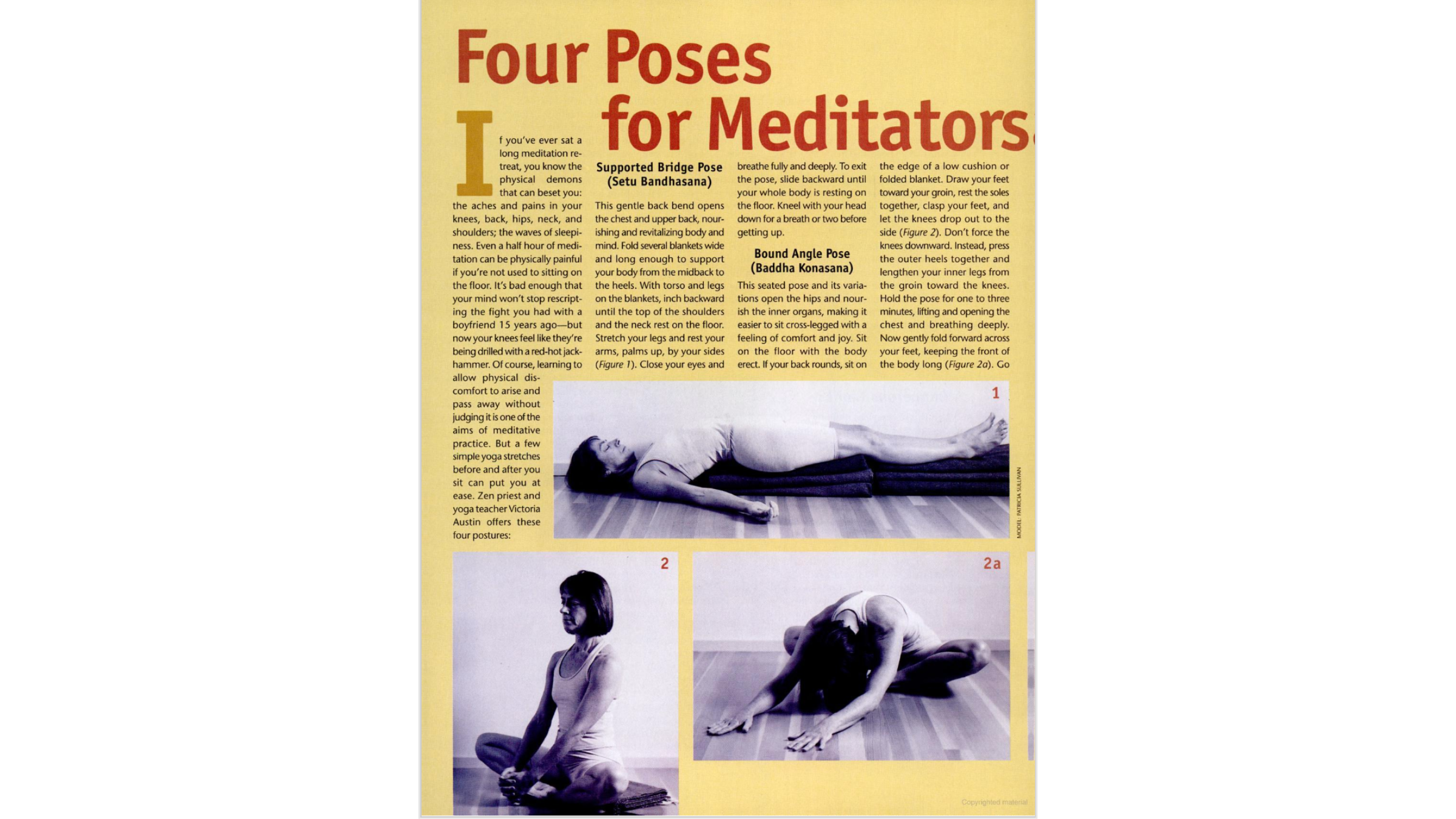
1. Supported Bridge Pose (Setu Bandhasana)
- The Mechanics: This gentle, restorative backbend opens the chest, shoulders, and upper back while encouraging deep, diaphragmatic breathing. By reversing the forward slump characteristic of modern desk work, it nourishes and revitalizes both body and mind.
- Execution: Fold several blankets wide and long enough to support the entire torso from the mid-back to the heels. Lie back with the torso and legs supported by the blankets, then inch backward until the top of the shoulders and the neck rest comfortably on the floor. Extend the legs and rest the arms by the sides with palms facing upward.
- Transition: Close the eyes and breathe deeply. To exit, slide backward until the entire body rests flat on the floor, then pause in a kneeling position with the head bowed for a breath or two before rising.
2. Bound Angle Pose (Baddha Konasana)
- The Mechanics: Often referred to as Cobbler’s Pose, this seated posture targets the adductors, opens the tight hip joints, and stimulates the abdominal organs. It lays the anatomical foundation for comfortable, upright, cross-legged sitting.
- Execution: Sit on the floor with an erect spine. If the lower back tends to round, elevate the hips by sitting on the edge of a low cushion or folded blanket. Draw the feet inward toward the groin, bringing the soles together while allowing the knees to drop outward. Avoid forcing the knees down; instead, press the outer heels together and lengthen the inner legs from the groin to the knees.
- Variations: Hold the upright posture for one to three minutes with deep breathing. Gently fold forward across the feet while maintaining length in the front body. For restorative deep rest, recline backward onto a bolster or stacked blankets with the groin soft and open, releasing the belly on every exhalation.
3. Hero Pose (Virasana) with Shoulder Stretches
- The Mechanics: Kneeling postures like Virasana stretch the quadriceps, knees, and ankles—areas that tighten significantly during long periods of immobility. Adding upper body movements releases the shoulder girdle and neck.
- Execution: Kneel with the calves folded alongside the thighs and the buttocks resting between the feet (use a cushion or block between the feet if knee strain occurs). Clasp the hands, turn the palms outward, and press the arms overhead for five to ten deep breaths.
- Shoulder Integration: Follow this by bending the right arm overhead with the elbow pointing upward, and sweeping the left arm up from behind the lower back to clasp hands (using a strap if fingers do not meet). Hold for five to ten breaths before switching sides.
4. Downward-Facing Dog Pose (Adho Mukha Svanasana)
- The Mechanics: Described by Austin as the ultimate reset button after intensive practice (sesshin), Downward-Facing Dog is a hybrid posture functioning simultaneously as a forward bend, an inversion, a standing pose, and a mild backbend. It stretches the hamstrings and calves, strengthens the upper body, improves cerebral circulation, and balances the nervous system.
- Execution: Begin on all fours with palms spaced shoulder-width apart and feet hip-width apart. Exhale to straighten the legs, lifting the thighs upward and backward. Lengthen the torso from the palms to the sit bones while pressing the heels down toward the floor.
- Restorative Adaptation: Placing a wooden yoga block or a stable stack of books on the mat to support the forehead transforms the pose into a deeply soothing, restorative experience. Hold for 10 to 20 slow, deliberate breaths.
Expert Insights and Official Responses
Contulative instructors and somatic therapists increasingly emphasize that forcing the body into meditation without preparation can lead to chronic muscular holding patterns and aversion to the practice itself.
Dr. Elena Vance, a somatic movement specialist based in Seattle, notes that physical preparation acts as a neurological safety signal. "When we signal to the nervous system through gentle, opening asanas that the body is safe, supported, and free of acute tension, the amygdala relaxes. This downregulation is what allows the practitioner to transition smoothly from ‘fight-or-flight’ stress into deep parasympathetic meditation," Vance explains.
Furthermore, traditional teachers echo these findings. Monastic leaders across various Zen and Vipassana centers have updated their orientation guidelines to encourage gentle stretching during break periods. Rather than viewing physical movement as a distraction from meditative austerity, contemporary contemplative science views bodily care as an essential pillar of sustained mental discipline.
Implications for Daily Practice and Mental Wellness
The integration of targeted yoga postures into a meditation regimen carries far-reaching implications for both individual wellness routines and broader clinical mindfulness applications.
- Reduction of Dropout Rates: Many beginners abandon meditation because physical pain makes the practice feel punishing. By eliminating unnecessary musculoskeletal discomfort through pre-meditation stretching, retention and consistency in daily practice improve dramatically.
- Enhanced Neuroplasticity and Focus: When physical distractions are minimized, cognitive resources can be redirected toward mindfulness anchors—such as the breath or bodily sensations. This deepens the neurobiological benefits associated with meditation, including reduced cortisol levels, improved emotional regulation, and enhanced grey-matter density in areas related to attention.
- Holistic Mind-Body Synergy: The practice reinforces the non-dualistic philosophy underlying ancient wellness traditions: the mind cannot find peace if the physical house is in distress. By honoring the physical vehicle through mindful movement, practitioners cultivate a more compassionate, integrated relationship with themselves.
Ultimately, whether you are preparing for a rigorous multi-day silent retreat or simply trying to carve out ten minutes of morning calm before a busy workday, taking a few minutes to open the heart in Bridge Pose, release the hips in Bound Angle, lengthen the thighs in Hero Pose, and refresh the nervous system in Downward Dog can change everything. As the archives of Yoga Journal suggested over two decades ago, true mental stillness begins by making friends with your physical body.
