

By the Editorial Desk
Published in partnership with In5D.com
Main Facts
For generations, popular astrology has been dominated by a single, reductionist question: "What’s your sign?" Millions of people worldwide readily identify as a Libra, a Leo, or a Pisces based entirely on their Sun sign. However, contemporary astrological practitioners and esoteric researchers argue that this widespread practice captures only a fraction of an individual’s psychological and emotional architecture.
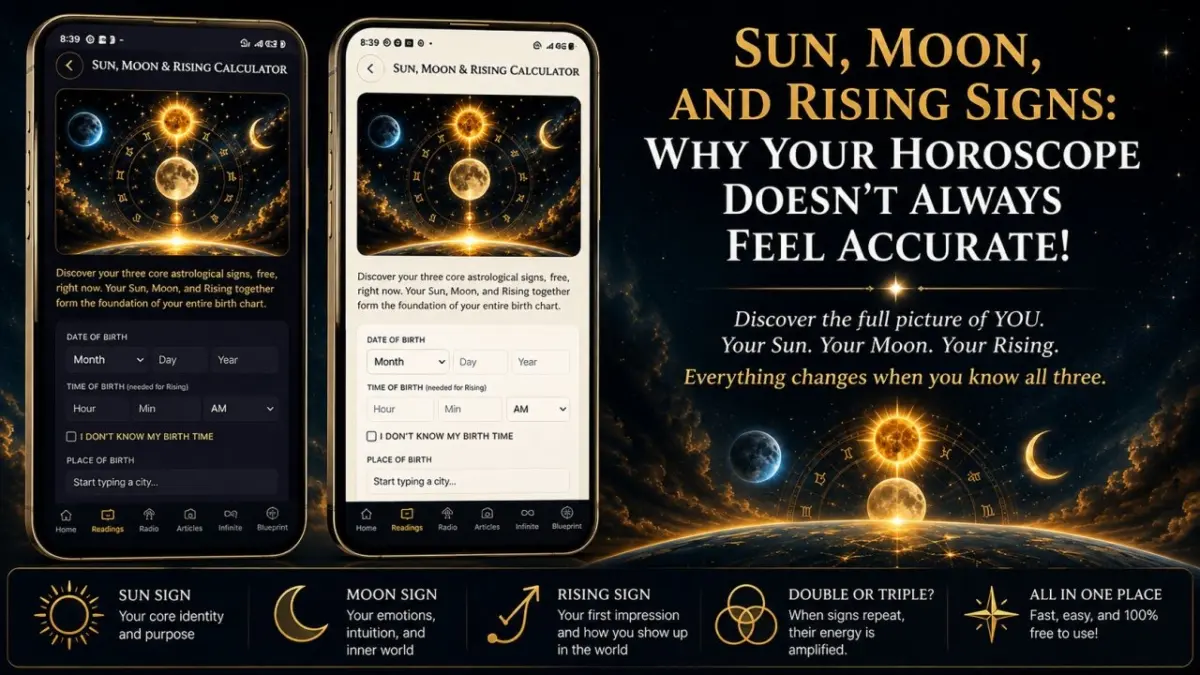
According to Gregg Prescott, M.S., founder and editor of In5D.com, relying solely on a Sun sign is akin to reading a single chapter and claiming to understand an entire book. To truly comprehend human behavior, emotional processing, and social presentation, individuals must look to their "Big Three":
- The Sun Sign (Core Identity)
- The Moon Sign (Emotional Landscape)
- The Rising Sign / Ascendant (External Presentation)
Furthermore, recent interest has surged around rare astrological configurations where individuals possess "double" or "triple" placements—sharing the exact same zodiac sign across their Sun, Moon, and Rising houses. Such configurations amplify specific elemental and modal traits, offering profound insights into why traditional daily horoscopes often feel misaligned with an individual’s lived reality.

Chronology and Evolution of Modern Astrology
The popularization of astrology dates back to the early 20th century, when newspaper columns first began distilling complex planetary calculations into easily digestible daily horoscopes.
- Early 20th Century: The birth of the modern Sun-sign horoscope column. To make astrology accessible to the general public, astrologers categorized the entire global population into twelve distinct buckets based solely on the Gregorian calendar date of birth. While effective for mass media, this approach stripped away the intricate mathematical frameworks historically used by traditional astrologers.
- The Late 20th Century (The Rise of Esoteric Databases): With the advent of personal computing and early internet forums, astrological software began making birth charts accessible to everyday enthusiasts. People could finally calculate their exact planetary positions—provided they knew their precise birth times.
- Present Day (The Digital App Era): Platforms like the In5D Infinite app have streamlined this process further, offering automated, instant calculations for complex multi-point charts. This technological shift has transitioned public curiosity away from generic Sun-sign horoscopes and toward holistic natal chart analysis, empowering users to decode their comprehensive astrological profiles free of charge.
Supporting Data and Astrological Mechanics
Understanding why a daily horoscope frequently misses the mark requires examining the distinct mechanical roles played by each of the Big Three astrological pillars.
1. The Sun Sign: The Foundation of Core Identity
Determined by the precise position of the Sun at the exact moment of birth, the Sun sign dictates an individual’s overarching life purpose, vitality, and core ego. It represents the conscious self—the person you are striving to become and the fundamental traits you naturally gravitate toward over a lifetime.
2. The Moon Sign: The Internal Emotional World
While the Sun represents the outward-facing ego, the Moon governs the internal landscape. It dictates how an individual processes emotions, instinctual reactions, and intuitive promptings in private. Because the Moon changes zodiac signs approximately every two to three days, two people born under the same Sun sign can exhibit wildly divergent emotional responses to identical crises. The Moon sign explains why a typically calm, grounded individual might react with unexpected intensity or vulnerability behind closed doors.

3. The Rising Sign (Ascendant): The Social Mask
The Rising sign marks the zodiac constellation ascending on the eastern horizon at the precise minute of birth—making an accurate birth time non-negotiable for its calculation. The Ascendant governs first impressions, physical mannerisms, and the energetic armor or filter through which a person interacts with the outside world. For instance, a naturally introverted and sensitive Cancer Sun may project a charismatic, bold exterior if supported by a Leo Rising.
The Phenomenon of Double and Triple Signs
When an individual exhibits the same zodiac sign across multiple foundational pillars—such as a Double Virgo or a Triple Libra—the behavioral characteristics of that sign are intensely magnified.
Citing his own personal experience, Gregg Prescott recounts discovering he is a "Triple Libra" (Libra Sun, Moon, and Rising) after having his chart run by colleague Helane Lipson. Far from representing the stereotypical, effortless equilibrium often attributed to the sign, a Triple Libra reveals a psyche in constant pursuit of balance. It explains both a deep-seated drive for diplomacy and community-building, alongside the quintessential Librarian struggle with decision fatigue—navigating the polarities of "A" and "Z" while struggling with the intermediate steps.
Expert Perspectives and Community Implications
Astrologers and psychological researchers suggest that expanding public awareness beyond simple Sun-sign horoscopes fosters deeper empathy and interpersonal understanding.

When individuals recognize that compatibility and personal temperament are governed by a complex matrix of elemental energies (Fire, Earth, Air, and Water), interpersonal conflicts soften. For example, understanding that a partner’s reactive emotional outbursts stem from a water-dominant Moon sign—rather than malice—changes the dynamic of interpersonal relationships.
"Once you start looking up the Sun, Moon, and Rising signs of your family and friends, you’ll probably begin understanding them on a much deeper level, too," notes Prescott, emphasizing that self-awareness naturally spills over into compassion for those in our immediate social circles.
Broader Implications and Future Outlook
The shift from generalized pop-astrology to personalized natal chart literacy carries significant implications for the wellness and self-help industries.
- De-stigmatization of Complexity: Society is moving away from rigid, one-size-fits-all personality categorizations. Tools that incorporate multi-layered astrological reports validate the multifaceted nature of human psychology.
- Technological Accessibility: The integration of free digital tools—such as the calculator featured on the In5D Infinite application—democratizes esoteric knowledge, moving it out of exclusive consulting rooms and placing it directly into the hands of everyday seekers.
- Enhanced Self-Actualization: By acknowledging the interplay between core purpose (Sun), emotional processing (Moon), and social presentation (Rising), individuals are better equipped to navigate career choices, mental health strategies, and relationship dynamics.
As accessibility to birth-time tracking and instantaneous chart generation continues to expand, the question "What’s your sign?" is rapidly evolving into a more nuanced inquiry: "What does your whole chart say?"
