

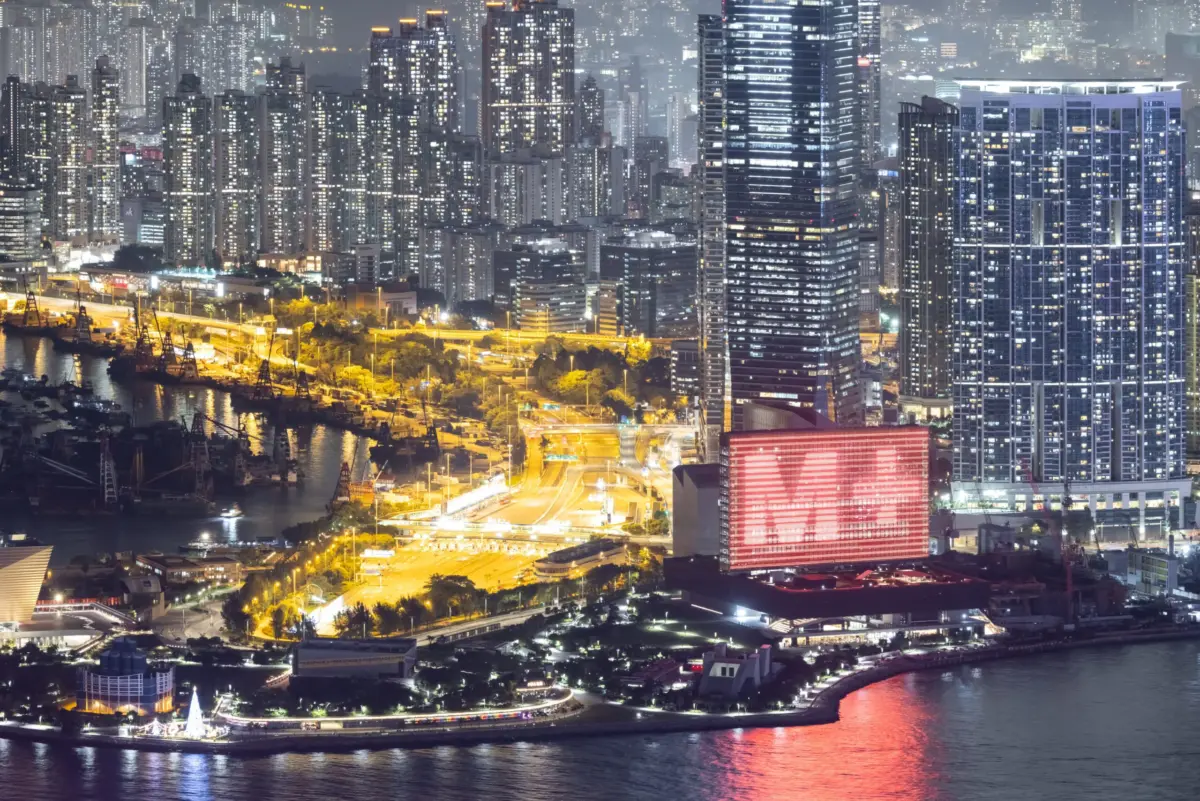
In recent years, Hong Kong’s art, design, and architecture scene has undergone a profound renaissance. Sparked in part by the late 2021 opening of the M+ museum—a monumental cultural anchor designed by Herzog & de Meuron—the city has cemented its status as a global nexus for contemporary creativity. This momentum is continually reinforced by the annual expansion of Art Basel Hong Kong, first launched in 2013, which now serves as the gravitational pull for thriving satellite events such as Art Central and the Edible Art Fair.

Landmark architectural additions continue to reshape the skyline at a breathtaking pace. The city recently celebrated the unveiling of the WestK Performing Arts Centre (WestK PAC), designed by UNStudio, which joins the recently completed, Zaha Hadid-designed tower known as The Henderson. The latter has not only redefined commercial real estate but also houses Christie’s Hong Kong headquarters and Peridot, an eye-popping, lime-green cocktail lounge.

Yet, to define Hong Kong solely by its gleaming towers is to miss its heartbeat. "There’s the impression of Hong Kong as a hyper-efficient financial capital, all modern skyscrapers," says interior designer and Hong Kong native Vincent Lim, who returned to the city in 2015 after a decade in New York. "But the Hong Kong we love is more textured than that."

Spend even a couple of days here, and you realize that these glass monoliths are inextricably interspersed with traditional street stalls, wet markets, family-run businesses, and vintage cha chaan tengs—the colonial-era cafes still serving piping hot milk tea, buttered toast, and pork chop rice. "The layering of the city is what makes it special," Lim adds.

Laura Cheung, founder of decorative furnishings brand Lala Curio, agrees that it is the atmospheric alleyways and decades-old shops framed by vintage neon signs that prove especially alluring to design lovers. "I can’t think of another city where, in its prime commercial center, you still have these little family-run antiques shops and fruit stalls lined with red and blue canvas," she notes. "But then there’ll be a hidden door, and inside that, the chicest speakeasy lounge."

To decode this city of contradictions, we turned to five of Hong Kong’s leading design insiders for their personal, highly curated recommendations on where to stay, eat, shop, drink, and wander.

Meet the Experts
- Pak Man Lee: Founder and CEO of Nuovo, a contemporary design gallery in the Central district renowned for its experimental exhibitions.
- Vincent Lim & Elaine Lu: The husband-and-wife team behind Lim + Lu, an award-winning interdisciplinary interior design practice.
- Frank Leung: Founder and principal of architecture firm Via, celebrated for high-end residential, commercial, and hospitality projects, including the Kimpton Tsim Sha Tsui.
- Laura Cheung: Founder of Lala Curio, a luxury interiors brand specializing in bespoke handmade wallpapers and cloisonné tiles.
Where to Stay: Architectural Sanctuaries
Hong Kong’s hospitality sector balances high-octane urban luxury with pockets of profound tranquility.

- Rosewood Hong Kong: "We often recommend Rosewood Hong Kong for its exceptional attention to detail in both design and hospitality," says Elaine Lu. "The restaurants are among our favorites, the harbor views are spectacular, and the service always feels warm and genuine."
- The Upper House: Designed by André Fu, Vincent Lim notes that it "feels remarkably calm and residential despite being in the heart of the city. The restrained palette and thoughtful detailing demonstrate how architecture can create a genuine sense of serenity."
- The Peninsula Hong Kong: "I grew up coming to The Peninsula, and it remains one of Hong Kong’s great icons," shares Laura Cheung. "Its colonial heritage, timeless architecture, and impeccable hospitality embody the city’s unique blend of British elegance and Asian warmth."
- Kimpton Tsim Sha Tsui: Frank Leung highlights this recent waterfront addition, which his firm helped design. "The arrival experience celebrates Hong Kong’s artistic spirit with a curation of pieces by local photographers and ceramicists. Don’t miss the rooftop pool and lounge for sunset cocktails."
- Mandarin Oriental, Hong Kong: "Hong Kong’s grande dame is still the one that feels like the city itself," says Pak Man Lee. "The heritage, the service, the sense of occasion—there’s nothing quite like it."
Culinary Landscapes: Where to Eat
From humble neighborhood noodle shops to contemporary fine dining, Hong Kong’s food culture is a masterclass in contrasts.

- Yardbird: Frank Leung’s top pick for out-of-town guests. Located in Sheung Wan, chef-owner Matt Abergel serves exceptional yakitori alongside playful merchandise.
- Roganic: Elaine Lu praises Simon Rogan’s contemporary, seasonally focused dining, noting that its culinary restraint aligns closely with her design philosophy.
- Ju Xing Home: A down-to-earth Prince Edward gem beloved by local chefs after hours, famous for seafood dishes and exceptional boiled hand-cut beef.
- Yung Kee & Chiuchownese Noodle Shop: Essential institutions. Yung Kee serves legendary roast goose for generational family milestones, while the Sai Ying Pun noodle shop offers comforting, simple soup noodles.
Cafes and Time Capsules
- Mido Café (Yau Ma Tei): Opened in the 1950s, its stained-glass windows and mosaic floors make it a living time capsule.
- Cheung Hing Coffee Shop (Happy Valley): Vincent Lim’s go-to spot for the city’s best pineapple bun.
- Halfway Coffee: Featuring salvaged furniture and vintage cups, its newest branch on the Peak boasts hand-sculpted counters and glorious sunset views.
Where to Drink: Speakeasies and Sonic Bars
- b.a.r. Executive Bar: A hidden, appointment-only Japanese-style bar in Causeway Bay recommended by Pak Man Lee for precise, understated mixology.
- Paragon: Anchored by high-end speakers, vinyl records, and the iconic 1964 Karuselli Chair by Yrjö Kukkapuro.
- Bar Leone: Laura Cheung praises its lively, unpretentious atmosphere, exceptional cocktails, and brilliant Italian comfort food.
Best Neighborhoods for Wandering
Tsim Sha Tsui East
Pak Man Lee highlights this zone for its nostalgic 1990s energy, housing architectural gems like the Royal Garden atrium (built in 1981), Champagne Court, and historic outposts of the Tai Ping Koon Restaurant.

Ap Lei Chau & Wong Chuk Hang
Hong Kong’s burgeoning Southside art district. By riding the freight lifts, visitors uncover stacked galleries—such as Gold, Exit, Axel Vervoordt, and Ben Brown—alongside warehouse shopping at Horizon Plaza.

Sheung Wan
Vincent Lim describes Sheung Wan as the ultimate starting point for visitors. Beginning at Man Mo Temple, the neighborhood unfurls into antique shops, independent galleries, and weathered tong楼 (tong lau) tenement buildings.

Sham Shui Po & Star Street Precinct
While Sham Shui Po balances traditional hardware and textile trades with a rising creative cafe culture, the Star Street Precinct feels like a hidden village filled with boutiques, galleries, and fine dining.

Where to Shop for Design Objects
- Crack and Anecdote & Select 18: Essential stops for one-of-a-kind vintage curiosities and Chinese antiques.
- Pedder Arcade: Located on the fifth floor of the historic Pedder Building, this fine menswear mecca houses The Armoury, a whiskey library, and rare book collections.
- Yuet Tung China Works: Established in 1928, this Kowloon Bay workshop is a treasure trove of hand-painted, neo-vintage ceramics.
- Lala Curio: Laura Cheung’s flagship at The Peninsula reinterprets centuries-old Asian craftsmanship through cloisonné tiles and hand-painted wallcoverings.
Museums, Galleries, and Natural Escapes
No architectural tour of Hong Kong is complete without experiencing its cultural institutions and surprising proximity to nature. Alongside the architectural triumph of M+ and Pak Man Lee’s contemporary collectible design gallery Nuovo, design enthusiasts should explore Tai Kwun—Herzog & de Meuron’s masterful adaptive reuse of a colonial police station—and the Asia Society Hong Kong Center, designed by Tod Williams Billie Tsien Architects.

When urban fatigue sets in, the city’s rugged topography offers instant relief. Frank Leung recommends hiking the Wilson Trail on Hong Kong Island or the Lo Fu Tau Trail on Lantau Island. Whether riding the historic Star Ferry across Victoria Harbour at dusk or exploring the serene Tang-style architecture of Tsz Shan Monastery, Hong Kong proves that its true magic lies in its infinite, textured layers.
