

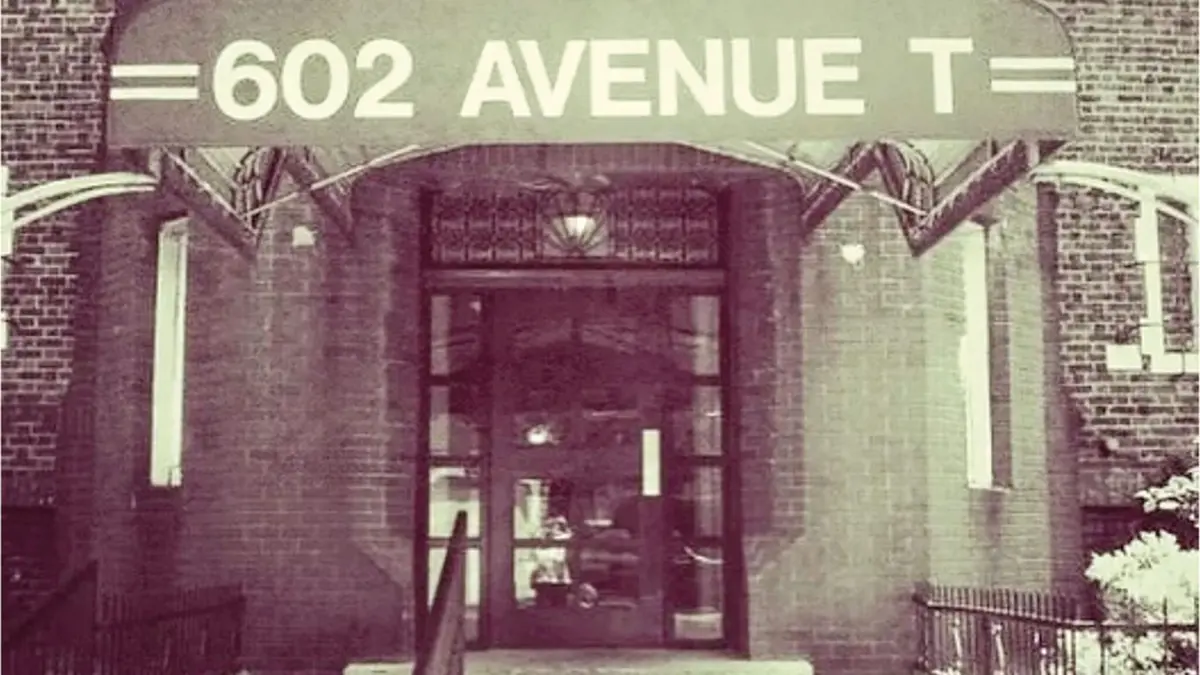
Main Facts: A Reluctant Return to Avenue T
In the autumn of 1991, writer and culinary professional Elissa Altman found herself at a profound personal and professional crossroads. Freshly untethered from her first serious romantic breakup and having recently transitioned out of New York City’s high-energy late-eighties food scene into the publishing world, Altman faced an acute housing crisis. With few viable options remaining, she made a reluctant pilgrimage across the boroughs to 602 Avenue T, near Coney Island—an hour-and-a-half subway ride from the cultural pulse of Greenwich Village.
The destination was her long-deceased grandmother’s apartment, a time capsule preserved since 1933. For nearly six decades, Altman’s father and aunt had maintained the lease, dutifully paying the $142 monthly rent as a psychological safety net—a financial buffer meant to catch family members in the event of job loss, divorce, or absolute destitution. Altman, having checked off nearly every iteration of those "just in case" scenarios, stepped across a threshold she had once vowed never to cross again.
The move stripped away her familiar coping mechanisms, chief among them cooking. Upon arrival, her father handed her two housewarming tokens: a one-liter bottle of Bombay Sapphire gin and a stark, uncompromising warning regarding the kitchen appliance. "Don’t make assumptions about what you can and cannot do," he cautioned, before delivering the ultimatum: leave the stove strictly alone, as it possessed the dangerous potential to explode.
Chronology: From Dean & DeLuca to the Stoops of Brooklyn
To understand the magnitude of Altman’s displacement in 1991, one must trace the trajectory of her preceding years in New York City’s gastronomic vanguard.
- Late 1980s (The Culinary Zenith): Altman immersed herself completely in the city’s burgeoning food culture. By day, she worked at the legendary specialty market Dean & DeLuca; by night, she attended cooking school; and on weekends, she operated a catering business out of her tiny walk-up apartment.
- The Culinary Landscape: This era was marked by stylistic whiplash—a collision between avant-garde presentations (such as vertical plating and spun-sugar nests) and a rustic revival of cucina povera (peasant cooking). The shelves of Dean & DeLuca reflected this dichotomy, juxtaposing hyper-modern kitchen tweezers and early sous-vide circulators with handmade French rolling pins, bird’s-beak radish-carving knives, and traditional, rust-prone Sabatier chef’s knives.
- 1991 (The Pivot to Brooklyn): Facing professional burnout and personal heartbreak, Altman exited the professional food industry and returned to publishing. The refuge she sought in cooking was instantly revoked upon moving into the Avenue T apartment. With an ancient stove rendered unusable by threat of combustion, her culinary instincts were effectively grounded.
- The Discovery of Avenue U (1991–1993): Unable to walk to her grandmother’s traditional Jewish purveyors for kosher chickens, brisket, and challah, Altman pivoted two blocks away to the neighborhood’s Italian enclave on Avenue U. There, she encountered a thriving ecosystem of independent, specialty storefronts: a salumeria, a macelleria, a formaggeria, an alimentari, a fishmonger, a greengrocer, and a wine shop.
- The 18-Month Apprenticeship: For a year and a half, Altman shopped daily on Avenue U, developing an informal, profound mentorship with the neighborhood’s formidable Italian grandmothers. It was here that she learned the foundational ethos of her future writing and philosophy: the "beginner’s mind."
- 1993 (Departure): Altman packed her belongings, turned over the keys to her father—who finally relinquished the lease after nearly sixty years—and closed the chapter on Avenue T.
Supporting Data: The Economics and Ecology of a Lost New York
The preservation of 602 Avenue T offers a fascinating data point in the history of New York City housing, generational wealth, and neighborhood micro-economies:
- Rent Stabilization and Longevity: Initiated in 1933, the tenancy at 602 Avenue T endured for nearly 60 years. Even with gradual increases over decades, the monthly rent hovered at an astonishingly low $142 by the time Altman moved in—a figure that underscores the vanishing landscape of pre-war rent stability in the outer boroughs.
- Urban Food Desries and Micro-Retail: The transition from Avenue T to Avenue U highlights the rich, hyper-local food infrastructure of mid-century and late-century Brooklyn. Within a two-block radius, Avenue U maintained a fully integrated vertical web of food commerce based on daily provisioning rather than bulk, weekly supermarket sweeps.
- The Culinary Artifacts of 1988–1990:
- High-Tech/Precision: Sous-vide circulators (in their infancy), kitchen tweezers, glossy black Pontiac-steering-wheel-sized chargers.
- Traditional: Sabatier carbon-steel knives, Cornishware, French rolling pins, bird’s-beak turning knives.
- The Prescription for Survival (The Butcher’s Paper List): The ingredient list thrust into Altman’s hands by an exasperated Avenue U matriarch bypassed modern convenience foods entirely, focusing on raw, foundational elements: olive oil, Parmigiano, porcini mushrooms, garlic, butter, bread, sage, ricotta, eggs, and fresh lasagna sheets.
Official Responses and Cultural Echoes: The Philosophy of the Beginner’s Mind
While the neighborhood grandmothers of Avenue U possessed no formal training in Eastern philosophy, their pragmatic dismissal of Altman’s culinary anxieties directly mirrored ancient Zen principles.
When Altman complained about her inability to cook due to the dangerous, unusable oven, the women laughed off her technical limitations. "You don’t need no oven," they told her. "You need to think like a baby, not like a robot."
This street-level instruction anticipated the core teachings of Japanese Zen master Shunryu Suzuki (1904–1971), founder of the San Francisco Zen Center and author of the seminal 1970 text Zen Mind, Beginner’s Mind. Suzuki defined the beginner’s mind (shoshin) as an attitude of openness, eagerness, and lack of preconceptions. As Suzuki famously wrote: "In the beginner’s mind there are many possibilities, but in the expert’s there are few."
The grandmothers of Avenue U embodied shoshin through every impatient sigh, dropped shoulder, and scribbled list on brown butcher’s paper. They forced Altman to abandon her rigid, professionalized "expert" identity—honed in high-end Manhattan kitchens and culinary schools—and approach a single clove of garlic, a bunch of sprouting broccoli, and a stovetop as if encountering them for the very first time.
The first meal Altman engineered under these constraints—porcini-stuffed ravioli with brown butter and sage, executed entirely on the stovetop—became a metaphor for her entire relationship with creativity and existence.
Implications: Beyond Food to the Art of Living
Reflecting on her time at Avenue T, acclaimed author and James Beard Award winner Elissa Altman (known for her work including Poor Man’s Feast: A Love Story of Comfort, Desire, and the Art of Simple Cooking) recognizes that her career has never truly been about food.
Instead, the kitchen has always served as a laboratory for human survival. The lessons learned under the watchful, critical eyes of Brooklyn’s matriarchs extended far beyond the stovetop, permeating every facet of adult existence: romance, career pivots, aging, caregiving, financial precarity, and the messy, nonlinear progression of personal growth.
As the seasons turn—marking the transition from the safety of summer’s warmth into the crisp, fifty-nine-degree onset of autumn when wild porcini mushrooms reappear in local markets—Altman’s philosophy remains anchored to the asphalt of Avenue U.
To embrace the beginner’s mind is to accept the discomfort of not knowing, to relinquish the illusion of total control, and to greet every changing season, every unexpected crisis, and every single onion as if it were entirely new. In the gorgeous imperfection of humanity, Altman asserts, that radical openness is the only way forward.
