

The modern landscape of clean technology reporting is increasingly vulnerable to the rapid, often unvetted spread of viral content. Recently, the clean tech community was captivated—and deeply divided—by claims made across various online platforms regarding Donut Lab and its advanced battery cells. Critics, led by online analysts and digital content creators, aggressively argued that Donut Lab’s innovative cells were secretly traditional Nickel Manganese Cobalt (NMC) lithium-ion batteries wrapped in clever marketing.
However, a closer look at rigorous independent testing, paired with revealing empirical observations from both professional facilities and everyday observers, has completely dismantled these assertions. The evidence shows that Donut Lab’s cells—specifically the heavily scrutinized DL1, DL2, and DL3 variants—are categorically not NMC batteries. This controversy serves as a major cautionary tale about the perils of mistaking social media commentary and unverified YouTube claims for empirical science.
Main Facts: The Core of the Battery Controversy
At the heart of the debate is a fundamental question of materials science: Are Donut Lab’s advanced battery cells genuinely novel solid-state or bipolar formulations, or are they simply standard liquid-electrolyte NMC cells repackaged to look revolutionary?
Critics pointed to voltage discharge curves, arguing that subtle "bumps" and end-point similarities constituted a unique "fingerprint" proving the cells were traditional NMC chemistry. Prominent online critics, including a creator known as Ziroth, disseminated these theories, which were subsequently picked up by several tech-focused YouTube channels and news outlets. The narrative quickly gained traction under the broad banner of "scientists say," creating a rush to judgment that framed Donut Lab’s innovations with deep skepticism.
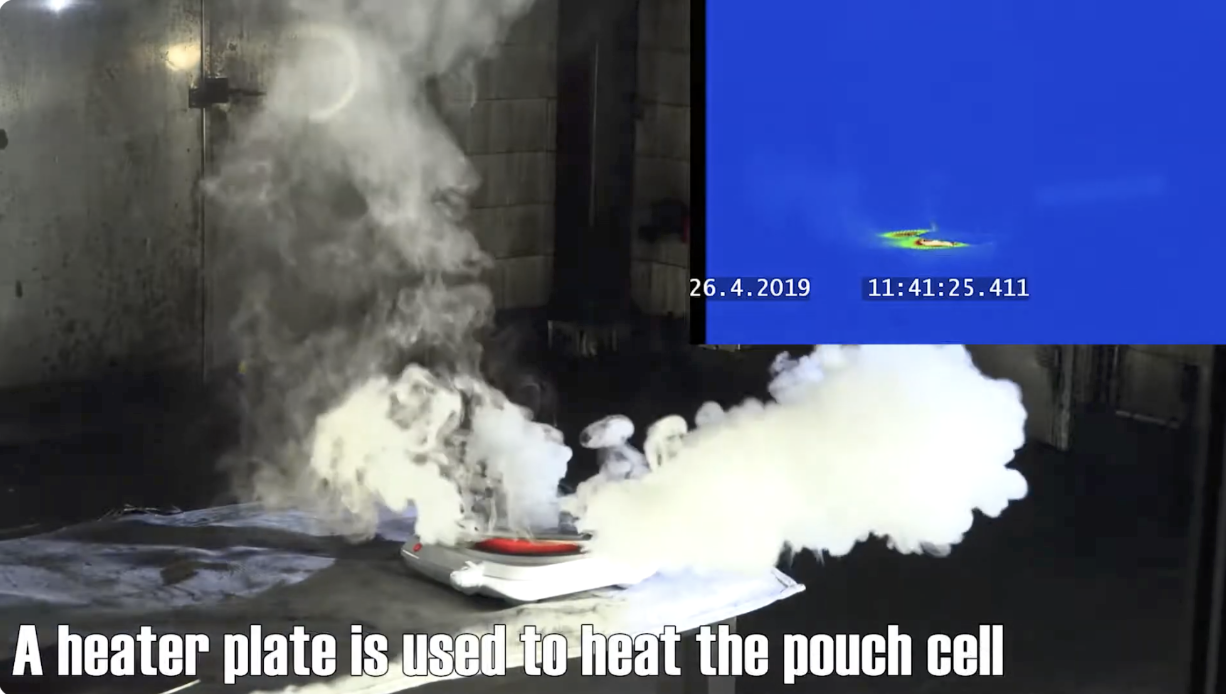
Yet, physical reality tells a completely different story. When subjected to severe thermal and mechanical stress tests—the ultimate arbiter of battery chemistry—Donut Lab’s cells behaved in a manner fundamentally incompatible with NMC chemistry:
- Thermal Stress Resistance: Traditional NMC pouch cells rely on liquid electrolytes that begin to decompose at roughly 100 degrees Celsius (212 degrees Fahrenheit). This decomposition generates massive internal gas pressures, causing the pouch to balloon like an excited pufferfish, turn exothermic, and frequently breach, smoke, or catch fire.
- The "Pop-Tart" Profile: Donut Lab’s DL2 battery, when subjected to 100-degree Celsius environments for extended periods (four hours or more), retained its flat profile—affectionately likened to a Pop-Tart—without ballooning, off-gassing, or generating exothermic heat.
- Mechanical Torture: Subsequent nail penetration tests performed on Donut Lab cells resulted in no fire, no explosion, no smoke, and no sudden temperature spikes—outcomes that are entirely impossible for standard, volatile NMC cells.
Chronology: How the Controversy Unfolded
To fully understand how misinformation proliferated and was subsequently corrected, it is essential to trace the timeline of events, testing milestones, and public discourse.
Phase 1: Initial Deployments and Independent Laboratory Testing
Months prior to the public controversy, Donut Lab submitted its early-generation cells—designated DL1, DL2, and DL3—for professional evaluation to independent testing facilities, including VTT (a prominent research center). Concurrently, cells like DL3 underwent rigorous fast-charge testing at elevated temperatures, establishing baseline performance metrics.
Phase 2: The Rise of the "NMC" Allegation
As performance data and voltage curves circulated online, critics began analyzing the telemetry. Drawing parallels between voltage endpoints and theoretical curves, online analysts claimed to have discovered a definitive "fingerprint." Ziroth and other digital commentators publicly asserted that Donut Lab’s cells were, in fact, standard NMC chemistry. This claim spread like wildfire across YouTube channels and tech blogs, often presented as an exposed industrial secret.
Phase 3: The Backyard Experiment and the Turning Point
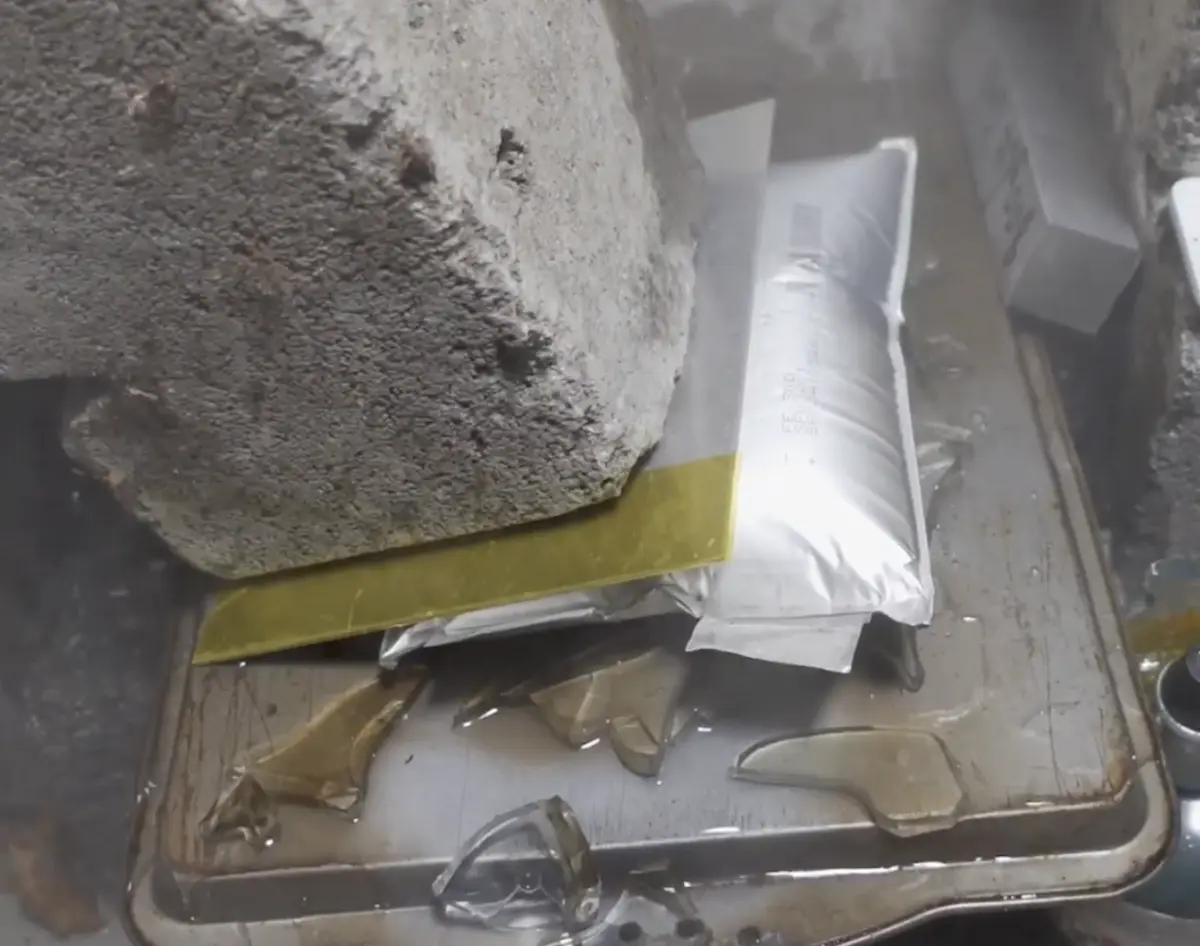
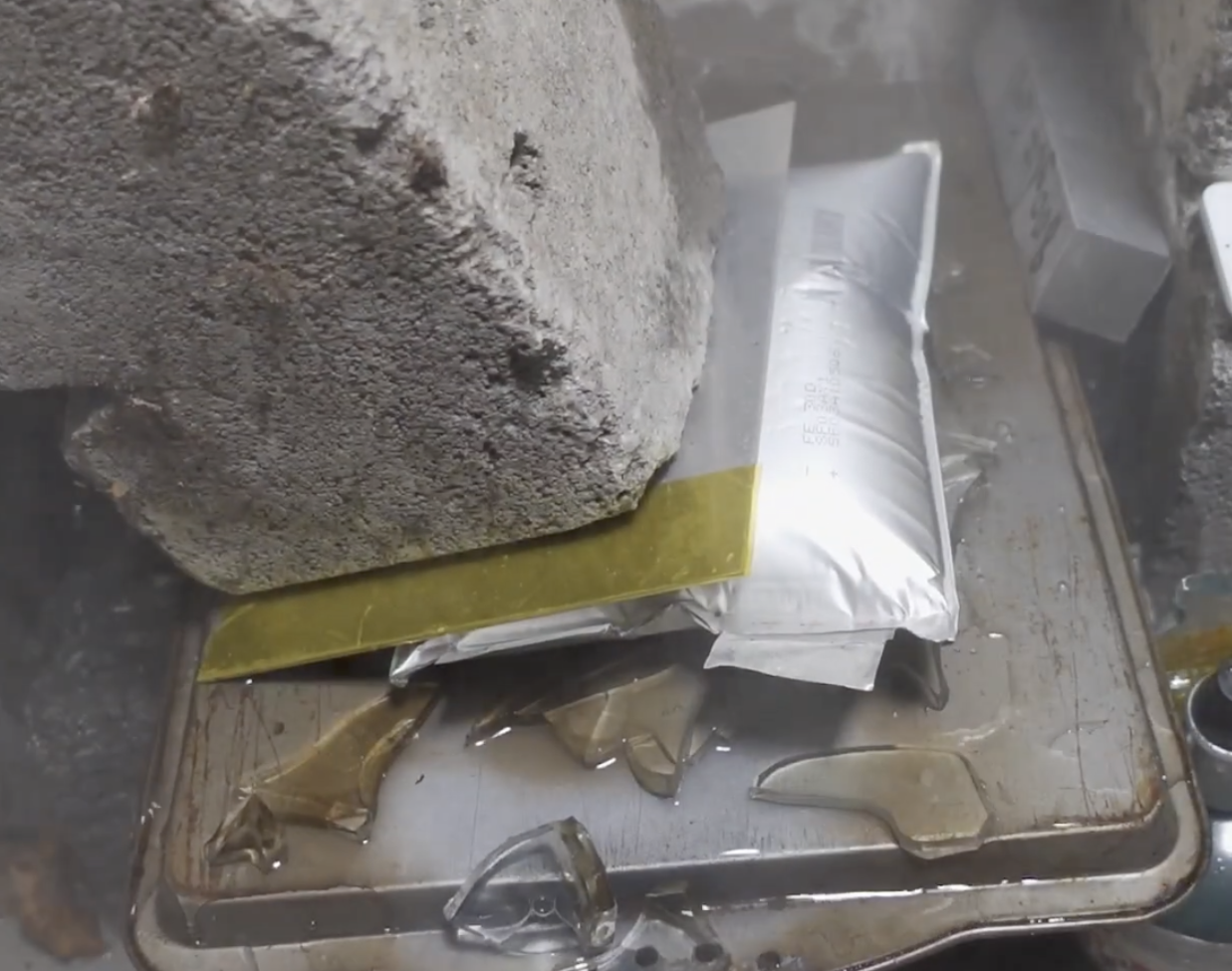
The narrative began to fracture thanks to empirical reality. An astute observer on Reddit decided to test the thermal limits of an actual NMC pouch battery by placing it in a boiling water bath at 100 degrees Celsius, weighed down by a heavy cinderblock brick. Within a short time, the internal gas pressure of the NMC battery became so extreme that it forcefully displaced the heavy brick and catastrophically disrupted the experiment.
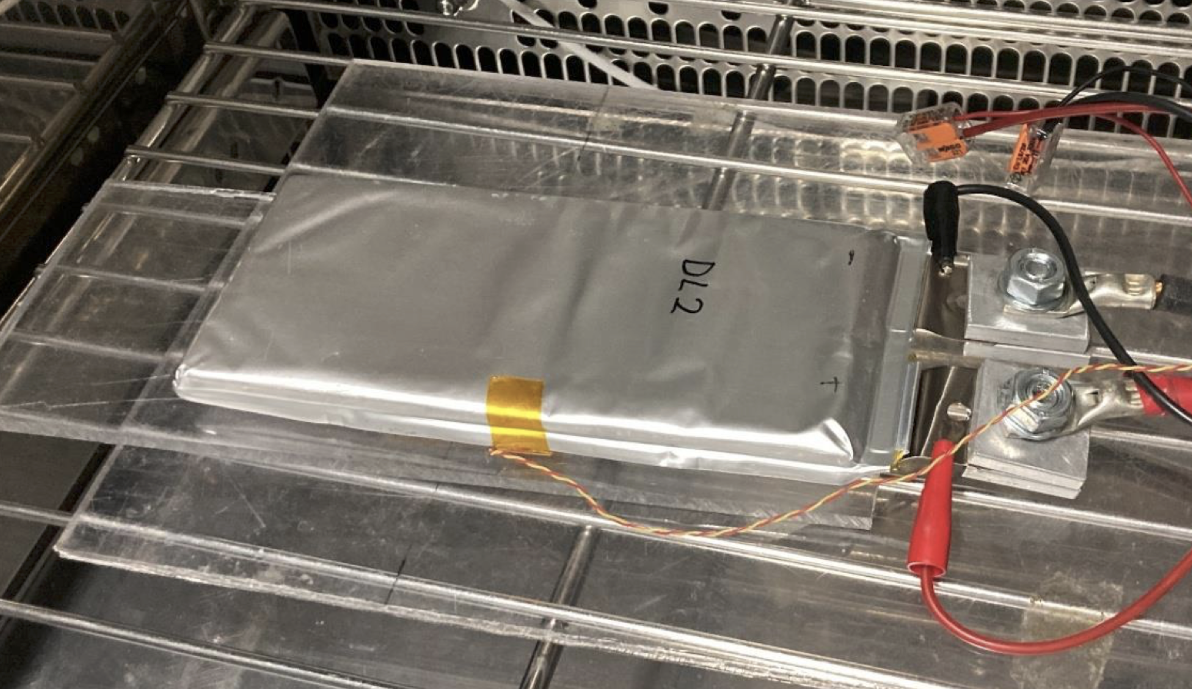
When compared side-by-side with official testing footage of Donut Lab’s DL2 cell—which endured 100 degrees Celsius for four hours without expanding, ballooning, or losing structural integrity—the flaw in the critic’s argument became glaringly obvious.
Phase 4: Nail Tests and Final Verification
Following the thermal stress discrepancies, Donut Lab subjected its cells to invasive nail-penetration testing. The absolute absence of thermal runaway, smoke, or fire provided definitive proof that the cells lacked the volatile liquid electrolytes characteristic of NMC chemistry. Furthermore, testing confirmed their bipolar architecture, reinforcing their classification as advanced solid-state designs.
Supporting Data: Disproving the "Fingerprint" and "Bump" Theories
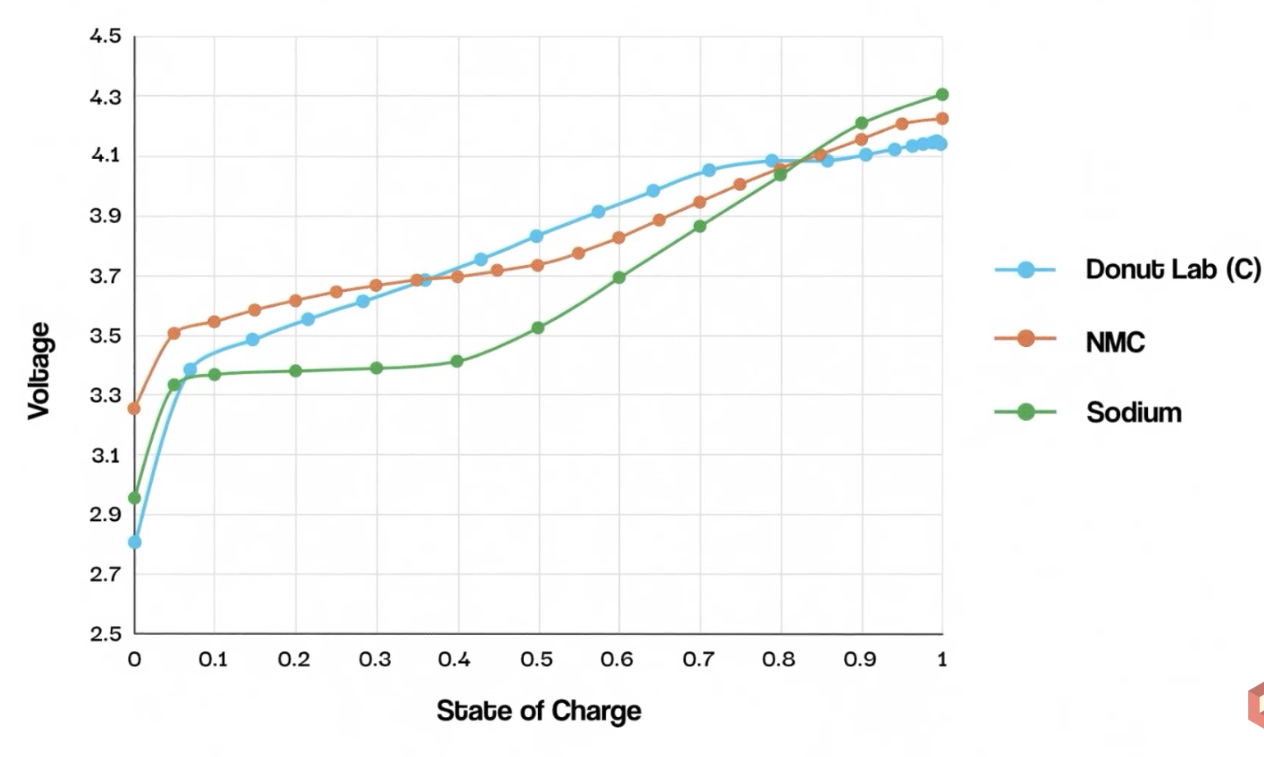
A central pillar of the criticism against Donut Lab relied on the informal "unique fingerprint" and "bump" theories. Critics argued that the specific voltage curves of DL1, DL2, and DL3 matched the behavior of NMC batteries during discharge cycles.
However, advanced materials science dictates that voltage curves alone are not infallible proof of chemistry. Chemical dopants, specialized coatings, and novel cell architectures can easily be engineered to mimic specific voltage endpoints or curve behaviors. As independent analysis demonstrated, none of the disputed voltage curves matched a standard NMC profile exactingly. Shoehorning complex, proprietary cell chemistries into preconceived, rigid molds based on superficial curve similarities violates basic analytical logic. A theory of uniqueness is instantly invalidated the moment a single valid exception is found—and the physical behavior of Donut Lab’s cells at 100 degrees Celsius provided that exception definitively.
Furthermore, thermal data from the VTT testing reports (covering DL1, DL2, and DL3) showed an absolute lack of the exothermic heat generation that is thermodynamically mandatory for a liquid-electrolyte NMC cell undergoing prolonged high-temperature exposure.
Official Responses and Expert Consensus
The fallout from the Donut Lab controversy highlighted a stark divide between rigorous, peer-reviewed methodology and the reactive nature of digital content creation.
Industry experts and tech analysts who dove deeper into the engineering realities—such as commentary from Ricky at Two Bit Da Vinci and technical evaluations by Marko Manninen—cautioned against accepting sensationalized claims at face value. They emphasized that evaluating advanced battery technology requires controlled, multi-variable laboratory settings rather than superficial pattern matching.
Conversely, the handling of the narrative by various online commentators and media aggregators drew sharp criticism. Rather than pressing for secondary sources or verifying technical claims with independent electrochemists, many channels rushed to publish clickbait headlines featuring phrases like "scientists say."
Professional scientific bodies and accredited journals operate under strict protocols of peer review, double-blind verification, and exhaustive data auditing to eradicate bias. The rapid amplification of unverified claims on social media bypassed these safeguards entirely, transforming a technical debate into a cautionary study in modern digital misinformation.

Implications: Lessons for the Clean Tech Sector
The Donut Lab battery controversy holds profound implications for how clean technology developments are communicated, analyzed, and consumed by the public.
- The Danger of Surface-Level Analysis: In the fast-moving world of electric vehicles and energy storage, visual similarities or surface-level data metrics (such as voltage discharge curves) can easily be misinterpreted by observers lacking specialized electrochemistry expertise.
- The Power of Empirical Testing: Physical stress tests—ranging from thermal exposure to nail penetration—remain the ultimate benchmark for validating battery safety and chemistry. Theoretical debates are quickly settled when subjected to the laws of thermodynamics.
- The Responsibility of Tech Journalism: Media outlets and content creators carry a vital responsibility to maintain journalistic integrity. Relying on a single source or echoing sensationalized claims without professional vetting damages public trust and misleads consumers regarding the actual state of technological innovation.
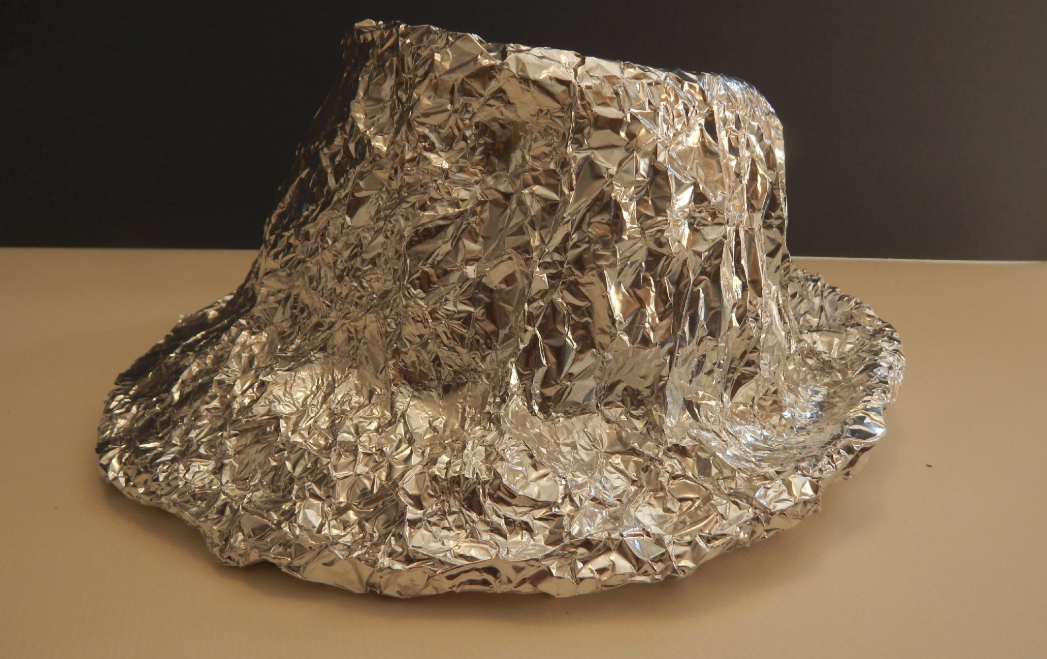
As the clean tech sector continues its rapid evolution toward solid-state and advanced bipolar architectures, skepticism is healthy—provided it is rooted in rigorous science rather than sensationalism. Ultimately, the empirical evidence proves that Donut Lab’s batteries are standing firmly on their own technological merits, leaving critics with little more than shattered theories and a symbolic aluminum foil hat.
