

Introduction: The Hidden Cost of Healing and Spirituality
The global crystal healing and metaphysical market has experienced an unprecedented boom over the last decade. From boutique wellness stores in Manhattan to viral TikTok videos showcasing pristine amethyst clusters and rose quartz towers, crystals have firmly established themselves as modern staples of self-care, interior design, and holistic wellness. Consumers turn to these geological wonders for grounding, energy clearing, and spiritual alignment. However, behind the aesthetic appeal, polished surfaces, and promises of high vibrations lies a complex, often opaque supply chain that rarely enters the conversation in mainstream metaphysical spaces.
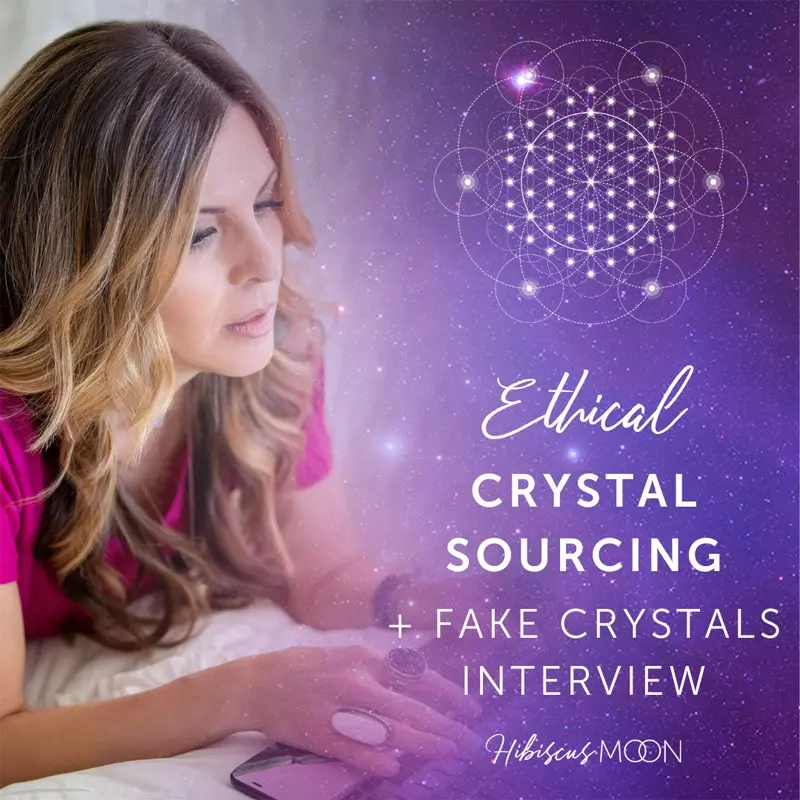
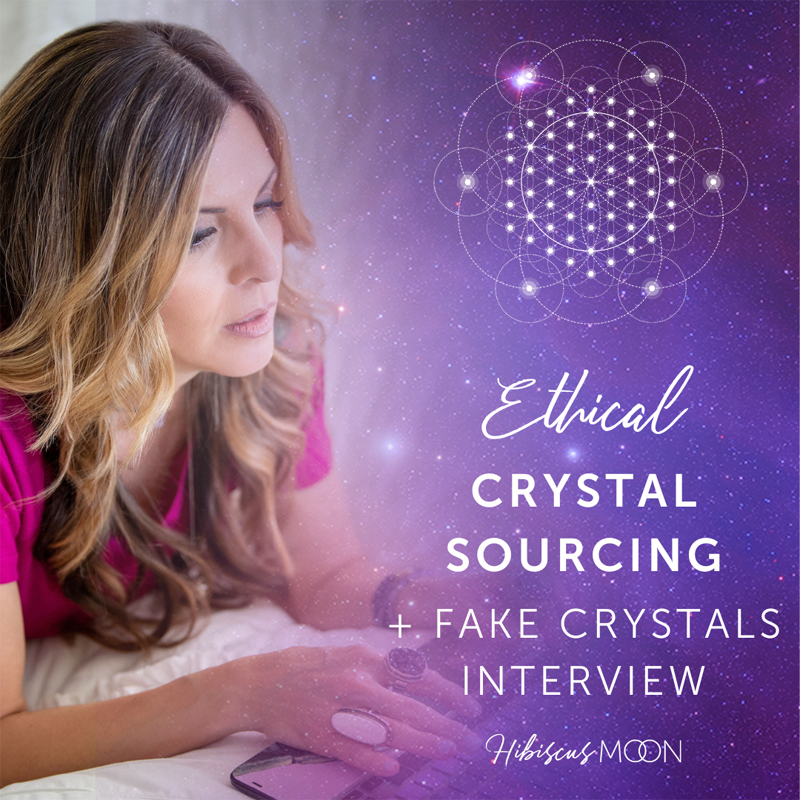
Recently, renowned crystal educator and author Hibiscus Moon sat down for a candid, no-holds-barred live interview with Barbie—widely known in digital spaces as "Cold Brew Barbie"—to tackle one of the most pressing, uncomfortable, and vital conversations in the modern spiritual community: ethical crystal sourcing.
While confronting this issue may feel like an inconvenient truth for enthusiasts who prefer to view their collections through a purely spiritual lens, education and transparency are becoming non-negotiable. This comprehensive feature explores the core themes of the Hibiscus Moon and Cold Brew Barbie interview, examining the realities of the global gem and mineral trade, the challenges of defining "ethical" mining, and what conscious consumers can do to align their purchasing habits with their values.
Main Facts: Unveiling the Realities of the Crystal Supply Chain
To understand why ethical sourcing has become a hot-button topic, one must first understand how crystals transition from the earth to a retail shelf. Unlike manufactured goods with traceable assembly lines, natural crystals are mined from the earth, involving labor-intensive extraction processes that span multiple continents, including Brazil, Madagascar, India, China, and the United States.
The Anatomy of the Mineral Trade
- Extraction (Mining): This is the foundational step, ranging from large-scale, heavily mechanized commercial operations to small-scale artisanal and traditional mining (ASM). While commercial mines are often subject to labor and environmental laws (with varying degrees of enforcement), artisanal miners often operate in impoverished regions with little to no regulatory oversight.
- Processing and Cutting: Once extracted, raw stones are shipped—frequently across international borders—to processing hubs where they are tumbled, carved, polished, and shaped into the familiar forms seen in metaphysical shops.
- Distribution and Retail: The finished products move through a network of wholesalers, importers, and distributors before finally reaching specialty crystal boutiques, online marketplaces, and end-consumers.
During their live broadcast, Hibiscus Moon and Cold Brew Barbie pulled back the curtain on this journey. They addressed the uncomfortable reality that many crystals are extracted under hazardous working conditions, by laborers—sometimes including children—who receive a tiny fraction of the retail value. Furthermore, unregulated strip mining can lead to severe environmental degradation, including soil erosion, deforestation, and toxic runoff into local water supplies.
Chronology: How the Ethical Crystal Movement Gained Momentum
The conversation surrounding ethical crystal sourcing did not emerge in a vacuum. It is part of a broader, consumer-driven movement toward sustainability that has reshaped industries ranging from fast fashion to diamond and gold jewelry.
A Timeline of Consciousness in the Mineral Market
- The Pre-Internet Era (Late 20th Century): Crystals were primarily purchased in niche metaphysical shops or rock-and-mineral shows. Consumers rarely asked about the origin of a stone; the primary focus was on its metaphysical properties, mineral classification, and aesthetic beauty.
- The Wellness Boom (2010s): Social media platforms like Instagram popularized the "crystal aesthetic." Demand skyrocketed, leading to mass commercialization and industrial-scale extraction in vulnerable developing economies, particularly in Madagascar and parts of South America.
- The Awakening (Late 2010s to 2020): Investigative journalism, documentaries, and grassroots activism began highlighting the dark side of the gemstone trade. Stories of artisanal miners working in dangerous, unregulated shafts brought light to child labor and human rights abuses in mica and quartz mining.
- The Digital Dialogue (2022–Present): Creators, educators, and industry insiders—exemplified by the collaboration between Hibiscus Moon and Cold Brew Barbie—began using live-streaming platforms and social media to bring these conversations directly to everyday consumers, transforming a fringe ethical debate into a mainstream wellness dialogue.
Supporting Data and Economic Realities
Evaluating the ethics of the crystal market requires looking closely at the economic structures that govern mining communities. While exact figures for the global metaphysical crystal market are difficult to isolate from the broader gemstone and mineral industry, the economic disparity along the supply chain is well-documented.
Economic Disparities in Mineral Extraction
- The Artisanal Miner’s Share: According to reports by organizations monitoring artisanal and small-scale mining (ASM), miners at the base of the supply chain often earn less than $2 to $5 a day, despite working in grueling, life-threatening conditions without proper safety gear.
- Global Footprint: Countries like Madagascar are primary global suppliers of raw materials such as rose quartz, labradorite, and celestite. While mineral exports generate significant revenue for these nations on paper, local communities frequently remain impoverished, lacking basic infrastructure, healthcare, and education systems.
- The Transparency Gap: Unlike the Kimberley Process for diamonds—which, despite its flaws, attempts to track the origin of conflict stones—no universal, legally binding certification scheme exists for metaphysical crystals. This leaves a massive traceability gap, making it difficult for retailers to independently verify claims of 100% ethical sourcing.
During their discussion, Hibiscus Moon and Cold Brew Barbie emphasized that while absolute perfection in sourcing is currently nearly impossible, awareness of these economic imbalances is the first step toward driving meaningful change in the industry.
Official Perspectives and Industry Responses
As consumer pressure mounts, participants at every level of the crystal supply chain are being forced to respond. The reactions from miners, wholesalers, shop owners, and educators highlight a deeply divided industry grappling with the realities of globalization.
The Retailer’s Dilemma
Many independent crystal shop owners genuinely want to source their inventory ethically. However, they frequently encounter severe bottlenecks:
- Middlemen and Wholesalers: Most shop owners do not buy directly from the mines. They purchase from large wholesalers who bundle minerals from various sources, making supply chain tracking exceptionally difficult.
- The "Greenwashing" Trap: Some suppliers slap "ethically sourced" labels on their products as a marketing ploy without providing verifiable proof. Industry leaders like Hibiscus Moon urge consumers and retailers alike to look beyond buzzwords and ask deeper questions about supplier transparency.
The Perspective of Artisanal Mining Communities
Development economists and human rights advocates point out that outright boycotts of crystals from impoverished regions can do more harm than good. In many rural communities, mining is the only viable economic survival strategy. Therefore, industry experts argue that the goal should not be to shut down trade, but to invest in better labor standards, fair wages, and community development projects—a sentiment echoed by Cold Brew Barbie during their live exchange.
Implications: What Ethical Sourcing Means for the Future of Spirituality
The intersection of ethics and spirituality forces practitioners to confront a profound philosophical question: Can a crystal carry positive, healing energy if its journey from the earth involved human suffering and environmental destruction?
For many modern energy workers and holistic practitioners, the answer is a resounding no. The core tenet of many spiritual traditions is interconnectedness and reverence for Mother Earth. Damaging the planet and exploiting fellow human beings to acquire a tool meant for healing creates an energetic dissonance that many conscious consumers are no longer willing to ignore.
Key Takeaways for the Conscious Consumer
Based on the insights shared by Hibiscus Moon and Cold Brew Barbie, crystal enthusiasts can adopt several practical strategies to navigate their purchasing habits responsibly:
- Ask Questions: Don’t hesitate to ask your local crystal shop or online retailer where their minerals come from. Even if they don’t have all the answers, demanding transparency signals to the market that consumers care.
- Support Businesses with Direct Relationships: Prioritize retailers who work directly with miners or small, independent family-run quarries where working conditions can be verified.
- Appreciate Vintage and Second-Hand Stones: Reusing or adopting "pre-loved" crystals from estate sales, flea markets, or fellow collectors eliminates the demand for newly mined materials altogether.
- Embrace Imperfection: Understand that achieving total supply chain transparency is a journey, not an overnight fix. Supporting education and open dialogue is just as important as the individual purchases we make.
Conclusion: Lighting the Way Forward
The live interview between Hibiscus Moon and Cold Brew Barbie served as a vital wake-up call for the metaphysical community. By shining a light on the often uncomfortable truths of ethical crystal sourcing, they demonstrated that true spiritual practice cannot be divorced from real-world responsibility.
As the wellness industry continues to mature, consumers hold the ultimate power. By replacing blind consumption with conscious curiosity, the crystal community can help transform a murky global trade into one defined by respect, fairness, and true healing—for both people and the planet.
