

Main Facts
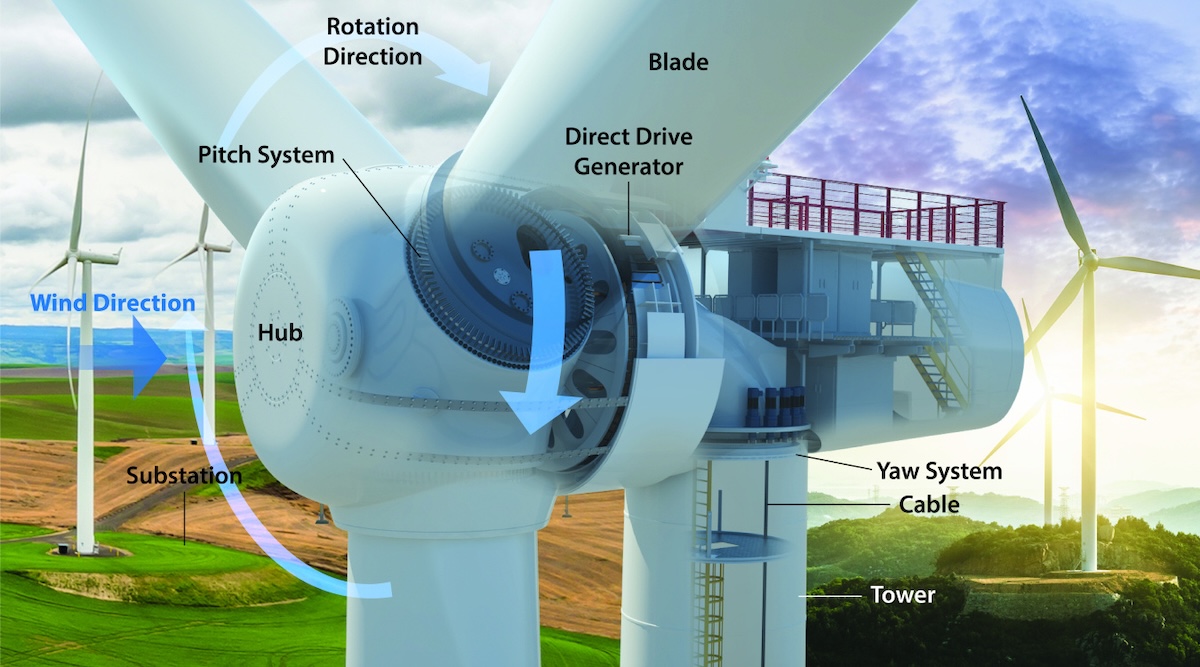
The United States Department of Energy (DOE) has introduced a bureaucratic and linguistic pivot regarding renewable energy under the administration of President Donald Trump. In an organizational restructuring that merges the former Solar Energy Technologies Office and the Wind Energy Technologies Office into a single entity—the Integrated Energy Systems Office (IESO)—the federal government has opted to rebrand wind turbines with a novel technical term: "aeromechanical energy systems."
This nomenclature change occurs against a backdrop of sustained administrative skepticism and active federal pushback against wind power infrastructure. The newly formed IESO operates under the broader umbrella of the Office of Critical Minerals and Energy Innovation (OCMEI). While the agency’s updated web pages and informational briefs formally acknowledge the manufacturing and supply chain needs of the wind industry, they simultaneously categorize wind technology under this specialized branch. The branch is officially tasked with addressing long-term reliability, performance challenges, and the recycling of end-of-life components, all while new funding opportunities specifically dedicated to wind energy remain notably absent from active federal program lists.
Chronology
- August 2025: The U.S. Department of Defense (DoD) abruptly halts its routine review process for wind farm permits, freezing mitigation agreements and communications with developers regarding projects featuring turbines over 200 feet tall.
- Late 2025: A federal court affirms that the executive branch holds the legal authority to halt the issuance of new offshore wind leases on federal lands and waters, effectively freezing future offshore expansion.
- Summer 2026: A coalition of 19 state attorneys general files a federal lawsuit against the Trump administration to contest the DoD’s freeze on wind farm permits.
- August 27, 2026: PacWave South, a major wave energy clean energy facility, officially opens for business following years of development.
- August 2026: A federal judge rules that the Department of Defense’s blockage of onshore wind project permits was unlawful.
- September 10, 2026: The Department of Energy updates its online explainer pages, including "Wind Manufacturing and Supply Chain," emphasizing domestic manufacturing capabilities and supply chain reliability under the newly structured Integrated Energy Systems Office.
- September 17, 2026: The DOE officially announces via email the creation of the Integrated Energy Systems Office (IESO), combining solar and wind initiatives and introducing the term "aeromechanical energy systems" into federal programmatic documentation.
Supporting Data
The operational framework of the newly established Integrated Energy Systems Office reveals a distinct lack of active financial support for the wind sector, juxtaposed with broader energy initiatives.
- Office Structure: The IESO consolidates the legacy Solar Energy Technologies Office and Wind Energy Technologies Office.
- Funding Distribution: As of its launch, the IESO website lists zero upcoming funding opportunities for wind energy. The sole open funding opportunity cataloged on the IESO portal targets space-based solar power research. All other listed programs are presently marked as "under review" and pertain primarily to solar applications or general grid-integration infrastructure.
- Permitting Scope: The Department of Defense permit review process—prior to its temporary administrative freeze—applied specifically to vertical structures exceeding 200 feet in height, intersecting with the jurisdiction of the Federal Aviation Administration (FAA).
- Legal Opposition: A coalition of 19 state attorneys general spearheaded the legal challenge against the federal permitting freeze, while multiple coastal states filed separate lawsuits regarding federal offshore lease management and buyout transactions.
Official Responses
The rebranding and operational shifts have elicited strong reactions from federal agencies, state officials, and legal representatives.
The Department of Energy defends the creation of the IESO through its official messaging, stating:
"Our core mission at IESO is to enhance grid reliability and resilience, secure U.S. technological leadership across diverse energy generation sources, and lower energy costs for hardworking Americans. By combining our efforts, we can more effectively seize the incredible opportunities presented by the evolving energy landscape to unleash American energy dominance."
Regarding the specific administrative hurdles placed on onshore installations, state-level officials have pushed back aggressively. Washington State Attorney General Nick Brown criticized the sudden shift in federal compliance, noting:
"In August 2025, DoD abruptly stopped following this process. Officials ceased countersigning mitigation agreements, stopped sending completed agreements to developers for signature, and delayed or halted communications with developers about mitigation."
Legal analysts and clean energy advocates have pointed out the incongruity between the DOE’s formal descriptions of supply chain support and the actual absence of active capital allocations for wind technology development. Critics characterize the terminology shift toward "aeromechanical energy systems" as an exercise in bureaucratic semantics designed to distance federal agencies from conventional renewable energy branding.
Implications
The convergence of administrative restructuring, vocabulary shifts, and legal battles carries significant implications for the future trajectory of American energy infrastructure.

Regulatory and Semantic Shift
The adoption of "aeromechanical energy systems" in place of standard terminology like wind turbines or wind energy systems highlights a broader trend of administrative repositioning. By embedding wind technology within specialized sub-branches focused on materials science, component recycling, and mechanical reliability rather than direct generation expansion, federal agencies can nominally fulfill statutory oversight duties while sidelining active deployment goals. This linguistic pivot mirrors past bureaucratic adjustments intended to reframe climate and clean energy programs under traditional fossil-fuel-centric policy frameworks emphasizing "energy dominance."
The Onshore Versus Offshore Divide
The legal landscape for wind power remains sharply divided between federal waters and non-federal lands. While federal courts have upheld the executive branch’s authority to suspend the issuance of new offshore leases, they have simultaneously limited attempts to retroactively terminate existing, legally binding contracts. This tension has resulted in unique financial maneuvers, including lease buyouts intended to clear offshore zones of planned turbine installations. Conversely, onshore wind development navigates a complex matrix of private, state, and local jurisdictions. Although federal agencies like the Department of Defense and the FAA maintain significant leverage through airspace and environmental reviews, recent federal court rulings—such as the decision invalidating the DoD’s permit freeze—demonstrate that administrative roadblocks are subject to successful judicial review by state coalitions.
Long-Term Market Resilience
Despite shifting federal priorities, regulatory friction, and funding freezes, the foundational economics and resource availability of wind power remain unchanged. Legal challenges brought by multi-state coalitions underscore that state governments and private developers retain substantial autonomy to advance projects independently of federal executive headwinds. As the newly minted Aeromechanical Energy Systems branch navigates its internal reviews and structural reorganization, the broader energy market continues to weigh the friction of federal bureaucracy against the enduring demand for reliable, domestic renewable generation capacity.
