

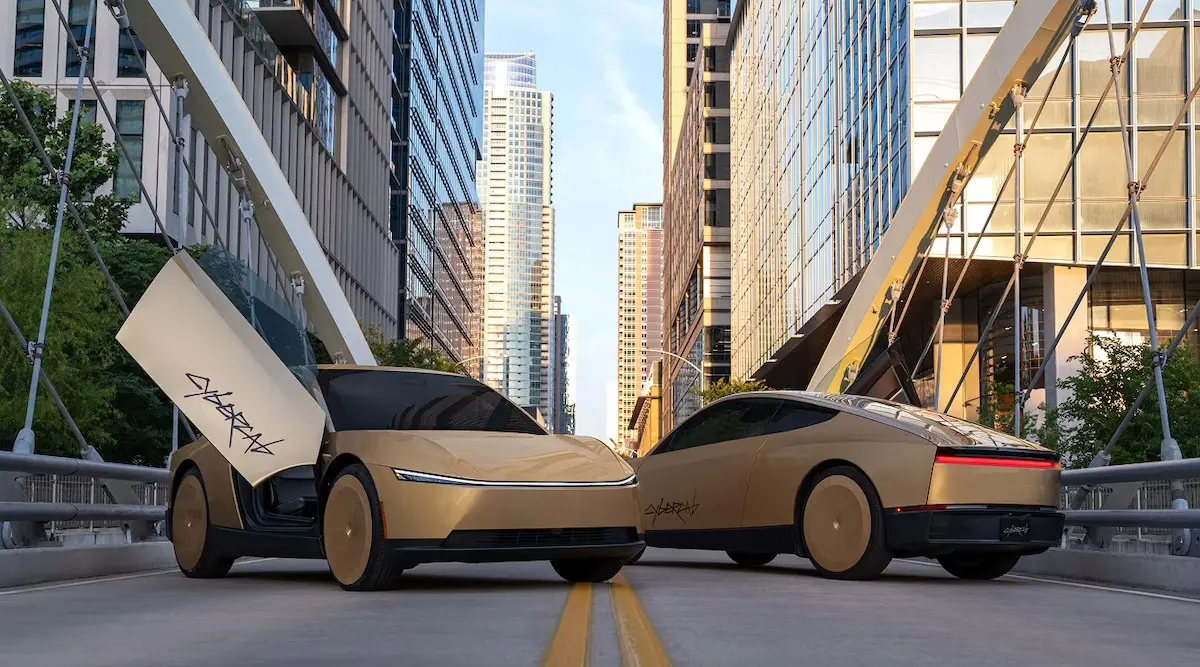
The rollout of Tesla’s long-awaited Cybercab in Austin, Texas, was supposed to mark a monumental leap forward for autonomous mobility. Instead, the September 3 debut has evolved into a multi-faceted controversy involving missing executives, skeptical investors, pranksters testing the vehicle’s limits, an erratic navigational detour, and a stringent federal investigation. Compounding the situation, the National Highway Traffic Safety Administration (NHTSA) has issued a formal Special Order demanding answers to 21 specific inquiries regarding Tesla’s self-certification of the vehicle.
As Tesla navigates these regulatory hurdles, the broader U.S. electric vehicle (EV) market is experiencing a profound transition. Plagued by shifting federal policies, changing incentive structures, and mounting competition, the industry finds itself at a crossroads.
Main Facts
At the core of the controversy is Tesla’s newly introduced Cybercab—a purpose-built robotaxi designed to operate entirely without a steering wheel or traditional human controls. However, the vehicle’s debut has raised significant questions regarding its readiness, safety compliance, and actual level of autonomy.
- The Austin Rollout: Unveiled on September 3 in Austin, Texas, the launch was immediately notable for the absence of Tesla CEO Elon Musk, dampening investor enthusiasm and causing a temporary dip in Tesla’s stock price.
- The Autonomy Debate: While marketed as a pure robotaxi devoid of manual controls, automotive reports—including insights from MotorTrend—suggest the vehicle may feature a "secret" virtual joystick or support temporary manual configurations.
- Regulatory Scrutiny: Just one day after the launch, NHTSA opened an Audit Query (AQ) to investigate Tesla’s self-certification that the Cybercab meets all applicable Federal Motor Vehicle Safety Standards (FMVSS).
- The 21-Question Special Order: NHTSA issued a formal Special Order requiring Tesla to provide exhaustive technical data under oath by September 30, focusing heavily on whether human controls were used to achieve compliance.
- Real-World Glitches: Highlighting ongoing navigation and software challenges, a recent passenger reported that a routine 10-minute trip turned into a baffling 70-minute detour across East Austin.
Chronology of Events
The timeline surrounding the Cybercab debut highlights a rapid succession of high-profile events, public stunts, and immediate regulatory intervention.
- Late August: Anticipation builds as Tesla prepares its Austin infrastructure for the public unveiling of the Cybercab fleet.
- September 3: Tesla holds its official Cybercab launch event in Austin, Texas, conspicuously missing CEO Elon Musk. The event prompts mixed public reactions and sparks initial safety concerns from onlookers and first responders.
- September 4: NHTSA officially announces an Audit Query to evaluate Tesla’s self-certification process for a vehicle lacking traditional human controls.
- Mid-September: Pranksters begin recording videos of themselves jumping in front of operating Cybercabs on Austin streets to "test" the vehicle’s automated emergency braking and full self-driving (FSD) responsiveness.
- Mid-September (The 70-Minute Detour): A local Austin resident shares an experience on Reddit detailing how a short 10-minute trip in a Cybercab turned into an hour-long, unexpected scenic route through East Austin.
- September 30 (Upcoming Deadline): The mandated deadline set by NHTSA for Tesla to submit its formal responses to the 21 specific inquiries outlined in the federal Special Order.
Supporting Data and Market Dynamics
While the Cybercab struggles to cement its operational reliability, Tesla continues to maintain its standing as the top seller of electric vehicles in the United States, albeit within a contracted national market.
According to recent data from Kelley Blue Book (KBB), the broader U.S. EV sales landscape is facing a steep downturn compared to previous years. The premature rollback of federal EV tax credits has triggered a pullback from legacy automakers like Ford and General Motors, leaving total market growth stifled.
- August Sales Performance: Tesla led U.S. EV sales in August, followed by competitors such as Toyota, Rivian, Hyundai, and Cadillac. However, Tesla’s monthly sales dipped by 3.8% compared to July.
- Year-Over-Year Contraction: KBB data indicates that while new EV sales rose 2.5% from July to August, they plummeted 46.9% compared to the same period in 2025.
- Market Share Disparity: EVs accounted for a modest 5.7% of total new vehicle sales in the U.S. during August, lagging far behind global marketplace adoption rates, which have surged past 25%.
- Global Influences on Fuel and EV Adoption: Ongoing geopolitical tensions—including conflicts in the Middle East and the protracted war in Ukraine, which has seen strategic strikes on Russian oil and refinery infrastructure—continue to destabilize traditional fossil fuel markets. These energy sector fluctuations could potentially reinvigorate consumer interest in electric alternatives.
- Rising Competitor Pressure: Despite regulatory hurdles, competition in the American EV space is intensifying. Ford continues to advance production pipelines for upcoming models like the Fathom electric pickup truck, and Rivian recently secured a substantial $4.5 billion Department of Energy loan to construct a manufacturing facility in Georgia.
Official Responses and Regulatory Demands
NHTSA’s intervention underscores the gravity of self-certifying a vehicle class that bypasses historical safety paradigms. Addressed to Tesla Head of Litigation Brian Jazeri and Associate General Counsel Eric Williams, the federal Special Order demands absolute transparency regarding how compliance was achieved.
Self-certification is a foundational responsibility for vehicle manufacturers under the National Traffic and Motor Vehicle Safety Act of 1966. Because the Cybercab completely eschews traditional driver interfaces, regulators are zeroing in on the exact technical methodologies Tesla utilized to meet federal mandates.
Among the 21 specific queries issued by NHTSA, several key points have drawn intense industry scrutiny:
- Question #5: Demands confirmation on whether the subject vehicles are capable of being driven by a human via temporarily attached manual controls.
- Question #6: Asks whether temporarily installed human driver controls or associated equipment formed any part of Tesla’s basis for certifying compliance with FMVSS standards, and requests a detailed list of those specific standards.
- Question #13: Focuses on turn signal mechanics, requiring Tesla to state whether the vehicles feature a self-canceling turn signal operating unit activated by steering wheel rotation, or a manually operated control unit. If answered in the negative, NHTSA demands a detailed explanation of how Tesla determined compliance with FMVSS No. 108.
These questions suggest that regulators are eager to determine whether Tesla relied on temporary, workaround mechanisms to pass safety compliance tests for a vehicle that is ultimately advertised as entirely autonomous.

Implications for Tesla and the Autonomous Industry
The convergence of federal oversight, public skepticism, and technical anomalies carries profound implications for Tesla’s long-term autonomous strategy.
Regulatory Compliance and Accountability
The NHTSA Audit Query represents a critical test for autonomous vehicle (AV) deployment frameworks. If regulators determine that Tesla’s self-certification process circumvented established safety standards—particularly regarding missing or auxiliary manual controls—it could set a rigorous precedent for how future robotaxis are evaluated nationwide. Furthermore, given past federal budget discussions and shifts in governmental oversight offices, the degree of enforcement power retained by agencies like NHTSA remains a focal point for industry watchers.
Consumer Trust and Technical Readiness
Incidents like the unexpected 70-minute detour and viral stunts involving pedestrians testing the vehicle’s sensors highlight the friction between marketing autonomous readiness and actual real-world execution. For the Cybercab to transition from an experimental Austin rollout to a scalable, commercially viable fleet, Tesla must demonstrate absolute navigational reliability and robust safety protocols that satisfy both federal regulators and everyday passengers.
The Path Forward
Tesla remains a dominant force in the global electrification movement, yet its robotaxi ambitions are entering a highly litigious and scrutinized phase. As the September 30 deadline for the NHTSA Special Order approaches, the answers provided by Tesla will likely dictate not only the immediate future of the Cybercab in Texas, but also the broader regulatory roadmap for autonomous transportation across the United States.
