

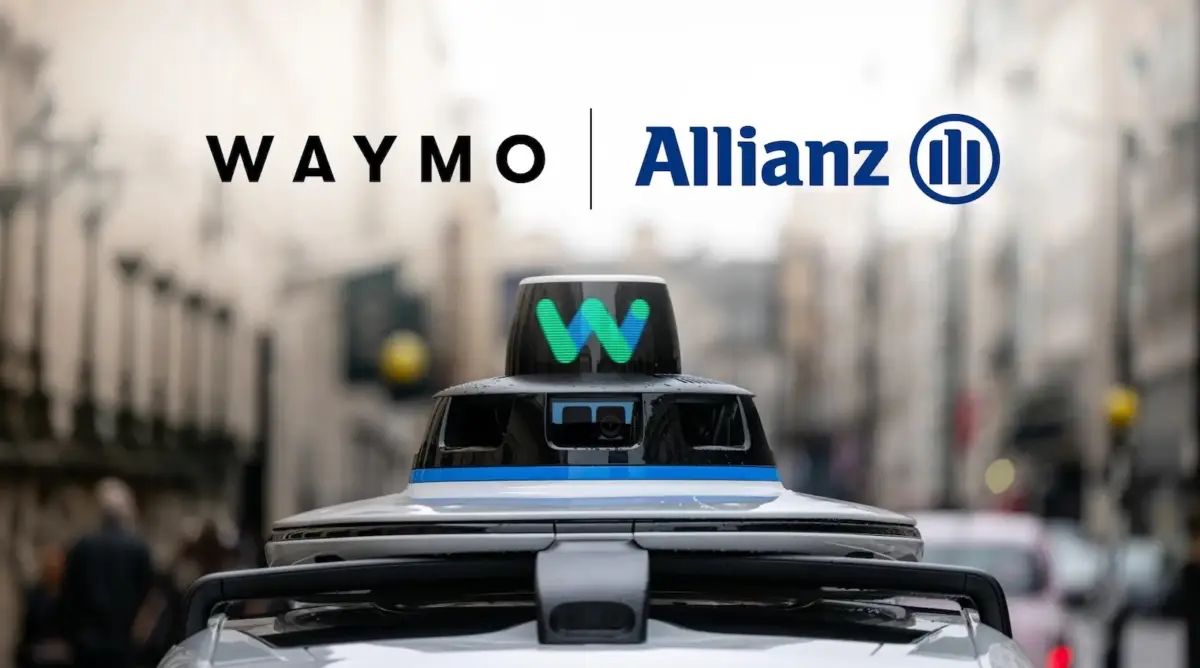
London and Munich — As autonomous vehicle technology transitions from experimental American testing grounds to dense, complex European urban centers, developers are finding that software engineering is only half the battle. Waymo, a pioneer in commercial rider-only autonomous services operating more than half a million paid trips weekly across the United States, has announced a strategic partnership with global insurance powerhouse Allianz Partners.
The collaboration is designed to lay the groundwork for Waymo’s upcoming commercial European deployment, starting with initial testing and rollout plans in London and Munich. By integrating Allianz Partners’ deep local market expertise, risk assessment capabilities, and digital claims infrastructure, the autonomous vehicle leader aims to build a comprehensive operational backbone that guarantees safety, regulatory compliance, and consumer trust from day one.
Main Facts: The Anatomy of the Waymo-Allianz Partnership
The core of the announcement centers on how Waymo plans to execute its long-awaited European footprint. Operating autonomous fleets internationally requires navigating a patchwork of vastly different national regulatory frameworks, traffic laws, and dense urban environments.
Through this alliance, Allianz Partners will provide Waymo with tailored risk management and operational solutions across Europe. Key elements of the collaboration include:
- Comprehensive Risk and Insurance Framework: Constructing specialized insurance products tailored specifically to driverless, commercial robotaxi operations.
- Streamlined Digital Claims Management: Implementing fast, technologically integrated claims processing systems designed to minimize downtime for autonomous fleets.
- Safety Research Integration: Combining Waymo’s extensive U.S. collision and safety data with Allianz’s European automotive safety research to continuously refine vehicle performance.
- Future Fleet Innovations: Exploring joint operational solutions, including customized vehicle recovery and roadside assistance programs specifically engineered for driverless vehicles.
This partnership bridges Silicon Valley technology with traditional European financial and risk infrastructure, creating a blueprint for how autonomous mobility can scale globally.
Chronology: The Road to Europe
To understand the significance of this partnership, it is helpful to look at the timeline of Waymo’s evolution and its deliberate path toward international expansion.
Phase 1: U.S. Market Proving Ground (2018–2024)
Waymo—originally born as the Google Self-Driving Car Project in 2009—spun out as an independent subsidiary under Alphabet. Over nearly a decade of commercial scaling, the company established rider-only robotaxi services in major U.S. metropolitan areas, including Phoenix, San Francisco, Los Angeles, and Austin. By accumulating hundreds of millions of autonomous miles, Waymo built a massive repository of real-world safety data.
Phase 2: Strategic International Scouting (2024–2025)
As domestic operations stabilized and proved profitable and scalable, Waymo turned its sights abroad. European cities, characterized by narrow medieval streets, complex roundabouts, dense pedestrian and cyclist traffic, and strict regulatory bodies, presented an entirely new class of engineering and logistical challenges. Leadership realized that replicating its U.S. success would require trusted, deeply entrenched local partners rather than attempting to build foreign operations from scratch.
Phase 3: The European Partnership Announcement (2026)
Waymo officially announced its initial European deployment targets: London and Munich. Recognizing that vehicle technology alone is insufficient without local institutional backing, Waymo initiated talks with Allianz Partners. The resulting partnership establishes the legal, financial, and risk management framework necessary to put the Waymo Driver on European asphalt legally and securely.
Supporting Data: The Safety Case for Autonomous Fleets
A critical driver behind insurance partnerships of this scale is hard data. Insurance companies like Allianz do not underwrite emerging technologies based on marketing promises; they require rigorous, quantifiable safety metrics.
Waymo enters the European market backed by extensive empirical data from its U.S. operations. According to the company’s published safety impact reports:
- 16x Reduction in Serious Injuries: In the urban markets where Waymo currently operates, its vehicles have demonstrated a dramatic reduction in crashes resulting in serious injury compared to human-driven benchmarks over equivalent distances.
- Elimination of Human Error Factors: Autonomous systems do not suffer from fatigue, distraction, alcohol impairment, or aggressive driving—the primary root causes of conventional traffic accidents.
- High-Frequency Commercial Validation: Managing over half a million paid trips every single week provides an unmatched stress-test environment, yielding billions of simulation and real-world miles that feed directly back into the Waymo Driver’s machine learning architecture.
This safety track record was instrumental in convincing Allianz Partners that Waymo’s technology represents a manageable, highly calculable risk profile rather than an unpredictable wildcard.
Official Responses: What Leadership is Saying
The executives spearheading this transatlantic collaboration emphasized that success in autonomous mobility relies as much on institutional partnerships as it does on artificial intelligence.
Tomas Kunzmann, CEO of Allianz Partners, stated:
"Autonomous mobility is one of the most significant shifts our industry will navigate in the years ahead. Waymo’s technology leadership, combined with Allianz’s global expertise in insurance, assistance, and vehicle safety, allows us to build a comprehensive ecosystem that gives operators and passengers confidence at every stage of the journey."
Kunzmann’s remarks highlight the broader transformation occurring within the insurance sector. Insurers are evolving from passive financial backers of after-the-fact accidents into active technological partners helping shape the future of safer transportation.

Tilia Gode, Head of Risk & Insurance at Waymo, added:
"As we advance our commercial rollout in Europe, building the right operational foundation is just as critical as the technology behind the Waymo Driver. Teaming up with Allianz Partners allows us to pair our proven U.S. safety record and commercial experience with world-class European risk and claims expertise, ensuring we scale reliably and responsibly from day one."
Gode’s comments underscore Waymo’s cautious, methodical approach to international expansion. Rather than rushing into foreign markets, the company is prioritizing regulatory alignment and operational resilience.
Implications: What This Means for the Future of Urban Mobility
The partnership between Waymo and Allianz Partners carries profound implications for the global automotive, insurance, and smart-city landscapes.
1. A New Paradigm for Autonomous Vehicle Insurance
For years, the insurance industry has struggled to price policies for autonomous vehicles due to a lack of historical data and legal gray areas regarding liability (whether liability lies with the driver, the software developer, or the vehicle owner). By working directly with an industry giant like Allianz from the pre-launch phase, Waymo is helping establish standardized insurance frameworks that could become the gold standard for the entire autonomous vehicle industry.
2. Accelerating European Acceptance
Europe has historically taken a conservative, highly protective approach toward consumer safety and emerging technologies. By partnering with a trusted European institution like Allianz, Waymo bridges a psychological and regulatory gap for municipal authorities in London, Munich, and beyond. If regulators see that Europe’s leading insurance firms are willing to underwrite and partner with robotaxi fleets, municipal approval processes could accelerate significantly.
3. The Blueprint for Global Scaling
Other autonomous vehicle developers—ranging from domestic competitors to international upstarts—will be closely watching this partnership. Successfully deploying robotaxis across multi-national borders requires localized ecosystems. Waymo’s strategy of outsourcing risk management and operational infrastructure to local experts may well become the required playbook for any tech company hoping to scale hardware-as-a-service models globally.
Looking Ahead
As Waymo prepares to deploy its fleet in London and Munich, the real-world test of this partnership is just beginning. While riders will ultimately judge the service by its convenience, cleanliness, and price, the invisible scaffolding built by Waymo and Allianz Partners—spanning risk analytics, seamless claims resolution, and proactive safety research—will be the true bedrock enabling the future of driverless mobility in Europe.
