

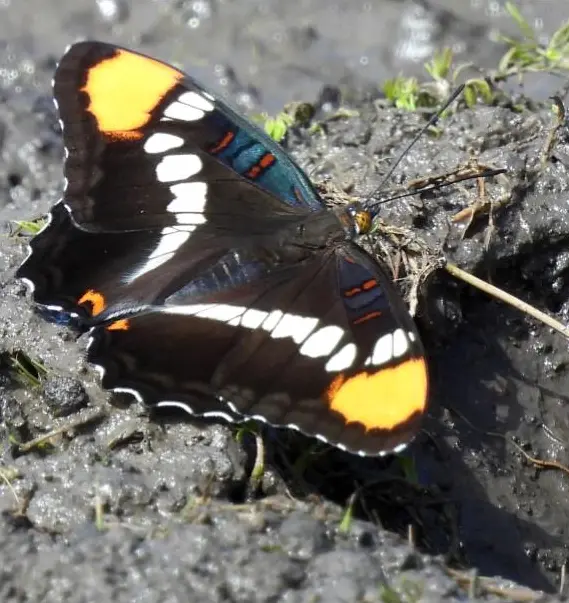
SEDONA, Ariz. — A new ecological milestone is taking flight in the high desert of northern Arizona. The city of Sedona, in collaboration with a rapidly growing local conservation group, has announced the launch of the inaugural Sedona Butterfly Festival. Scheduled for Saturday, Sept. 12, from 9:00 a.m. to 12:00 p.m., the free community event will take place at the Sedona Wetlands Preserve, a scenic and ecologically vital municipal park located just west of the city center.
The festival represents a major victory for local conservationists, coming years ahead of its organizers’ initial projections. What began as a modest proposal for a family-oriented nature walk has expanded into a comprehensive public celebration featuring educational workshops, native plant vendors, youth scavenger hunts, and live scientific demonstrations. The event aims to connect the public with the delicate, changing world of Southwestern lepidoptera while highlighting the critical role of citizen science in modern habitat preservation.
Chronology: From Private Passion to Public Partnership
The path to the Sedona Butterfly Festival began in 2018 when lepidopterist and conservationist Denise Gibbs began meticulously cataloging butterfly species across Sedona and the broader Verde Valley. At the time of her initial surveys, Gibbs recorded a baseline of 101 distinct butterfly species inhabiting the region’s diverse microclimates, which range from arid desert scrub to lush riparian corridors.
[2018] Denise Gibbs begins cataloging Sedona/Verde Valley butterflies (101 species baseline)
   │
[Feb 2025] Becky Hardy & Denise Gibbs co-found Butterfly Enthusiasts of Northern Arizona (BENA)
   │       *Set a long-term goal to host a regional butterfly festival within 5 years*
   │
[Spring 2026] Sedona Parks and Recreation Department proposes a "pop-up" partnership
   │
[Sept 2026] Inaugural Sedona Butterfly Festival launches (Only 19 months after BENA's founding)
           *Local species count rises to potentially 127 confirmed species*
In February 2025, Gibbs partnered with fellow enthusiast Becky Hardy to co-found the Butterfly Enthusiasts of Northern Arizona (BENA). Upon the group’s incorporation, the co-founders established a strategic five-year plan, with the organization of a dedicated regional butterfly festival designated as their premier long-term milestone.
However, the timeline accelerated dramatically in early 2026. Recognizing the growing community interest in local biodiversity, the City of Sedona’s Parks and Recreation Department approached BENA with an invitation to collaborate.
"The city actually reached out to us and said, ‘Hey, we would love it if you could offer an event for the families,’" recalled Hardy. "They meant more of a field trip, a couple of hours or something like that for families. I have a tendency to think a little big."
Rather than hosting a simple guided walk, Hardy and the BENA leadership designed a multi-faceted festival. By mid-2026—just 19 months after the group’s founding—plans for the inaugural Sept. 12 festival were finalized, turning a five-year dream into an immediate reality.
Supporting Data: Lepidoptera Diversity and Ecological Dynamics
The timing and location of the festival are highly strategic, aligned with late-summer ecological shifts, monsoon-driven moisture patterns, and seasonal migration corridors.
Expanding Regional Diversity
According to BENA’s ongoing census, the biological diversity of butterflies in the Verde Valley has experienced a marked upward trend. From the 101 species cataloged by Gibbs in 2018, the count has steadily climbed.
"From 2018 to now, we have seen a consistent increase," Hardy explained. "Right now, I literally have an email out to experts… but if that latest species gets confirmed, we could be up to 127 species. It is increasing every single year."
This upward trend is attributed to both intensifying local observation efforts and shifting environmental conditions that may be driving southern species northward into the middle-elevation habitats of Yavapai County.
The Phenomenon of "Puddling"
The choice of the Sedona Wetlands Preserve as the festival venue provides attendees with a firsthand look at a vital biological behavior known as "puddling."
Visitors to the wetlands frequently observe species like the vibrant Arizona sister (Adelpha eulalia) gathering on patches of damp, mineral-rich mud.
[Male Butterfly Puddles on Moist Soil]
       │
       ├─► Extracts Sodium, Amino Acids & Minerals
       │
       └─► Transports Nutrients to Female during mating
             │
             ├─► Increases Egg Viability & Reproductive Success
             │
             └─► Aids in Pheromone Production (Attracts mates)
This behavior is highly specialized:
- Nutrient Acquisition: Male butterflies utilize their proboscis to extract sodium, amino acids, and essential minerals from wet soil and decaying organic matter.
- Reproductive Success: These gathered nutrients are transferred to females during mating as a nuptial gift, significantly enhancing egg viability and reproductive success.
- Chemical Communication: Certain species process these minerals to manufacture pheromones, which males emit while in flight to attract nearby females.
Shifting Migrations: Monarchs and Sulphurs
The festival coincides with the late-summer migration period, which is exhibiting noticeable shifts due to regional climate variations.
- Monarch Butterflies (Danaus plexippus): Historically, migrating monarchs began appearing in the Verde Valley by mid-to-late July. In recent years, this arrival window has drifted later, with the first waves now consistently recorded in early August. These arriving monarchs deposit eggs on native milkweed plants. The eggs hatch within three to five days, according to data from the Monarch Conservation Fund. The resulting caterpillars pupate, and the newly emerged generation of butterflies continues the grueling migration to overwintering sites along the central coast of California or south into the mountain forests of Michoacán, Mexico.
- Clouded Sulphurs (Colias philodice): In contrast to the southbound monarchs, the clouded sulphur exhibits a reverse migration pattern during this season. Extremely sensitive to high temperatures, the clouded sulphur migrates northward during the late summer to escape the intense heat of lower-elevation desert valleys, seeking refuge in cooler, higher-elevation northern zones.
Official Responses: Municipal and Scientific Collaboration
The upcoming festival has garnered enthusiastic support from municipal leaders, who view the event as an ideal execution of the city’s long-term community development goals.
Municipal Perspective
Kimberly Sager, Athletics and Aquatics Supervisor for the City of Sedona, expressed excitement about the event’s expanded scale. She noted that the festival serves a dual purpose: elevating a dedicated local non-profit and introducing residents to an underutilized municipal asset.
"Many people don’t realize the Sedona Wetlands Preserve is actually a city park," Sager said. "This event highlights an organization doing incredibly important conservation work while bringing families out to experience this unique riparian environment."
Sager emphasized that the partnership aligns directly with Sedona’s overarching Community Plan, which prioritizes environmental stewardship, public education, and community-driven municipal programming.
"The thing about local nonprofit organizations is that they’re always trying to do outreach," Sager added. "This is a direct effort to bridge the gap between grassroots science and public awareness."
The "Pop-ortunity" Initiative
The City of Sedona structured the collaboration as a "pop-ortunity"—a municipal designation for pop-up opportunities designed to rapidly connect local organizations with the broader community. According to Sager, the city is actively seeking additional non-profit partners for similar ventures.
The success of the butterfly festival’s planning has prompted the city to slate several additional "pop-ortunities" for the fall and winter seasons. These upcoming events will be published in the city’s official Fall-Winter Activity Guide, scheduled for release in mid-to-late September.
Implications: Conservation, Habitat Restoration, and Citizen Science
Beyond its appeal as a weekend family outing, the Sedona Butterfly Festival carries significant implications for regional conservation efforts and scientific data collection.
Citizen Science and Tagging Demonstrations
A cornerstone of the festival will be public demonstrations of butterfly tagging, scheduled for 9:30 a.m. and 11:00 a.m. Led by prominent Southwest monarch researcher Gail Morris, these demonstrations will show attendees how to safely handle and tag butterflies to monitor their migratory flight paths.
┌─────────────────────────────────────────────────────────────┐
│                 BUTTERFLY TAGGING METHODS                   │
├──────────────────────────────┬──────────────────────────────┤
│         STICKER TAGS         │          RADIO TAGS          │
├──────────────────────────────┼──────────────────────────────┤
│ • Lightweight adhesive paper │ • High-tech micro-transmitters│
│ • Applied to hindwing        │ • Measures precise movement  │
│ • Suitable for all sizes     │ • Requires minimum weight/span│
│ • Low-cost, community-driven │ • Used for advanced research │
└──────────────────────────────┴──────────────────────────────┘
While advanced researchers are beginning to deploy ultra-lightweight radio transmitters on larger, robust monarchs to track precise flight coordinates, the festival’s demonstrations will focus primarily on traditional sticker tagging.
"What’s even more exciting is that everybody can do this," Hardy said. "Once you are trained by Gail, the Southwest Monarch Study actually sends out tags if you request them. You can tag them on your own. It’s a massive community science project."
The data generated by these volunteer taggers is invaluable. By mapping where tagged butterflies are recovered, conservationists can pinpoint critical migratory stopovers, calculate travel velocities, and assess the survival rates of successive generations.
Habitat Restoration and Native Flora
The ultimate goal of both BENA and the City of Sedona is to translate public enthusiasm into tangible habitat restoration. The festival will host specialized vendors offering native plants, providing residents with the specific flora necessary to convert private backyards into functional migratory waystations.
"BENA members help residents answer the crucial question: ‘What kinds of native plants do we need to plant more of for butterflies to thrive?’" Sager noted.
By encouraging the planting of native nectar sources and host plants—such as desert milkweed (Asclepias subulata) and Arizona milkweed (Asclepias angustifolia)—the initiative aims to establish a contiguous habitat corridor across Yavapai County. This corridor will support declining pollinator populations, bolster urban biodiversity, and ensure that the Verde Valley remains a hospitable sanctuary for the 127 butterfly species that call the region home.
