

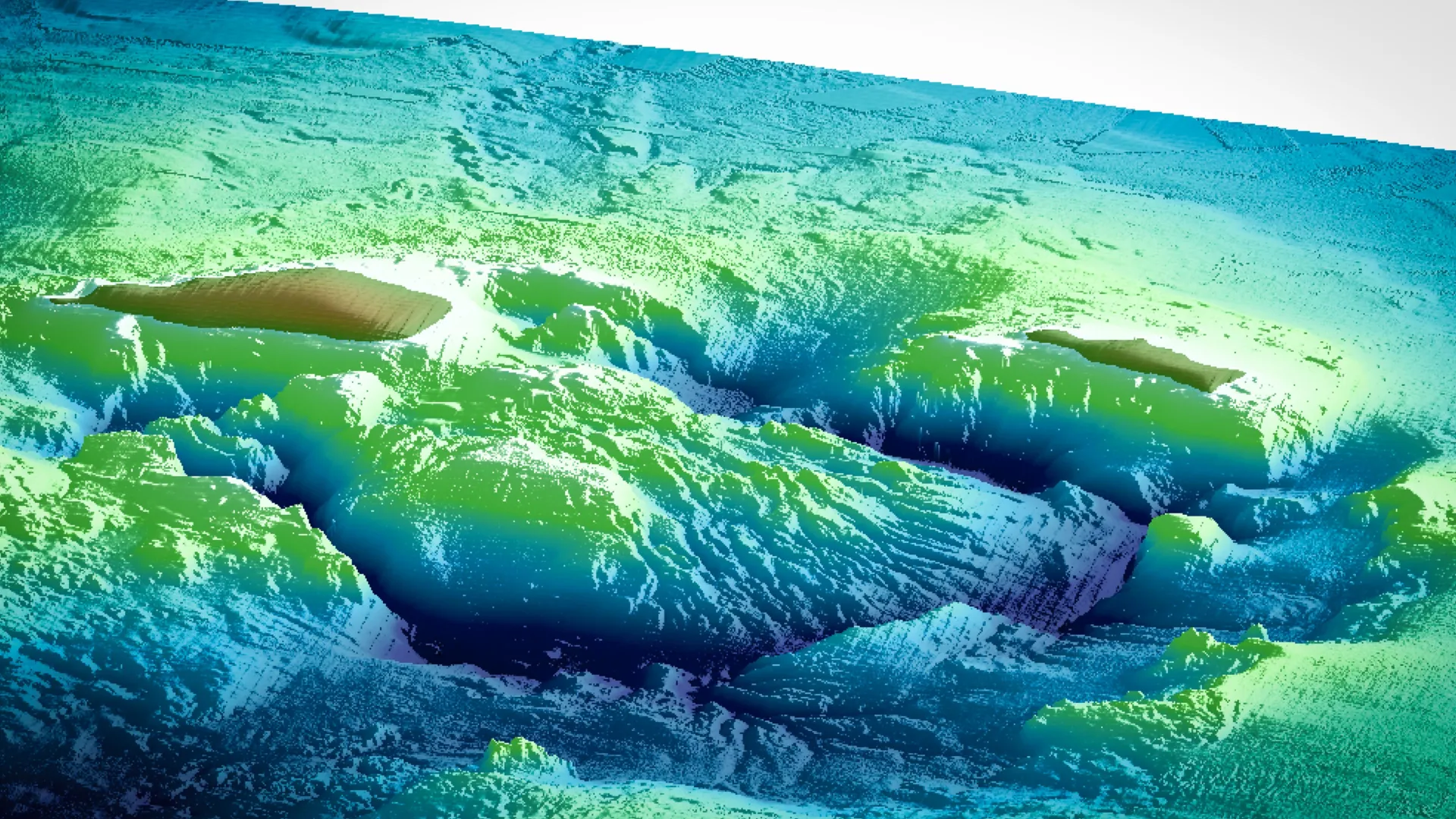
TOKYO — Deep beneath the rolling waves of the East China Sea, south of Japan’s main islands, a subterranean giant is stirring. A vast, hidden reservoir of molten rock beneath the submerged Kikai caldera is actively refilling, offering volcanologists an unprecedented, high-resolution window into the secretive lifecycle of Earth’s most destructive volcanic systems.
Published recently in the journal Communications Earth & Environment, a landmark study led by researchers at Kobe University reveals that the geological engine responsible for one of the Holocene epoch’s most cataclysmic eruptions is quietly coming back to life. While scientists emphasize that this resurgence does not signal an imminent cataclysm, the findings provide critical insights into how supervolcanoes—such as Yellowstone in the United States and Toba in Indonesia—recover, recharge, and prepare for future eruptions.
Main Facts: Unlocking the Subsurface Secrets of Kikai
The recent investigation centers on the Kikai caldera, a largely submerged volcanic complex located approximately 40 kilometers south of Kyushu, Japan. The caldera measures roughly 20 kilometers across. Its defining feature is a history of immense violence: roughly 7,300 years ago, Kikai was the site of the Akahoya eruption, the largest known Holocene volcanic event.
During this prehistoric disaster, the volcano ejected an estimated 150 to 170 cubic kilometers of volcanic tephra and pyroclastic material. To put that scale into perspective, the volume of magma displaced during the eruption was so vast that it could bury the entirety of New York City’s Central Park under a scorching layer of molten rock and ash 12 kilometers (nearly 7.5 miles) deep. The collapse of the emptied magma chamber formed the massive oceanic depression we see today.
Calderas differ fundamentally from traditional, cone-shaped stratovolcanoes like Mount Fuji. When a magma chamber of staggering proportions evacuates its contents in a matter of days or weeks, the structural integrity of the crust above it vanishes. The overlying ground plunges inward into the void, creating a wide, sunken basin.
For decades, geophysicists have struggled to answer a central question of modern volcanology: How do these colossal subterranean systems manage to accumulate such immense quantities of magma following a catastrophic collapse? Until now, the processes governing the recharge phase of giant calderas remained largely hidden behind a veil of inaccessible geology.
The Kobe University research team, in collaboration with the Japan Agency for Marine-Earth Science and Technology (JAMSTEC), cracked this problem by turning Kikai’s underwater geography from a logistical hurdle into a scientific advantage. Because the caldera lies primarily beneath the ocean, the researchers were able to execute broad, systematic seismic surveys across the entire structure without the obstacles posed by dense human populations or rugged terrestrial terrain.
Chronology: From Ancient Catastrophe to Modern Recharge
To understand how Kikai is rebuilding its subterranean reserves, scientists must look back across millennia of geological evolution. The timeline of the caldera is a story of destruction, quiet recovery, and continuous transformation:
- 7,300 Years Ago (The Akahoya Eruption): Kikai unleashes the largest volcanic event of the current geological epoch (the Holocene). A staggering volume of magma is expelled, and the surface collapses to form the caldera. Much of the surrounding region is devastated, and global climate is temporarily altered by stratospheric ash.
- Post-Eruption to Present (The Recharge Phase): Over the ensuing millennia, the emptied magma chamber does not remain dormant or cool entirely. Instead, fresh, buoyant magma from deeper within the Earth’s mantle and lower crust begins to ascend, slowly filtering into the shallow reservoir system.
- 3,900 Years Ago to Present (Lava Dome Formation): A prominent lava dome begins to form near the center of the Kikai caldera. Lava domes occur when viscous, silica-rich magma sluggishly reaches the surface, piling up directly over the vent rather than flowing outward. Chemical analyses of this dome’s material reveal that it is composed of newly injected magma, distinct in chemical composition from the juvenile materials expelled during the colossal Akahoya event 7,300 years ago.
- Recent Seismic Surveys (The Discovery): Utilizing advanced marine geophysical techniques, Kobe University and JAMSTEC researchers map the subsurface crust beneath the caldera, confirming that a massive, active magma reservoir is currently swelling with fresh molten rock.
Supporting Data: Listening to Seismic Waves Beneath the Ocean
To image the invisible architecture of Kikai’s magma plumbing system, the research team deployed a sophisticated array of geophysical instruments. Because seismic waves travel at different speeds and refract in predictable ways depending on the density, temperature, and state of the material they encounter, they act as an underground X-ray system.
The researchers utilized powerful airgun arrays towed behind research vessels to generate controlled, low-frequency seismic pulses. As these acoustic waves plunged through the ocean floor and into the Earth’s crust, they echoed back to an extensive network of ocean-bottom seismometers deployed across the caldera.
By analyzing the arrival times, velocities, and attenuation of these seismic waves, the team successfully mapped low-velocity zones—regions where seismic waves slow down significantly. In geology, these zones are the telltale signatures of partially molten rock and magma storage chambers.
The data yielded striking results. The seismic imaging revealed a substantial, continuous magma-rich region situated directly beneath the sector of the caldera that fed the ancient Akahoya eruption. By calculating the physical boundaries of this anomaly, the researchers determined that the current reservoir occupies the exact same geographic and structural footprint as the ancient chamber.
Crucially, the physical and chemical data rule out the possibility that this is merely cooling, stagnant residue from the eruption 7,300 years ago. The persistent formation of the central lava dome over the last 3,900 years, paired with geochemical signatures of younger materials, confirms that the chamber is being actively replenished by fresh batches of magma migrating from deeper mantle sources.
Official Responses and Expert Perspectives
The study has drawn widespread attention from the global geophysical community, offering a rare empirical anchor for theoretical models of supervolcanism.
Dr. Nobukazu Seama, a geophysicist at Kobe University and lead investigator of the project, emphasized the critical importance of understanding how these systems amass their destructive potential.
"We must understand how such large quantities of magma can accumulate to understand how giant caldera eruptions occur," Dr. Seama stated during a briefing on the findings. Reflecting on the methodological advantages provided by the ocean floor, he added, "The underwater location allows us to implement systematic, large-scale surveys that are exceptionally difficult to perform in terrestrial settings."
Addressing the nature of the magma currently residing beneath the caldera, Dr. Seama noted the undeniable chemical shift compared to prehistoric outputs: "This means that the magma that is now present in the magma reservoir under the lava dome is likely newly injected magma."
While the prospect of a refilling supervolcano chamber naturally raises public safety concerns, researchers are quick to calm anxieties. The discovery does not mean that Kikai is primed for an immediate eruption. Instead, it demonstrates that the subterranean plumbing network remains dynamically alive, cycling through the slow, agonizingly patient phases of post-eruptive recovery.
Implications: A Global Blueprint for Yellowstone, Toba, and Beyond
The most profound impact of the Kikai study extends far beyond the waters of southern Japan. Volcanologists have long sought a unified model to explain the behavior of giant calderas worldwide. Systems like the Yellowstone Caldera in the United States and the colossal Toba Caldera in Sumatra, Indonesia, share striking structural similarities with Kikai. All three are capable of "super-eruptions" that can impact the global climate and threaten human civilization.
However, monitoring these titans has always been fraught with uncertainty. Because supervolcanoes erupt so infrequently—often on timescales of tens of thousands of years—scientists have had very few modern, active examples to study during their quiet, recharging phases.
The "magma re-injection model" validated by the Kikai study provides a much-needed framework. By proving that major calderas can be actively recharged by fresh magma inputs over millennia without immediately triggering an eruption, the research gives scientists a clearer baseline for what "normal" activity looks like in a recovering supervolcano.
"This magma re-injection model is consistent with the existence of large shallow magma reservoirs beneath other giant calderas like Yellowstone and Toba," Dr. Seama observed.
Armed with this knowledge, researchers hope to refine monitoring techniques to better distinguish between harmless background tectonic or magmatic adjustments and the dangerous, accelerated pre-eruptive signals that precede a major awakening.
"We want to refine the methods that have proved to be so useful in this study to more deeply understand the re-injection processes," Dr. Seama concluded. "Our ultimate goal is to become better able to monitor the crucial indicators of future giant eruptions."
As ocean-bottom seismology and marine geophysics continue to advance, studies like the one conducted at Kikai are transforming our view of the underworld. The sleeping giants beneath our feet are no longer total mysteries; thanks to pioneering research off the coast of Japan, humanity is learning to listen to the slow, steady heartbeat of the Earth’s most powerful volcanoes.
This research was funded by the Ministry of Education, Culture, Sports, Science and Technology (MEXT) under "The Third Earthquake and Volcano Hazards Observation and Research Program (Earthquake and Volcano Hazard Reduction Research)" and by the Japan Society for the Promotion of Science (grant 20H00199). Field operations and technical data acquisition were conducted in close collaboration with researchers from the Japan Agency for Marine-Earth Science and Technology (JAMSTEC).
