

By Gayathri Narayanan
Main Facts: A Quarter-Century Without the Neighborhood
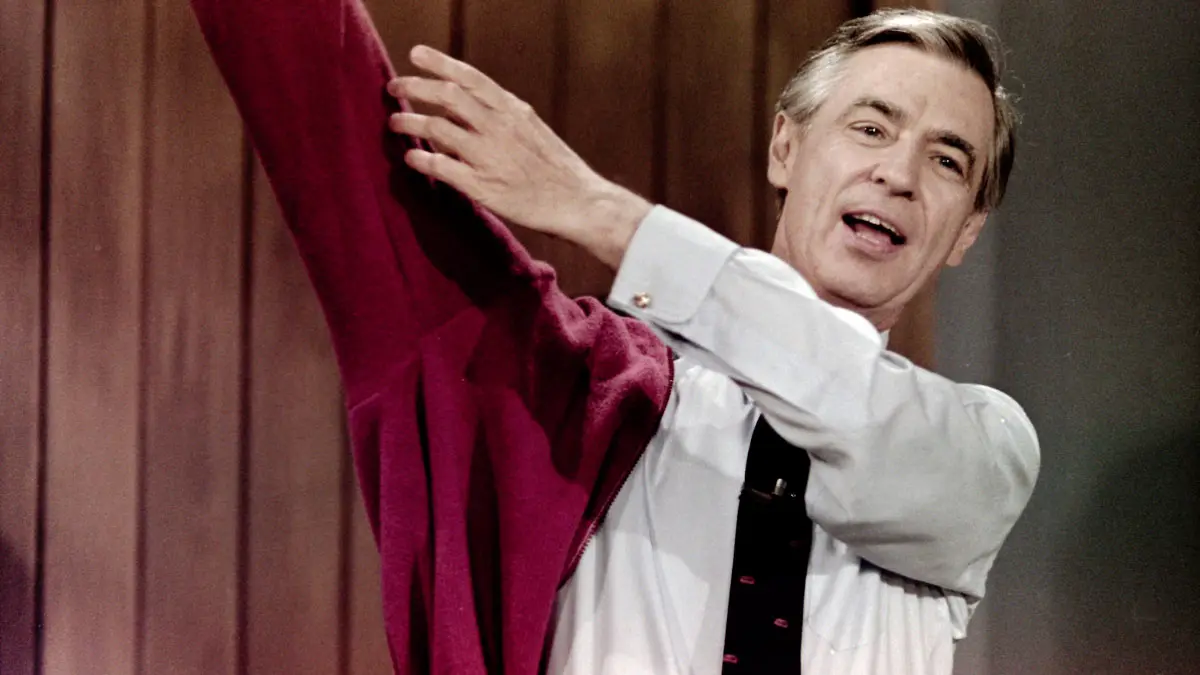
August 31 marks a poignant milestone in American cultural history: twenty-five years since the final episode of Mister Rogers’ Neighborhood aired on television. For more than three decades, Presbyterian minister Fred Rogers invited generations of children and adults into a deceptively simple television living room, changing his shoes, zipping up a knitted cardigan, and offering a daily broadcast of radical empathy.
Despite not growing up in the United States and only discovering Rogers later in life—first through Tom Hanks’ portrayal in the 2019 biographical film A Beautiful Day in the Neighborhood and subsequently through the critically acclaimed 2018 documentary Won’t You Be My Neighbor?—the author’s introduction to Rogers revealed a universal resonance. Rogers did not merely act a part; he looked at every child, guest, and viewer with an absolute, undivided attention that suggested they were the most important person in the world at that exact moment.
At its core, the philosophy of Fred Rogers mirrors the contemplative concept of metta—usually translated as loving-kindness or unconditional friendliness toward oneself and others. Through his work, Rogers conveyed a singular, revolutionary message: You do not need to change anything about yourself to be worthy of love. In a media landscape dominated by performance, achievement, and commercialism, Rogers argued that human beings possess an inherent sacredness and basic goodness that requires no validation from external accomplishments.
Chronology: The Evolution of a Gentle Activist
To understand the depth of Fred Rogers’ impact, it is essential to look at the timeline of his life, his television career, and the moments that defined his public and private commitments:
- 1928: Fred McFeely Rogers is born in Latrobe, Pennsylvania. As a sickly child who suffered from frequent illnesses and severe bullying—earning the cruel moniker "fat Freddy"—he developed an intimate understanding of vulnerability and fear, later channeling these emotions into his beloved puppet alter ego, Daniel Striped Tiger.
- 1950s–1960s: Rogers studies at Pittsburgh Theological Seminary and is ordained as a Presbyterian minister. Recognizing the often-vacuous nature of early television programming for children, he helps create Mister Rogers’ Neighborhood, developing a slow-paced, deeply intentional format focused on emotional literacy.
- 1969 (The Wading Pool): At a time when racially segregated swimming pools were still a reality across America, Rogers invites François Clemmons, a Black cast member who played Officer Clemmons, to share his small wading pool, famously cooling their feet together and drying Clemmons’ feet afterward—a quiet yet profoundly subversive political statement.
- 1969 (Senate Testimony): Facing proposed federal funding cuts of $20 million to public broadcasting, Rogers appears before the U.S. Senate Subcommittee on Communications. Eschewing a prepared speech, he speaks plainly about the emotional and psychological needs of children. Senator John Pastore, initially dismissive, is visibly disarmed and concedes on the spot that Rogers has preserved the funding.
- 2001 (The Final Episode): The final new episode of Mister Rogers’ Neighborhood airs on August 31, 2001—just eleven days before the tragic events of September 11.
- 2002 (Post-9/11 Messages): Persuaded by his producers to return to the studio, a reluctant Rogers records comforting messages for parents and children shaken by the terrorist attacks, invoking the Jewish concept of tikkun olam ("repairers of creation").
- 2003: Fred Rogers passes away at the age of 74, leaving behind a legacy that continues to shape modern conversations on mental health, education, and mindfulness.
Supporting Data: Examining the Man Behind the Cardigan
While television audiences frequently wondered whether "Mr. Rogers" was an artificial persona designed for ratings, historical accounts and those who worked closely with him confirm that his public demeanor was an authentic reflection of his inner life. However, his life was sustained by rigorous personal disciplines and hard-won emotional maturity:
- Daily Disciplines: To maintain his physical and mental health, Rogers swam a mile every morning, continuously monitored his weight as a deliberate counter-practice to his childhood insecurities, and maintained a steadfast routine of spiritual study and prayer.
- The Cost of Compliance: While Rogers was a progressive pioneer on racial integration, historical context reveals the limits of his era. He asked Officer Clemmons to keep his homosexuality private out of fear that a public controversy would jeopardize the show’s capacity to reach millions of children—a compromise that carried a heavy personal toll for Clemmons.
- Cultural Reach: Mister Rogers’ Neighborhood produced over 900 episodes across 31 seasons, making it one of the longest-running and most influential children’s television programs in history.
- Political Impact: His 1969 Senate appearance single-handedly saved public television funding, proving that quiet conviction could outweigh aggressive political lobbying.
Official Responses and Public Reception: Critics and Converts
Throughout his career, Fred Rogers faced a unique spectrum of public responses, ranging from fierce political criticism to profound spiritual and psychological reverence.
Conservative Criticism and the "Entitlement" Debate
During the height of his television run, Rogers was occasionally targeted by conservative commentators and cultural critics who argued that his message—“I like you just the way you are”—contributed to the rise of an entitled generation. Critics asserted that children needed to earn validation through competition and achievement rather than receiving unconditional praise.
However, supporters and biographers counter this interpretation by pointing to Rogers’ theological grounding. As an ordained minister, Rogers was not attempting to inflate children’s egos or promote narcissism. Rather, he was communicating a deeply spiritual truth: that human dignity is intrinsic, not transactional.
Senate Recognition
The most dramatic institutional response to Rogers occurred during his legendary 1969 appearance before Congress. Senator John Pastore, chairing the subcommittee with a reputation for sharp skepticism, listened intently as Rogers read a simple poem about television and the inner lives of children. When Rogers finished, Senator Pastore smiled, visibly moved, and stated:
"I think it’s fantastic. Looks like you just earned the 20 million dollars."
Implications: The Relevance of Mister Rogers in a Polarized World
Twenty-five years after his final broadcast, the implications of Fred Rogers’ life and philosophy extend far beyond children’s television, offering a vital framework for modern psychology, contemplative practice, and social activism.
Bridging Contemplative Traditions
The author’s journey from Advaita Vedanta and Buddhist mindfulness practices to the legacy of Fred Rogers highlights a striking convergence across disparate spiritual traditions. While Rogers spoke the language of Christian grace—framing human worth through the lens of God’s unconditional love—Eastern traditions like metta (loving-kindness) and Advaita Vedanta point to the same fundamental reality: the dissolution of artificial boundaries between "self" and "other."
Whether viewed as the Christian realization of being a "child of God," the Buddhist cultivation of metta, or the Advaitic recognition of non-duality, the underlying message is identical: a love that excludes no one.
Activism Through Presence
In contemporary society, political and social engagement is frequently equated with loud protest, digital outrage, and macro-level systemic battles. While these forms of resistance are necessary, Rogers modeled a different brand of activism. He demonstrated that micro-interactions matter deeply.
As the author reflects:
"He wasn’t asking us to fix the whole world—he was asking us to be there for our neighbors, to reach out in small ways to whoever happens to be in front of us, and ultimately make them part of our neighborhood. We don’t have to solve everything. Tending to our own little corner of the world matters."
The Grief of What Could Be
Watching clips of Mister Rogers’ Neighborhood today often evokes an unexpected emotional response: grief. In an era defined by political polarization, digital isolation, and social fragmentation, viewing Rogers’ gentle interactions elicits a collective longing: I wish we could have that kind of world.
Yet, that grief is also a call to action. It reminds us that the "neighborhood" was never merely a television set; it was an invitation. Fred Rogers taught us that love is not a passive emotion, but an active, daily struggle to slow down, truly see the person standing in front of us, and respond to their humanity. Twenty-five years after the cameras stopped rolling, that lesson remains the most radical practice we can undertake.
