

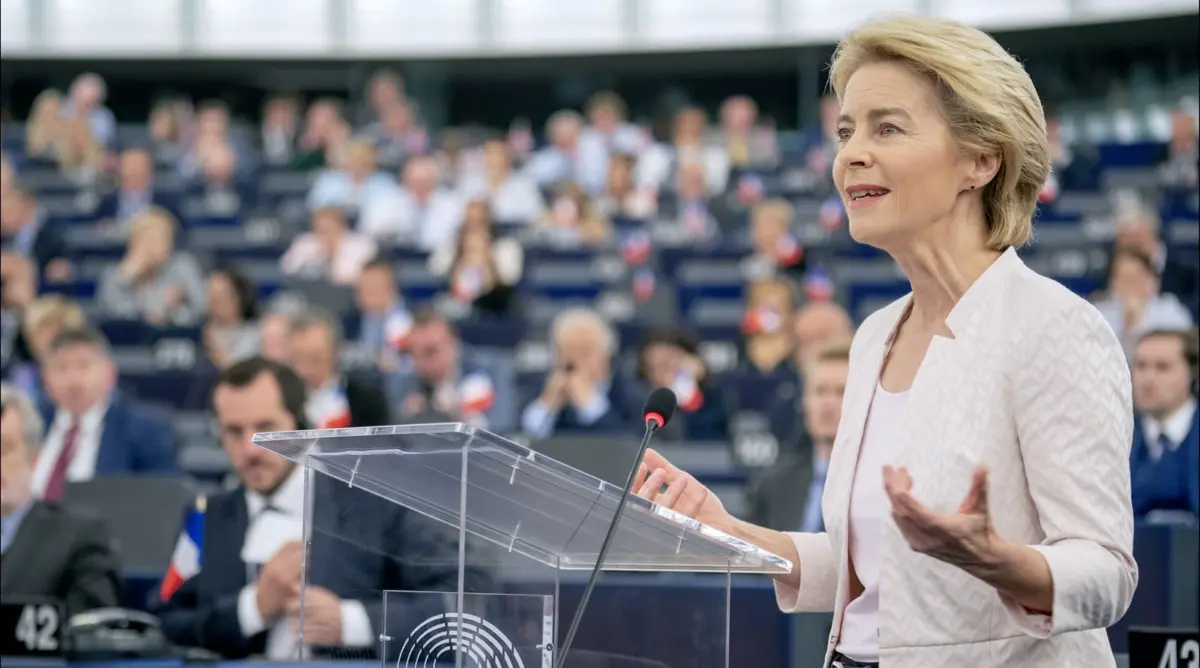
Brussels, Belgium — In a unified and urgent plea, two of Europe’s most influential transport and environmental organizations are calling on European Commission President Ursula von der Leyen to spearhead a high-level strategic dialogue on the decarbonization of heavy-duty vehicles (HDVs).
The International Road Transport Union (IRU) and Transport & Environment (T&E) issued a joint letter highlighting the convergence of economic, geopolitical, and environmental pressures bearing down on Europe’s road freight sector. With key European Union regulations slated for major legislative reviews, the organizations argue that the current political framework requires renewed momentum, robust stakeholder alignment, and targeted financial backing to prevent the transition to zero-emission trucks, buses, and coaches from stalling.
Main Facts
The push for a presidential-level intervention comes at a critical juncture for Europe’s transportation infrastructure and climate policy.
- The Core Demand: IRU and T&E have jointly petitioned European Commission President Ursula von der Leyen to launch a formal, high-level "Strategic Dialogue on Heavy-Duty Vehicle Decarbonization."
- The Stakeholders: This proposed forum aims to bridge a critical gap by bringing together transport operators, vehicle manufacturers, energy grid operators, infrastructure providers, and civil society actors.
- The Legislative Catalysts: The demand coincides with forthcoming reviews of two foundational EU regulatory pillars: the Alternative Fuels Infrastructure Regulation (AFIR), which dictates the rollout parameters for public charging and hydrogen refuelling stations, and the Heavy-Duty Vehicle (HDV) $textCO_2$ Standards, which mandate emissions reductions for newly registered commercial fleets.
- The Drivers of Urgency: Surging diesel prices—exacerbated by ongoing geopolitical conflicts in the Middle East and Eastern Europe—alongside mounting concerns over energy security and extreme weather events fueled by climate change, have created an unprecedented operational squeeze for commercial carriers.
Chronology: How the Pressure Built Up
To understand why this strategic dialogue is being demanded now, it is necessary to examine the timeline of events and regulatory milestones shaping Europe’s commercial road transport sector over the past decade.
2019–2020: Setting the Baseline
The European Green Deal established an ambitious framework aiming for climate neutrality by 2050, putting heavy-duty transport under the microscope. Historically responsible for a disproportionate share of transport-related emissions, trucks and buses became the target of aggressive decarbonization strategies.
2023: The Adoption of Tougher Standards
Following intense negotiations, the EU finalized tightened $textCO_2$ emission standards for heavy-duty vehicles, setting legally binding reduction targets for 2030, 2035, and 2040. Concurrently, negotiations around AFIR sought to establish mandatory deployment targets for alternative fuel infrastructure along the trans-European transport network (TEN-T). However, industry stakeholders repeatedly warned that infrastructure deployment was lagging far behind vehicle manufacturing timelines.
2024–2025: The Geopolitical and Energy Shocks
The structural fragility of Europe’s energy ecosystem was laid bare by ongoing geopolitical conflicts involving Iran and Ukraine. These crises introduced severe volatility into global oil markets, driving diesel prices to historic highs and severely impacting the profit margins of freight operators. Simultaneously, compounding climate-driven weather anomalies—ranging from severe flooding to infrastructure-damaging heatwaves—began routinely disrupting supply chains and road networks.
Mid-2026: The Convergence Point
With the upcoming statutory reviews of both AFIR and the HDV $textCO_2$ Standards looming, IRU and T&E recognized that minor regulatory tweaks would no longer suffice. By mid-2026, the gap between regulatory ambitions and ground-level operational realities prompted the joint call for President von der Leyen to step in directly and reset the multi-stakeholder strategy.

Supporting Data & Market Realities
The argument for a strategic dialogue is anchored in hard economic and logistical data. Transitioning commercial transport from internal combustion engines to zero-emission alternatives is vastly more complex than electrifying passenger cars.
The Energy Security Imperative
Europe remains structurally dependent on imported fossil fuels. According to industry analyses, the recent spikes in diesel prices have directly inflated operational costs for logistics providers across the EU. Scaling up battery-electric trucks running on clean, domestically produced European electricity is framed by T&E not merely as an environmental necessity, but as a vital pillar of continental energy security and macroeconomic resilience.
Infrastructure Bottlenecks
While heavy-duty original equipment manufacturers (OEMs) are rolling out new models of battery-electric and hydrogen fuel-cell trucks, operators face a severe lack of suitable charging and refuelling infrastructure.
- High-Power Charging Needs: Unlike passenger cars, heavy-duty trucks require megawatt-scale charging stations (MCS) to ensure rapid turnaround times that align with mandatory driver rest periods.
- Grid Capacity: Expanding high-voltage grid connections to highway depots and logistics hubs requires complex permitting processes and multi-billion-euro investments by national grid operators, which currently lag behind vehicle adoption curves.
Financing and Total Cost of Ownership (TCO)
Although the long-term operational costs of electric trucks can be lower than diesel equivalents, the upfront capital expenditure (CapEx) for zero-emission vehicles remains prohibitively high for many small- and medium-sized enterprises (SMEs), which dominate the European road transport market. Without targeted financial incentives, favorable financing terms, and competitive energy pricing, fleet operators face significant financial risk when attempting to upgrade their fleets.
Official Responses and Perspectives
The leaders of both organizations emphasized that the transition cannot succeed if policymakers design regulations in a vacuum, isolated from the practical realities of daily fleet operations.
IRU EU Advocacy Director Raluca Marian
Raluca Marian underscored the indispensable role of commercial operators in achieving Europe’s climate goals:
"The transition of heavy-duty transport needs renewed political momentum at the highest level. The EU has set a clear direction, but delivering it will require EU and national efforts to go hand in hand. A strategic dialogue led by President von der Leyen would send an important signal that the transition of trucks, buses, and coaches remains an EU priority."
Marian further stressed that operators are the ones bearing the financial risk of investing in and running these novel vehicles every day:

"Their operational and economic realities need to be at the heart of the decisions shaping the next phase of the transition."
T&E Executive Director William Todts
William Todts pointed to the recent market turbulence as a critical wake-up call for European policymakers:
"The diesel crisis is a wake-up call for Europe. We must rapidly reduce our dependence on imported oil, and the single best way to do that is by scaling up electric trucks run on clean, homegrown electricity. The EU is preparing action on charging and $textCO_2$ standards. What we need to succeed is a transparent, inclusive process with all the key players around the table."
Implications for the Future of European Transport
The outcome of this call for a strategic dialogue will likely determine whether Europe can meet its mid-century climate goals without crippling its logistics sector. Several key implications emerge from the current standoff:
1. Bridging the Policy-Practice Gap
If President von der Leyen agrees to launch the strategic dialogue, it will force a multi-sectoral alignment that has largely been missing. Bringing energy regulators, truck manufacturers, infrastructure developers, and transport companies into the same room will help synchronize grid upgrades with vehicle delivery schedules.
2. Safeguarding Competitiveness for SMEs
The vast majority of Europe’s 500,000+ trucking companies are small businesses operating just a handful of vehicles. Without robust European-level financial frameworks, grants, and leasing structures, these operators risk bankruptcy or non-compliance penalties as stricter $textCO_2$ standards take effect. A structured dialogue provides a direct channel to address these systemic inequalities.
3. Redefining EU Industrial Policy
Decarbonizing heavy-duty transport is inextricably linked to Europe’s broader industrial strategy. Ensuring that batteries, charging equipment, and zero-emission trucks are manufactured within the EU—rather than imported—will depend heavily on the coordinated policy signals generated by such a high-level dialogue.
As the European Commission prepares to open formal reviews of AFIR and the HDV $textCO_2$ Standards, the ball is now in Ursula von der Leyen’s court. Whether the EU chooses to double down on an isolated regulatory approach or pivot toward a collaborative, multi-stakeholder strategic roadmap will shape the trajectory of European green mobility for the next decade.
