

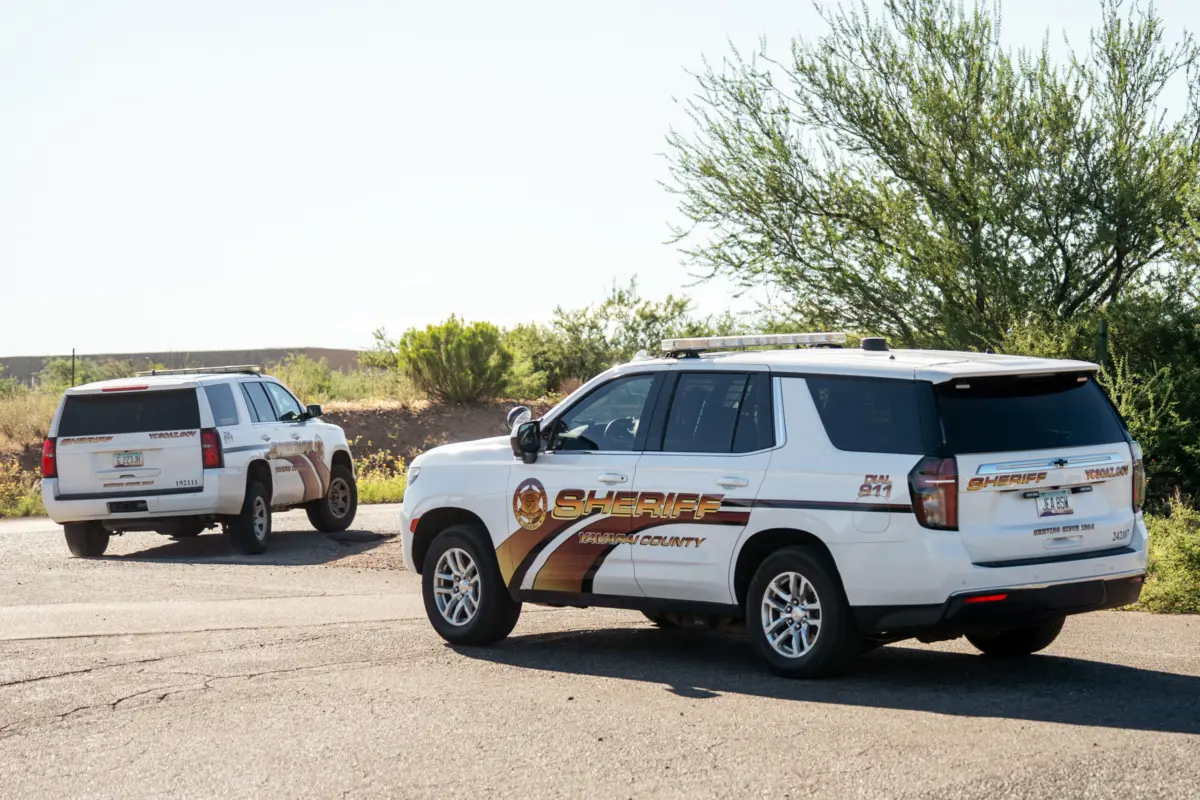
COTTONWOOD, Arizona — In a unanimous decision that highlights growing public anxiety over government surveillance and data privacy, the Yavapai County Board of Supervisors rejected two key contracts on Wednesday, August 19, 2026. The contracts would have equipped the Yavapai County Sheriff’s Office (YCSO) with advanced mobile automated license plate readers (ALPRs) and integrated data-fusion software.
The decision represents a significant checkpoint in the ongoing debate over the integration of high-tech surveillance tools in local policing, demonstrating that even conservative-leaning jurisdictions are beginning to demand stricter guardrails on digital tracking technologies.
Main Facts: The Rejected Surveillance Upgrades
The Yavapai County Board of Supervisors voted unanimously to deny two separate but linked consent agenda items put forward by the Yavapai County Sheriff’s Office.
The Mobile ALPR Hardware Contract
The first rejected item was a $39,348 contract for three Ekin Patrol G2 mobile ALPR units. The Sheriff’s Office sought these units for an initial one-year term, with provisions for a potential three-year extension. Unlike stationary cameras mounted on traffic poles, the Ekin Patrol G2 is a roof-mounted, mobile smart-patrol system designed to scan license plates dynamically from patrol vehicles in real-time traffic. YCSO intended to fund these units directly from its operational budget.
The LeadsOnline NightHawk Software Contract
The second rejected item was a $13,847 agreement with LeadsOnline LLC for its NightHawk Subscription Services. NightHawk is a sophisticated software package designed to act as a data-fusion platform. According to county agenda documents, the software integrates multiple distinct streams of information, including:
- Cellular call records
- GPS location data
- Social media activity
- License plate recognition (LPR) hits
The platform is designed to assist detectives in visualizing subject interactions, generating search warrants, and coordinating multi-agency investigations, particularly those targeting human trafficking and narcotics distribution.
+-------------------------------------------------------------------------+
|                       REJECTED YCSO CONTRACTS                           |
+------------------------------------+------------------------------------+
| Ekin Patrol G2 Mobile ALPRs (x3)   | $39,348 (YCSO Budget)              |
+------------------------------------+------------------------------------+
| LeadsOnline NightHawk Software     | $13,847 (State Grant Funded)       |
+------------------------------------+------------------------------------+
Chronology: From Border Security Funding to Public Pushback
The path to the August 19 vote spans several years of legislative action, funding acquisitions, and rising community resistance.
June 7, 2023: Initial ALPR Allocations
The Board of Supervisors approved $74,620 for YCSO mobile plate readers. The stated purpose of the technology was to "reduce criminal activities associated with human smuggling and border-related crimes." This established the initial footprint of six ALPR-equipped patrol vehicles in the county.
November 5, 2025: State Funding for the Intelligence Center
The Board of Supervisors unanimously accepted $2 million in state seed money. This funding was secured through Senate Bill 1735, Section 118-30, an appropriation championed by Arizona State Senator Mark Finchem [R-District 1]. The money was earmarked for the establishment of YCSO’s Criminal Information Intelligence Analysis Coordination Center (frequently referred to as the "Intel Center"). The NightHawk subscription was intended to be funded through this $2 million state appropriation.
Mid-August 2026: Agenda Manipulation and Public Realization
In the days leading up to the August 19 meeting, Board Chairman Brooks Compton [R-District 1] and Vice Chairwoman Nikki Check [D-District 3] recognized mounting community concern regarding the expansion of the surveillance network. Working in tandem, they removed the two ALPR-related items from the standard "consent agenda"—where routine, non-controversial items are typically passed in bulk without individual discussion—and slated them for a formal vote.
August 19, 2026: The Vote and Public Testimony
At the beginning of the Wednesday morning meeting in Cottonwood, the board voted unanimously to deny both contracts without public discussion.
At the end of the meeting, during the designated public comment period, seven local residents took the podium to express deep concerns. They argued that the widespread adoption of ALPR technology violates the Fourth Amendment protection against unreasonable searches. They also questioned why contracts with such significant privacy implications had originally been placed on the consent agenda, bypassing public debate.
Supporting Data: Regional Surveillance and Collaborative Networks
While YCSO does not currently operate stationary ALPR systems of its own, investigative data reveals that the agency is already highly integrated into a broader, regional surveillance network.
The Coconino County Connection
A public records investigation by Larson Newspapers of Coconino County Sheriff’s Office (CCSO) Flock Safety stationary cameras revealed extensive cross-county data sharing. The review analyzed approximately 3.2 million searches within the CCSO Flock network:
- Direct YCSO Searches: Year-to-date, YCSO personnel initiated 106 searches of Coconino County’s Flock camera database.
- Proxy Searches: An additional 173 searches were conducted by outside law enforcement agencies citing Yavapai County cases or requests.
       COCONINO COUNTY FLOCK NETWORK SEARCHES (Year-to-Date)

  Direct YCSO Searches   [████████████] 106
  Outside Agency Proxy   [████████████████████] 173
                         +---------+---------+---------+
                         0        100       200       300
Sheriff David Rhodes confirmed that while he does not personally oversee every query, he authorizes his staff to access these external networks. He noted that the internal policy for querying another agency’s network requires deputies to call, state a clear law enforcement purpose, and provide an active case number. Some of these queries, he added, are made in real-time by dispatchers responding to active emergency calls, such as road rage incidents.
Approved Law Enforcement Expenditures
While the board rejected the ALPR and NightHawk contracts, it did approve several other major law enforcement expenditures during the same session:
- $200,000 Contract: Awarded to Hundred Public Safety Inc. (operating as Performance Protocol) for staff recruitment and retention initiatives.
- $80,000 Advertising Campaign: Authorized for digital advertising with the Arizona Media Association through the end of 2026, funded via the county’s anti-human trafficking program.
- $30,000 Media Consulting: Approved for Cole Pro Media, Corp, to provide transparency engagement advising services.
Transparency and Public Records Delays
The denial of the contracts coincides with an ongoing struggle by local media to obtain regional ALPR audit logs.
- The Prescott Police Department complied with requests, turning over its Flock network audit logs on August 19.
- The Cottonwood Police Department failed to provide its logs by the August 21 deadline, following a public records request filed on July 17.
- The Prescott Valley Police Department has not produced any data regarding its ALPR usage since records were requested on July 30.
Official Responses: Law Enforcement and County Governance
The rejection of the contracts prompted distinct responses from county supervisors and Sheriff David Rhodes, revealing a shared desire for public safety but sharp differences on oversight.
Sheriff David Rhodes (YCSO)
Sheriff Rhodes sought to clarify the scope of his request, emphasizing that his office was not attempting to build a blanket surveillance grid.

"People have a lot of questions about it, and so I think that you know the idea that you’re going to have these stationary license plate readers all over the county, and that nobody can drive by without having their images taken, is one thing that community members are very concerned about, and I understand," Rhodes said. "But I was not asking for that. We were attempting to increase the number of cars from six to nine that had ALPR on them."
Rhodes acknowledged that he agreed to pull the items after gaugeing the public’s reaction:
"We worked together on that when we saw the community reaction, and so that was not a surprise to me. I talked to the board before the meeting. But I did not want the board to attempt to pass that yesterday morning… because ultimately the community needs to have a voice, and we need to listen to it."
Vice Chairwoman Nikki Check (District 3)
Supervisor Check focused on the lack of operational parameters, data retention limits, and third-party access definitions in the proposed contracts.
"I read the contracts, and what was lacking in my mind is sort of the definitions that were in the contracts… such as who are our authorized users or partners that could also utilize the technology or the data, and what internal policies do we have in place?" Check said. "How do we actually utilize the technology, and what stopgaps are there to make sure that there’s no abuse?"
Despite her vote, Check remained open to future implementations of the technology if proper civil liberty protections are codified:
"I really do believe that this technology can be used in a responsible and productive manner. I just think that it’s so important that our policies make sure that people’s privacy isn’t overtly impacted."
Chairman Brooks Compton (District 1)
Chairman Compton emphasized that while the vote does not derail the development of the county’s new $2 million Intelligence Center, it will alter how the board evaluates the center’s future tools. When asked if the ALPR controversy made him reconsider the facility, Compton responded:
"Not whether to do it or not, but to more closely scrutinize what would be going into the building. How would it be [used], what is the plan?"
Implications: The Constitutional Battleground of Local Surveillance
The unanimous rejection of the ALPR and LeadsOnline contracts in Yavapai County reflects a broader national conversation regarding the boundaries of municipal surveillance, data fusion, and constitutional rights.
                              ┌───────────────────────────┐
                              │    Data Fusion Engine     │
                              │       (LeadsOnline)       │
                              └─────────────┬─────────────┘
                                            │
                    ┌───────────────────────┼───────────────────────┐
                    ▼                       ▼                       ▼
         [Cellular Call Logs]      [GPS Location Data]     [Mobile ALPR Hits]
The Fourth Amendment and the "Mosaic Theory"
Privacy advocates argue that modern ALPR systems, especially when combined with data fusion software like LeadsOnline NightHawk, violate the Fourth Amendment. This argument relies heavily on the "mosaic theory" of privacy, which posits that while individual public movements may not be private, the continuous, automated tracking of a citizen’s vehicle over time creates a highly detailed, intrusive portrait of their private life—including their religious, political, and personal associations.
By integrating cellular records, GPS, and social media data, tools like NightHawk amplify these concerns. They allow law enforcement to bypass traditional search warrant requirements for individual data streams by compiling pre-existing public and commercial databases into unified, searchable profiles.
The Problem with Consent Agendas
The public backlash in Cottonwood highlights growing frustration with how surveillance technologies are procured. Law enforcement agencies frequently place high-tech acquisition contracts on "consent agendas," framing them as routine software renewals or minor equipment purchases.
By pulling these items into the light of a public vote, the Yavapai County Board of Supervisors established a local precedent: surveillance technology is inherently policy-adjacent and demands active, transparent public debate rather than rubber-stamp approval.
Regional Surveillance by Proxy
The data showing YCSO’s frequent use of Coconino County’s Flock Safety network reveals a critical loophole in local oversight. Even when a county rejects the purchase of surveillance hardware, its officers can still access identical data through inter-agency sharing agreements with neighboring jurisdictions.
This network effect means that local municipal bans or restrictions on ALPRs can be functionally bypassed unless local policies explicitly restrict officers from querying third-party or regional databases.
The Future of Yavapai’s Intelligence Center
The $2 million state-funded Criminal Information Intelligence Analysis Coordination Center will proceed, but its operational framework is now under intense scrutiny. Sheriff Rhodes’ admission that he supports ALPR integration "but with guardrails" suggests that the Sheriff’s Office will have to draft explicit, public-facing policies regarding data retention, sharing limitations, and auditing protocols before the board will approve future technology acquisitions.
The struggle to obtain audit logs from Cottonwood and Prescott Valley police departments further underscores the necessity of these guardrails, as public trust relies on the ability of citizens and journalists to verify that surveillance databases are not being abused.
