

By CleanTechnica & Carbon Brief Analysis
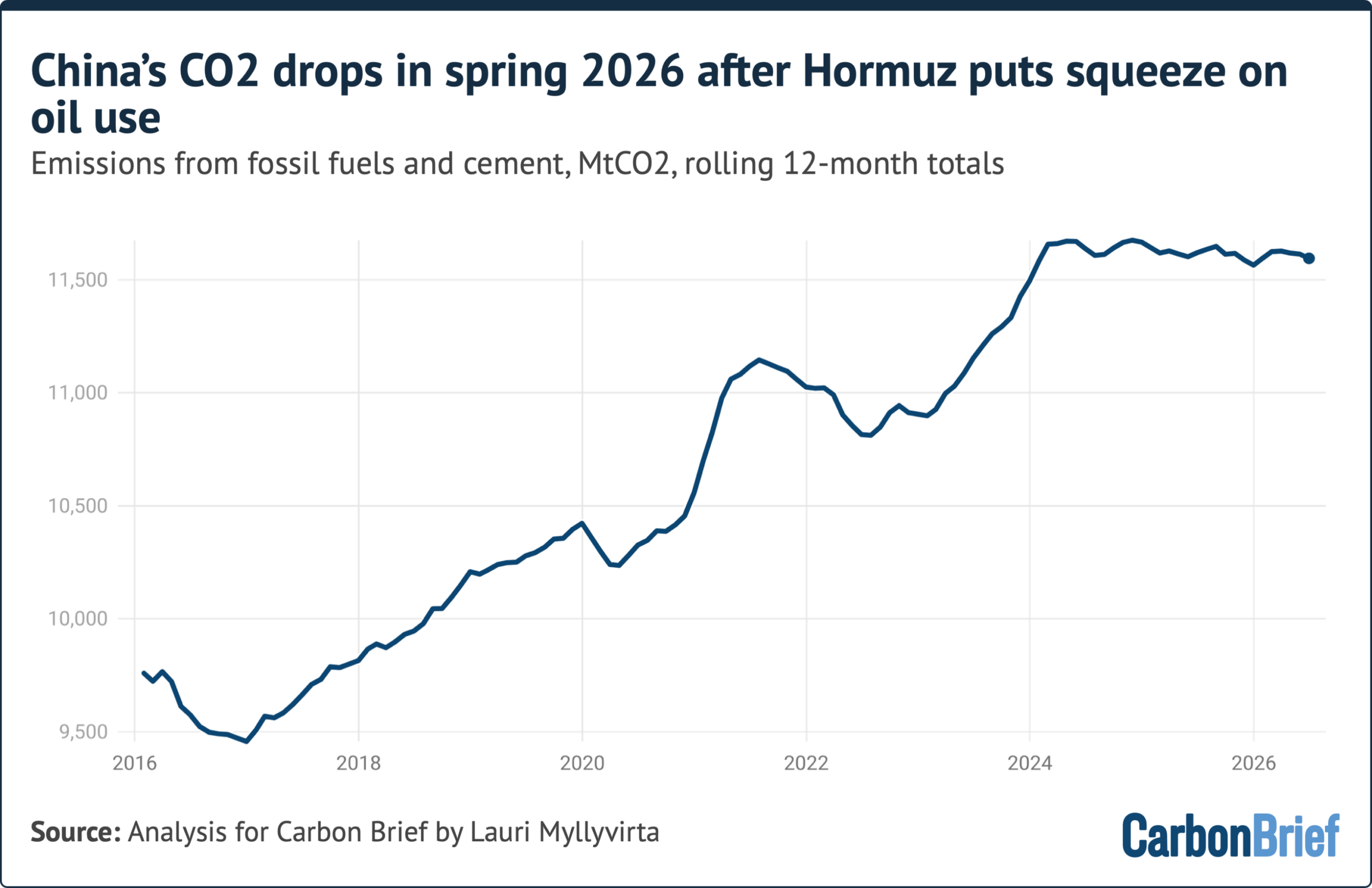
In a historic turning point for global energy markets and climate metrics, China’s carbon dioxide ($textCO_2$) emissions fell by 1% in the second quarter of 2026. This contraction marks a critical deviation from past emissions trends.
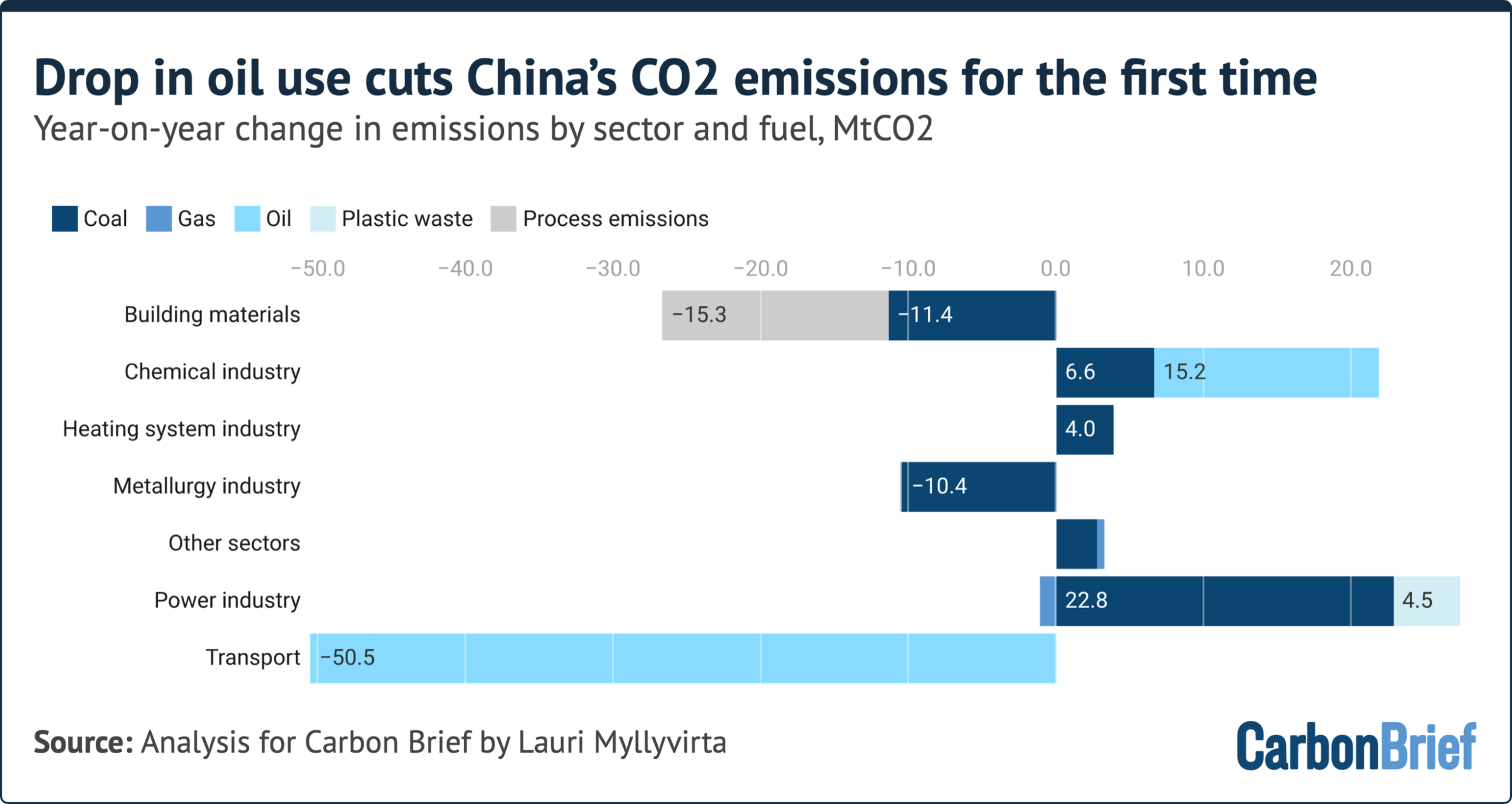
For the first time in modern economic history, a nationwide decline in greenhouse gas output was driven not by a slowdown in coal combustion, but by a sudden, structural collapse in domestic oil consumption.
Triggered heavily by geopolitical supply disruptions stemming from the Strait of Hormuz crisis, the crunch on imported crude exposed vulnerabilities in traditional fossil fuel supply chains. Yet, it simultaneously underscored the aggressive cushioning effect of China’s mass electrification campaign.

Even as coal-fired power generation experienced an anomalous rebound due to grid-integration hurdles, the rapid adoption of electric vehicles (EVs), alternative transit systems, and sweeping new five-year energy frameworks kept overall emissions on a flat-to-falling plateau.
Main Facts: Key Q2 2026 Takeaways
- Overall Emissions Decline: China’s total $textCO_2$ emissions fell by 1% year-on-year in Q2 2026, extending a two-year emissions plateau that began following a peak in early 2024.
- The Oil Shock: Driven by supply disruptions in the Gulf and Strait of Hormuz, overall oil consumption dropped by 9% in Q2, while transport oil demand plummeted by 16%. Crude oil imports fell by 32%.
- First-of-its-Kind Driver: This represents the first recorded instance where a reduction in oil use—rather than coal—was the primary catalyst for an overall quarterly emissions decrease.
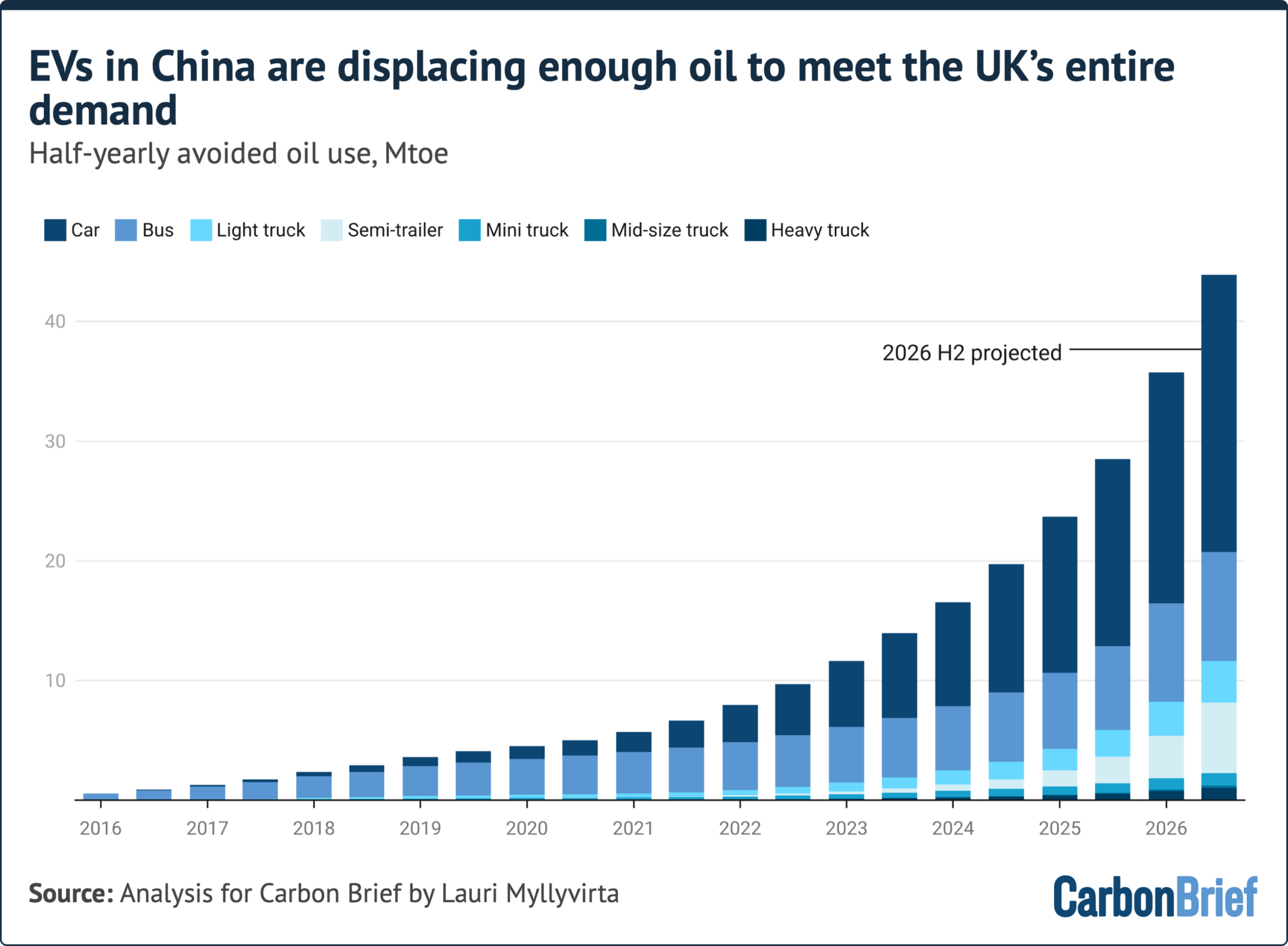
- EV Displacement Milestone: Accelerated EV adoption and surging usage volumes displaced an estimated 19 million tonnes of oil equivalent (Mtoe) in Q2 alone, pushing first-half total oil displacement to 36 Mtoe—surpassing the total six-month oil consumption of the United Kingdom.
- Coal Power Anomalies: Power-sector emissions rose by 3% in the first half of 2026. This increase was driven primarily by solar and wind "curtailment" (wasted renewable energy) and unfavorable wind conditions, rather than a lack of renewable capacity additions.
Chronology: The Timeline of the 2026 Energy Shift
The trajectory of China’s energy landscape through the first half of 2026 unfolded across a series of stark economic and geopolitical phases:
Early 2026: The Rebound and Wasted Renewables
Following a multi-year emissions plateau established in 2024, China’s $textCO_2$ emissions unexpectedly ticked up by 2% year-on-year in the first quarter of 2026. This initial bump was largely caused by a surge in wasted solar and wind generation, as grid infrastructure and market models struggled to accommodate rapid variable renewable energy deployment.
Spring 2026: The Strait of Hormuz Crisis
As geopolitical tensions escalated into conflict in the Middle East, the Strait of Hormuz crisis disrupted critical oil supply routes from the Persian Gulf. China slashed its crude oil imports by 32% in the second quarter.
Rather than inducing panic or economic paralysis, the resulting oil price shock acted as a stress test for China’s accelerating clean-energy transition. High fossil fuel prices rapidly accelerated consumer and industrial behavior away from internal combustion engines, supercharging EV sales and utilization rates.
Mid-2026: The Release of the 15th Five-Year Plans
Throughout June, July, and August 2026, Beijing’s economic planners released a torrent of long-anticipated sectoral five-year planning documents. These included strategic blueprints for the "new-type energy system," power systems, renewable energy, carbon peaking, and environmental protection.
The plans officially signaled a higher hurdle for new coal plant approvals, introduced mechanisms to target "coal-power generation" rather than just capacity growth, and broadened the framework for grid reliability beyond coal backup.
Supporting Data: Dissecting the Numbers
A granular examination of official data from China’s National Bureau of Statistics (NBS), the National Energy Administration (NEA), and industry trackers reveals a complex interplay between contracting oil demand and stubborn coal dynamics.
The Oil and Transport Equation
Total crude oil processing volumes dropped 11% in Q2. Sinopec, China’s largest oil refiner, reported a 9% drop in product sales.
However, falling imports were managed through a dual mechanism:
- Actual Demand Destruction & Displacement: Domestic consumption of petrol, diesel, and jet fuel fell sharply, aided by structural efficiency gains.
- Stockpile Drawdowns: Roughly 40% of the drop in imports was absorbed by drawing down the nation’s vast strategic and commercial oil inventories.
EV integration played an outsized role in suppressing liquid fuel demand. In Q2 2026:
- Electric heavy-truck sales surged by 77% year-on-year, with June sales doubling and capturing over 45% market share of new sales.
- Public charging volumes jumped 60%, indicating that existing EVs on the road were utilized much more intensively at the expense of conventional petrol and diesel vehicles.
- Total avoided oil consumption reached 36 Mtoe for the first half of the year, preventing approximately 35 million tonnes of $textCO_2$ emissions (net of charging emissions).
+--------------------------------------------------------------------------+
|                  Q1–Q2 2026 China Energy Sector Metrics                  |
+----------------------------------+---------------------------------------+
| Metric                           | Change / Volume                       |
+----------------------------------+---------------------------------------+
| Q2 Total CO2 Emissions           | -1% (Year-on-Year)                    |
| Q2 Overall Oil Consumption       | -9% (-16% in transport)               |
| Q2 Crude Oil Imports             | -32%                                  |
| H1 2026 EV Oil Displacement      | 36 Mtoe (Exceeds UK 6-month demand)   |
| H1 Heavy Electric Truck Sales    | +77% YoY (>45% market share in June)  |
| H1 Power Sector Emissions        | +3% (Driven by curtailment & coal)    |
+----------------------------------+---------------------------------------+
The Coal and Power Paradox
Despite record additions of solar, wind, nuclear, and hydropower, power-sector emissions rose by 3% in the first half of 2026. This apparent contradiction stems from structural rigidities in China’s power markets:

- Curtailment Rates: A significant portion of potential wind and solar generation was wasted because regional grids and coal-dominated dispatch models lack the flexibility to absorb variable supply.
- Capacity Payments: Coal plants are insulated by fixed capacity payments that reward mere availability rather than flexible, market-responsive operation. Consequently, 30 GW of new coal-fired capacity went operational in H1 2026—the highest rate since 2016.
- Slower Demand Growth: Electricity consumption growth slowed from 5.9% in Q2 2025 to 5.2% in Q2 2026, yet it still outpaced the immediate transmission upgrades needed to clear renewable backlogs.
Official Responses and Strategic Policy Shifts
The juxtaposition of a collapsing oil market and expanding clean energy utilization has prompted a profound recalibration in Beijing.
The series of five-year plans released in mid-2026 establish aggressive new benchmarks for electrification and system flexibility:
- Elevated Electrification Targets: The government has raised its sights to ensure electricity accounts for 35% of total energy end-use by 2030 (up from 30% in 2025). In transport, Beijing aims for EVs to make up 30% of the total vehicle fleet and 25% of all commercial vehicles by the end of the decade.
- Redefining Grid Reliability: Historically, new coal plants were justified primarily as indispensable backup for system stability. The new renewable energy and power system blueprints dismantle this monopoly, elevating energy storage, virtual power plants, smart microgrids, and flexible demand response as equal partners in grid reliability.
- Curtailment Threshold Adjustments: While newly updated plans permit a slightly higher official threshold for regional renewable curtailment (up to 15% in specific resource-rich provinces), they simultaneously mandate expanded long-distance ultra-high-voltage (UHV) transmission lines and zero-carbon industrial parks to consume clean power locally.
- Targeting Coal Generation: For the first time, official policy language vows to actively control "coal-power generation" totals rather than merely capping capacity growth, signaling a potential ramp-up in the retirement of older, inefficient thermal assets.
Implications: The Race Between Energy Demand and Clean Energy Growth
The events of the second quarter of 2026 provide a powerful preview of the future global energy landscape.
By demonstrating that rapid EV penetration and smart transport policies can successfully insulate an economy from severe Middle Eastern oil shocks, China has transformed energy security from a fossil-fuel defense strategy into a mandate for aggressive electrification.
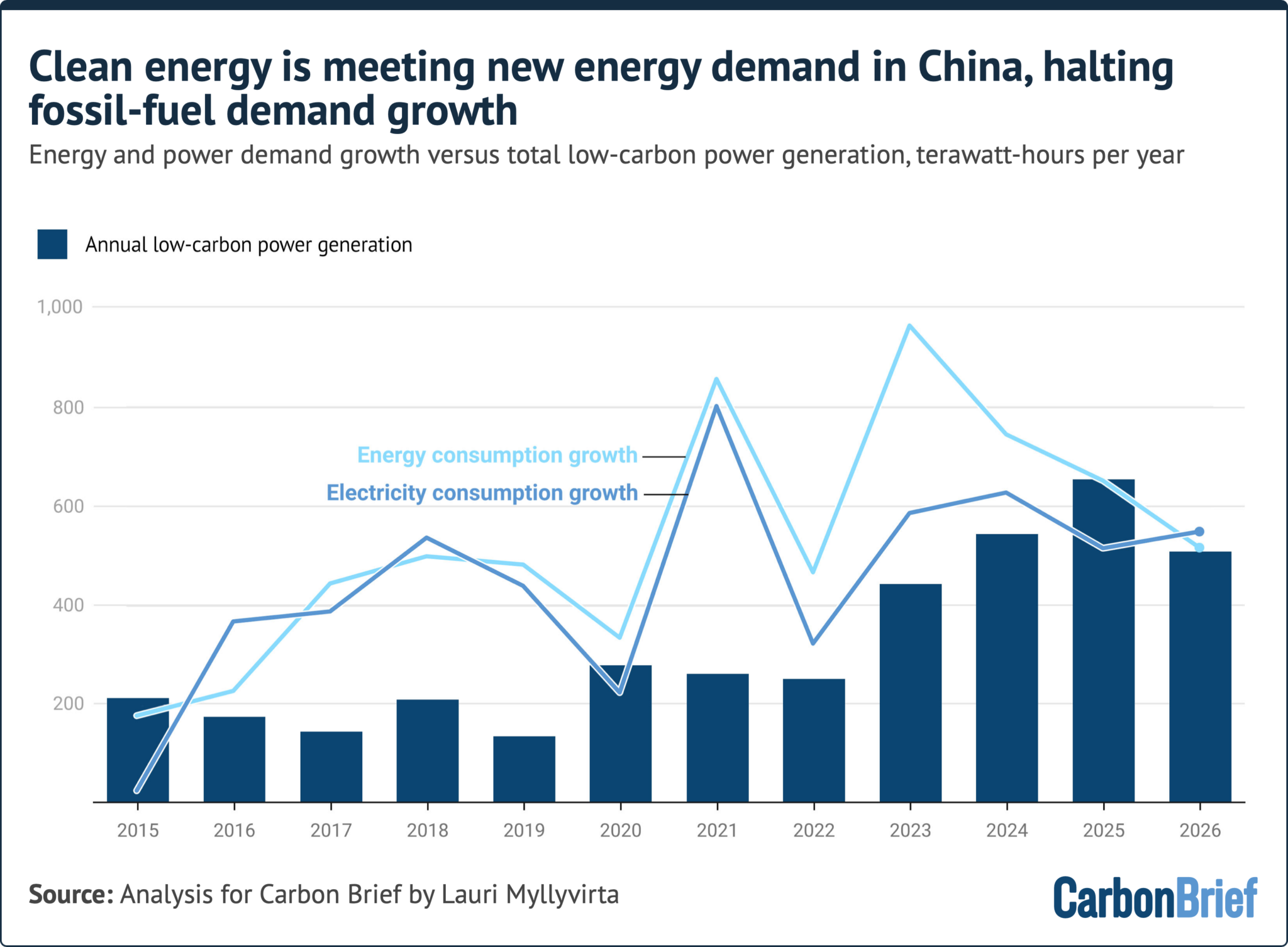
The ultimate trajectory of China’s carbon emissions remains locked in a high-stakes race: energy demand growth versus clean-energy deployment.
On one hand, structural slowdowns in real estate construction, maturing industrial chemical sectors, and permanent oil displacement by electric mobility are exerting downward pressure on fossil fuel demand. On the other hand, the lingering inertia of coal plant buildouts and grid dispatch bottlenecks continues to artificially inflate power-sector emissions.
If grid modernization, energy storage additions (which reached 153 GW cumulative in mid-2026), and transmission expansions successfully catch up with the nation’s immense renewable capacity, China’s post-2024 emissions plateau is poised to transition into a permanent, structural decline.
