

Main Facts
The global wellness community has turned its attention toward an intersection that many traditional scientists once dismissed but are now increasingly curious to explore: the convergence of mineralogy, quantum physics, and holistic wellness. At the center of this movement is the annual Crystal Healing Summit, a premier virtual gathering designed to demystify the energetic properties of stones and bring a rigorous, evidence-based approach to crystal work.
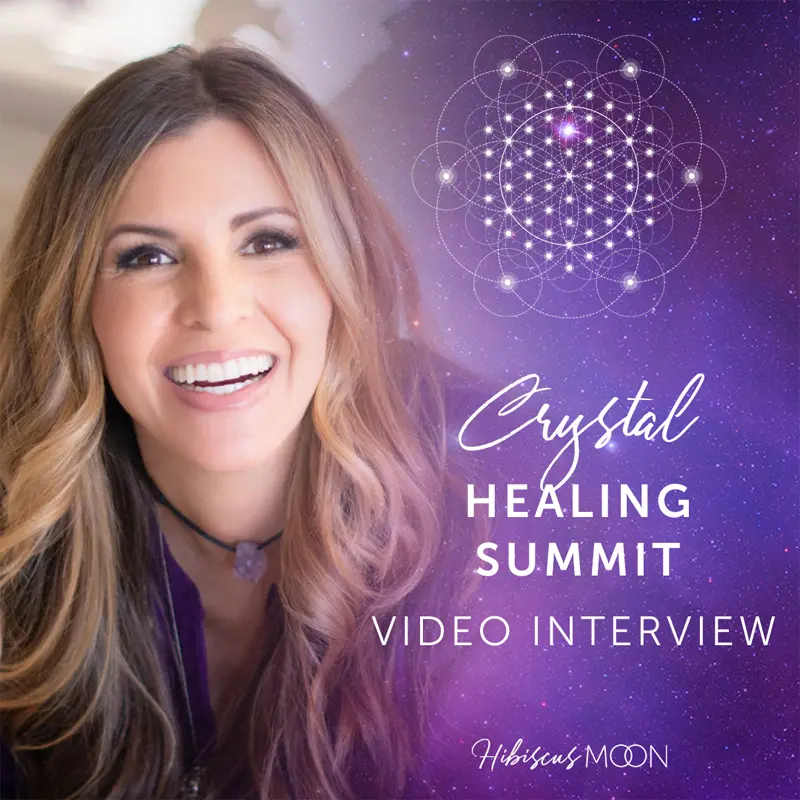
In one of the summit’s most anticipated sessions, renowned educator, author, and self-proclaimed "Crystal Geek Extraordinaire" Hibiscus Moon sat down for an in-depth conversation with holistic practitioner and educator Saralee Hofrichter. Far from a superficial discussion on gemstone aesthetics, the interview—structured more like an immersive masterclass—dove deep into the science behind how crystals interact with human energy fields, the piezoelectric effect, and the structural lattice formations that give minerals their unique properties.
The event highlights a broader cultural shift: the growing demand for intellectual depth, scientific grounding, and practical application within the metaphysical community. By leaning heavily into her scientific background, Hibiscus Moon aims to legitimize and elevate the discourse surrounding crystal healing, proving that passion and empirical curiosity can comfortably coexist.
Chronology: The Evolution of Modern Crystal Education
To understand the significance of the Crystal Healing Summit and sessions like the one featuring Hofrichter, one must examine the timeline of how crystal education has evolved over the past several decades.
- Late 20th Century (The New Age Wave): Crystal healing gained widespread mainstream visibility during the New Age movement of the 1970s and 80s. During this era, literature and practices focused heavily on the mystical, esoteric, and intuitive aspects of stones. While powerful for many practitioners, this approach frequently lacked standardized frameworks or scientific explanations, leading to skepticism from the mainstream scientific community.
- The 2000s (Rise of Digital Communities): With the advent of the internet and early blogging platforms, holistic practitioners began building niche communities. Educators like Hibiscus Moon emerged during this period, recognizing a distinct gap: modern seekers wanted the magic of crystals, but they also wanted to know why and how they worked on a physical level.
- The 2010s (Mainstream Wellness Boom): Crystals transitioned from specialty occult shops to mainstream retail giants, spa treatments, and wellness routines. However, this commercialization brought a dilution of educational quality, prompting experts to push for more structured, credible, and science-adjacent learning models.
- The 2020s (The Virtual Summit Era): Accelerated by global shifts toward digital connectivity, events like the Crystal Healing Summit were established to centralize global expertise. These virtual platforms allowed educators like Hibiscus Moon and Saralee Hofrichter to broadcast masterclass-level teachings directly to international audiences, bridging the gap between ancient traditions and modern physics.
- Present Day: Today, discussions at events like the Crystal Healing Summit focus heavily on verifiable natural phenomena—such as lattice structures, resonance, and piezoelectricity—providing practitioners with a sophisticated vocabulary that marries scientific literacy with spiritual devotion.
Supporting Data: The Physics and Mineralogy Behind the Practice
While skeptics often reduce crystal healing to the placebo effect, educators at the Crystal Healing Summit ground their teachings in verifiable mineralogical and physical principles. Understanding these core concepts helps explain why humans have felt a tangible connection to stones for millennia.
1. The Piezoelectric Effect
One of the most frequently cited scientific pillars in advanced crystal healing is piezoelectricity—the ability of certain materials (most notably quartz) to generate an electrical charge in response to applied mechanical stress.
- The Data: Quartz crystals possess a crystalline lattice structure lacking a center of symmetry. When pressure or thermal changes are applied, the positive and negative ions within the crystal shift, creating an electrical polarization.
- Application: This property is not merely theoretical; it is foundational to modern technology. Quartz crystals are used in precision timekeeping (quartz watches), ultrasound equipment, and microprocessors because of their ability to stabilize and oscillate electrical frequencies. Holistic practitioners argue that if quartz can reliably interact with technology through subtle energetic and electrical means, it is entirely plausible that it can interact with the bioelectrical field of the human body.
2. Lattice Structures and Symmetry
Crystals are defined scientifically by their internal atomic arrangement, known as a crystal lattice. Minerals form in one of seven crystal systems: isometric, tetragonal, orthorhombic, monoclinic, triclinic, hexagonal, and trigonal.
- The Data: The rigid, highly ordered geometric repetition of atoms gives crystals their physical stability and characteristic shapes.
- Application: In holistic frameworks, this supreme order is believed to act as an energetic template. Proponents suggest that when human energy fields—which can become chaotic or stressed—are placed in the presence of a stable, highly ordered atomic lattice, a process of sympathetic resonance can encourage the human field to return to a state of coherence.
3. Resonance and Frequency
Everything in the universe vibrates at a specific frequency, a principle rooted in quantum mechanics.
- The Data: Minerals vibrate at steady, measurable frequencies dictated by their mass, density, and atomic composition.
- Application: Much like a tuning fork can cause a dormant string on a nearby instrument to vibrate at the same pitch, crystal healers utilize the steady vibrational frequencies of gemstones to help realign discordant frequencies within the human subtle body (often referred to as the chakra system or aura).
Official Responses and Perspectives
The dialogue between Hibiscus Moon and Saralee Hofrichter reflects a broader evolution in how holistic practitioners present their work to the public. Educators in this space are increasingly adopting a transparent, intellectually rigorous tone.
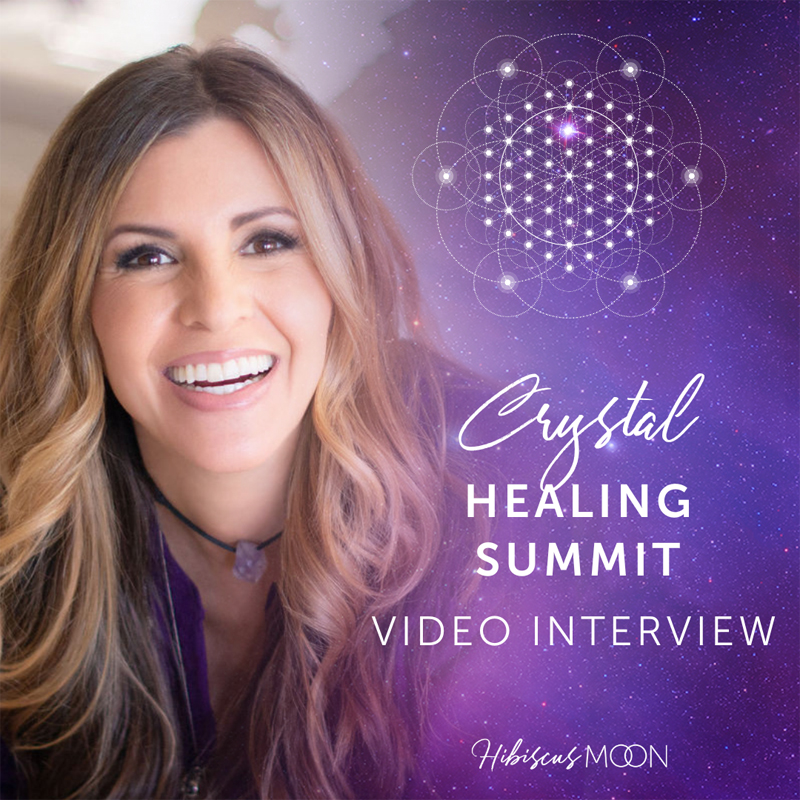
"I’m passionate, and I’m nerdy, and I’m owning it!"
— Hibiscus Moon, Crystal Geek Extraordinaire and Summit Host
This sentiment encapsulates the modern ethos of the crystal community. Rather than shying away from scientific inquiry, modern crystal educators are inviting it in. By framing crystal work through the lens of mineralogy and physics, leaders in the space are successfully shielding their practices from ungrounded claims while elevating the overall educational experience for students.
Holistic practitioners who attended or reviewed the Hofrichter-Moon session have noted a distinct shift in tone. Rather than telling students to simply "trust the energy," the conversation emphasizes observational skills, tactile engagement, and an understanding of earth sciences.
Furthermore, academic geologists and physicists generally acknowledge the fascinating properties of minerals—such as piezoelectricity and optical properties—even if they remain skeptical of metaphysical claims regarding human healing. The dialogue fostered at the summit acts as a fascinating bridge, inviting open-minded scientific exploration into realms traditionally reserved for philosophy and spirituality.
Implications: Where Does Crystal Healing Go From Here?
The success of the Crystal Healing Summit and the enthusiastic reception of sessions led by figures like Saralee Hofrichter and Hibiscus Moon carry several significant implications for the future of the wellness industry.
1. A Higher Standard for Holistic Education
As consumers become more discerning, fluff-based wellness content is rapidly losing market share. Platforms and practitioners that survive and thrive will be those that offer substantive, well-researched educational content. By treating crystal healing as both an art and a science, educators are setting a new benchmark for professional standards in the holistic space.
2. Encouraging Hands-On Mindfulness
In an increasingly digital, screen-bound world, working with physical crystals offers a vital tactile anchor. As Hibiscus Moon noted in her address to the "crystal family," sessions like these serve as a much-needed reminder to unplug, touch raw earth elements, and spend quality time recalibrating one’s sensory awareness. The simple act of holding, cleaning, and meditating with a stone encourages mindfulness and mental grounding.
3. Interdisciplinary Curiosity
The fusion of geology, physics, and metaphysics encourages a multidisciplinary worldview. Students of crystal healing are no longer just learning folklore; they are studying mineralogy, chemistry, and history. This holistic approach fosters a deeper, more respectful relationship with the natural world, reminding humanity that the earth itself is an active, dynamic system capable of producing structures of breathtaking order and beauty.
As the crystal community continues to grow and mature, conversations like the one shared between Hibiscus Moon and Saralee Hofrichter pave the way for a more enlightened, scientifically literate, and deeply spiritual future.
