

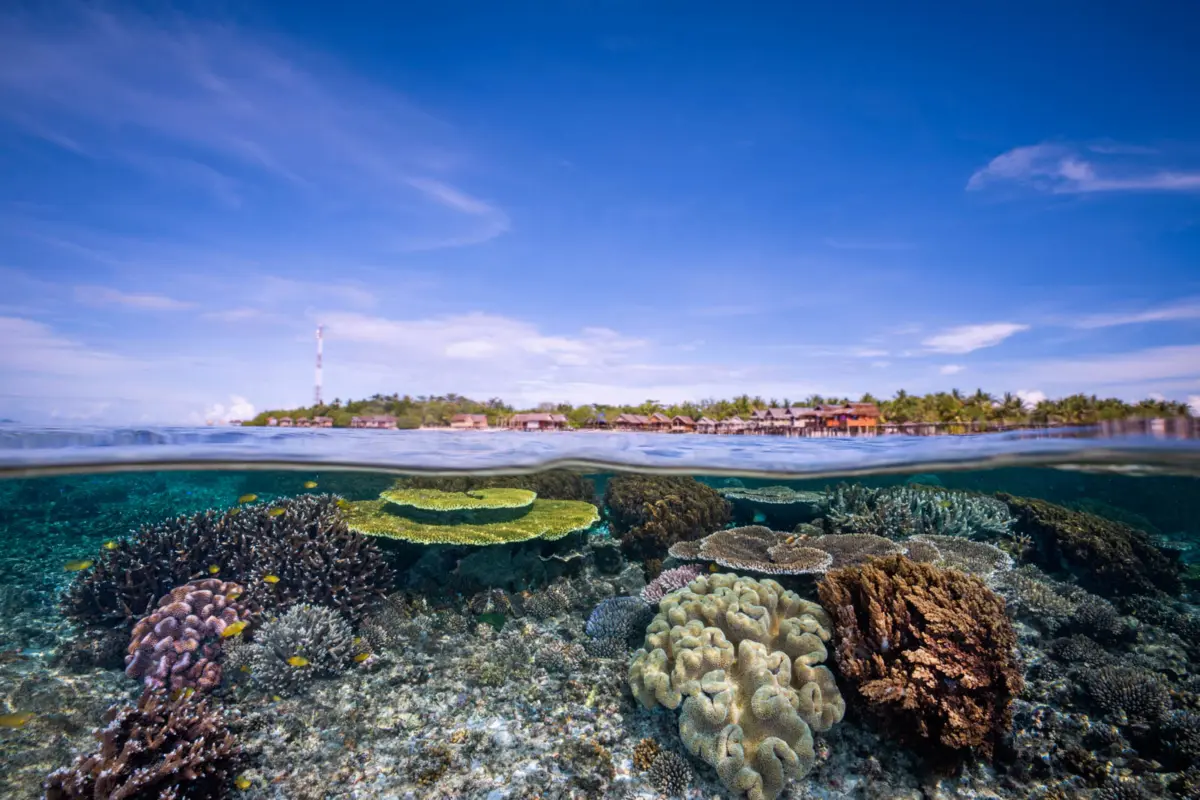
Main Facts: The Global Epicenter of Marine Biodiversity
Tucked away off the northwestern tip of the Bird’s Head Peninsula in West Papua, Indonesia, lies an archipelago that continually defies imagination. Raja Ampat—widely revered by marine biologists, conservationists, and elite ocean visualists alike as “The Last Paradise”—comprises over 1,500 jungle-covered limestone islands surrounding its four primary landmasses: Waigeo, Batanta, Salawati, and Misool.
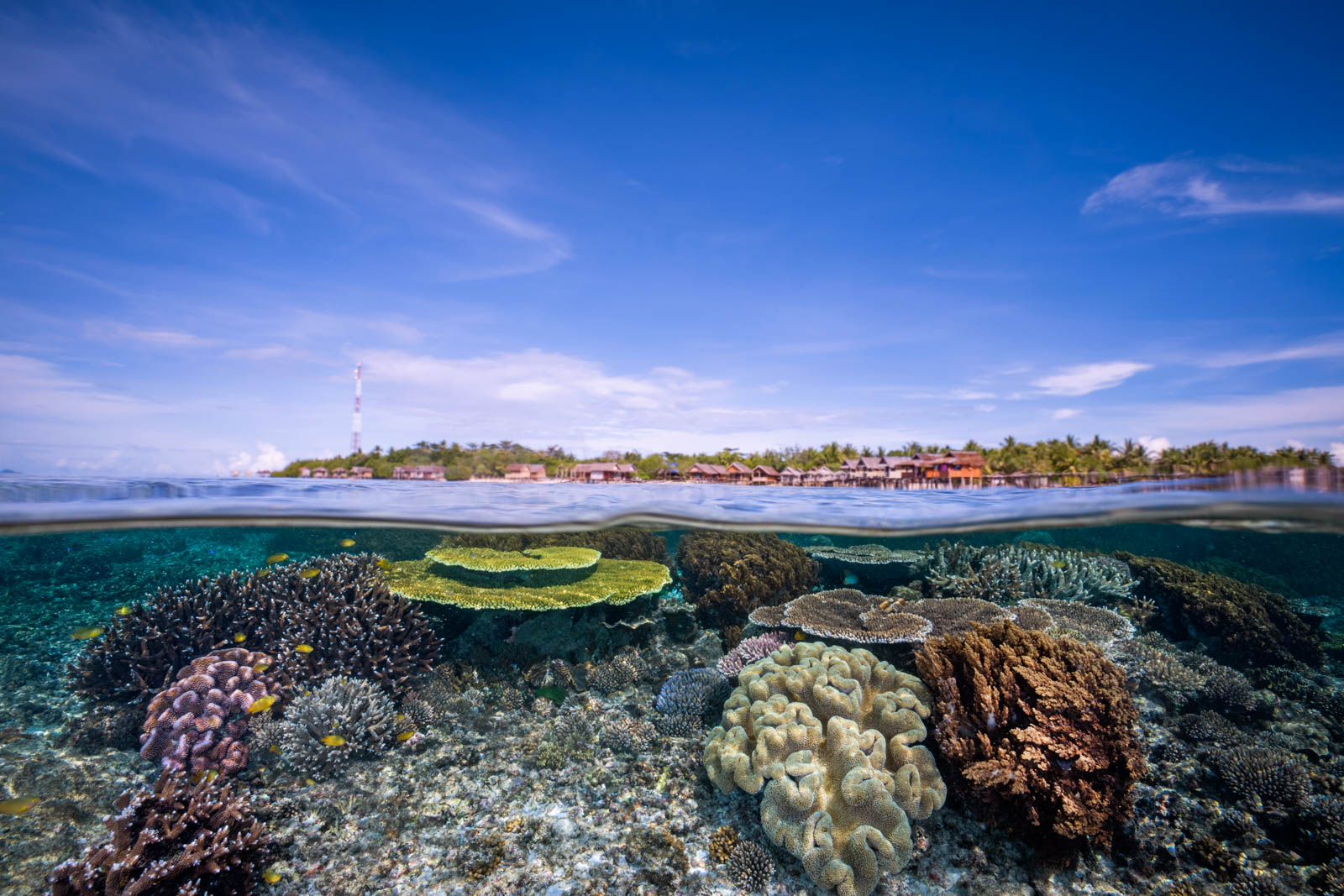
Situated dead center within the globally renowned Coral Triangle, this remote Indonesian sanctuary boasts a staggering statistical dominance over global marine life. Marine experts estimate that the region harbors roughly 75% of all known coral species on Earth, alongside an astonishing repertoire of over 1,000 species of reef fish, 540 distinct strains of hard and soft coral, 700 types of mollusks, majestic dugongs, saltwater crocodiles, and schooling manta rays. For underwater photographers, this ecosystem represents the undisputed holy grail—a place where wide-angle vistas and micro-habitats coexist in unprecedented abundance.

However, capturing the ethereal beauty of Raja Ampat requires more than just high-end camera gear; it demands meticulous logistical planning, an intimate understanding of dynamic oceanographic conditions, and a profound respect for fragile marine ecosystems.

Chronology: Navigating the Journey to the Edge of the World
Planning an expedition to one of the planet’s most pristine marine environments is an exercise in endurance. For travelers originating from Oceania or Western hubs, the route to the starting point in Waisai is a multi-stage odyssey.

Phase 1: Transit and Logistics
- The Long-Haul Flights: Reaching West Papua typically requires at least two international and domestic flight segments, punctuated by lengthy layovers in major Indonesian transit hubs such as Jakarta or Makassar before landing in Sorong.
- The Ferry Crossing: From Sorong, travelers must board a slow, humid, two-hour public ferry ride across the Dampier Strait to reach Waisai, the administrative capital of the Raja Ampat regency.
- The Final Leg: Upon arrival in Waisai, navigating pothole-peppered coastal roads leads to local jetties where travelers catch speedboats out to their final island destinations or liveaboard vessels.
Phase 2: Choosing Your Platform (Liveaboard vs. Homestay)
Veterans of the region strongly advocate for a hybrid travel itinerary. Booking a multi-day liveaboard is the most effective way to cover the vast expanses of the archipelago. Ideally, itineraries that include the southern reefs of Misool hit the conservation jackpot, as Misool is one of the few global marine zones where overall biodiversity is actively improving rather than declining due to strict local community-led marine sanctuaries.

Following a liveaboard expedition, photographers often elect to “stow away” at a land-based eco-resort or local homestay. Selecting a homestay with a pristine, well-managed house reef grants photographers 24-hour access to shallow water columns, maximizing opportunities for split-shots and macro-hunting during surface intervals.

Supporting Data & Photographic Anatomy: Mastering the Elements
To capture frame-worthy images in Raja Ampat, underwater photographers must understand the delicate balance between equipment selection, lighting dynamics, and environmental variables.

Wide-Angle Mastery vs. Macro Realities
Raja Ampat offers two distinct worlds of photography, forcing shooters to make difficult daily choices:

- The Coral Cosmos (Wide-Angle): Flourishing, mountainous coral plates and expansive reefscapes call for rectilinear wide-angle lenses (such as a 16–35mm zoom). These setups are essential for capturing schooling barracuda, reef sharks, green turtles, and manta rays against sprawling backdrops.
- The Macro Universe: Hidden within the crevices of the reef systems are some of the strangest macro subjects on earth. While a mid-range 60mm macro lens is useful, expeditions to Raja Ampat practically demand a longer focal length (90mm to 120mm) paired with external wet diopters to capture tiny subjects like pygmy seahorses (Hippocampus bargibanti) clinging to Muricella gorgonian fans, ghost pipefish, blue-ringed octopuses, and flamboyant cuttlefish.
Environmental Challenges: Nutrient-Rich Waters and Fierce Currents
The very feature that makes Raja Ampat a biological powerhouse—its intense, nutrient-rich currents driven through narrow geographic funnels like the Dampier Strait—presents significant hurdles for photographers:

- Visibility Fluctuations: Nutrient blooms frequently reduce water clarity. Photographers must master precise strobe positioning and backscatter reduction techniques to maintain clarity in wide-angle compositions.
- The Current Factor: Certain dive sites experience punishing downcurrents and surging waters. Photographers must evaluate whether heavy camera rigs will behave like sails in the wind. In extreme currents, guides often advise leaving primary camera rigs behind to ensure diver safety, highlighting the absolute necessity of secure lanyard attachments and comprehensive equipment insurance policies.
Site Profiles: The Crown Jewels of Raja Ampat Diving
For those preparing an itinerary, five iconic dive sites consistently deliver world-class photographic opportunities:

1. Melissa’s Garden
An unmissable wide-angle sanctuary near the Fam Islands. Dropping onto Melissa’s Garden means becoming completely enveloped by endless acres of pristine coral plates. The sublime topography provides a natural stage for wide-angle compositions featuring schooling batfish, fusiliers, snappers, and hunting lionfish.

2. Batu Rufus
Famed for its emerald lagoon enclosed by towering limestone karsts, Batu Rufus presents a masterclass in split-shot photography. Photographers navigate a coral-encrusted swim-through before entering a calm, shallow lagoon where natural light filters through the water column, creating perfect conditions for natural-light freediving and over-under captures.

3. Cape Kri
Holding historic renown for yielding the highest recorded number of fish species on a single scuba dive, Cape Kri is a diverse site requiring multiple visits. Photographers can dedicate one dive to wide-angle pelagic action (sharks, giant trevallies, and cruising turtles) and a subsequent dive to macro exploration, scouring gorgonian fans for well-camouflaged pygmy seahorses and nudibranchs.

4. Manta Ridge
Situated between Mansuar and Arborek Islands, Manta Ridge is a premier cleaning station for oceanic and reef manta rays (Mobula alfredi). While strong, unpredictable currents demand vigilance and respect for marine wildlife protocols, encountering multiple manta rays gliding effortlessly overhead provides unforgettable cinematic and photographic rewards.

5. Citrus Ridge
Located near the Gam Islands, Citrus Ridge lives up to its name with hyper-saturated soft corals exploding in vibrant oranges, yellows, and pinks. It serves as a dual-threat location: photographers can experiment with abstract wide-angle reefscapes while simultaneously engaging in macro detective work to find rare bottom-dwellers tucked into the multicolored reef matrix.

Implications: Conservation, Sustainability, and the Future
As global marine ecosystems face unprecedented threats from rising ocean temperatures, coral bleaching, and overfishing, Raja Ampat stands as a beacon of hope—and a warning regarding the fragility of paradise.

Official Responses and Conservation Frameworks
Local governments, indigenous communities, and international NGOs have enacted rigorous conservation frameworks to safeguard the archipelago:

- The Marine Protected Area (MPA) Network: Established in 2007, the Raja Ampat MPA network covers over 2 million hectares.
- Visitor Environmental Fees: All travelers entering the region are required to purchase a Marine Park Entry Permit (Tag), directly funding local enforcement, patrol units, and community-based conservation initiatives.
- Sustainable Tourism Mandates: Eco-resorts and liveaboard operators are increasingly bound by strict environmental guidelines regarding waste management, anchoring protocols, and responsible wildlife interaction distances (particularly concerning manta rays and sharks).
The Photographer’s Responsibility
For the underwater photography community, visiting Raja Ampat carries an ethical imperative. Photographers must practice exemplary buoyancy control to prevent accidental fin strikes on delicate coral formations, refrain from baiting or touching marine life for the sake of a shot, and support operators who prioritize ecological preservation over commercial volume.

In conclusion, Raja Ampat remains the ultimate proving ground for underwater visualists. Balancing the logistical complexities of remote travel, mastering challenging currents, and respecting the delicate ecological balance of the Coral Triangle ensures that "The Last Paradise" will continue to inspire generations of ocean advocates and image-makers for decades to come.
