

Published August 30, 2026
Drawing from Yoga Journal’s historic archives, this special retrospective explores a classic meditation asana first published in the September–October 1979 issue. We examine its anatomical implications, philosophical depth, and enduring relevance in modern yoga practice.
Main Facts: Unlocking the Mechanics and Meaning of Hero Pose
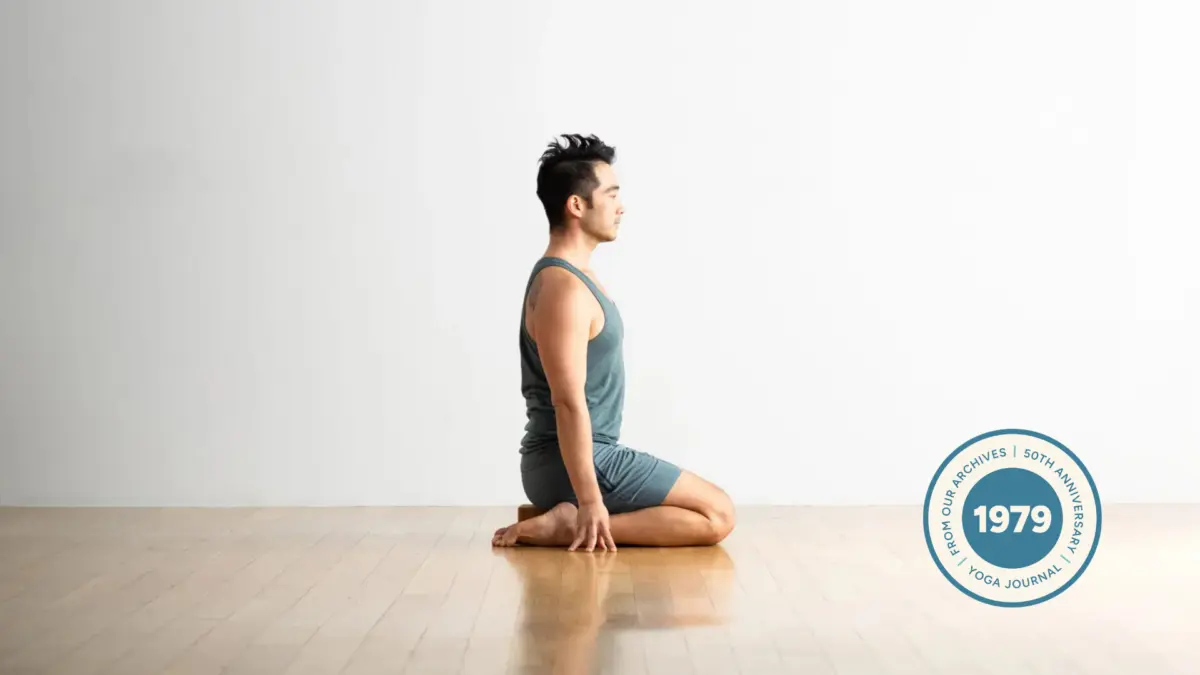
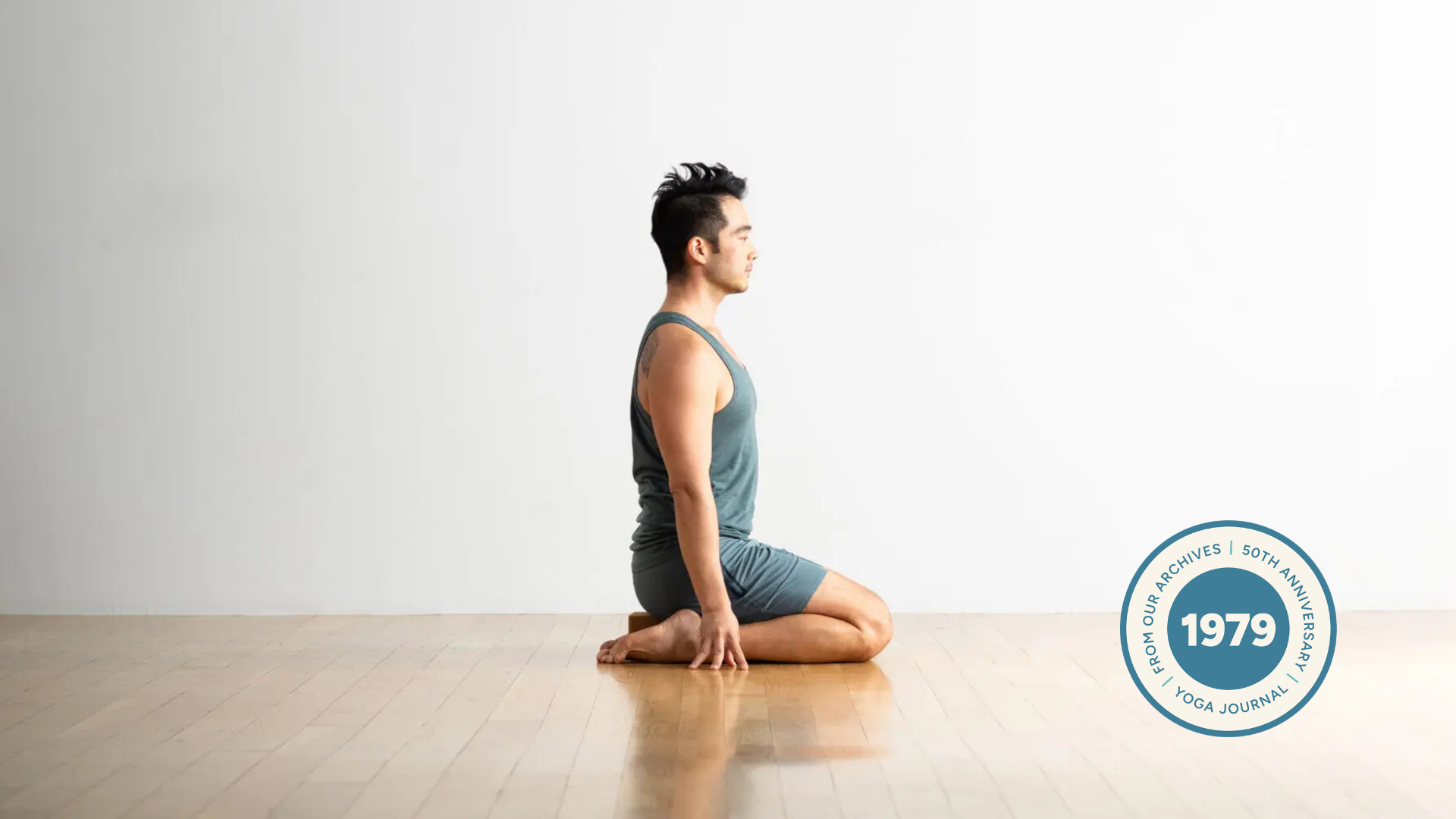
In the pantheon of hatha yoga postures, few asanas bridge the physical and the profound quite like Virasana (Hero Pose). Widely recognized as a classical seated posture for meditation and pranayama, Virasana presents a fascinating paradox for the contemporary practitioner. To the average adult—particularly in Western societies characterized by chair-bound lifestyles—the pose can initially feel intensely demanding, if not entirely inaccessible. Yet, observe children of virtually any culture during unscripted play, and you will frequently find them squatting or kneeling spontaneously into variations of Virasana. This natural affinity underscores a fundamental truth: the posture is not an unnatural imposition on the human frame, but rather a primordial shape to which our joints naturally belong.
Despite its triumphant nomenclature, Virasana is fundamentally an asana of repose. It exerts a uniquely grounding, soothing effect upon both the nervous system and the skeletal framework. However, mastering the posture requires navigating a physical dialogue between resistance and release.
While hatha yoga sequences frequently prioritize hip openers—such as Padmasana (Lotus Pose) or Baddha Konasana (Bound Angle Pose)—Virasana offers a vital anatomical counter-balance. By bringing the hips into a neutral, slightly internally rotated position, it conditions the joints differently, safeguarding the knees and ankles while rehabilitating long-suppressed ranges of motion.
Chronology: The Evolution of a Practice—From Ancient Roots to Modern Archives
To fully appreciate Virasana, one must trace its journey through both ancient tradition and modern pedagogical history.
- Ancient Origins: Rooted in classical Vedic and hatha yoga traditions, Virasana was historically prescribed not merely as a physical exercise, but as a gateway to dhyana (meditation). Ancient sages recognized that physical discomfort acts as a megaphone for a restless mind; thus, conquering the discomfort of a seated pose was viewed as a direct prerequisite for stilling the fluctuations of consciousness.
- The Mid-20th Century Revival (The Iyengar Era): The modern technical understanding of Virasana was profoundly shaped by Yogacharya B.K.S. Iyengar. In his seminal 1966 text, Light on Yoga, Iyengar formalized precise anatomical alignments for the pose, emphasizing safety, structural integrity, and the intelligent use of props. His methodology transformed Virasana from a posture of raw endurance into an accessible tool for students of all levels.
- September–October 1979 (Yoga Journal Archives): Capturing the zeitgeist of the American yoga awakening, Yoga Journal published a definitive guide to Virasana, detailing how Western practitioners could safely approach the posture. This archival piece highlighted the psychological hurdles of sitting in stillness, framing physical discomfort as a laboratory for developing willpower and self-observation.
- Present Day (2026): Decades after its archival debut, Virasana remains a cornerstone of intelligent sequencing. Modern physical therapists and biomechanists have increasingly validated its role in counteracting "sitting disease," cementing its place in contemporary therapeutic yoga.
Supporting Data and Anatomical Analysis: Addressing the Knees and Mind
The mechanics of Virasana involve a complex interplay of flexion, extension, and internal rotation across the lower extremities.
Joint Mechanics and Muscular Engagement
When executed correctly, Virasana stretches the quadriceps femoris (specifically the rectus femoris and vastus muscles), the anterior ankle joints, and the connective tissues surrounding the shins and knees.
| Anatomical Structure | Action in Virasana | Primary Benefit |
|---|---|---|
| Quadriceps | Deep stretch | Releases tension from the front of the hips and thighs |
| Ankle Joints | Dorsiflexion/Plantarflexion integration | Increases joint mobility and relieves stiffness |
| Hips | Neutral alignment / Internal rotation | Balances external hip openers like Lotus |
| Spine | Axial extension | Promotes upright, effortless posture for meditation |
The Physiology of Willpower
Beyond biomechanics, the archival literature emphasizes the psychological utility of holding mild discomfort. Yogic philosophy categorizes mental fluctuations as vrttis (literally meaning "whirlpools" or "waves"). When a practitioner settles into a challenging posture like Virasana, the mind invariably rebels, cycling through resistance, negotiation, and eventual acceptance.
According to traditional yoga theory, consciously enduring this cycle—without hardening the ego or inducing bodily harm—strengthens the will (an ephemeral faculty bridging the mental and spiritual realms). This disciplined stillness helps dissolve the cognitive static that obscures the atman (the pure inner self).
Official Responses and Expert Perspectives: Medical Insights on Safety
For decades, medical professionals, orthopedic specialists, and physical therapists have scrutinized kneeling and deep-flexion yoga poses due to concerns over joint safety. Virasana has historically been viewed with skepticism by clinicians unfamiliar with precise yoga alignment.
However, modern sports medicine and orthopedic research have nuanced this view, largely aligning with the pedagogical warnings established by Iyengar and early yoga pioneers:
- The Risk of Misalignment: Medical professionals correctly note that forcing the heels outward—so that they flare wider than the hips—places destructive rotational torque on the medial collateral ligaments (MCL) of the knees. This can lead to chronic inflammation or injury.
- The Benefit of Correct Execution: Conversely, when practitioners keep the feet strictly aligned parallel with the shins and calves, the mechanical stress on the inner knee is neutralized. Furthermore, progressive exposure to Virasana has been shown by physical therapists to rehabilitate stiff knee joints, provided practitioners respect their individual anatomical limitations.
- Therapeutic Application: Contemporary instructors and clinicians frequently utilize modified versions of Virasana (using blankets, blocks, or rolled towels behind the knees) to alleviate mild joint stiffness and improve lower-limb circulation.
Implications: Translating Stillness into Modern Life
The implications of mastering a posture like Virasana extend far beyond the yoga mat. In an era dominated by digital hyper-stimulation, shrinking attention spans, and chronic physical stagnation from desk work, the lessons embedded in Hero Pose are more urgent than ever.
1. Reclaiming Physical Freedom
Our modern built environment—designed around chairs, couches, and cushioned footwear—has institutionalized physical rigidity. By systematically reintroducing poses like Virasana and its reclined variation, Supta Virasana, practitioners can reclaim the lost elasticity of their joints. As noted in the 1979 archives, physical flexibility is inextricably linked to a sense of bodily and mental freedom.
2. Deepening Breath and Digestion
Supta Virasana (Reclined Hero Pose) offers profound physiological dividends. By fully opening the thoracic cavity and stretching the connective tissues around the ribs, it acts as an exceptional preparation for pranayama (conscious breathwork). Additionally, pioneering teachers like B.K.S. Iyengar long advocated for the pose as an aid to digestion. Notably, prenatal practitioners have observed that gentle variations of Virasana can alleviate symptoms of indigestion and morning sickness during pregnancy.
3. The Inner Sanctuary of the Mind
Ultimately, the enduring value of Virasana lies in its demand for radical presence. In the words of the archival text, learning to sit well in a pose of repose is a discipline that captures the very essence of yoga: the cessation of mental turbulence to experience the quiet truth of the inner self. As we look back at the wisdom preserved in the Yoga Journal archives, Virasana stands not as a test of athletic endurance, but as an invitation home to the natural, unburdened human body.
For further exploration of foundational poses and archival retrospectives, visit the official Yoga Journal Archives.
